
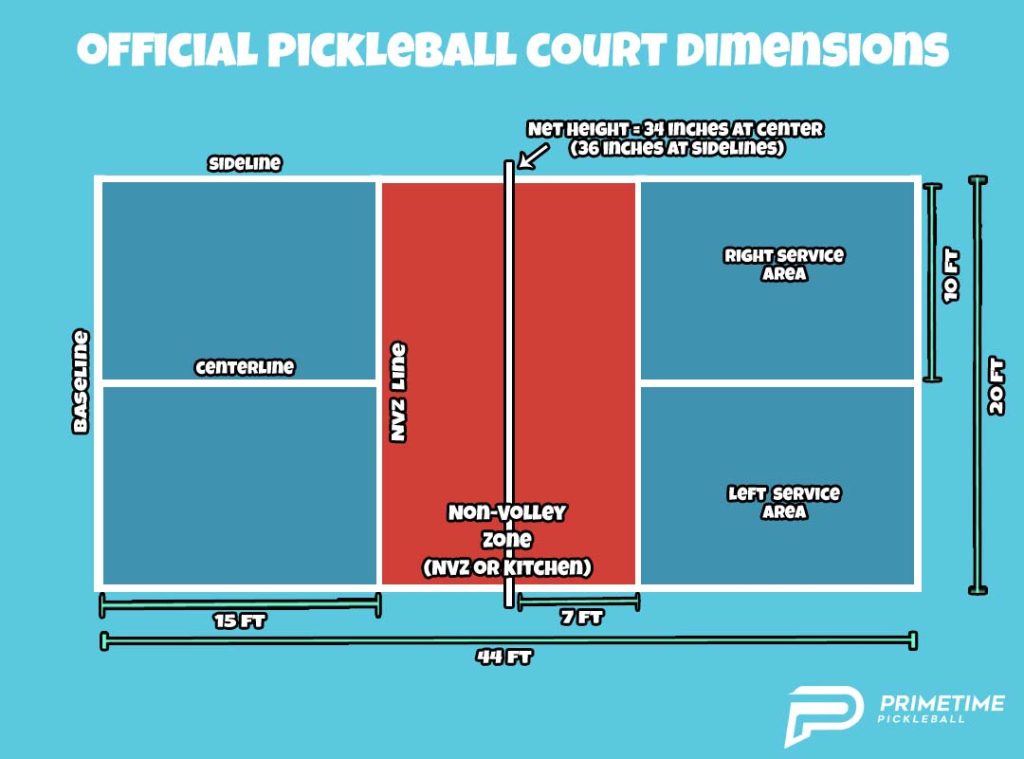
A standard pickleball court is 20 feet wide for both singles and doubles.
If you’ve wondered how wide is pickleball court and why it matters, you’re in the right place. I’ve built, taped, and measured more courts than I can count, and I’ll walk you through every detail. We’ll cover official specs, real-world tips, and common mistakes, so you can set up a court that plays fair, feels safe, and meets the rules. By the end, you’ll know exactly how wide is pickleball court, plus how to measure and mark it like a pro.

Official pickleball court width and full dimensions
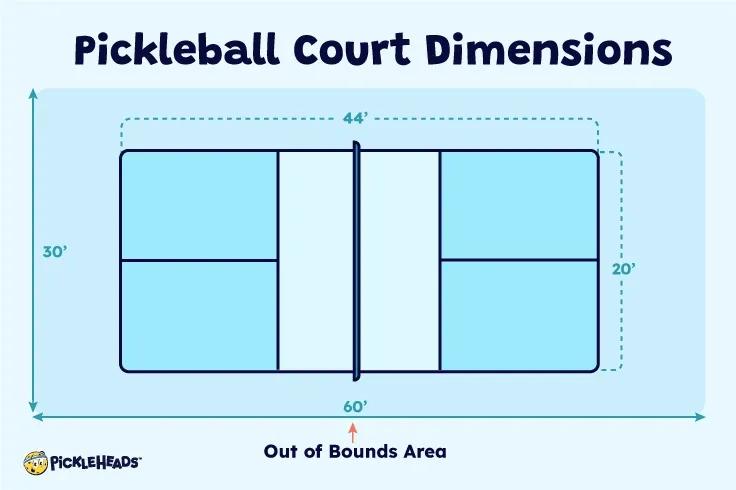
The official width is 20 feet. That number is the same for singles and doubles. The length is 44 feet. These measurements include the lines.
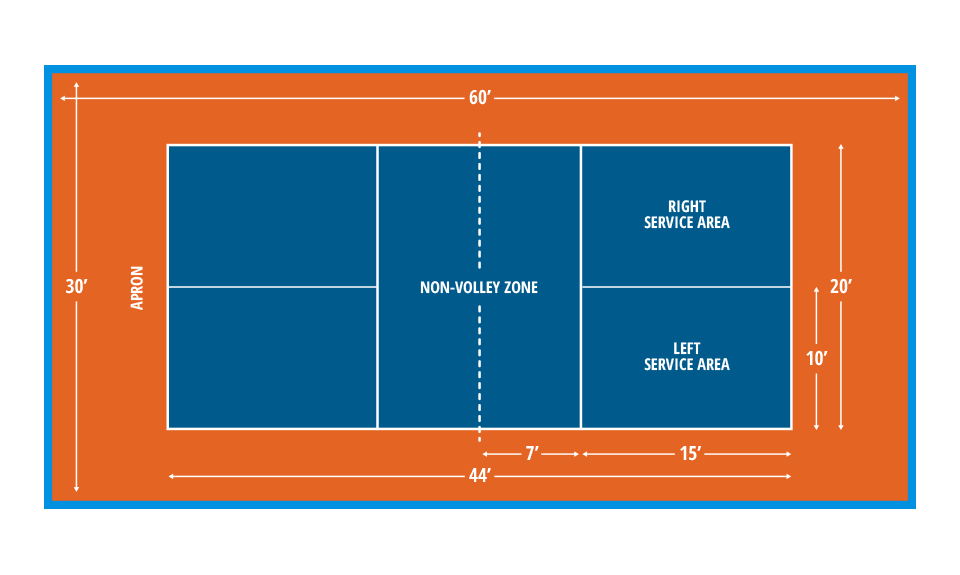
Lines are usually 2 inches wide. Measurements are taken to the outside edge of each line. The non-volley zone, also called the kitchen, is 7 feet deep on each side of the net.
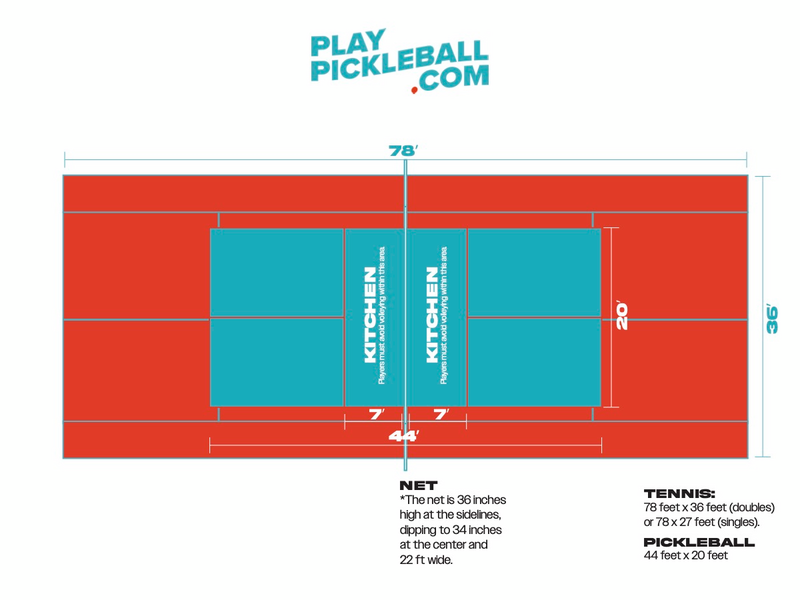
If you like metric, the width is 6.10 meters and the length is 13.41 meters. The net is 34 inches high at the center and 36 inches at the posts. The net spans 22 feet from post to post, which places the posts outside the sidelines.
People often ask how wide is pickleball court when taping lines in a gym. The exact number is 20 feet, measured to the outside of the sidelines, per USA Pickleball rules. That clarity avoids arguments on game day.
Why width matters: play, strategy, and safety
Court width shapes how the game feels. At 20 feet, angles are sharp but not wild. You can attack the sidelines, yet rallies still flow.
Doubles teams must protect the middle and the lines. Singles players must master recovery, since the ball can pull you edge to edge. Footwork, split steps, and smart placement matter more than raw speed.
A correct width also boosts safety. Mis-measured sidelines cause awkward lunges and foot faults. When the court is right, players move with confidence.
How much space you need beyond the lines
The court is 20 by 44 feet, but you need room around it. The minimum recommended play area is 30 by 60 feet. That gives space to chase lobs and avoid walls or fences.
For events, many facilities use about 34 by 64 feet per court. Extra buffer helps with benches, bags, and traffic. It also reduces distractions and collisions.
For backyard or driveway courts, leave as much clear space as you can. Safe runoffs make a big difference for beginners.

Singles vs doubles: is the width different?
Singles and doubles use the same court: 20 feet by 44 feet. The width does not change.
The difference is in movement. Singles players cover all 20 feet alone, so they play more down-the-line shots and safer margins. Doubles teams share the 20 feet, so they angle more and fight for the middle.
If you’re teaching new players, tell them how wide is pickleball court is for both formats. That consistency keeps learning simple.
style=”max-width: 100%; height: auto; border: 2px solid black; border-radius: 10px; display: block; margin: 0 auto;”
loading=”lazy”
/>
Indoor gyms, driveways, and temporary courts
You can lay down a regulation-width court on many surfaces. In a gym, use painter’s tape or removable court tape. Measure 20 feet to the outside of each sideline.
On a full tennis court pad, you can fit up to four pickleball courts with buffers. Many parks set two to four courts, depending on aisles and fences. On a home driveway, you can chalk a 20-foot width and scale length if space is tight.
For planning, always confirm how wide is pickleball court and how much buffer you can spare. Space and safety go hand in hand.
Measuring and marking the width step by step
Follow these simple steps to get it right the first time:
- Gather tools. Bring a 100-foot tape, chalk or tape, string line, stakes, and a marker.
- Mark your baseline. Snap a straight line for the baseline. Use a string line for accuracy.
- Measure the 20-foot width. Mark the two baseline corners at 20 feet apart, to the outside of the lines.
- Square the court. From each corner, measure 44 feet for sidelines. Check the diagonal: it should be about 48 feet 4 inches.
- Add the kitchen. From the net line, measure 7 feet toward each baseline and mark the non-volley zone.
- Tape the lines. Use 2-inch tape. Recheck all corners and diagonals before pressing the tape down.
When laying tape, confirm how wide is pickleball court before you start. You’ll avoid wasted tape and crooked sidelines.
Common mistakes to avoid
- Measuring to the inside of lines. Measurements should go to the outside edge.
- Using a random width. The only correct answer to how wide is pickleball court is 20 feet.
- Skipping the diagonal check. A square court plays fair; a skewed one does not.
- Tight runoffs. Build in buffer space so players can move safely.
- Wrong net setup. Posts should be 22 feet apart. The center should be 34 inches high.
I’ve learned these the hard way. Fixing lines after the tape is down takes longer than doing it right from the start.

Real-life lessons from building local courts
At our community center, we once marked a court at 19 feet by mistake. It looked fine until play began. Balls that “missed” by an inch were actually in. We had to retape the whole side.
Since then, I double-check the diagonal and ask a second person to confirm each mark. For backyard builds, knowing how wide is pickleball court helps you pick the right spot. It also helps when you buy a net and set your posts.
My league captains sometimes text me how wide is pickleball court when they tape temporary lines. I tell them: 20 feet, outside to outside, and do not eyeball it.

Rules and standards you can trust
Official specifications come from USA Pickleball and the International Federation of Pickleball. These bodies define court size, line width, and net height. They also review changes to keep play fair and consistent.
If you’re hosting a league or event, officials will verify the court. For tournaments, they confirm how wide is pickleball court, the net height, and the runoffs. That ensures every court plays the same.
Rulebooks settle the debate on how wide is pickleball court, how long it is, and how to measure. When in doubt, check the latest rules before taping.
How wide is pickleball court compared to other sports?
Pickleball is 20 feet wide. Badminton doubles is also 20 feet wide. Tennis doubles is 36 feet wide.
That smaller width keeps rallies tight and fun. It keeps the game friendly for all ages. It also makes indoor setups easier, since most gyms can fit at least one court.
Planning layouts: parks, clubs, and schools
When you plan a multi-court layout, think beyond the 20-foot width. Plan aisles of at least 8 to 10 feet between courts. Add seating and gear zones outside the fences.
On a tennis pad, many planners consider how wide is pickleball court to fit multiple courts safely. With a 60 by 120 foot pad, two to four courts can work. Good lighting and clear signs help with flow and safety.
For shared spaces, paint permanent kitchen lines and use tape for the rest. It keeps the space flexible without confusion.
Extra tips for home and travel play
- Use a 22-foot portable net for proper coverage past the sidelines.
- Bring two tape measures to check each other. Errors stack fast.
- If kids ask how wide is pickleball court, show them with cones first, then tape.
- Roll tape slowly and keep tension even to avoid waves.
- On asphalt, clean dust before taping so lines stick.
These small habits make courts last longer and play better. They also save arguments about close calls.
Frequently Asked Questions of how wide is pickleball court
Is the width the same for singles and doubles?
Yes. The official width is 20 feet for both singles and doubles. Only the number of players changes, not the court.
Are the lines included in the 20-foot width?
Yes. Court dimensions include the lines. Measure to the outside edge of each line.
What is the net height on a pickleball court?
The net is 36 inches at the posts and 34 inches at the center. This slight dip is by design.
How much extra space should I have around the court?
Aim for at least 30 by 60 feet total space. For events or comfort, 34 by 64 feet is better.
Can I fit pickleball courts on a tennis court?
Often yes. On a full tennis pad, you can fit up to four courts with smart planning and buffers.
What tape should I use for temporary indoor courts?
Use low-residue painter’s tape or court tape about 2 inches wide. Test a small area to avoid damage.
How do I square the court when marking it?
Check the diagonal from corner to corner. It should be about 48 feet 4 inches if your sides are exact.
Conclusion
You now know how wide is pickleball court, why it’s 20 feet, and how to mark it right. Accurate width improves play, keeps games fair, and reduces risk. It also makes your space work better, indoors or out.
Grab a tape, a friend, and these steps, and set up your next court with confidence. If this helped, share it with your crew, subscribe for more guides, and drop your court-building questions in the comments.