Learn pickleball how to play: rules, gear, serve, score, and win today.
Pickleball is easy to start yet rich with skill and strategy. In this friendly guide, I share pickleball how to from my years of coaching new players and leveling up rec crews. You will learn the court, the rules, the serve, the kitchen, scoring, and smart tactics. If you want a simple path to enjoy pickleball and improve fast, this pickleball how to walkthrough is for you.

What is pickleball and how it works
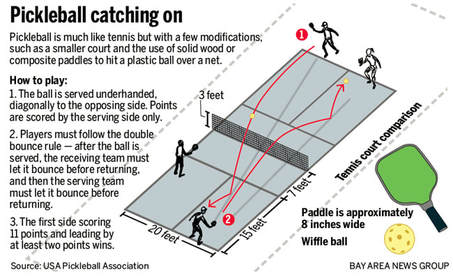
If you search pickleball how to, start with the court and flow of play. The court is 20 by 44 feet, the same size for singles and doubles. The net is 36 inches at the posts and 34 inches at the center. There is a 7‑foot non-volley zone on each side of the net. Most players call it the kitchen.
You play with a paddle and a plastic ball with holes. You serve underhand and cross-court. Only the serving team scores in standard play. Games are often to 11, win by 2.
After the serve, the ball must bounce once on each side before anyone can volley. This is the two-bounce rule. When you score, the server switches sides. When you lose the rally on serve, the serve passes to your partner, then to the other team.
Pickleball how to is simple: keep the ball low, get to the kitchen line, and hit one more shot than your rivals. That mindset helps at every level.

Pickleball how to choose the right gear
The right gear makes learning easier and safer. I learned this the hard way after one week in flat sneakers and a sore ankle. Start here.
Paddles
- Weight: 7.6 to 8.4 ounces suits most beginners. Lighter is easier to swing. Heavier gives more power and stability.
- Grip size: Measure from palm center to ring-finger tip. Most adults like 4.25 to 4.5 inches. If unsure, go smaller and add an overgrip.
- Face and core: Polymer cores are quiet and soft. Fiberglass faces add pop. Carbon fiber adds control.
Balls
- Outdoor balls have smaller holes and are firmer. They fly true in wind. Indoor balls have larger holes and feel softer.
Shoes
- Choose court shoes with lateral support. Running shoes are risky for side steps.
- A gum or non-marking sole grips the surface well.
Extras
- Overgrips for sweat and size tweaks.
- A soft bag for paddle care.
- Safety glasses if play gets fast.
If budget is tight, get a midweight polymer paddle and court shoes first. That combo gives you the best return.

Pickleball how to set up and understand the court and rules
You can tape a temporary court or use painted lines. The key lines are clear. Baselines at the ends. Sidelines on the sides. A centerline splits each service box. The kitchen line is 7 feet from the net.
Serve basics
- Serve underhand and cross-court. Aim beyond the kitchen line.
- The serve must land in the opposite service box. Hitting the kitchen line on the serve is a fault.
- You may use a volley serve or a drop serve. On a drop serve, let the ball fall from your hand without adding force, then hit it after the bounce.
Footwork on the serve
- Before contact, do not touch the baseline or the court with your feet.
- Do not step on the sideline or centerline extensions before contact.
Rally rules
- Two-bounce rule: The serve must bounce once, and the return must bounce once, before volleys are allowed.
- Non-volley zone: Do not volley while any part of you is in the kitchen. Momentum counts. Clear it before you volley again.
- Service lets are in play. If the ball hits the net and lands good, keep playing.
- Ball out of bounds.
- Ball into the net.
- Volley from the kitchen or on a kitchen line.
- Illegal serve or foot fault.
Understanding these rules is the heart of pickleball how to. Review them once, then go play.

Pickleball how to serve and return consistently
A steady serve and deep return set the tone. Here is a simple plan.
Legal serve checkpoints
- Contact the ball below your waist with an upward swing if volley serving.
- Keep the paddle head below your wrist at contact on a volley serve.
- On a drop serve, form does not matter as much. The bounce relaxes the rules. Focus on accuracy.
- Do not touch the baseline before the hit. Aim cross-court beyond the kitchen.
Targets and tips
- Pick a safe target: back third of the box and near the sideline.
- Add a small pre-serve routine. Bounce, breathe, hit.
- Start at 60 percent speed. Place first. Add pace later.
Return of serve
- Hit deep down the middle. It reduces angles and buys time.
- Use a simple, low-backswing stroke. Shoulder turn, smooth push.
- Move to the kitchen line after contact, split step, and get ready.
When I coach beginners on pickleball how to serve, I start with ten drop serves to each target. The bounce calms nerves and builds a feel for the sweet spot fast.
Pickleball how to master the kitchen
The kitchen is where most points are won. Think of it as chess with a ball.
Non-volley zone rule
- You can step in to hit a ball that has bounced.
- You cannot volley while touching the kitchen or its line.
- If you volley and your momentum carries you in, it is still a fault.
Dink basics
- Use a soft, compact swing with little wrist.
- Contact in front of your body. Keep the ball low over the net.
- Aim cross-court for more net space and a safer arc.
Speed-ups and resets
- Speed up to your rival’s paddle hip or shoulder. Stay compact.
- If they attack you, block with a stable paddle face. Let the ball die short.
Drills I swear by
- Forehand and backhand cross-court dinks, 50 each.
- Volley blocks from mid-court, focus on quiet hands.
- Kitchen line footwork: step, plant, and hold balance after each shot.
Mastering this zone is the soul of pickleball how to. It builds touch, control, and teamwork.
Pickleball how to keep score and rotate
Scoring feels odd at first. Stick with it and it clicks.
Doubles scoring
- Only the serving team scores. Announce three numbers: your score, their score, and server number.
- The first serve of the game starts at second server. You call 0-0-2 to begin.
- If the serving team wins a rally, the server switches sides and serves again.
- When the serving team loses a rally, serve goes to the partner. After both fail to win a rally on serve, it is a side out.
Singles scoring
- Call two numbers: server and receiver scores.
- Serve from the right when your score is even. Serve from the left when odd.
Typical games are to 11, win by 2. Some matches go to 15 or 21. Learn the rotation, and pickleball how to keep score becomes second nature.
:max_bytes(150000):strip_icc()/how-to-play-pickleball-tips-for-getting-started-5119213_final-bf80f980ffce4deca59039e2d83a1a1a.png)
Pickleball how to improve fast: drills and practice plan
A short, focused plan beats random hitting. Try this simple layout.
Warm-up, 5 minutes
- Light jog or jump rope.
- Dynamic moves for hips, calves, shoulders.
Skill blocks, 20 to 40 minutes
- Serves to four targets, 20 balls each.
- Deep returns down the middle, 20 reps each side.
- Third-shot drops cross-court, then down the line, 30 each.
- Dink ladder: soft to mid to aggressive, 5 minutes each.
- Reset drill: partner speeds up, you block to the kitchen.
Games, 10 to 20 minutes
- Play to 7 with only drops allowed on third shots.
- Play skinny singles down one half to sharpen aim.
Wall work when solo
- Volley taps 100 in a row.
- Soft drop to a taped target 50 times.
Log what you worked on and one win from the day. Tracking turns pickleball how to train into real progress.

Pickleball how to play strategy for doubles and singles
Strategy is your multiplier. Use simple rules that hold under stress.
Doubles
- Get to the kitchen and hold the line with your partner.
- Third shot: choose drop if rivals are set at the line. Choose drive if they are back or give you a high ball.
- Communicate early and often. Call mine or yours. Call out-outs for balls near the baseline.
- Poach smart. Move when you see a weak pop-up. Cover the middle with your forehand if stronger.
- Try stacking if one player has a stronger forehand. It keeps that wing in the middle.
Singles
- Serve wide, then hit to open space.
- Return deep and charge to the kitchen line under control.
- Guard the middle. Make your rival beat you with angles.
Knowing when to slow the ball is core to pickleball how to win. Soft beats fast more often than you think.

Pickleball how to stay safe and avoid injury
Good prep keeps you on court longer. Most injuries come from slips, overuse, or heat.
Warm-up
- Five minutes of movement. Add calf raises, squats, band pulls, and shoulder circles.
- Practice 10 soft dinks and 10 volleys before a match.
During play
- Wear court shoes with clean tread.
- Drink water early. Add electrolytes in heat.
- Take short rests between games. Stretch calves and forearms.
Post-play
- Gentle stretch for hips, quads, calves, and shoulders.
- Ice for hot spots if needed. Rest if pain lingers.
Research shows warm-ups reduce strains and sprains. The safest pickleball how to is simple: prepare, pace yourself, and listen to your body.
Pickleball how to find games and level up
Where you play matters. The right group helps you grow with joy.
Find play
- Check local parks, gyms, and rec centers.
- Use community boards and apps that list open play times.
Learn with others
- Join beginner clinics for fast feedback.
- Ask to rotate with players a bit better than you.
- Record a few points to spot easy fixes like footwork or paddle height.
Etiquette
- Introduce yourself. Call the score loud. Make honest line calls.
- Rotate fairly in open play. Invite new players in.
- Thank partners and rivals. It keeps the vibe fun.
A friendly crew and steady matches are the best pickleball how to for long-term growth.
Frequently Asked Questions of pickleball how to
What is the easiest way to start learning pickleball?
Borrow a paddle, learn the basic rules, and play short games to 7. Focus on getting to the kitchen line and keeping the ball in play.
How do I hold the paddle for control?
Use a continental grip, like shaking hands with the handle. It makes switching from forehand to backhand fast and smooth.
What is the third shot drop and why is it key?
It is a soft shot from near the baseline that lands in the kitchen. It lets you move forward and join your partner at the line.
How often should I practice to improve?
Two to three sessions per week helps most beginners. Mix drills for 20 minutes with games for 20 minutes.
Is the kitchen line in or out on volleys?
The line is part of the kitchen. If you volley while touching it, even on the line, it is a fault.
Can I serve with spin in pickleball?
Yes, but keep the motion underhand and legal. Many players add spin on the drop serve for safe variety.
What score do I call in doubles?
Call your team’s score, then theirs, then your server number. For example, 5-3-1.
Conclusion
You now have a full pickleball how to roadmap: the court, the gear, the serve, the kitchen, scoring, drills, and smart tactics. Keep it simple. Place the ball, take the line, and make one more shot.
Take action today. Book one game this week, run the 30-minute plan, and track one skill win per session. Want more tips? Subscribe for weekly drills, drop your questions in the comments, and share your best pickleball how to moments with the community.