Yes, but only on the return of serve and the very next shot.
If you have wondered does the ball have to bounce in pickleball, you are not alone. I coach new and mid-level players, and this rule comes up in every clinic. In this guide, I break down the two-bounce rule, kitchen rules, common mistakes, and smart tactics. You will learn clear examples, match-tested tips, and simple drills you can use today.
The two-bounce rule explained
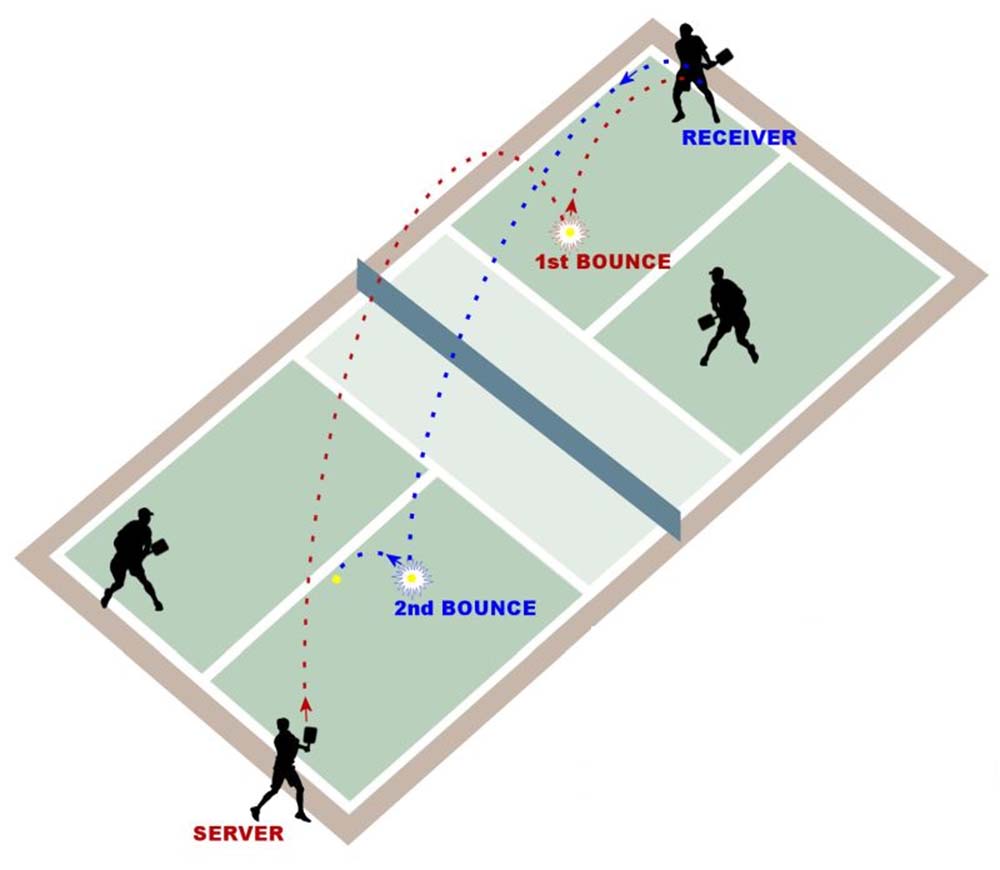
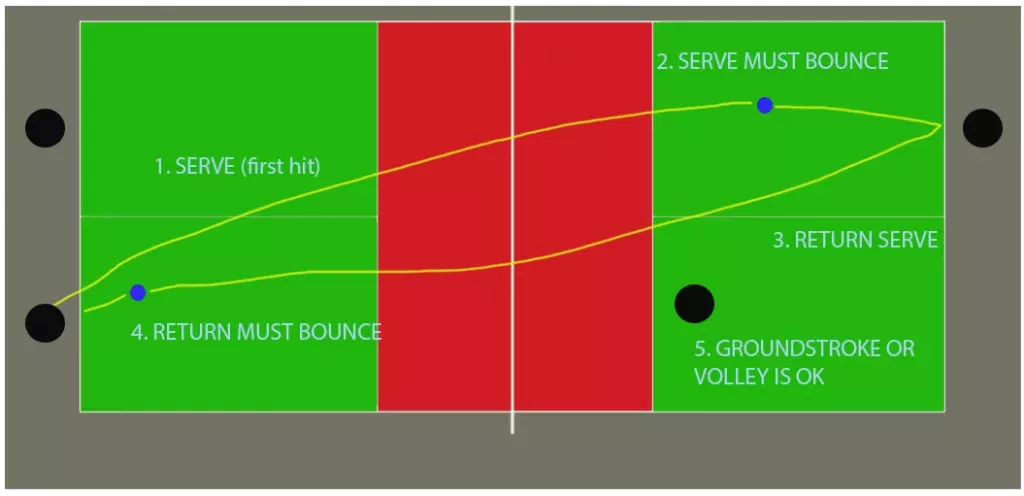
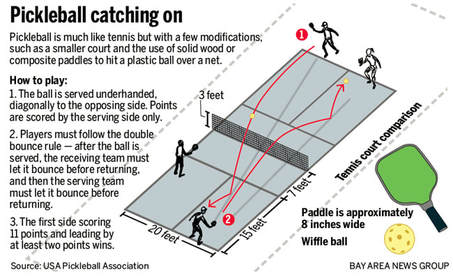
Pickleball uses what the official rulebook calls the two-bounce rule. After the serve, the returner must let the ball bounce once. Then the serving team must also let the next shot bounce once. After those two bounces, any team may volley.
This answers the big question, does the ball have to bounce in pickleball. It must bounce on the return and the next shot. After that, you can hit the ball in the air, as long as you follow kitchen rules.
In doubles or singles, it works the same. The serve must land in the correct box. The return must bounce. The next shot must bounce. Then volleys are legal.

When does the ball have to bounce in pickleball?
Short answer again: on the return of serve and on the serving team’s next shot. That is the two-bounce rule. After those two bounces, you can choose to volley or let it bounce.
Players ask does the ball have to bounce in pickleball during rallies after the third shot. No. It does not. The bounce is only required for the first two shots of each point. The rest is up to you, your position, and your plan.
A simple flow you can memorize:
- Serve the ball. It must land in.
- Returner lets it bounce, then hits.
- Serving team lets it bounce, then hits.
- Now, volleys are legal for both sides.
Kitchen rules and bounce myths
The non-volley zone, also called the kitchen, confuses many players. You cannot volley while touching the kitchen or its line. You can step in the kitchen to play a ball that has bounced. You must exit before volleying again.
So, does the ball have to bounce in pickleball when it lands in the kitchen? Only if you are in the kitchen or on its line. Volleys from the kitchen are not allowed, ever. But balls may land in the kitchen on any shot, including the serve if it is a let in some formats, though standard serves cannot land in the kitchen.
A few quick reminders:
- If your momentum takes you into the kitchen after a volley, it is a fault.
- The kitchen line counts as part of the kitchen.
- If the ball bounces in the kitchen, you may step in and hit it.

Common mistakes I see and how to fix them
I coach many first-time players, and this mistake tops the list. Players rush the net and volley the third shot. That breaks the two-bounce rule. Stay patient. Split step and wait for the bounce.
Another common mistake is crowding the kitchen too early. You end up stuck, late, or foot-faulting. Move up with balance. Stop before the opponent swings. Then react.
One more mistake is soft returns that land short. That gives the serving team an easy third shot. Drive or deep chip the return to the back third. It buys time to get set at the line.

Strategy: turn required bounces into easy points
Use the two-bounce rule to shape the rally. A deep, heavy return makes the third shot hard. That keeps your team in control at the line.
Here is how I coach it in clinics:
- Return deep through the middle. Reduce angles.
- Split step at the kitchen line as the serving team hits their third shot.
- If their third shot is a drop, aim a safe dink crosscourt.
- If it sits up, attack to the right hip or at feet.
This is why people ask, does the ball have to bounce in pickleball. When you know when it must bounce, you can plan the third shot and win the line. You control time and space.

Simple drills to nail your timing
You get better when you train the first three shots. Keep it short and sharp.
Try these:
- Deep return ladder. Hit 10 deep returns to different targets. Call out bounce, then split step.
- Third-shot drop repeat. Partner feeds a deep ball. You let it bounce, then drop to the kitchen. Aim high over the net tape.
- Transition zone blocks. Start mid-court. Partner drives at you. Block back with a compact swing. Focus on calm feet and soft hands.
- Bounce callout. In rallies, say bounce out loud on the return and on the third shot. It sets your timing.
Small tip from my first tournament. I rushed and volleyed the third ball twice. Faults cost games. Saying bounce out loud fixed it fast.

Gear, courts, and weather: how bounce changes
Not all bounces feel the same. Outdoor balls are harder and skip more. Indoor balls are softer and sit up. Old balls skid less, and cracked balls act wild.
Court type matters too. Smooth indoor wood gives a truer bounce. Rough outdoor asphalt can kick to the side. Cold weather keeps the ball low. Heat makes it fly.
So, does the ball have to bounce in pickleball the same way everywhere? The rule is the same. The feel is not. Warm up for five minutes to learn the day’s bounce.

Rule nuances and updates you should know
The two-bounce rule has stayed stable in recent seasons. It is sometimes called the double-bounce rule, but the meaning is the same. The return must bounce. The next shot must bounce.
Non-volley zone rules still bar any volley while you touch the kitchen or its line. Momentum into the kitchen after a volley is a fault. Lines count as in, but the kitchen line counts as kitchen on volleys.
If you still wonder does the ball have to bounce in pickleball on the serve itself, the serve does not have to bounce before you hit it. You can volley serve or drop serve, per current rules. But the returner must let it bounce.

Frequently Asked Questions of does the ball have to bounce in pickleball
Does the ball have to bounce in pickleball after the serve?
Yes, the returner must let the serve bounce once. Then the serving team must also let the next shot bounce.
Can I volley from inside the kitchen?
No. Any volley while touching the kitchen or its line is a fault. Step out before you volley.
Does the ball have to bounce in pickleball during normal rallies?
No. After the two required bounces, you may volley or let it bounce. Choose based on your position and the ball height.
What if my momentum carries me into the kitchen after a volley?
That is still a fault, even if the ball is dead. Wait until you can stop outside the kitchen before you volley.
Can the return of serve be a volley?
No. The returner must let the ball bounce. Volleys on the return are a fault.
Does the ball have to bounce in pickleball if it hits the net cord and goes over?
If it is the serve and it lands in, play it if the format allows lets; most rec play continues. During rallies, net-cord balls are live, and bounce rules still apply.
Is the rule different in singles vs. doubles?
No. The two-bounce rule is the same in both. Return must bounce, and the next shot must bounce.
Conclusion
You now know exactly when the ball must bounce and when it does not. Use the two-bounce rule to win the line, shape the third shot, and control the rally. Keep your feet calm, call bounce out loud, and choose smart targets.
Take this to your next session. Drill the first three shots for 10 minutes. Then play a short game and track how many clean points start with a deep return. If this helped, share it with a friend, subscribe for more tips, or drop a question in the comments.