
A single outdoor pickleball court costs about $25,000 to $60,000 installed.
That range covers base work, surfacing, fencing, and basic gear. Lights and extras can push costs to $80,000 or more.
If you are asking how much does a pickleball court cost, you want real numbers you can use today. I’ve managed installs for schools, HOAs, and backyard owners, and I’ll share what worked, what did not, and what I’d do next time. This guide explains every cost, from asphalt to lights, so you can plan with confidence and avoid surprises.

What drives the price of a pickleball court
The big drivers are site prep, base type, surfacing, fencing, and lights. Location and soil conditions matter a lot. Permits and drainage can also add time and money.
Think of price like a triangle: speed, quality, and cost. You can pick two. If you want top quality fast, expect to pay more. If you want low cost, accept a longer timeline or a simpler build. Many readers ask how much does a pickleball court cost because these trade-offs are not obvious at first.
Key factors that change price:
- Site conditions. Flat, dry sites cost less than sloped or wet sites.
- Base choice. Asphalt is cheaper. Post-tensioned concrete lasts longer.
- Extras. Fencing, lighting, shade, and windscreens add up fast.
- Local labor. Urban markets and remote sites cost more.
- Access. Tight access means more labor and staging.
Line-item cost breakdown
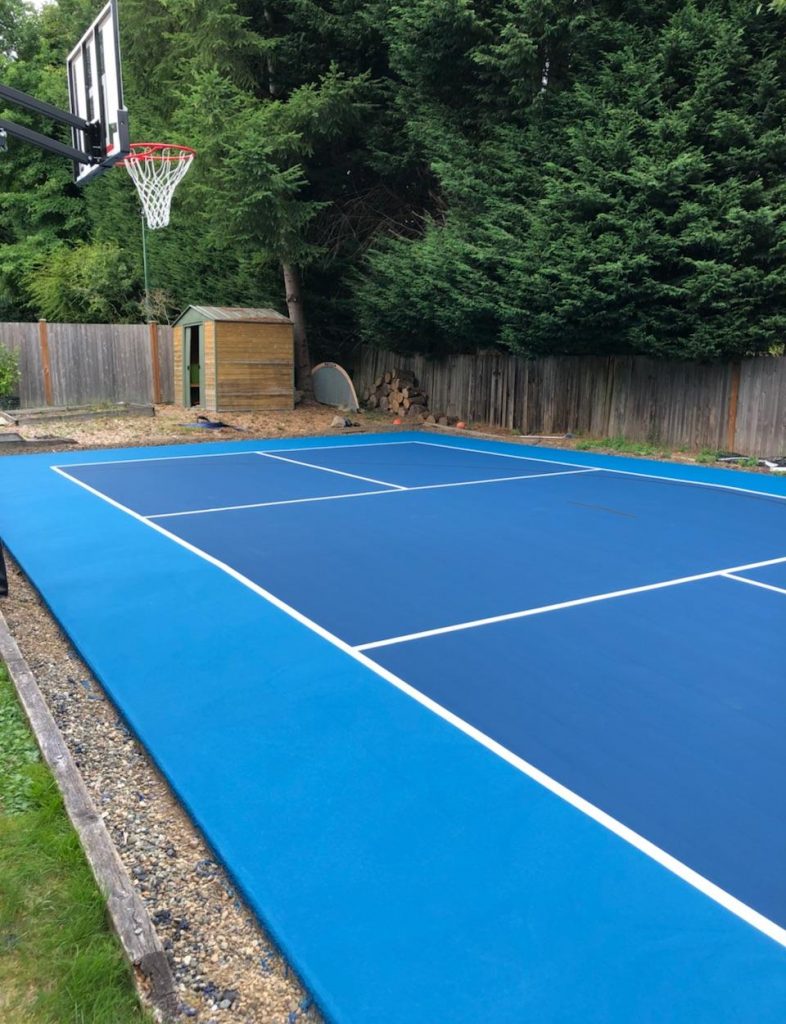
Here is what a single 30 by 60 foot court often includes. Prices are typical in the US and vary by region.
- Site prep and grading: 2,000 to 15,000. Tree removal, cut and fill, haul-off.
- Base paving, asphalt: 7,200 to 18,000. About 4 to 10 per square foot.
- Base paving, post-tensioned concrete: 18,000 to 32,000. About 10 to 18 per square foot.
- Acrylic sport surfacing: 2,700 to 5,400. Three to five coats.
- Lines and layout: 300 to 800. Regulation lines and tape off.
- Net, posts, sleeves: 600 to 1,500. Permanent, tennis-grade hardware.
- Fencing, 8 to 10 feet: 5,400 to 9,900. About 30 to 55 per linear foot.
- Lighting, LED, 2 to 4 poles: 10,000 to 30,000. Poles, trenching, power.
- Windscreens and gates: 500 to 2,000. With ties and fasteners.
- Benches, shade, and storage: 500 to 5,000. Depends on style.
- Drainage and swales: 1,500 to 8,000. Protects your surface.
- Design, testing, and permits: 500 to 5,000. Surveys and fees.
Tip from the field: plan at least 10 percent for contingency. Something always pops up. A common question is how much does a pickleball court cost when you include fencing and lights. With both, you are often at 40,000 to 80,000.
Material choices and price ranges
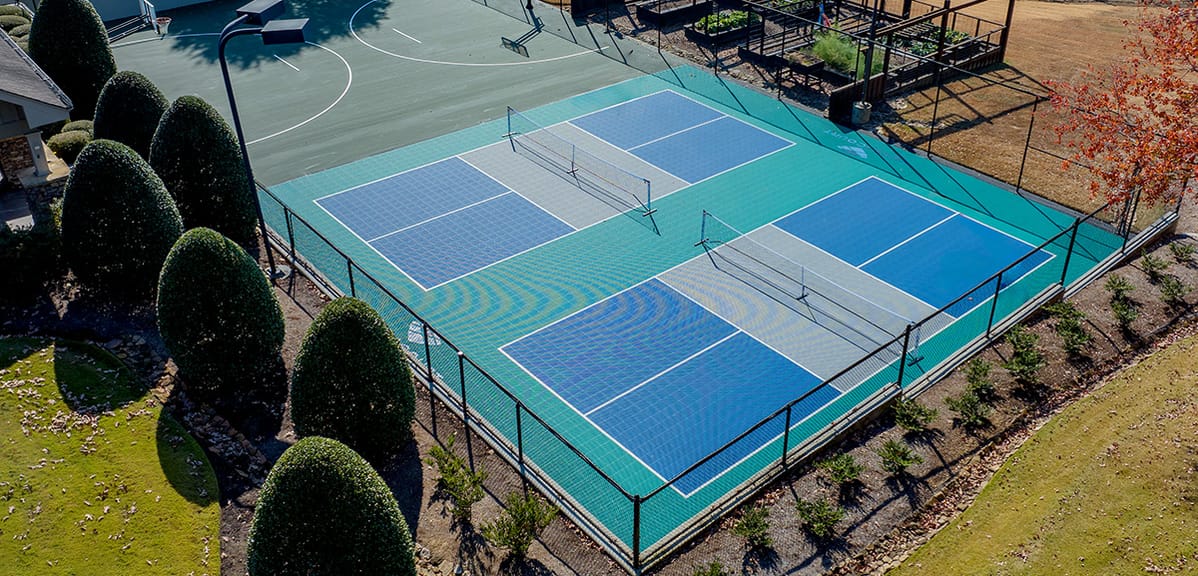
Your base is the backbone. It decides how the court plays and how long it lasts.
- Asphalt. Lower first cost. Good play. Resurface every 4 to 7 years. Best for tight budgets.
- Post-tensioned concrete. Higher cost. Great crack control. Long life. Best for clubs and heavy use.
- Modular sport tiles. Fast install. Works indoors or over old slabs. Easy to repair. Good for conversions.
Surfacing options:
- Acrylic color systems. Standard for outdoor courts. Good grip and color. Many brands and textures.
- Cushion systems. Softer on joints. Adds 2 to 4 per square foot. Nice upgrade for seniors.
- Tiles indoors. 6 to 10 per square foot. Durable and quick to install.
If you ask how much does a pickleball court cost with cushioned surfacing, add a few thousand to the base plan. It is a comfort upgrade that many players love.

Outdoor vs indoor costs
Outdoor courts are common and cost less per court. The weather is the wild card. You plan around rain, freezing, and heat.
Indoor courts live inside a gym or warehouse. The structure is the big spend, but the court lines and tiles are simple. Lighting and HVAC are shared costs.
Typical ranges:
- Outdoor, no lights: 25,000 to 45,000 per court.
- Outdoor, with lights: 40,000 to 80,000 per court.
- Indoor in existing space: 25,000 to 75,000 per court, depending on floor and nets.
When people ask how much does a pickleball court cost indoors, I ask about floor choice and power. Those two decide most of the price.
New build vs conversion
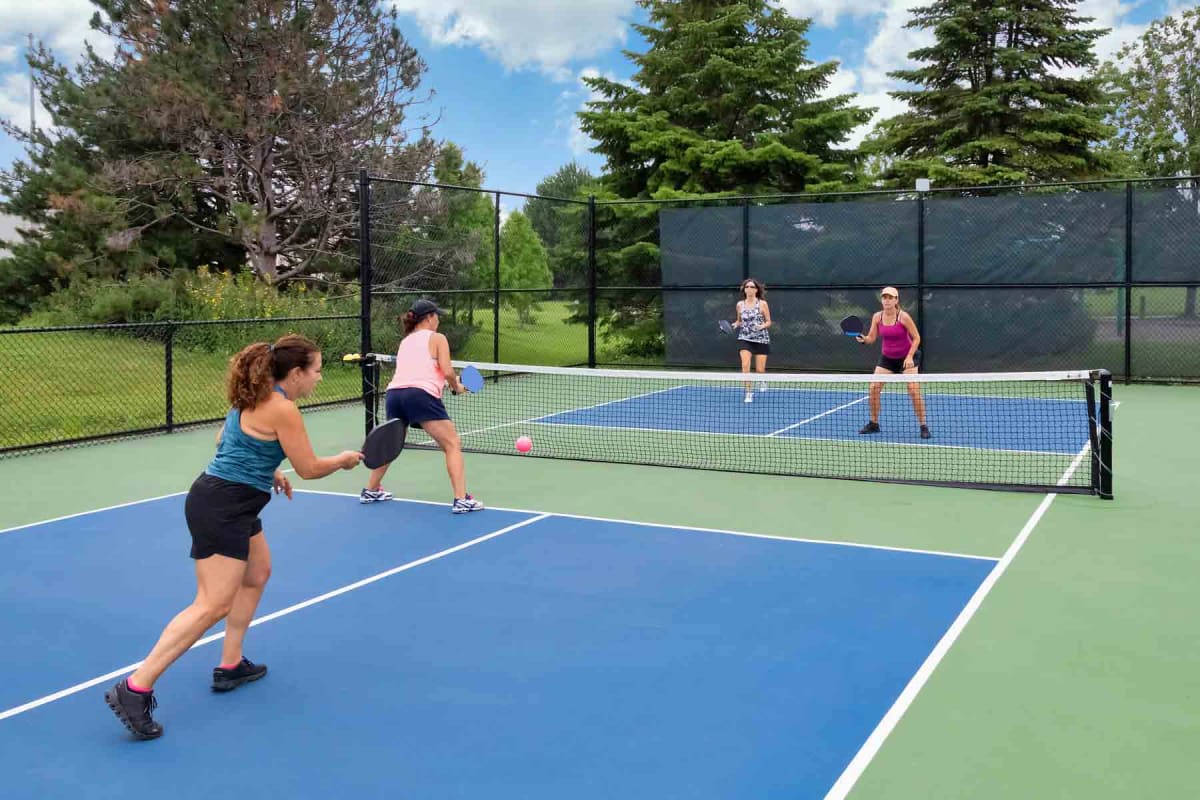
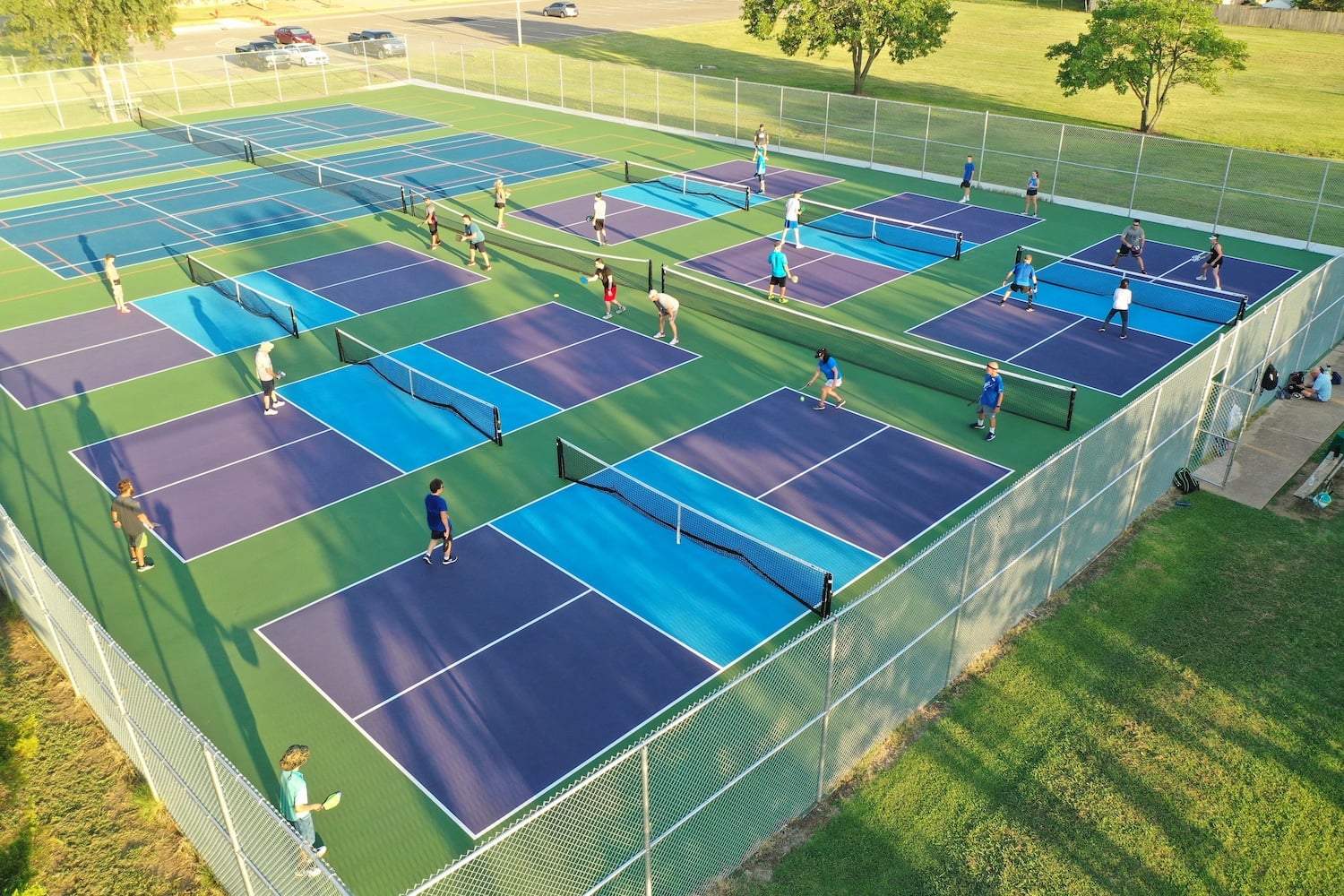
Conversions can save money and time. A single tennis court can fit two to four pickleball courts.
- Simple restripe with portable nets: 1,500 to 5,000. Fast and cheap.
- Full conversion with resurfacing and posts: 15,000 to 35,000 per tennis court.
- Add divider fencing, windscreens, and color zones: add 5,000 to 15,000.
I helped a parks director convert two tennis courts into six pickleball courts. The city spent about 78,000 all-in. The community use doubled in three months. If you wonder how much does a pickleball court cost during a conversion, know that reuse of fencing and lights can cut thousands.
DIY or hire a pro
DIY can work for backyard projects. You still need good base work. A bad base will crack and puddle.
Good DIY candidates:
- Portable nets and taped lines on an existing slab.
- Modular tiles over a sound driveway or barn floor.
- Painting lines on a smooth, sealed asphalt pad.
Hire a pro when:
- You need a new slab or post-tensioned concrete.
- You want fencing and lights.
- You care about warranty and long-term play.
If your main question is how much does a pickleball court cost when you DIY, expect 5,000 to 20,000 for a simple, no-fence build on an existing slab. Pro builds start higher but last longer.

Maintenance and lifetime costs
Courts are not set-and-forget. A small care plan saves big repairs.
Typical annual costs:
- Cleaning and debris control: a few hours per month.
- Crack fill and touch-ups: 200 to 800 per year.
- Resurfacing: 4,000 to 8,000 every 4 to 7 years for asphalt.
- Net and hardware refresh: 200 to 500 every 3 to 5 years.
- Electricity for lights: 300 to 1,500 per year, use-dependent.
Total cost of ownership over 10 years can double the build cost if you include lights and heavy use. Ask vendors for lifecycle numbers when weighing how much does a pickleball court cost over time.
Permits, drainage, and timeline
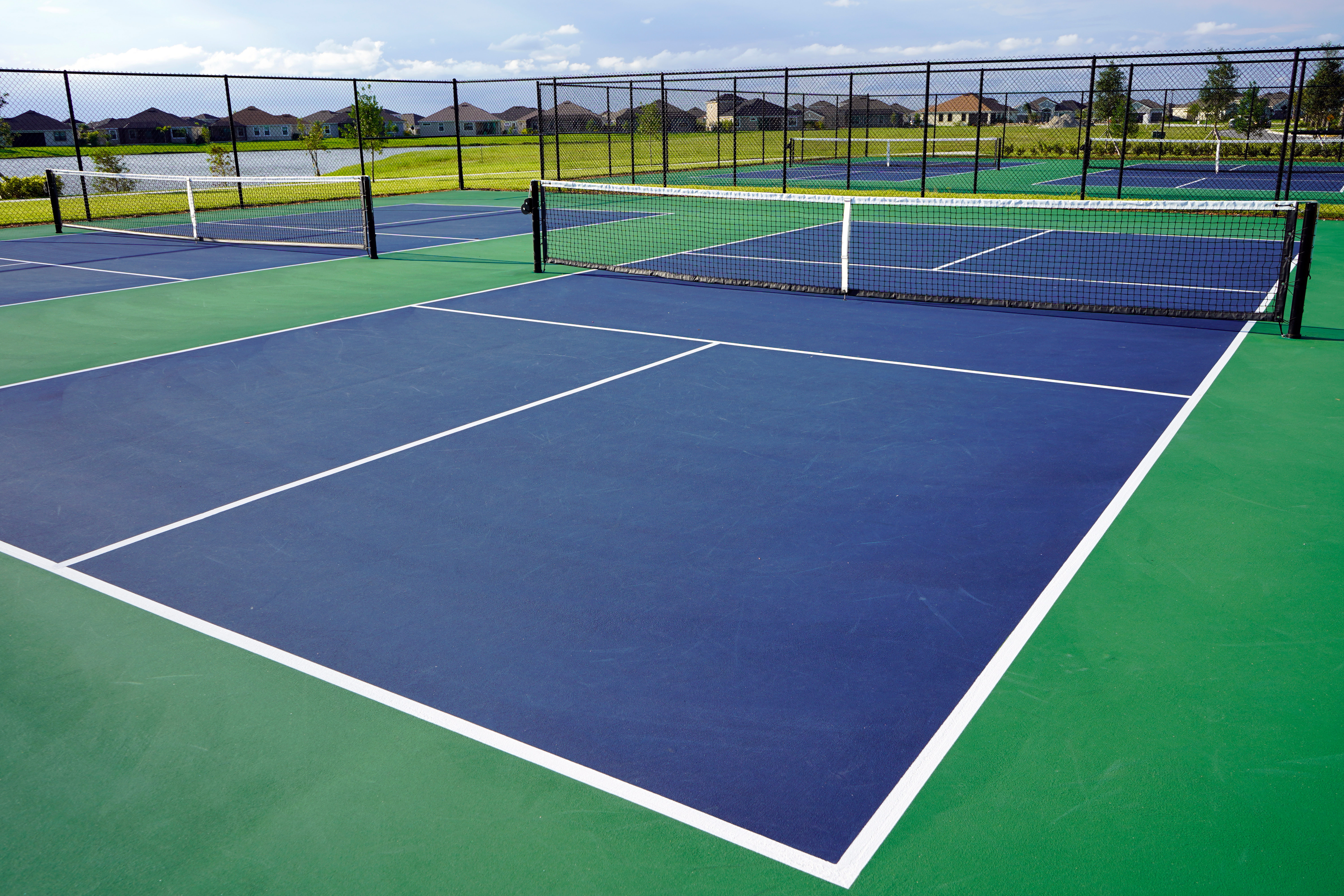
Many cities need permits for paving, fencing, and lights. Some require stormwater plans. Power runs for lights often trigger inspections.
Typical timeline:
- Planning and permits: 2 to 8 weeks.
- Site prep and base: 1 to 2 weeks.
- Curing and settling: 1 to 4 weeks, weather-based.
- Surfacing and striping: 3 to 7 days.
- Fencing and lights: 3 to 10 days.
Bad drainage ruins good courts. Spend to move water away from play. If you wonder how much does a pickleball court cost with proper drainage, add 1,500 to 8,000. It is worth it.
Realistic budgets and case studies
Here are three real-world style budgets that I see often.
- Starter backyard, no fence, no lights. Regrade, asphalt, acrylic, net system. 18,000 to 25,000.
- HOA showpiece, fence, windscreens, benches, lights. Asphalt or post-tensioned concrete. 45,000 to 85,000.
- School conversion of one tennis court to two pickleball courts. Resurface, paint, permanent nets. 25,000 to 40,000.
I once bid a premium post-tensioned concrete court with LED lights and shade. Final price was 92,000 due to rock in the soil and a power upgrade. The owner first asked how much does a pickleball court cost. The answer changed after soil tests and utility checks.
Smart ways to save without cutting corners
You can trim cost and keep quality.
- Pick asphalt with a solid subbase. Put savings into fencing and surfacing.
- Skip lights now. Add conduits during build. Wire later when budget allows.
- Share amenities. Cluster two or four courts to share fencing and poles.
- Reuse existing power and fencing where safe.
- Buy nets and windscreens in off-season sales.
Ask for alternates in bids. Side-by-side pricing helps you judge how much does a pickleball court cost with or without upgrades.
Funding, grants, and ROI for communities and clubs
Pickleball draws players fast. That helps funding.
Sources to explore:
- City recreation budgets and small grants for wellness.
- Sponsors and naming rights for benches or shade.
- Member buy-ins for clubs. Pre-sell court time.
- Partnerships with schools and YMCAs.
ROI ideas:
- Court rentals at peak hours.
- Leagues, clinics, and drop-in fees.
- Tournaments with local vendors.
A strong case shows use, health impact, and simple math. It answers the board’s question: how much does a pickleball court cost, and how soon does it pay back.
Common mistakes and how to avoid them
I see the same errors over and over.
- Skipping soil tests. Surprise rock or clay adds thousands later.
- Poor drainage. Puddles shorten surface life.
- Too little space around lines. Leave safe run-off areas.
- Thin surfacing. Do the full system. It plays better and lasts longer.
- No contingency. Always hold 10 percent in reserve.
When someone asks how much does a pickleball court cost, I ask for a plan review. A 30-minute review can save months of fixes.
A simple step-by-step cost calculator
Use these steps for a fast estimate per court.
- Choose base.
- Asphalt at 4 to 10 per square foot.
- Post-tensioned concrete at 10 to 18 per square foot.
- Add surfacing and lines.
- 1.5 to 3 per square foot for acrylic.
- 0.5 per square foot for lines and layout.
- Add fence and gates.
- 30 to 55 per linear foot. About 180 feet total.
- Add lighting if needed.
- 10,000 to 30,000 for poles, fixtures, and trenching.
- Add soft costs and drainage.
- 2,000 to 10,000 for permits, engineering, and water control.
Now ask yourself again, how much does a pickleball court cost with your choices. You will have a close, realistic number to start bids.
Frequently Asked Questions of how much does a pickleball court cost
How big is a pickleball court and why does size affect cost?
A standard court is 20 by 44 feet, with a 30 by 60 foot play area. More area means more paving, fencing, and surfacing, which increases cost.
Can I put a court in my backyard?
Yes, if you have flat space for 30 by 60 feet and access for equipment. Check setbacks, easements, and HOA rules first.
What is the cheapest way to build a court?
Use an existing slab, add modular tiles, and buy a portable net. It is the fastest and often costs under 10,000 if the slab is sound.
How long does a court last before major repairs?
With good drainage and care, 10 to 20 years for the base, and resurfacing every 4 to 7 years. Post-tensioned concrete can last longer with fewer cracks.
Do I need lights?
Not required, but lights extend play hours and boost community use. LEDs have higher upfront cost but lower power use and better light quality.
Can one tennis court fit multiple pickleball courts?
Yes, one tennis court can fit two to four pickleball courts. You may need divider nets, new lines, and posts.
Will the court be noisy for neighbors?
Paddle noise is real but manageable. Windscreens, plant buffers, and setting the court away from homes help.
Conclusion
You now have a clear picture of the full price range and the parts that drive it. From site prep to lights, each choice shapes budget, play, and long-term value. Use the steps here to build a clean plan and get apples-to-apples bids.
If you are weighing how much does a pickleball court cost, start with your base choice and drainage plan. That sets performance and lifetime costs. Ready to move forward? Map your site, set your must-haves, and request three detailed quotes. Subscribe for checklists and sample bid forms, or leave a comment with your project details and I’ll help you pressure-test the numbers.