Yes, you can spike the ball in pickleball, but not from the kitchen.
If you love fast points and big put-aways, this guide is for you. I’ll break down can you spike the ball in pickleball with clear rules, simple tips, and friendly advice from years of coaching and play. You’ll learn when a spike is legal, when it’s a fault, and how to smash with control and safety. Read on to turn high balls into smart, legal winners.
What does “spike” mean in pickleball?
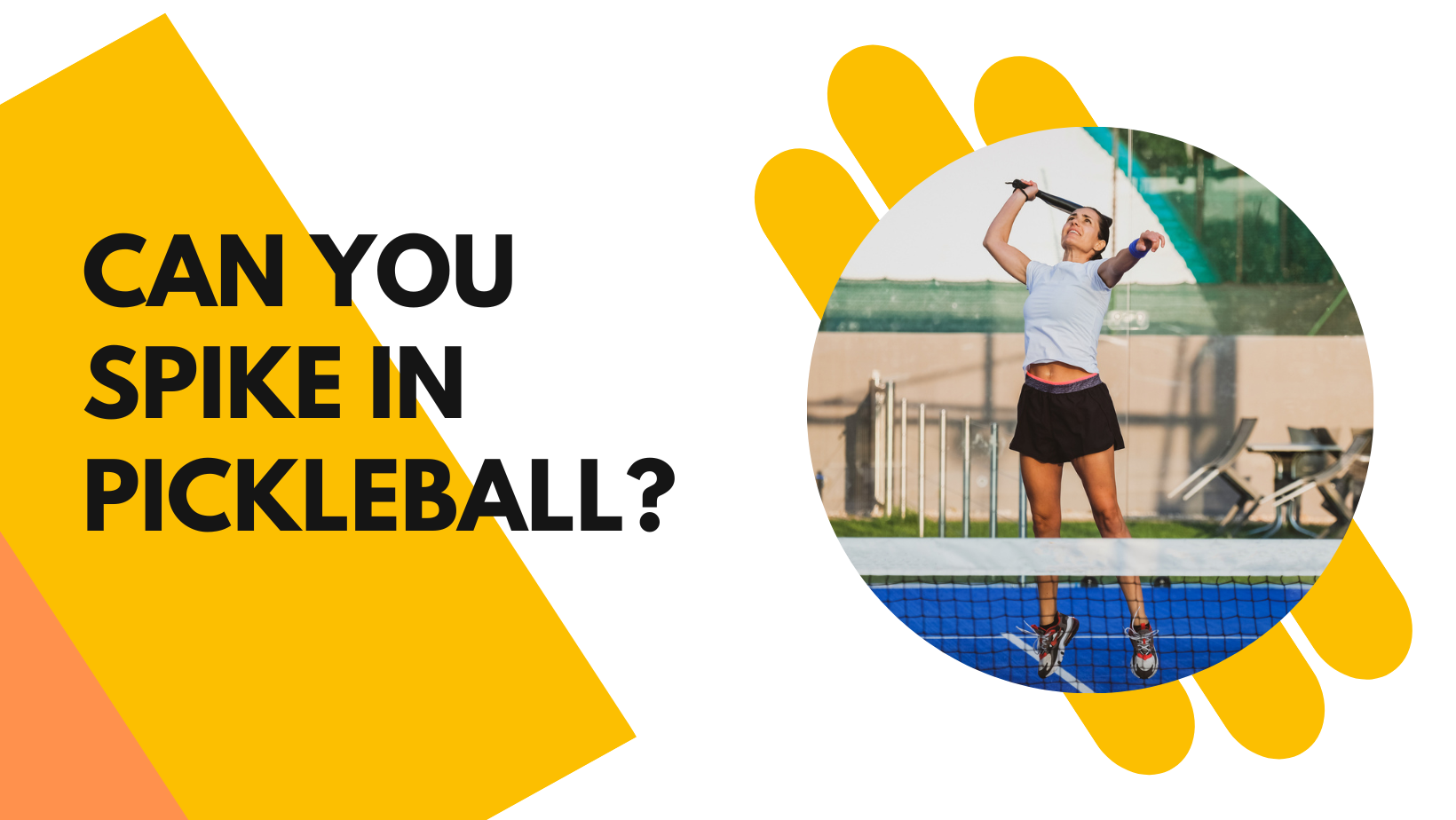
A spike in pickleball is an overhead smash. You hit the ball hard and down into the court. Most players use it to end a point off a high pop-up.
Many players ask, can you spike the ball in pickleball when at the net? You can, as long as you follow the non-volley zone rules and timing rules. Think of a spike as a tool, not a habit. Use it when it fits the play, not on every ball.
The kitchen and volley rules you must know
The non-volley zone is the kitchen. It is the 7-foot area on both sides of the net. You cannot volley while standing in it or touching its line. A volley is hitting the ball out of the air.
So, can you spike the ball in pickleball while in the kitchen? Yes, but only after the ball bounces. If you step into the kitchen to crush a bounce, you are safe. If you volley from the kitchen, it is a fault. Also, your momentum cannot carry you into the kitchen after a volley. Control your body after a smash.
When spiking is legal
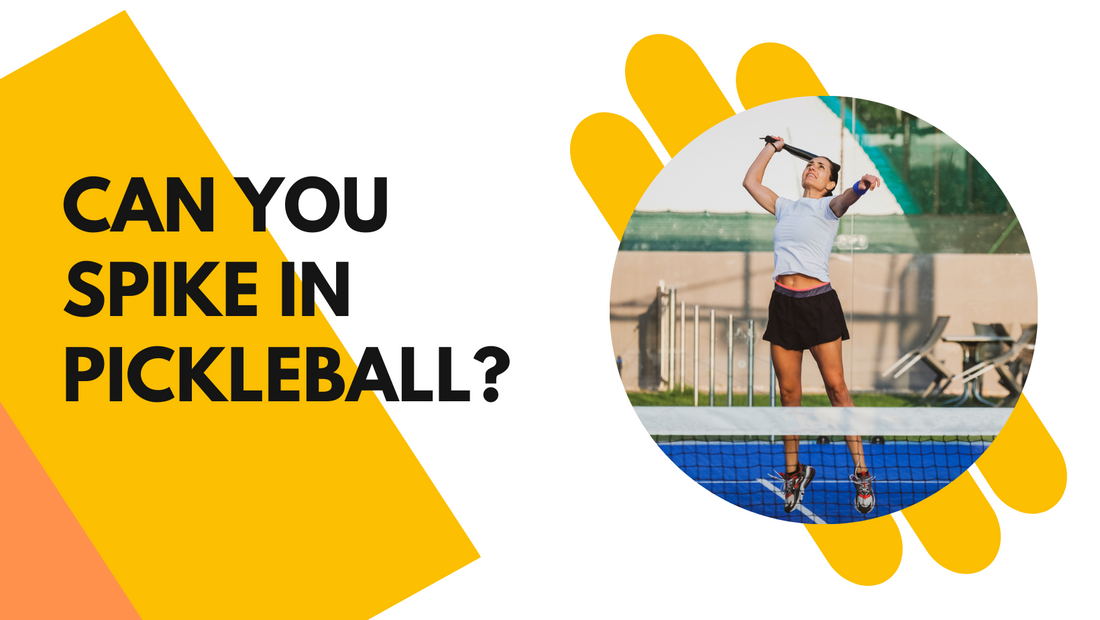
You can spike in many spots. The key is where your feet are and if the ball bounced.
Here are legal cases:
- You volley outside the kitchen: Feet and anything you wear must not touch the kitchen or its line.
- You spike a bounce inside the kitchen: Let it bounce first, then hit hard.
- You smash a lob: Get behind the ball, set your feet, and hit down into open space.
- You attack a high third ball: Only if you are past the non-volley zone line and the ball is high enough.
Yes, can you spike the ball in pickleball after the bounce? Always. The bounce removes the volley rule. Keep the ball in and hit to a safe target.
When spiking is illegal and becomes a fault
A great smash still fails if the rule is broken. Know these common faults so you avoid free points.
Watch for these faults:
- Kitchen volley: Any contact with the kitchen or line during a volley is a fault.
- Momentum into the kitchen: If your follow-through or body moves into the kitchen after a volley, it is still a fault.
- Net contact: Touching the net or posts during the point is a fault.
- Hitting before the ball crosses: You cannot reach over the net to hit a ball that did not cross first, unless it bounces back due to backspin.
If you wonder, can you spike the ball in pickleball during a serve return? You can, but not as a volley from the kitchen. Also, both serve and return must bounce first due to the two-bounce rule.
Technique: how to hit a clean, safe spike
Power is fun, but control wins. Use a balanced body, a short swing, and solid contact. Here is a simple method I teach new players.
Steps to a better spike:
- Read the setup: A weak lob or high dink is your green light.
- Get behind the ball: Move early and plant your feet outside the kitchen if you plan to volley.
- Point with your off-hand: It helps your eyes track the ball.
- Swing up, then down: Brush up to control the ball, then snap down.
- Contact in front: Strike the ball at eye level or higher.
- Finish balanced: Hold your finish and avoid falling into the kitchen.
To master it, ask not only can you spike the ball in pickleball, but how to do it with margin. Aim middle or deep corners for safety.

Footwork and positioning made simple
Footwork keeps you legal and strong. Your feet tell the rules if your paddle does not.
Core ideas:
- Split step as the ball rises: Be ready to move in any direction.
- Stop before contact: Plant outside the kitchen to volley. Or step in after a bounce.
- Recover fast: Do not admire your spike. Get back to neutral and watch for blocks.
- Use your non-dominant foot as a brake: It helps you avoid the kitchen on follow-through.
I like to whisper “plant, hit, hold.” It keeps my body from drifting forward.

Strategy: when to smash and when to chill
Not every high ball is a green light. Good players mix pace and placement. They choose the right tool for the right ball.
Smart choices:
- Pick a target, not just power: Middle of the court causes mix-ups.
- Spike to the backhand: Most players block weaker there.
- Deep to the feet: Make the next shot hard.
- Keep it in on game points: A heavy roll to the body beats a wild blast.
In doubles, can you spike the ball in pickleball off a high dink? Yes, if you are outside the kitchen or after a bounce. If the ball is low, reset with a soft shot. Do not force a hero swing.

Drills to build a reliable spike
Training turns nerves into habits. These simple drills work for solo or partner sessions.
Try these:
- Shadow footwork: Mark the kitchen line. Practice plant-and-freeze outside the line ten times.
- Coach toss: Partner feeds lobs. You set feet, point off-hand, and spike to targets.
- Bounce-and-bash: Let the ball bounce inside the kitchen, then hit down the line or middle.
- Block and recover: Partner blocks your spike. You recover fast and play the next ball.
Practice answers the big question: can you spike the ball in pickleball under pressure. Reps make it second nature.
Common mistakes and quick fixes
Even strong players slip on basics. These are the errors I see most, plus fixes you can use today.
What to avoid:
- Drifting into the kitchen: Fix it by saying the word “stop” before you swing.
- Swinging too big: Use a compact swing. Think “whip,” not “wind-up.”
- Aiming too low: Aim a foot above the net. Let gravity help you.
- Hitting from bad spots: Move your feet. If late, reset instead of forcing it.
People ask, can you spike the ball in pickleball with both feet inside? Not as a volley. If it bounces first, then yes.
Gear tips that help your spike
You do not need a special paddle, but feel matters. Look for a paddle that matches your style.
Simple gear notes:
- Weight: Midweight paddles add power with control.
- Surface: A textured face adds bite for topspin.
- Grip size: A snug grip helps wrist snap without strain.
- Shoes: Court shoes with good stop-and-go grip help avoid kitchen faults.
The right paddle helps when you think, can you spike the ball in pickleball with control. Try a few demos and notice your contact feel.
Safety, etiquette, and respect on the court
Hard hits can be safe and kind. Aim away from faces in social play. Call “heads up” if a ball drifts. Check in with your group on play style.
Simple rules of thumb:
- Watch your partner: Do not smash through them at the middle.
- Call your out balls: If a lob is sailing out, let it go.
- Read the room: Tone down full blasts with new players.
- Own your faults: If your momentum took you into the kitchen, say it.
Even if can you spike the ball in pickleball is yes, read the room. Good vibes keep games fun for all.
Frequently Asked Questions of can you spike the ball in pickleball
Can you spike the ball in pickleball from the kitchen?
You can spike from the kitchen only after a bounce. A volley from the kitchen or its line is a fault.
Can your momentum carry you into the kitchen after a spike?
Not after a volley. If momentum takes any part of you into the kitchen, it is a fault.
Is a spike allowed on the serve or serve return?
No volleys then. The serve and the return must bounce before you hit, due to the two-bounce rule.
What is the best target for a safe spike?
Aim middle or to the feet. Those spots reduce errors and make the next ball hard.
How do you avoid net contact during a spike?
Set your feet early and finish balanced. Do not chase the ball into the net on the follow-through.
Can you reach over the net to finish a spike?
Only if the ball has already crossed and then spun back. You cannot cross the plane early.
Does a topspin spike help keep the ball in?
Yes. A short, fast brush adds dip, which pulls the ball down into the court.
Conclusion
Yes, you can spike in pickleball, and you should when the setup is right. Stay clear of kitchen volley faults, plant your feet, and choose smart targets. A compact swing, good footwork, and calm recovery will raise your win rate fast.
Take this to your next match. Drill the plant-and-spike, aim safe, and read the play. Ready for more tips and drills? Subscribe for weekly guides, ask a question, or share your spike wins in the comments.