
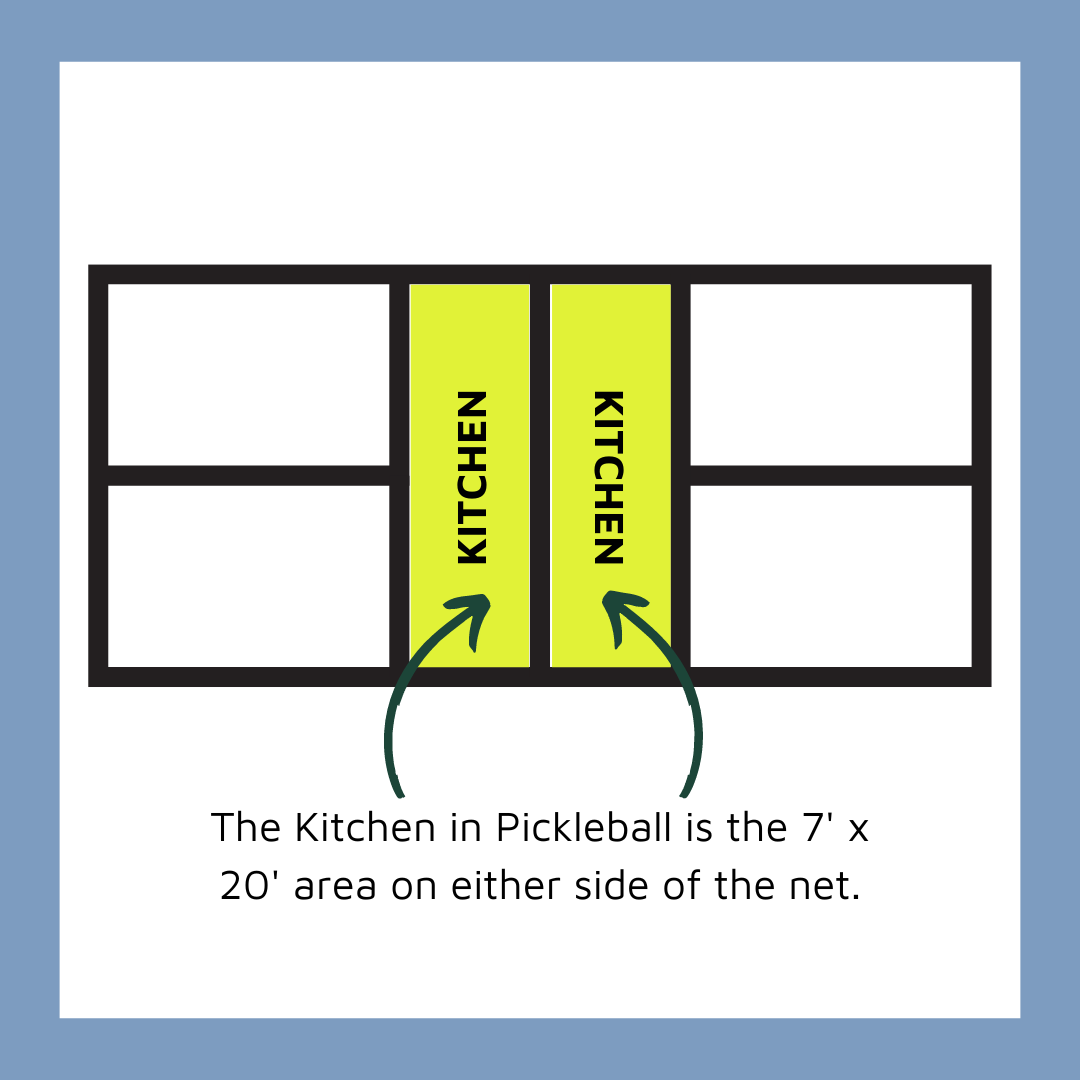
The kitchen is pickleball’s seven foot non volley zone next to the net.
If you’ve asked what’s the kitchen in pickleball, you’re already on the right track. I’ve coached and played for years, and this small strip of court shapes every rally. In this guide, I’ll break down the rules, strategy, footwork, and drills so you can use the kitchen to win more points with control and confidence.
What the Kitchen Is: Quick Definition and Court Layout
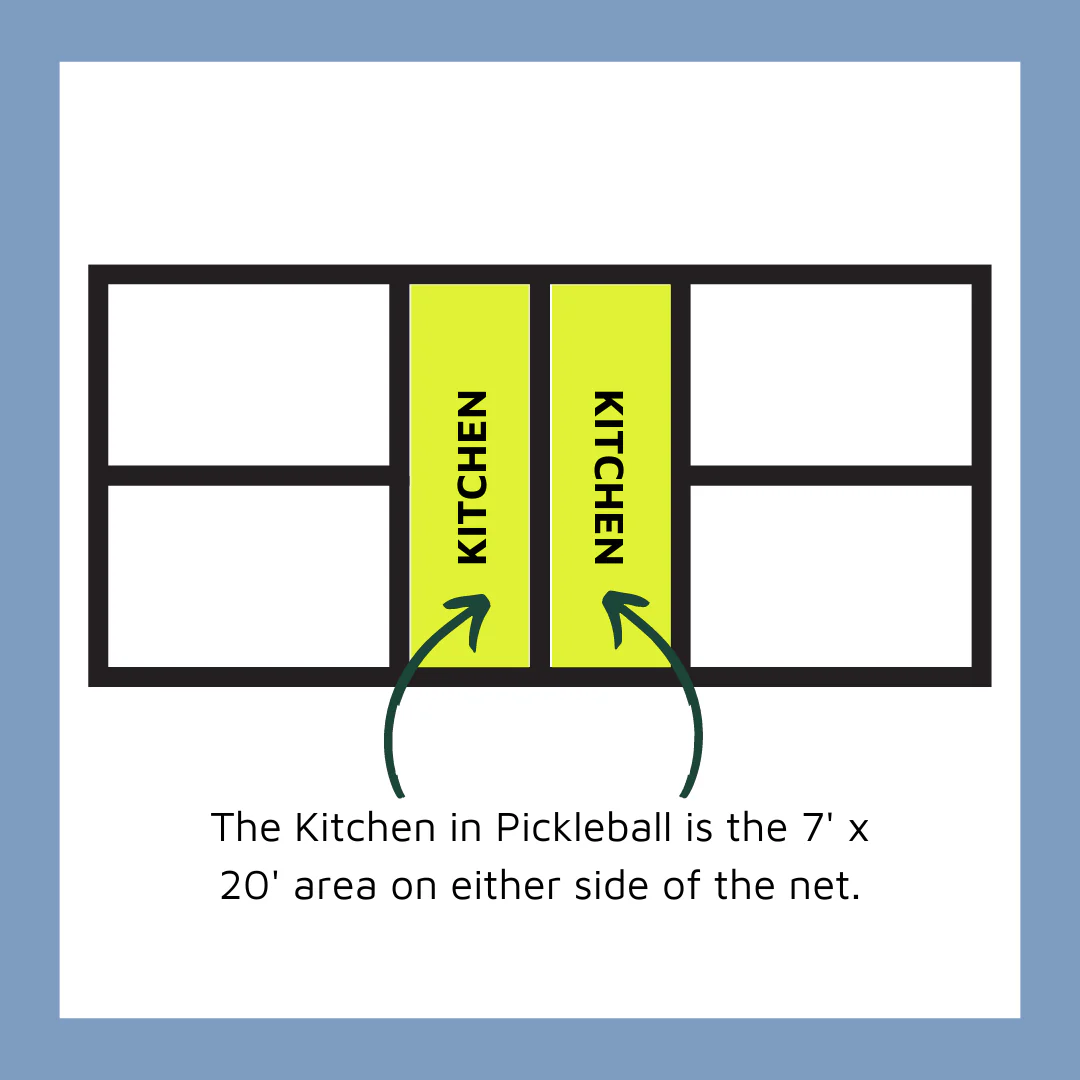
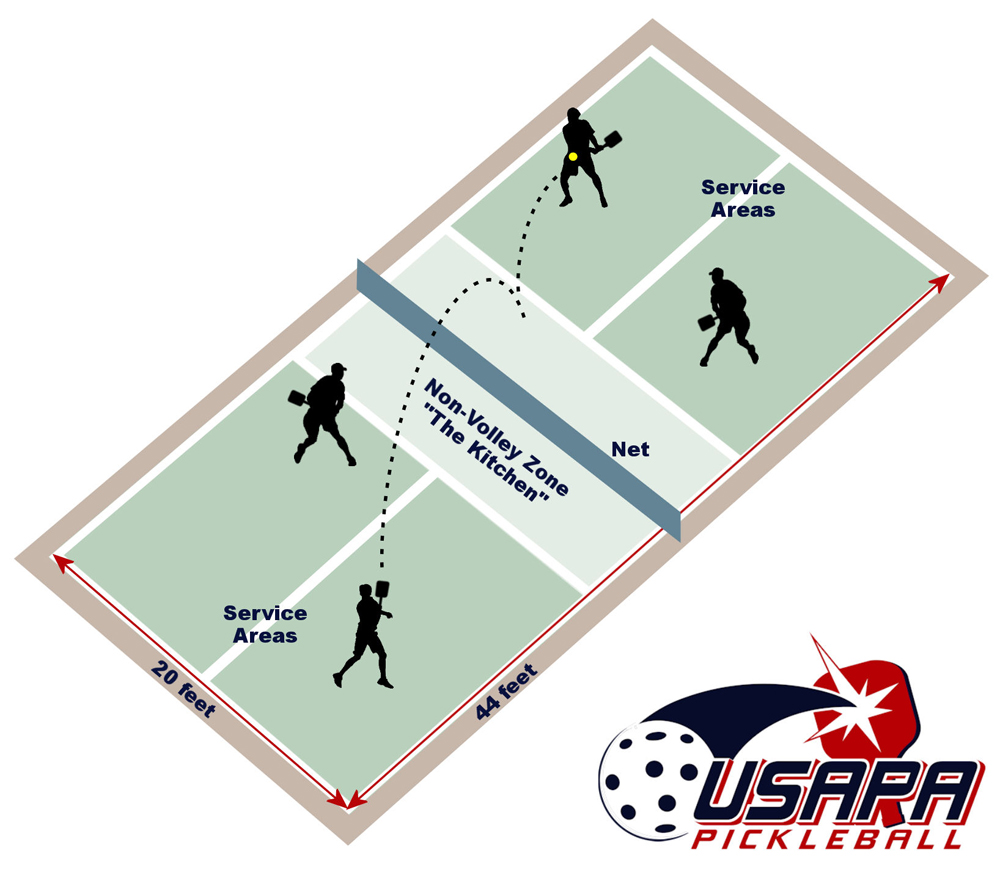
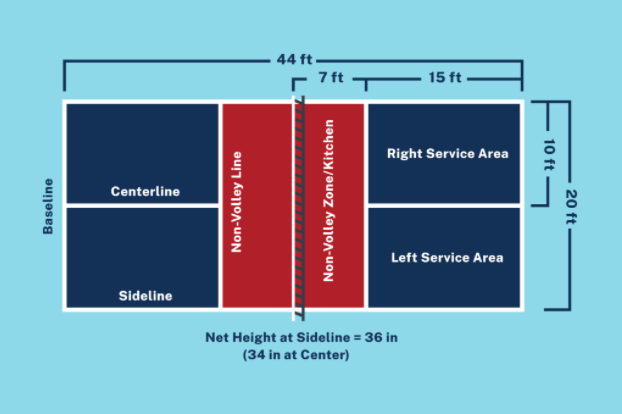
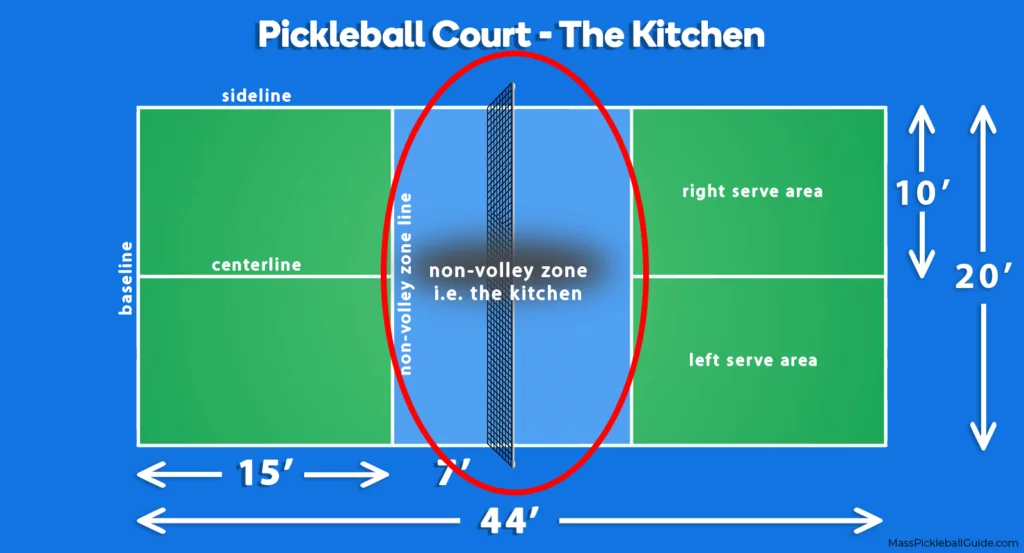
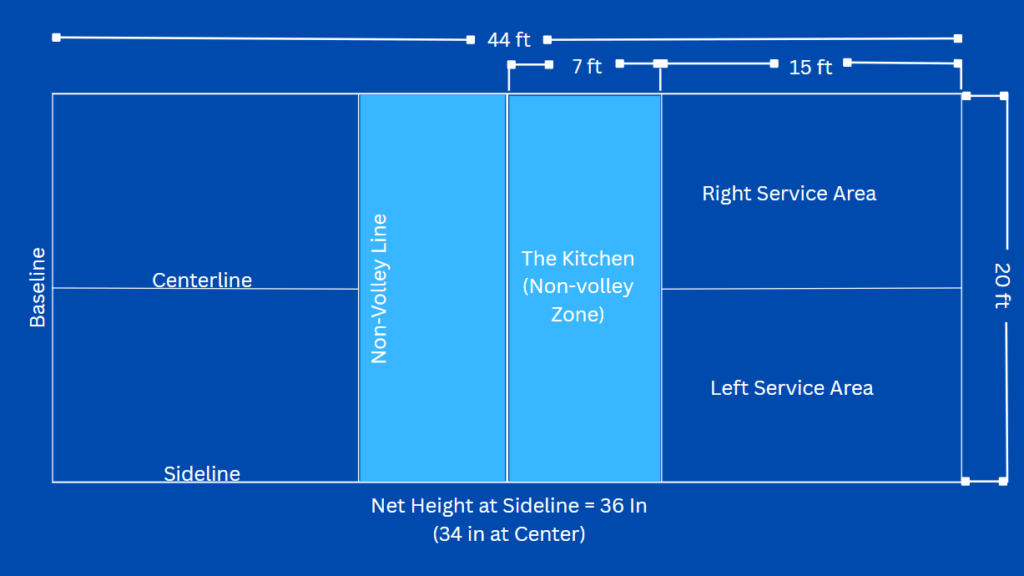
The kitchen is the non volley zone, a seven foot area on both sides of the net. It runs sideline to sideline. The lines count as part of the non volley zone. If you step on the kitchen line and volley, that is a fault.
If you want a simple test for what’s the kitchen in pickleball, look for the solid rectangle by the net. You can enter it anytime to hit a ball after it bounces. You just cannot volley from there.
Why the Kitchen Matters: Strategy and Safety
The kitchen keeps play fair and safe. It stops players from standing on top of the net to smash every ball. This rule balances power with touch.
It also creates a chess match at the net. Dinks, resets, and soft shots rule this space. When friends ask what’s the kitchen in pickleball, I say it is where control beats brute force.

The Core Rules of the Kitchen (NVZ)
Here are the key rules from the official rulebook that matter most during play.
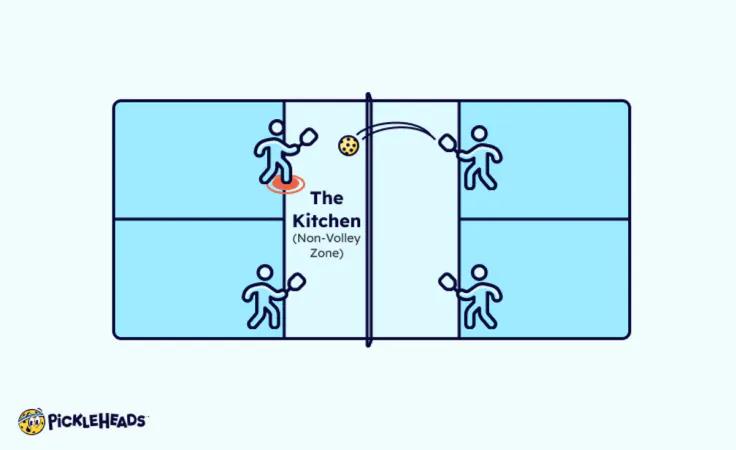
- You cannot volley while touching the non volley zone or any part of its line.
- Momentum faults count. If you volley and your body, paddle, hat, or partner touches the kitchen, it is a fault.
- You can step into the kitchen to hit a ball after it bounces. Then step out before you volley again.
- Both feet must be out to volley. Jumping from the kitchen to volley is a fault if your last contact was in the zone.
- Serves cannot land in the kitchen, including on the kitchen line.
If you still wonder what’s the kitchen in pickleball, think of it as a no volley safe zone that rewards soft hands. Follow these rules and you will avoid most faults.
Common Faults and How to Avoid Them
Most kitchen faults come from rushing. Players volley, then stumble forward into the zone. Slow down and stop your body first.
Use these tips to stay clean:
- Hold your finish after a volley. Pause. Make sure your feet are out.
- Keep your paddle out front. It helps you block without stepping in.
- Watch your gear. If a hat or towel falls into the kitchen after a volley, it is a fault.
- Call out “stop” with your partner after aggressive volleys. This shared cue prevents momentum faults.
If a teammate asks what’s the kitchen in pickleball doing to cause trouble, show them how momentum creates faults. Then drill the pause.
Footwork and Drills to Master the Kitchen
Good footwork makes the kitchen easy. Here are simple drills I use with new players.
- Line hops: Face the net. Hop back and forth over the kitchen line for 30 seconds. Learn where the line is without looking.
- Toe taps: Place your lead toe to the line. Tap without crossing it. Volley practice while keeping that toe off the paint.
- Crosscourt dinks: Aim soft crosscourt arcs that land near the opposite kitchen corner. Focus on height and spin.
- Reset blocks: Have a partner drive balls at you from mid court. Block with a soft hand so the ball drops into the kitchen.
- Momentum stop: Volley, then freeze and check your feet. Build the habit.
When folks ask what’s the kitchen in pickleball and how to get better there, I point them to these drills. Ten minutes a day helps a lot.
Doubles vs Singles Tactics at the Kitchen
Doubles play is won and lost at the kitchen. Stay shoulder to shoulder with your partner. Guard the middle with your forehands when you can. Call shots early and often.
In singles, you still use the kitchen for dinks and resets. But be ready to cover more court. If you are still asking what’s the kitchen in pickleball when playing singles, think of it as your control zone to set up passing shots.
Advanced Concepts: The Dink, the Reset, and the Erne
A great dink is quiet and slow. Aim a soft arc that lands near the opponent’s kitchen line. Keep the paddle face open and the wrist calm.
A reset takes pace off a fast ball so it drops into the kitchen. Use a short, gentle block. Let the ball come to you.
The Erne is a legal volley hit while you leap and land outside the sideline near the net. Your last step must be outside the kitchen, and you cannot touch the kitchen before or after the volley. If you are still learning what’s the kitchen in pickleball during an Erne, remember the key is launching and landing outside the zone.

Equipment and Court Setup Considerations
Court lines matter. The kitchen line counts as part of the zone. If you tape a temporary court, measure seven feet from the net for the line. Thick tape can change foot feel, so practice your stops.
Use shoes with good grip to help momentum control. Choose a paddle with a soft face if you want touch for dinks and resets. When a player asks what’s the kitchen in pickleball in terms of gear, I say pick control over raw power.
My On-Court Lessons About the Kitchen
I used to chase every high ball and fell into the kitchen a lot. I learned to breathe, set my feet, and then swing. That cut my faults fast.
I also learned to love the slow game. Dinking felt boring at first. Now I see it as a puzzle. If a friend asks what’s the kitchen in pickleball to me, I say it is the mind game part of the court.
Quick Checklist: Kitchen Do’s and Don’ts
Do:
- Call out “stop” after big volleys.
- Keep your paddle high and in front.
- Step into the kitchen after a bounce. Then get out to be ready to volley.
Don’t:
- Don’t volley with a toe on the line.
- Don’t let your gear fall into the zone.
- Don’t rush forward after a swing.
If you still need a memory hook for what’s the kitchen in pickleball, remember this: soft hands, quiet feet, clean lines.
Frequently Asked Questions of what's the kitchen in pickleball
What is the kitchen in pickleball?
It is the non volley zone, a seven foot area next to the net. You cannot volley while touching it or its line.
Can I step into the kitchen?
Yes, you can step in to hit a ball after it bounces. Step back out before you volley again.
Does the kitchen line count as part of the kitchen?
Yes. If any part of your foot touches the line during a volley, it is a fault.
Can a serve land in the kitchen?
No. If the serve lands in the kitchen or on the kitchen line, it is a fault.
What is a momentum fault at the kitchen?
If you volley and your body, paddle, or gear touches the kitchen due to momentum, it is a fault. This can happen even a moment after the hit.
Is an Erne legal if I jump from the kitchen?
No. Your last step before contact must be outside the kitchen, and you must not touch the kitchen during the play. Land outside the sideline to stay legal.
Why do players dink so much at the kitchen?
Dinks remove pace and force errors. They set up attackable balls while keeping you safe from kitchen faults.
Conclusion
The kitchen shapes every rally by rewarding control, footwork, and smart aim. Learn the rules, drill the pauses, and build soft hands. You will win more points without swinging harder.
Now that you know what’s the kitchen in pickleball and how to use it, plan a short practice. Run two footwork drills and one dink game this week. Want more guides like this? Subscribe, share your questions in the comments, and keep growing your game.