
Pickleball is a fast, fun paddle sport that blends tennis, badminton, and table tennis.
If you have wondered what is pickleball and why it’s everywhere, you’re in the right place. I teach new players each week and have played in local leagues for years. In this guide, I break down what is pickleball in plain language, from rules and gear to strategy, safety, and smart tips that help you win and have fun.

How Pickleball Works: Court, Gear, and Basic Rules
Pickleball is played on a small court with a net in the middle. The court is 20 feet by 44 feet. The net is 36 inches at the posts and 34 inches at the center. There is a 7-foot zone on both sides of the net called the non-volley zone.
You use a solid paddle and a plastic ball with holes. Paddles are wood, composite, or graphite. Balls for indoor play have fewer, larger holes. Outdoor balls have more, smaller holes and feel firmer.
The serve is underhand and hit diagonally. The ball must land in the opposite service court. Both the serve and the return must bounce before any volleys. After that, you can hit in the air, but not while standing in the non-volley zone.
- Court size: 20 by 44 feet
- Net height: 34 inches at center
- Non-volley zone: 7 feet from the net on both sides
- Serve: underhand, cross-court, one attempt
- Double-bounce rule: serve and return must bounce
If you ask what is pickleball at its core, it is a simple, social game that is easy to learn and hard to master. That is why the sport hooks people of all ages so fast.

Scoring and Serving Explained
Pickleball uses side-out scoring. Only the serving side scores points. Games often go to 11 and you must win by 2. Some matches play to 15 or 21.
In doubles, both players on a team get to serve before a side-out, except at the start of the game when only one server serves. Call the score as server score, receiver score, and server number. In singles, call server score then receiver score.
A legal serve is made with an underhand motion. Contact the ball below the waist. The paddle head must be below the wrist. Serve from behind the baseline. Hit the ball to the opposite service box.
- Faults include: serve lands out, ball hits the net and lands out, volley from the non-volley zone, ball hit out of bounds, double hit, or ball bounces twice
If you are still asking what is pickleball scoring, think “serve to score, win by two, and keep it simple.” That mindset will help you focus on each rally.
The Kitchen and Common Calls
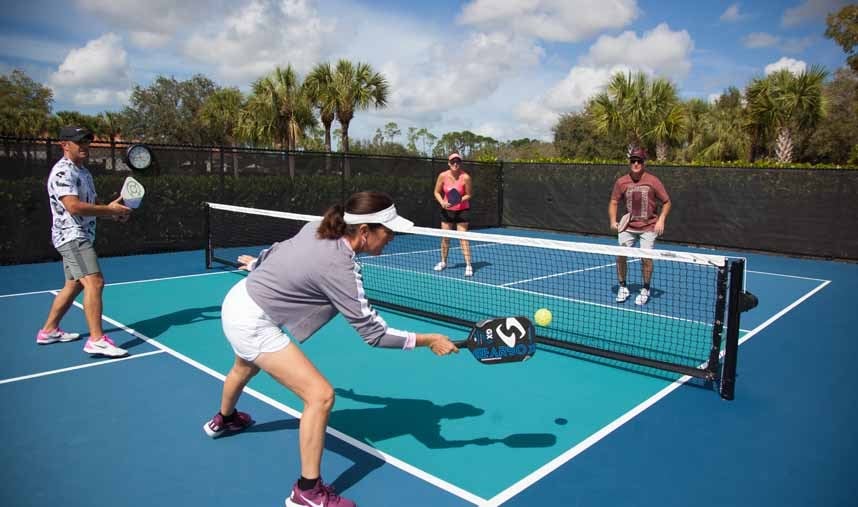
The non-volley zone is also called the kitchen. You can step into the kitchen any time the ball has bounced. You cannot volley while your feet are in the kitchen or on its line. If you volley and your momentum carries you into the kitchen, it is a fault.
A ball that clips the net on a serve and lands in the correct box is played. There are no replay “let” serves under the current rules. Lines on the sides and ends are in. The kitchen line is out for volleys.
- Legal in the kitchen: dinks after a bounce, resets, and drops
- Illegal in the kitchen: any volley, including follow-throughs that touch the line
When friends ask me what is pickleball’s most unique rule, I point to the kitchen. It keeps the game fair and adds a fun layer of touch and control.
Formats: Singles vs Doubles and Playing Styles
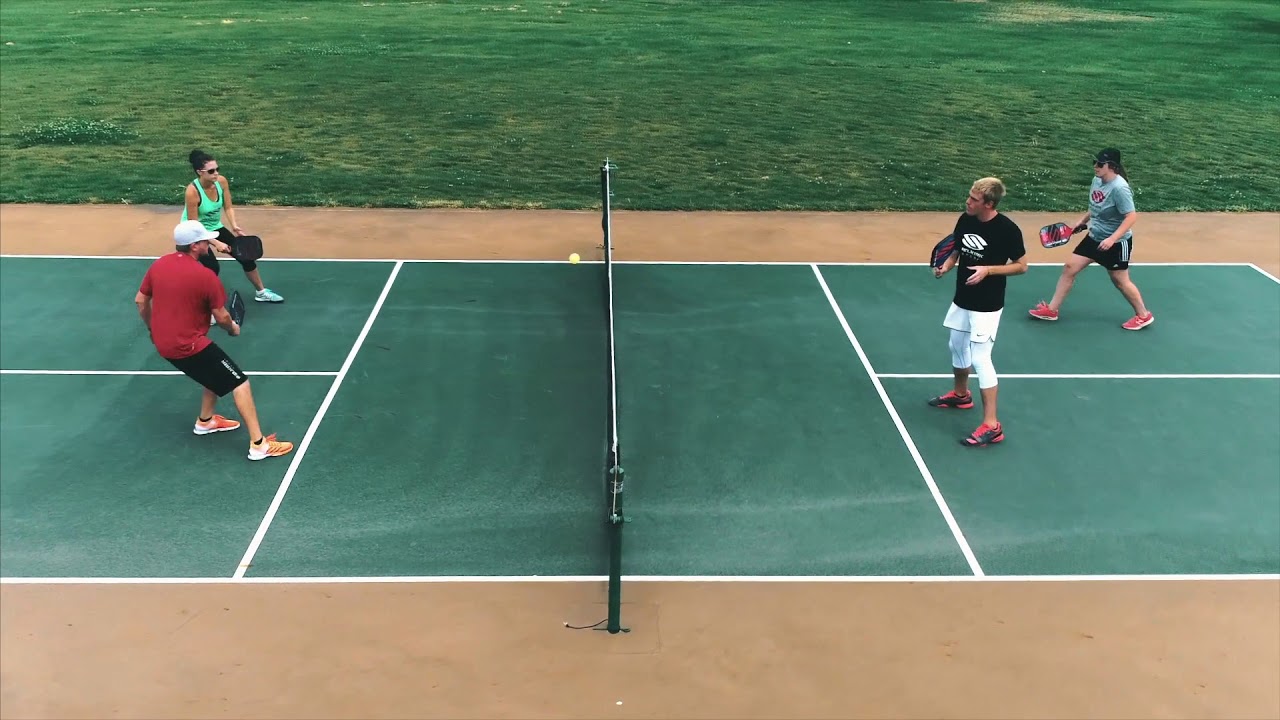
Doubles is the most popular format. It is social and strategic. Partners move as a team and cover the middle well. Singles is faster and more physical. You must cover the whole court.
Styles vary. Some players hit hard from the baseline. Others love the soft game at the net. Good teams mix both. They drive to set up a drop, or they dink to force a pop-up.
- Doubles focus: teamwork, court spacing, shot selection
- Singles focus: fitness, serve depth, hitting to open space
- Common styles: bangers (power), dinkers (touch), hybrids (blend)
If you are learning what is pickleball best format for you, try both. Many new players start in doubles and add singles later.

Strategy for Beginners: From First Rally to First Win
Start with a deep, safe serve. Aim for the back third of the court. Return deep too. This pushes your rivals back and gives you time to get to the net.
Learn the third shot drop. It is a soft shot from the baseline that lands in the kitchen. It lets you and your partner move forward. If the drop is hard, try a drive at the body or feet.
- Hit to feet, not to paddles
- Move with your partner as one unit
- Keep your paddle up at the net
- Be patient and pick your moment
From my first month, I learned this fast: patience beats power at the kitchen. I lost games by swinging too hard at high balls near the net. When I slowed down, aimed for feet, and reset the ball, I won more points. If you want to know what is pickleball’s secret sauce, it is control under pressure.

Health Benefits and Who Should Play
Pickleball is easy on the joints and great for the heart. The court is small, so you move a lot in short bursts. You build balance, quick feet, and hand-eye skill. It is a strong workout that still feels fun.
It is also social. You meet new people and play quick games. That keeps you active and engaged. Reports from 2023 and 2024 show it as the fastest growing sport in the US. Millions now play at parks, schools, and clubs.
- Cardio and agility gains
- Balance and reflex training
- Low barrier to entry and low cost
- Strong community and social ties
If your goal is to learn what is pickleball good for in daily life, think better mood, better sleep, and active friends who cheer you on.
:max_bytes(150000):strip_icc()/how-to-play-pickleball-tips-for-getting-started-5119213_final-bf80f980ffce4deca59039e2d83a1a1a.png)
How to Get Started: Gear, Cost, and Finding Courts
You can start with one paddle, a few balls, and court shoes. A good starter paddle costs between 30 and 60 dollars. Balls cost a few dollars per pack. Court shoes help with grip and safety.
Look for open play at parks and rec centers. Many groups welcome beginners and show you the ropes. Use local club sites, community boards, or sport apps to find courts near you.
- Bring water, a small towel, and sunscreen
- Warm up with light jogs and shadow swings
- Play short games to 11 and rotate partners
- Ask one tip per game from a better player
If your friend asks what is pickleball setup for day one, hand them a paddle, two balls, and a smile. That is enough.

History and Rapid Growth
Pickleball began in 1965 on Bainbridge Island in Washington. A few friends set up a net and mixed parts of tennis, badminton, and table tennis. They wanted a game for the whole family.
The name has two stories. Some say it came from a family dog named Pickles who chased the ball. Others link it to a “pickle boat,” a mix of rowers, which fits the mix of rules. Both stories add charm, and many players love the legend.
In the 2000s the sport spread in schools and parks. During 2020, outdoor play helped it boom. Recent participation reports show steep growth across ages. Today, when people search what is pickleball, they often end up at a local court the same week.

Etiquette, Safety, and Injury Prevention
Warm up for at least 5 to 10 minutes. Do easy jogs, side steps, and light stretches. Wear court shoes for support. If you play a lot at the net, consider eye protection.
Keep the game friendly. Call the score loud and clear before each serve. Make honest line calls. If you are not sure, give the point to your rivals. Tap paddles after a game and say thanks.
- Do not run backward on lobs; turn and run forward
- Bend your knees and keep a wide base at the net
- Hydrate and rest between games
- Stop at the first sign of pain
When new folks ask me what is pickleball etiquette, I say it is simple: be fair, be kind, and keep play safe.
Advanced Tips: Spin, Dinking, and Positioning
Topspin adds dip to your drives and makes them harder to block. Backspin helps your drops sit low. Use your legs and core for control. Do not arm-swing only.
Win the soft game with smart dinks. Aim cross-court to use lower nets and wider angles. Change speed and height to force errors. Reset hard balls in the middle of the court. A calm reset turns defense into offense.
- Serve deep to push returns back
- Return deep and run to the kitchen
- Mix third shot drops and drives
- Stack in doubles to keep strong forehands in the middle
I practice a 10-minute drill after work. It goes like this: 3 minutes of soft dinks, 3 minutes of cross-court dinks, 2 minutes of third shot drops, 2 minutes of volleys at the body. If you want to master what is pickleball at higher levels, short, focused drills work best.
Frequently Asked Questions of what is pickleball
What is pickleball in simple terms?
Pickleball is a paddle sport on a small court with a low net. You serve underhand, let the first two shots bounce, and try to win rallies by control and placement.
How big is a pickleball court?
A pickleball court is 20 feet wide and 44 feet long. The non-volley zone extends 7 feet from the net on each side.
What equipment do I need to start?
You need a paddle, a few plastic balls with holes, and court shoes. Bring water and sunscreen for outdoor play.
How does scoring work?
Only the serving team scores under standard rules. Games are usually to 11, win by 2, with server order announced before each serve.
Can I volley in the kitchen?
You cannot volley while standing in the kitchen or touching its line. You can step in to hit any ball that has bounced.
Is pickleball good exercise?
Yes, it offers steady cardio, balance, and reflex training with less joint stress than many sports. It is also very social, which helps you stick with it.
Conclusion
Now you know what is pickleball, how it works, and how to play with confidence. You learned the rules, the kitchen, smart scoring tips, and the habits that help you win more points with less effort. You also saw how to start on a budget and stay safe.
Your next step is simple: grab a paddle, find a local open play, and try three games this week. If you want more guides like this on what is pickleball skills and drills, subscribe, share this with a friend, or drop your questions in the comments.