

A regulation pickleball court is 20 feet wide by 44 feet long.
If you want to play better and plan smarter, you need to know more than just the numbers. In this guide, I break down how big is a pickleball court, what each line means, how much extra space you need, and how to set one up at home. I’ve helped lay out community courts and garage gyms, so you’ll get real tips and simple steps that work.
Official pickleball court dimensions
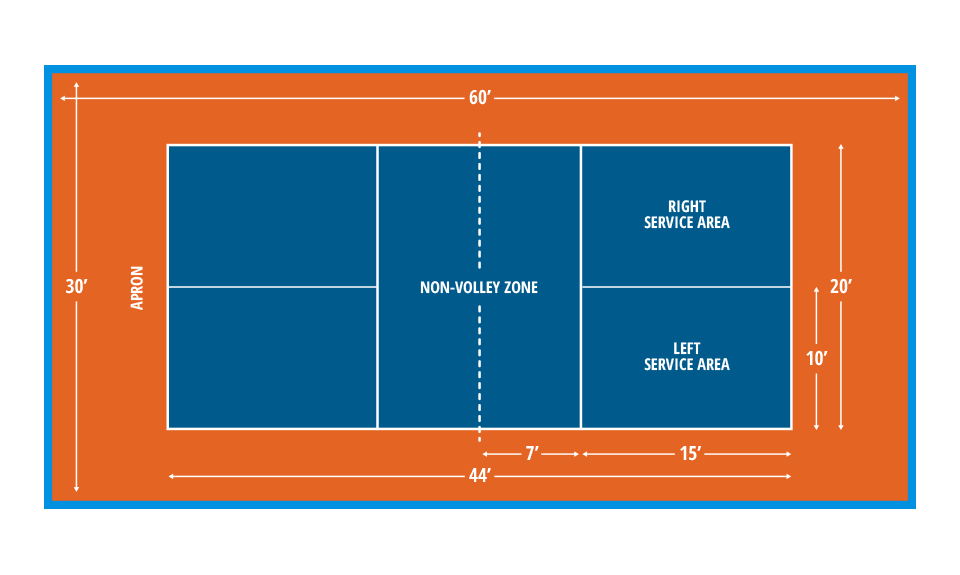
The official pickleball court size is 20 feet wide by 44 feet long for both singles and doubles. The non-volley zone, also called the kitchen, is 7 feet deep on each side of the net. The net height is 36 inches at the sidelines and 34 inches at the center. Lines are 2 inches wide and count as in.
In metric, the court is about 6.10 meters wide by 13.41 meters long. The kitchen is about 2.13 meters deep. Net height is about 0.91 meters at the posts and 0.86 meters at the center.
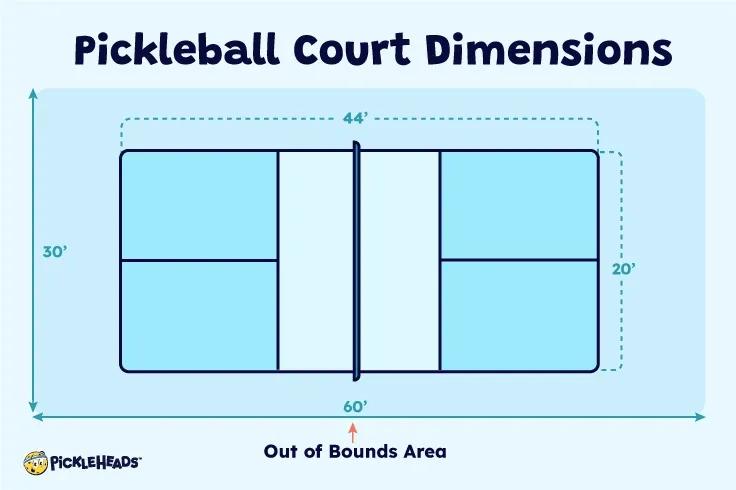
For safe play, the total recommended playing area is larger than the court. Most venues aim for 30 by 60 feet at minimum. Premium tournament setups use 34 by 64 feet or more. If you are asking how big is a pickleball court with room to move, plan for that extra space.
Court layout explained: lines and zones
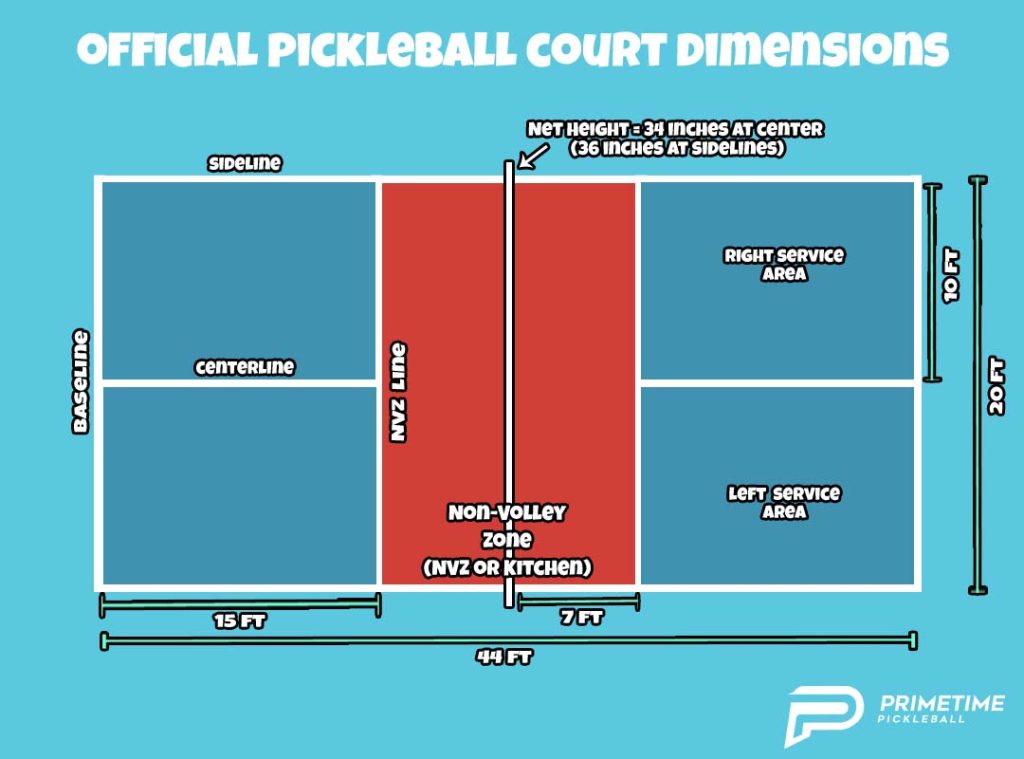
A pickleball court has clear zones. Learn them and you will serve, return, and volley with confidence.
- Baselines sit at the back of the court, 44 feet apart, and define the length.
- Sidelines run the 44-foot length and define the 20-foot width.
- The non-volley zone line is 7 feet from the net on both sides. You cannot volley from this zone.
- The centerline splits each side into two service courts, from the kitchen line to the baseline.
- Each service court measures 10 by 15 feet.
A quick way to picture it: the court is the same size as a badminton doubles court, but with a 7-foot kitchen on both sides of a lower net. If you ever forget how big is a pickleball court, remember 20 by 44 with a 7-foot kitchen each side.
Singles vs doubles and mixed play
Singles, doubles, and mixed doubles all use the same 20 by 44 foot court. There is no size change. Strategy shifts, but the layout stays the same.
This consistency helps new players. You can practice serves, returns, and dinks on any regulation court. No need to relearn how big is a pickleball court based on the format.

Indoor vs outdoor and space planning
Indoor and outdoor courts share the same dimensions, but space around the court matters.
- Minimum recommended total space: 30 by 60 feet.
- Preferred tournament space: 34 by 64 feet or more.
- Indoor ceiling height: at least 20 feet is comfortable. More height reduces lob issues.
- Fencing or walls: keep at least 5 to 7 feet behind baselines and 3 to 5 feet on each sideline.
- Lighting: even, non-glare, and high enough to avoid shadows over the kitchen.
If you are building from scratch and want the best play, plan for the larger footprint. It is the real answer behind how big is a pickleball court for safe movement.

Net, lines, and surface specs
The net spans the 20-foot court width between the inner faces of the posts. The top tape sits 36 inches high at the sidelines and dips to 34 inches at center. A center strap helps set the height. Portable nets are fine if they meet height and width specs and stay stable in wind.
Court lines are 2 inches wide and are part of the court. Use durable paint or textured tape that resists peeling. Good contrast improves line calls.
As for surfaces, acrylic over asphalt or concrete is common outdoors. Indoors, wood or synthetic sport floors work well. Choose a surface with good grip and a consistent bounce. If you play a lot, your knees will thank you.

Backyard or temporary court: step-by-step layout
You can set up a temporary court on a driveway, gym floor, or a tennis court. Here is a simple method I use when teaching clinics.
- Clear your area and confirm you have at least 30 by 60 feet if possible.
- Snap a straight baseline using a chalk line or long tape.
- Measure the full court: 44 feet length and 20 feet width. Mark corners.
- Square the rectangle by checking both diagonals. They should match. For a 20 by 44 court, each diagonal is about 48 feet 4 inches.
- Mark the net line at the midpoint of the length. Add the 7-foot kitchen line on both sides.
- Add the centerline on each half, from the kitchen line to the baseline.
- Tape or paint 2-inch lines. Use painter’s tape as a stencil for clean edges.
- Set the net and measure height: 36 inches at sidelines, 34 inches at center.
If you are striping over a tennis court, you can fit two to four pickleball courts depending on space. Two gives better run-off. Four fits more players. Always measure. It is easy to misjudge how big is a pickleball court by eye.
Common mistakes and pro tips
I see the same layout errors often. Avoid them and your court will feel right from day one.
- Kitchen too shallow or too deep. Always measure 7 feet from the net.
- Crooked or non-square courts. Match the diagonals to confirm square.
- Net set to 36 inches at center. It should be 34 inches at center.
- Lines too narrow or faded. Use 2-inch lines with high-contrast paint or tape.
- Too little run-off space. Give yourself room to chase lobs and returns.
Pro tips from the field:
- Use two long tapes at once. One for length, one for width. It speeds up layout.
- Snap chalk lines first, then tape, then paint. Clean up while paint is wet.
- If you share with tennis, use a softer color for pickleball lines to reduce visual clutter.
- Keep a small field kit: tape measure, chalk, blue painter’s tape, rubber mallet, net height gauge.
These habits make setup fast and accurate. They also lock in the answer to how big is a pickleball court in real life, not just on paper.

How pickleball court size compares to tennis and badminton
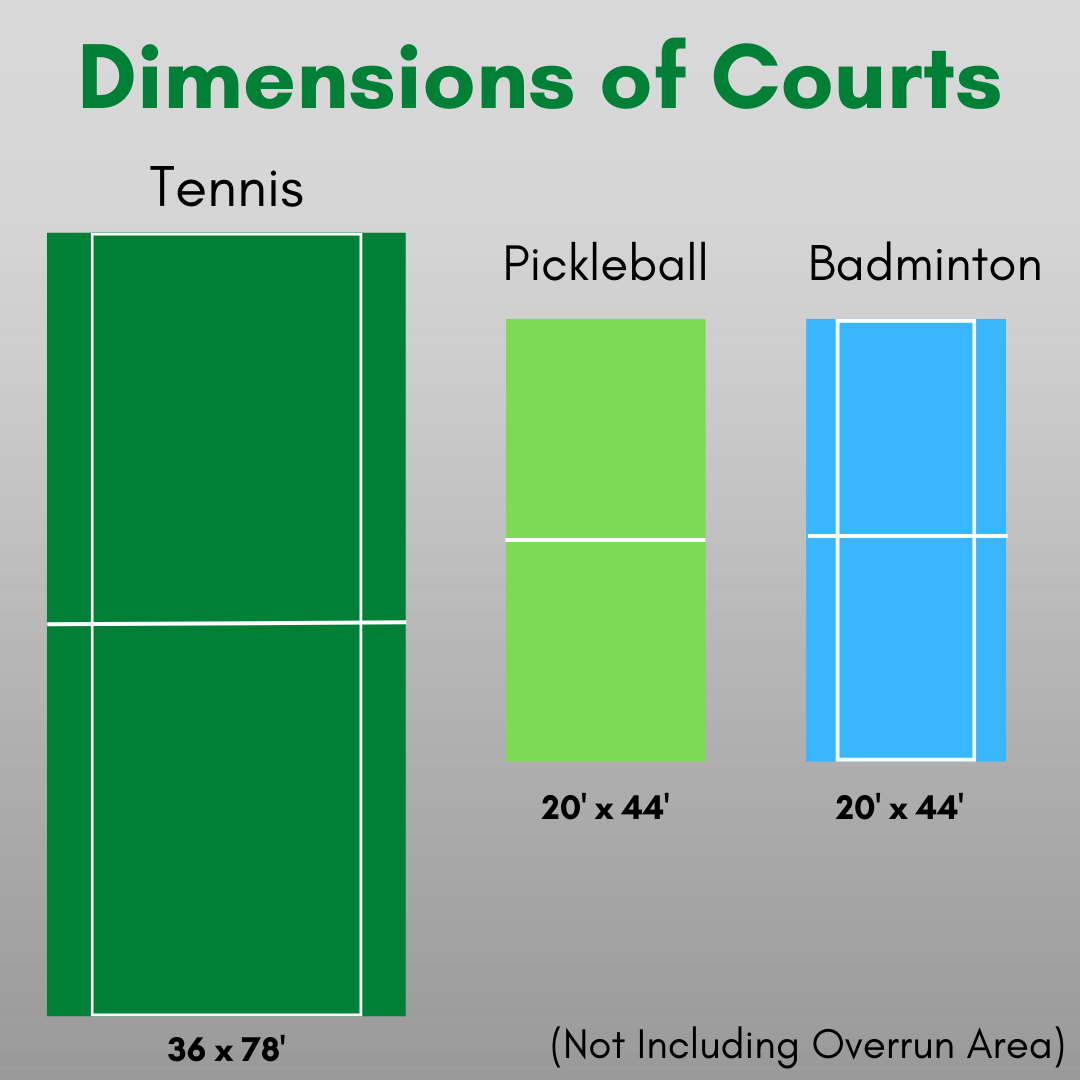
Pickleball and badminton courts share the same overall footprint: 20 by 44 feet. The key differences are the non-volley zone and the lower net in pickleball. Badminton lines and service rules are not the same.
Tennis courts are much larger. A doubles tennis court is 36 by 78 feet. You can place two pickleball courts north–south on one tennis court with good space, or up to four if you accept tighter run-offs and careful fencing. This is why many parks convert tennis courts to fit more play.
When you ask how big is a pickleball court compared to tennis, remember that pickleball uses less than one-third of the area of a tennis doubles court when you include safe run-offs.

Dimension quick reference and printable checklist
Keep these numbers handy. They answer how big is a pickleball court, what to measure, and what to bring.
- Court size: 20 by 44 feet.
- Kitchen: 7 feet from the net on both sides.
- Service courts: two per side, each 10 by 15 feet.
- Net height: 36 inches at sidelines, 34 inches at center.
- Lines: 2 inches wide, in-bounds.
- Minimum total space: 30 by 60 feet.
- Preferred total space: 34 by 64 feet or more.
- Indoor ceiling: 20 feet or higher is best.
Simple field kit checklist:
- 100-foot tape measure and a second shorter tape.
- Chalk line, blue painter’s tape, and a small roller.
- Net with center strap and a net height gauge.
- Broom or blower for debris and dust.
Follow the list and you will never wonder how big is a pickleball court while you work. You will build it right the first time.
Frequently Asked Questions of how big is a pickleball court
Is the court the same size for singles and doubles?
Yes. Singles, doubles, and mixed doubles all use a 20 by 44 foot court. There is no change in size or line layout.
How much extra space do I need around the court?
Aim for at least 30 by 60 feet total space. For serious play or events, 34 by 64 feet gives safer run-off and better flow.
What is the height of the pickleball net?
The net is 36 inches high at the sidelines and 34 inches high at the center. Use a center strap or a gauge to set it correctly.
How big is a pickleball court in meters?
It is about 6.10 meters wide by 13.41 meters long. The kitchen is about 2.13 meters deep on each side.
Can I fit a pickleball court on my driveway?
If your driveway is at least 20 by 44 feet with some buffer, you can set a scaled practice area. For full play, try to get close to 30 by 60 feet total space.
How many pickleball courts fit on a tennis court?
You can fit two courts with good space or up to four with tighter margins. Check local rules and neighbors before permanent striping.
Are the lines part of the court?
Yes. Lines are 2 inches wide and count as in. Good contrast makes calls easier.
Conclusion
Now you know exactly how big is a pickleball court, how each zone works, and how much space you need for safe, fun play. You also have a clear plan to mark a court at home or convert a shared space without guesswork.
Measure twice, paint once, and set your net to 34 inches at center. If you are ready to build or upgrade, use the checklist above, share this guide with your playing group, and subscribe for more step-by-step how-tos and gear tips.