
A volley in pickleball is a ball struck out of the air before it bounces.
If you want clean points and fast hands, you need to master the volley. In this guide, I break down what is a volley in pickleball with clear rules, simple tips, and drills I use with new and advanced players. You will learn the why, when, and how, so you can win more exchanges at the kitchen line and avoid easy faults.
What is a volley in pickleball? The core definition and rules
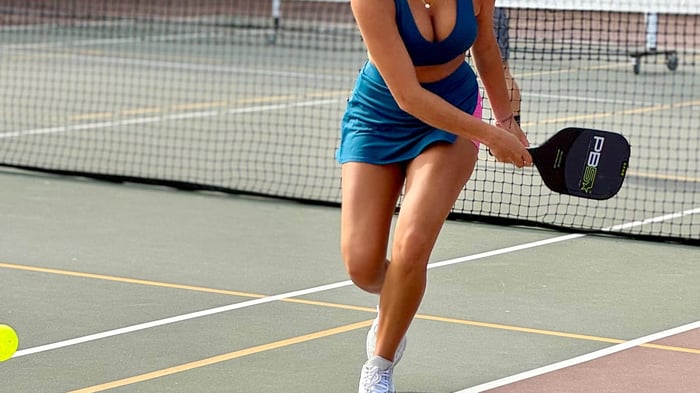
A volley is any shot you hit before the ball bounces. You make contact in the air. You cannot volley while touching the non-volley zone, also called the kitchen. That includes your body, paddle, or anything you wear. Your momentum cannot pull you into the kitchen after a volley. If it does, it is a fault.
There is a simple timing rule. After the serve, the return must bounce. Only then can you volley. Many players ask what is a volley in pickleball because this timing shapes the whole point. Think of it as a green light after two bounces.
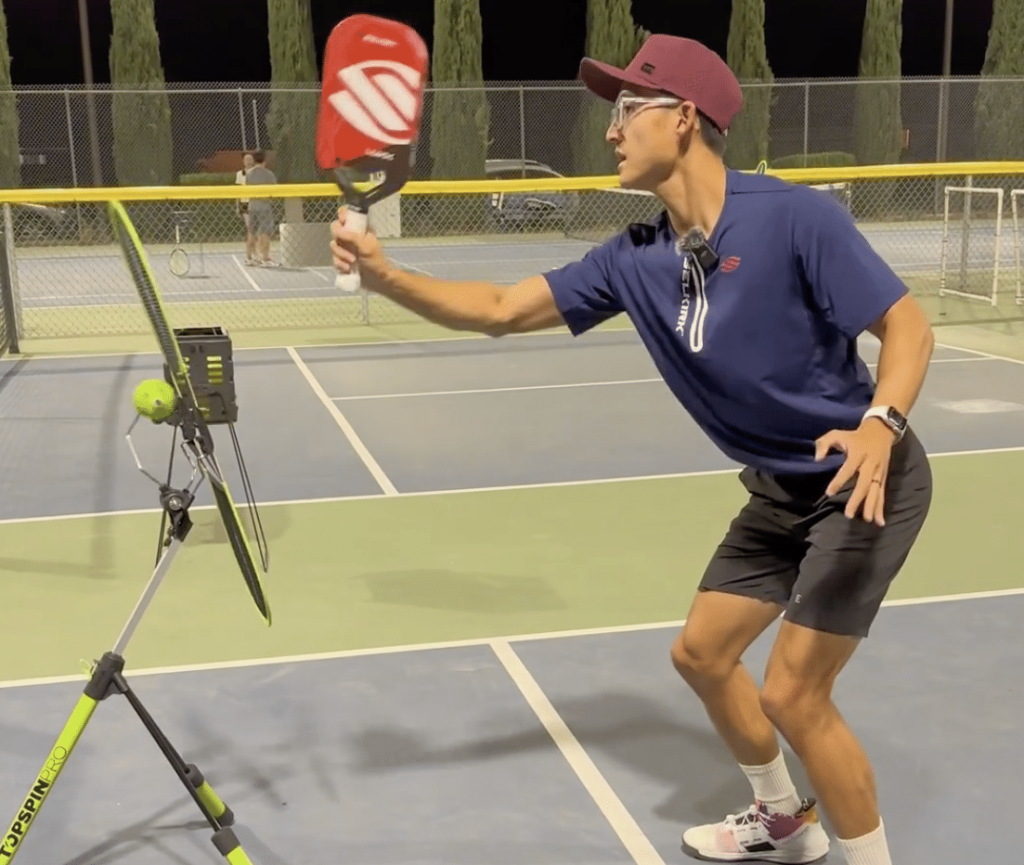
When people ask what is a volley in pickleball, I add this tip. Keep your paddle up and out in front. The ball comes fast. You need less swing and more angle.

The kitchen and court positioning
The non-volley zone is the seven-foot strip on both sides of the net. You can step in to play a ball that has bounced. You cannot step in to volley. Your hat, your paddle, or even your hair cannot break that rule. If your momentum carries you in after a volley, it is still a fault, even if the ball is dead.
Here is how to stand near the kitchen line:
- Keep your toes just behind the line.
- Use a split step as your opponent hits.
- Hold the paddle high, with the face slightly open.
- Stay light on your feet and ready to block.
Learning what is a volley in pickleball makes the kitchen feel less scary. It becomes your office, not a trap.
Simple volley technique that works
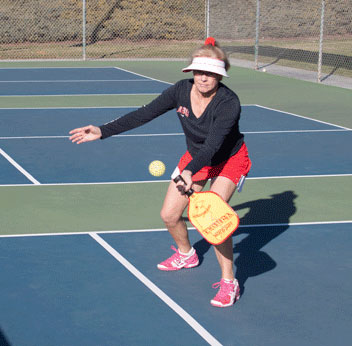
You do not need a big swing. A good volley is short and firm. Your goal is control first, then aim.
Follow these steps:
- Grip: Use a continental grip. It works for forehand and backhand.
- Stance: Feet shoulder width. Knees soft. Chest up.
- Contact: Out in front. Elbow relaxed. Paddle face steady.
- Swing: Short. Think push, not hit.
- Target: Aim at the opponent’s feet, hips, or to open space.
Common volley types:
- Block volley: Minimal swing. Absorb pace. Great for resets.
- Punch volley: Short jab. Add a little pace. Use when the ball sits higher.
- Roll volley: Small brush up. Adds topspin for dip into the court.
- Drop reset: Soft hands. Float the ball into the kitchen to slow the rally.
If a student asks what is a volley in pickleball, I demo the block first. It builds touch and wins hands battles.
Common mistakes and quick fixes
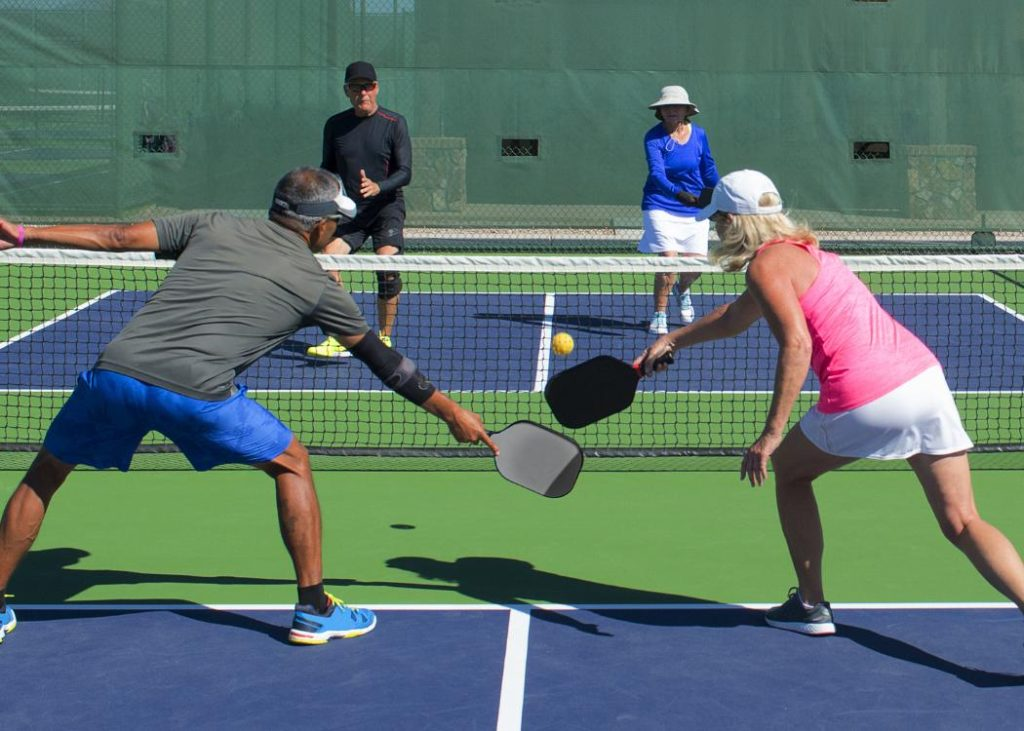
These errors show up often:
- Swinging too big: Leads to late contact. Fix it by shortening the stroke.
- Paddle too low: You get jammed. Keep it at chest height.
- Leaning into the kitchen: Your balance pulls you in. Keep weight centered.
- Hitting too hard: You lose control. Aim for a smooth push.
- Staring at the target too soon: Causes mishits. Watch the ball to the paddle.
If you wonder what is a volley in pickleball that wins points, think soft first. Power comes last.
Strategy: When to volley, where to place, and how to win exchanges
Volleys shine at the kitchen line. Play low to high and aim for the feet. Force your opponent to hit up. Then finish the next ball.
Smart targets:
- Opponent’s dominant hip. Hard to clear.
- Middle seam. Causes confusion in doubles.
- Open court. Go behind a moving player.
- At the feet after a high pop-up.
Smart choices:
- Speed up from shoulder height or above.
- Reset when you are off balance or the ball is low.
- Mix pace to break rhythm.
- Use dink-to-volley patterns to set traps.
Doubles timing:
- Call yours and mine early.
- Poach when you see a weak float.
- Guard the middle with your forehand if you can.
Many players type what is a volley in pickleball because they want easy points. The secret is shot selection. Crush only the high ones. Reset the rest. When I coach, I call it “green, yellow, red.” Green means attack. Yellow means place. Red means reset.

Drills to master volleys fast
Use short, focused drills. Five to ten minutes works well.
Try these:
- Wall blocks: Stand 8 to 10 feet from a wall. Tap firm, control height. Aim for 50 in a row.
- Partner tap and freeze: Partner feeds to your chest. You block and hold the finish. Check paddle face.
- Triangle targets: Put three targets near both feet and the middle. Hit 10 balls to each.
- 2-up reflex: Both at the kitchen. One speeds up. The other blocks. Switch.
- Ladder game: Start at 30% pace. Add 10% every 30 seconds. Stay in control.
If you ask what is a volley in pickleball that builds touch, it is the block drill. I start every session with it.

Equipment tips that help your volley
Your paddle can help your hands.
Key notes:
- Weight: A little more weight adds stability on blocks.
- Balance: Head-light paddles feel quick at the net.
- Core: Polymer cores soften feel and cut vibration.
- Face: Grit helps roll volleys dip.
Grip size matters too. If the grip is too big, your reach slows. Too small, and you squeeze too hard. If a player asks what is a volley in pickleball that feels easy, I hand them a head-light paddle and adjust grip tape.

Rules and faults to remember
These rules shape every exchange:
- Two-bounce rule: Serve bounces. Return bounces. Volleys allowed after that.
- Non-volley zone: No volley while touching it. No momentum into it after.
- Contact point: The ball is dead the instant you hit it. Your body still cannot enter the kitchen due to momentum after a volley.
- No supporter trick: You cannot touch the net, posts, or fence to stop momentum.
If you forget what is a volley in pickleball under the rules, think simple. Ball in air, clean feet, no kitchen.

Advanced volley skills for growing players
Level up with these:
- Reset under pressure: Loosen your grip. Open the paddle face. Float the ball short.
- Roll at the shoulder: Brush up to dip the ball to the feet.
- Inside-out punch: Angle the wrist to send the ball away from the body line.
- Poach with purpose: Cross when you see a weak float or a late paddle.
- Erne footwork: Leap outside the kitchen to volley beside the sideline. Land beyond the line to stay legal.
A common question is what is a volley in pickleball that flips a rally. It is the soft reset from a hard drive. Calm hands beat raw power.
Safety and etiquette at the kitchen line
Keep play safe and kind.
- Protect your eyes. Consider eyewear in fast games.
- Avoid swinging near faces. Aim lower when close.
- Call kitchen foot faults on yourself. It builds trust.
- Communicate with your partner. Clear calls prevent clashes.
When teammates know what is a volley in pickleball and respect space, rallies feel smooth and fun.
Frequently Asked Questions of what is a volley in pickleball
What is a volley in pickleball in simple terms?
It is a shot you hit out of the air before the ball bounces. You must not touch the non-volley zone when you hit it.
Can I step into the kitchen after I volley?
No. If your momentum carries you into the kitchen after a volley, it is a fault. Wait until you can stop before stepping in.
When can I start volleying in a point?
After the serve and the return have each bounced once. Then volleys are allowed by both teams.
How do I avoid kitchen foot faults on volleys?
Keep your toes behind the line and your weight centered. Use a split step and a short swing so momentum stays back.
What is the best grip for volleys?
Use a continental grip for fast changes between forehand and backhand. It helps you block and punch with one setup.
How hard should I hit a volley?
Hard enough to control target and depth. If the ball is low, reset soft; if it is high, a short punch is fine.
Conclusion
Now you can explain what is a volley in pickleball, where to stand, and how to hit it with control. Keep your paddle up, shorten the swing, and choose smart targets. Use drills each week and track your progress.
Put these tips to work in your next game. Try one drill today, then add another tomorrow. If this helped, share it with a partner, subscribe for more guides, or drop a question so I can help you level up.