Most modern pickleball paddles use polymer honeycomb cores with carbon or fiberglass faces.
If you’ve ever wondered what are pickleball paddles made of and why that matters, you’re in the right place. I’ve tested dozens of paddles across leagues and open play. In this guide, I’ll break down every layer, explain trade-offs, and help you pick a paddle with confidence.
The anatomy of a pickleball paddle
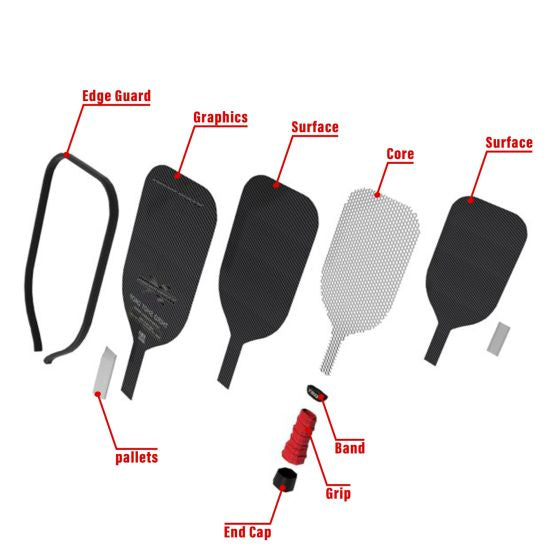
To answer what are pickleball paddles made of, think of a sandwich. The core is the filling, and the faces are the bread. Around that sits an edge guard, plus the handle and grip.
Most paddles follow a similar structure:
- Core: honeycomb material that sets feel and sound.
- Face: composite sheets that shape power, control, and spin.
- Edge: protective guard or edgeless wrap for aerodynamics and surface area.
- Handle and grip: spine and comfort layer that connect your hand to the paddle.

Core materials explained
The core is the heart of the paddle. It drives feel, pop, control, and noise. When people ask what are pickleball paddles made of, core material is usually the first big piece.
Common core options:
- Polypropylene polymer: The most popular. Soft feel, great control, and quieter play. Ideal for dinks and resets. Often 13 mm or 16 mm thick.
- Nomex honeycomb: Hard and loud. Very fast off the face. Many power hitters love it for punch volleys, but it can be less forgiving.
- Aluminum honeycomb: Light and very responsive. Nice control but less common now. Can dent under heavy use.
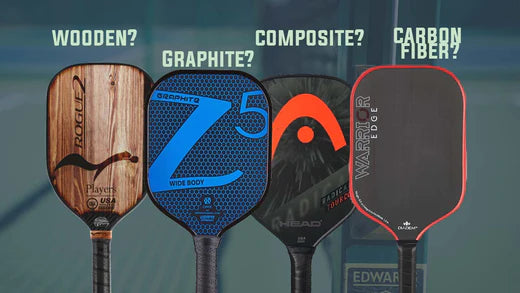
- Wood: Old-school, heavy, and very affordable. Good for groups and schools, but tiring for long sessions.
Tip from the court: Polymer cores pair well with carbon faces for a plush, controlled touch.

Face materials explained
The face layers frame how the ball grabs, spins, and launches. They also help answer what are pickleball paddles made of beyond the core.
Main face types:
- Fiberglass: Lively and powerful. The ball jumps off the face. Great if you want extra speed, but control and spin can be a touch lower.
- Carbon fiber: The gold standard for many advanced players. Excellent spin and control with a softer, longer dwell time. Often labeled as T700 or “raw carbon.”
- Graphite: Light and crisp. Often used as a thin carbon sheet. Offers good touch and control with a quick feel.
- Hybrid or composite blends: Mix materials for a balance of pop and grab. These can feel tuned for all-court play.
Surface texture matters too:
- Raw carbon textures grip the ball better for spin.
- Coated textures use grit or epoxy. They can wear down faster.
- USA Pickleball limits surface roughness, so extreme textures are regulated.
From my play tests, raw carbon faces with 16 mm polymer cores are money for soft hands and heavy spin. If you want pace, a fiberglass face on a 13 mm core brings the heat. That is a huge clue when choosing based on what are pickleball paddles made of.

Edge guards, handles, and grips
The smaller parts matter more than you think. Together, they affect balance, comfort, and durability.
- Edge guards: Usually TPU or similar plastic. Protects the face from chips. Adds a touch of head weight. Edgeless designs feel fast and offer full face area but can chip more.
- Handle: Composite or polymer tube wrapped in carbon or fiberglass. Some are solid for stability. Longer handles help two-handed backhands.
- Grip: Synthetic leather or polyurethane. Look for sweat-wicking, tacky feel, and good cushioning. Replace grips and overgrips often to keep your hand fresh.
If you are still thinking what are pickleball paddles made of, remember that these parts also define how the paddle feels over two or three hours on court.

How paddles are built and why it matters
There are two common build styles that change play and lifespan.
- Traditional build: Separate face sheets bonded to a core with an added edge guard. Balanced feel and easier repairs. Many classic control paddles use this style.
- Thermoformed build: The face wraps the core as one piece, often with foam-injected edges. This boosts stiffness, power, and sweet spot. Many raw carbon paddles use this method.
Key specs to watch:
- Thickness: 11–16 mm is typical. Thicker paddles soften the feel and add control. Thinner paddles add pop.
- Weight: Most are 7–8.5 oz. Heavier adds power and stability. Lighter adds hand speed.
- Balance: Head-heavy hits hard but may tire the arm. Head-light is fast at the kitchen.
USA Pickleball tests for deflection and texture. That keeps gear fair and safe. If you care about what are pickleball paddles made of, these build methods and specs define the on-court story.

How materials affect power, control, spin, and comfort
Materials change shots, plain and simple. Here’s how.
- Power: Fiberglass faces and thinner cores hit big. Nomex cores add pop but can be wild.
- Control: Carbon faces and thicker polymer cores calm the ball. Great for dinks and resets.
- Spin: Raw carbon grips the ball best. You can roll heavy topspin and slice.
- Comfort and sound: Polymer cores are arm-friendly and quiet. Nomex is loud and crisp.
My switch from a 13 mm fiberglass to a 16 mm raw carbon cut my pop-outs and boosted spin. If you wonder what are pickleball paddles made of, link the material to your misses and your goals.
Durability, care, and common issues
Good paddles last, but care matters.
- Delamination: A known issue in some thermoformed paddles. You may hear a hollow sound or see odd pop. Tap with a coin to check for loose areas.
- Edge wear: Edgeless paddles can chip. Use edge tape for protection.
- Heat and cold: Avoid leaving paddles in hot cars or freezing garages. Extreme temps can weaken glue and faces.
- Cleaning: Wipe the face with a damp cloth. For carbon faces, use a microfiber cloth and a small amount of water. Keep grit off for consistent spin.
If you keep asking what are pickleball paddles made of, factor in how different build styles handle heat, time, and weekly play.

How to choose based on your style and skill
Match your paddle to your habits and goals. This is where what are pickleball paddles made of becomes your edge.
- New players: Polymer core with a fiberglass or hybrid face. Balanced weight around 7.8–8.2 oz. Easy power with enough control.
- Control-first players: Raw carbon face with a 16 mm polymer core. Head-light to even balance for fast hands.
- Power hitters: Fiberglass face or thermoformed carbon with a 13–14 mm core. Slightly head-heavy for punch and drives.
- Doubles kitchen sharks: Raw carbon 16 mm, tacky grip, moderate weight. Touch wins points at the line.
- Arm comfort seekers: Polymer core, softer face, and a cushioned grip. Avoid very head-heavy builds.
I ask students three questions: Do you miss long, do you pop up dinks, or do you struggle to finish? Your answers map to what are pickleball paddles made of and help lock in the right build.

Price, value, and what you actually get
You can find a solid fit at most budgets.
- Under 50 dollars: Wood or basic composite. Heavy and durable. Best for casual use or groups.
- 75–120 dollars: Polymer core with fiberglass or hybrid faces. Great start point with balanced play.
- 150–230 dollars: Raw carbon, often thermoformed. Big spin, large sweet spot, stronger frames.
- 250 dollars and up: Pro signatures and premium layups. Refined feel, better QC, and tuned balance.
Price does not replace fit. If you know what are pickleball paddles made of, you can spot real value fast.
Frequently Asked Questions of what are pickleball paddles made of
Are all pickleball paddles made with a honeycomb core?
Most modern paddles use a honeycomb core made from polymer, Nomex, or aluminum. The honeycomb lowers weight, spreads impact, and tunes feel.
Is graphite the same as carbon fiber in paddle faces?
Graphite is a form of carbon, and in paddles it often refers to thin carbon sheets. Many brands now market “raw carbon” for extra spin and dwell time.
Do thicker paddles always mean more control?
Usually yes, because thicker cores absorb energy and slow the ball down. But face material and construction can change the result.
Are wooden paddles still good?
Wood is tough and cheap, so it is fine for beginners and community centers. It is heavy though, and most players upgrade for comfort and control.
What is thermoforming and why do I hear about it?
Thermoforming bonds the paddle as one shell and often uses foam in the edges. It boosts stiffness, power, and sweet spot, but needs good QC to avoid delamination.
Will a carbon fiber paddle hurt my elbow less than a fiberglass one?
Often yes, because many carbon builds with polymer cores have a softer feel. That said, weight, balance, and grip size also affect comfort.
Can I add weight tape to change feel?
Yes. Lead or tungsten tape can shift balance and add stability. Place small strips at 3 and 9 o’clock for more forgiveness without losing hand speed.
Conclusion
Now you know what are pickleball paddles made of and how each layer changes your game. Core, face, and build method shape power, spin, control, and comfort. Match those parts to your goals, and your paddle becomes a tool, not a guess.
Ready to take the next step? Try two builds side by side and note your misses, then adjust. If this guide helped, share it with a friend, subscribe for more paddle breakdowns, or drop your questions in the comments.