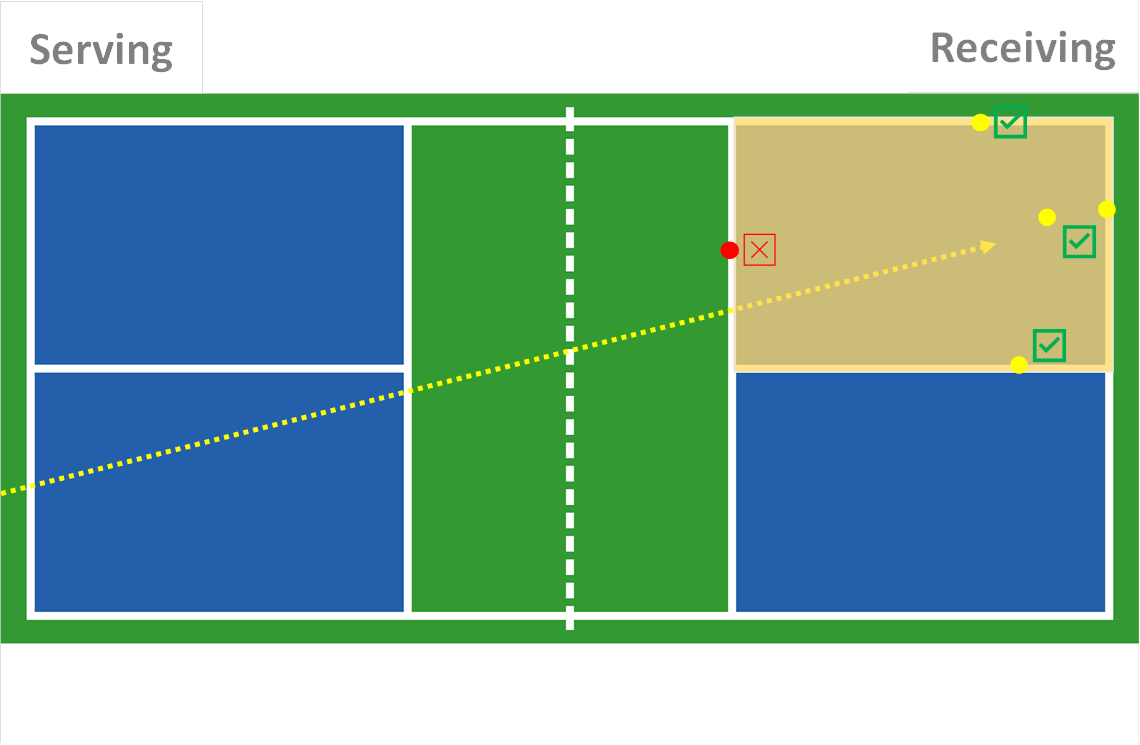
In pickleball, lines are in—except the kitchen line on serves is out.
If you’ve ever asked yourself, in pickleball is the line in or out, you’re not alone. I’ve coached new players and refereed local events, and this one rule causes more confusion than any other. Stick with me, and you’ll learn the exact pickleball line rules, why they exist, how to make better calls, and how to use lines to win more points.

Understanding the pickleball lines: what’s in and what’s out
The official rule is simple. Any ball that touches a line is in, except on a serve where hitting the non-volley zone (kitchen) line is a fault. That means baseline, sidelines, and centerline are your friends.
Here’s how the court breaks down:
- Baseline: The back line. Touch it and the ball is good.
- Sidelines: The outer edges. If the ball clips them, it’s good.
- Centerline: Splits the service boxes. It is in on serves and rallies.
- Non-volley zone line: Only out on serves; otherwise, it counts as in during rallies.
If you’re still thinking, in pickleball is the line in or out, remember this: lines are part of the court, with one serve-only exception. This tiny detail changes a lot of close calls and keeps play fair.

The serve: the special rule for the non-volley zone line
On the serve, the ball must land in the diagonal service box and clear the kitchen line. If the served ball touches the kitchen line, it is a fault. If it lands on the centerline, sideline, or baseline, it is in.
The same serve rule applies to both traditional and drop serves. So if you’re wondering, in pickleball is the line in or out on serves, the answer is yes for everything but the kitchen line. That one is out on serves only, and it catches many players off guard.
From experience, I tell newer players to “aim deep and inside.” Aiming 6–12 inches inside the baseline and sideline saves you from close faults while keeping pressure on the returner.

Common scenarios and how to judge close calls
Close calls happen fast. Train your eyes to watch the bottom of the ball as it hits the court. If any part of the ball touches any part of a line, it is in.
Use these quick tips when the point is tight:
- Listen for the sound. A clean “pop” off paint or tape can signal a line touch.
- Watch the bounce. Balls that hit a line often skid or change angle slightly.
- Understand ball compression. The ball flattens on impact, which means it can touch the line even if the center looks outside.
In rec play, if you cannot be sure, call it in. If your brain asks, in pickleball is the line in or out, default to in when in doubt. That habit keeps games friendly and aligned with the spirit of the rules.

Calling lines: etiquette, rules, and confidence
Players call balls on their own side of the net. If you are unsure, the ball is in. Partners can help, but only the receiving team calls the serve in or out. In tournaments with a referee, the ref can overrule when they have a clear view.
A few habits that build trust:
- Announce close balls calmly and quickly.
- Give opponents the benefit of the doubt when you’re unsure.
- Ask for a replay in casual games if both sides are uncertain.
I learned this the hard way in a league match. I thought a drive was out, but my partner saw it clip the line. We called it in, kept the rally energy positive, and won the game. If your brain loops on, in pickleball is the line in or out, the answer favors sportsmanship and the rulebook.

Strategy tips: use the lines to your advantage
Lines are not just boundaries. They are targets. Smart players aim for high-percentage margins that still stress opponents.
Try these small edges:
- Deep serves that graze the baseline force weak returns.
- Third-shot drops that flirt with the kitchen line stay low and unattackable.
- Dinks that catch the sideline push opponents wide and open the middle.
- Drives down the line punish poaches and test footwork.
If you ever hesitate mid-point and think, in pickleball is the line in or out, remember that aiming near lines is a skill. Train it, and your confidence grows fast.

Drills to improve line calls and accuracy
Accuracy and judgment get better with reps. Use simple drills that sharpen both your aim and your eye.
Try these:
- Tape targets: Place painter’s tape on lines and try to clip them with serves and dinks.
- 50-serve challenge: Hit 50 serves aiming 6–12 inches inside the lines, track makes.
- Shadow calls: Watch practice games and call balls from the sideline. Compare with players.
- Slow-mo check: Record rallies and review close bounces to see real contact points.
- Call-and-freeze: During drills, call “in” or “out” right at the bounce, then verify together.
These drills also quiet that inner question, in pickleball is the line in or out, because your eyes learn what a true line touch looks like.
Frequently Asked Questions of in pickleball is the line in or out
Are all lines considered in during regular play?
Yes. During rallies, any ball touching any line is in. The only exception is the kitchen line on a serve.
Is the kitchen line out on every shot?
No. The kitchen line is only out on the serve if the served ball touches it. During rallies, it counts as in.
What if I’m not sure whether the ball hit the line?
If you are not sure, the ball is in. This follows the principle of giving the benefit of the doubt.
Who makes the line calls in pickleball?
Players call shots on their own side of the net. The receiving team calls serves, and referees can step in at sanctioned events.
Does the centerline count as in on the serve?
Yes. A serve that lands on the centerline, baseline, or sideline is good. Only a served ball touching the kitchen line is a fault.
Can my partner overrule my out call?
Your partner can help you make the best call for your side. If either partner is unsure, the ball should be called in.
Conclusion
Lines are your allies in pickleball. Every line is in, except the kitchen line on serves. Learn that one rule, watch the bottom of the ball, and call what you truly see. With a few drills and calm habits, your line calls will earn respect and help you win more points.
Take this knowledge to your next game and practice aiming near lines with purpose. If you found this guide helpful, share it with your group, subscribe for more tips, or drop a question in the comments so we can keep learning together.