
Serve underhand, let two shots bounce, avoid the kitchen, score on serve to 11.
If you have ever wondered how do you play and score in pickleball?, this guide is for you. I coach new players each week and see the same questions come up. Here you will get a clear, friendly walk-through of how do you play and score in pickleball? with real examples, pro tips, and simple steps you can use today.

Court and Equipment Basics
Let’s start with the space and the gear. A pickleball court is 20 feet wide by 44 feet long. The non-volley zone, also called the kitchen, is the 7-foot strip on both sides of the net.
Use a paddle, a plastic ball with holes, and court shoes. You can play singles or doubles. If you want to know how do you play and score in pickleball?, it helps to learn the lines first.
Key court lines to know:
- Baseline. The line you stand behind to serve.
- Sidelines. The outer edges of the court.
- Centerline. Splits the service boxes.
- Non-volley zone line. Marks the kitchen.
Beginner gear tips from the court:
- Start with a midweight paddle. It is kind on the arm and easy to control.
- Pick an outdoor ball for outdoor courts and an indoor ball for gyms.
- Wear court shoes. Running shoes are slippery on quick stops.

Serving: Setup, Motion, And Where To Stand
A rally starts with a serve. In pickleball, serves are underhand. One foot must stay behind the baseline at contact. The paddle face must strike the ball below your waist.
You can use a traditional underhand serve or a drop serve. For a drop serve, let the ball fall from your hand. Then hit it after it bounces. Do not toss it up. Let gravity drop it. If you came here asking how do you play and score in pickleball?, nail the serve first.
Simple serving steps:
- Call the score before you start your motion.
- Stand behind the baseline, near the right or left box.
- Aim cross-court into the opposite service box.
- Keep it deep, chest-high to the receiver.
Legal serve must-haves:
- Contact below the waist.
- Paddle head not above the wrist at contact.
- At least one foot behind the baseline, not on the line.
- Ball lands in the diagonal service box, beyond the kitchen line.
Pro tip: Announce the score loud and clear. If you forget and hit, it is a do-over or a fault in some settings. In doubles, say ServerScore–ReceiverScore–ServerNumber.

The Two-Bounce Rule And The Kitchen
Two rules shape early points: the two-bounce rule and the kitchen rule. The two-bounce rule means the serve must bounce once. The return must bounce once. Only then can either side volley.
The kitchen is the non-volley zone. You cannot volley while standing in it or touching its line. You can step into the kitchen to hit a ball that has bounced. Then step out before the next volley. If how do you play and score in pickleball? is on your mind, master these two rules to cut errors fast.
Common kitchen mistakes I see:
- Rushing the net and volleying with a toe on the line.
- Leaning into the kitchen during a volley follow-through.
- Hitting a volley while your hat or paddle drops into the kitchen.
Practical fix:
- Pause for the second bounce. Count “one, two, go.”
- Keep a foot check. Think “heels behind the line” when you volley.
- Practice soft dinks in the kitchen after the ball bounces.
How Scoring Works In Doubles
Doubles uses side-out scoring. That means only the serving team can score. Games are often played to 11, win by 2. Tournaments may play to 15 or 21, win by 2.
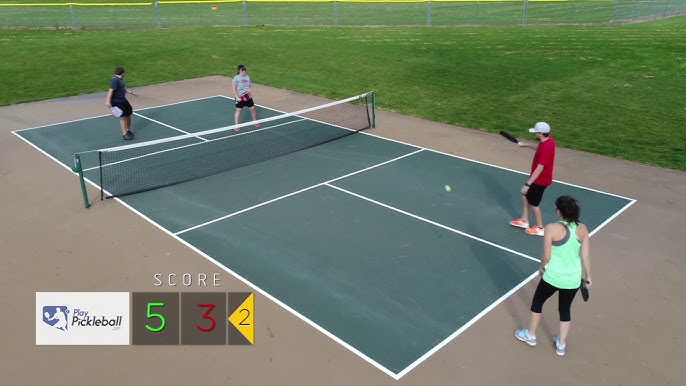
How do you play and score in pickleball? in doubles starts with learning the three-number call. It is ServerScore–ReceiverScore–ServerNumber. The server number is 1 or 2 within that team’s turn.
The starting team begins with 0-0-2. Only one server starts the match. After that first side-out, both partners get turns each side-out.
Basic doubles flow:
- First server starts on the right when your team’s score is even.
- If you win a point, switch sides with your partner. Same server keeps serving.
- When the first server faults, the second server serves from their current side.
- When the second server faults, it’s a side-out. The other team serves at 0 or 1, then 2.
Example point run:
- You call 3-2-1 from the right. You serve deep and win the rally. Score is now 4-2-1. You and your partner switch sides.
- You serve again and fault. Now it is 4-2-2. Your partner serves.
- Your partner wins two rallies. Score becomes 6-2-2. Then faults. Side-out.
I teach new groups to repeat the call out loud. It keeps everyone honest and helps you learn how do you play and score in pickleball? under pressure.

How Scoring Works In Singles
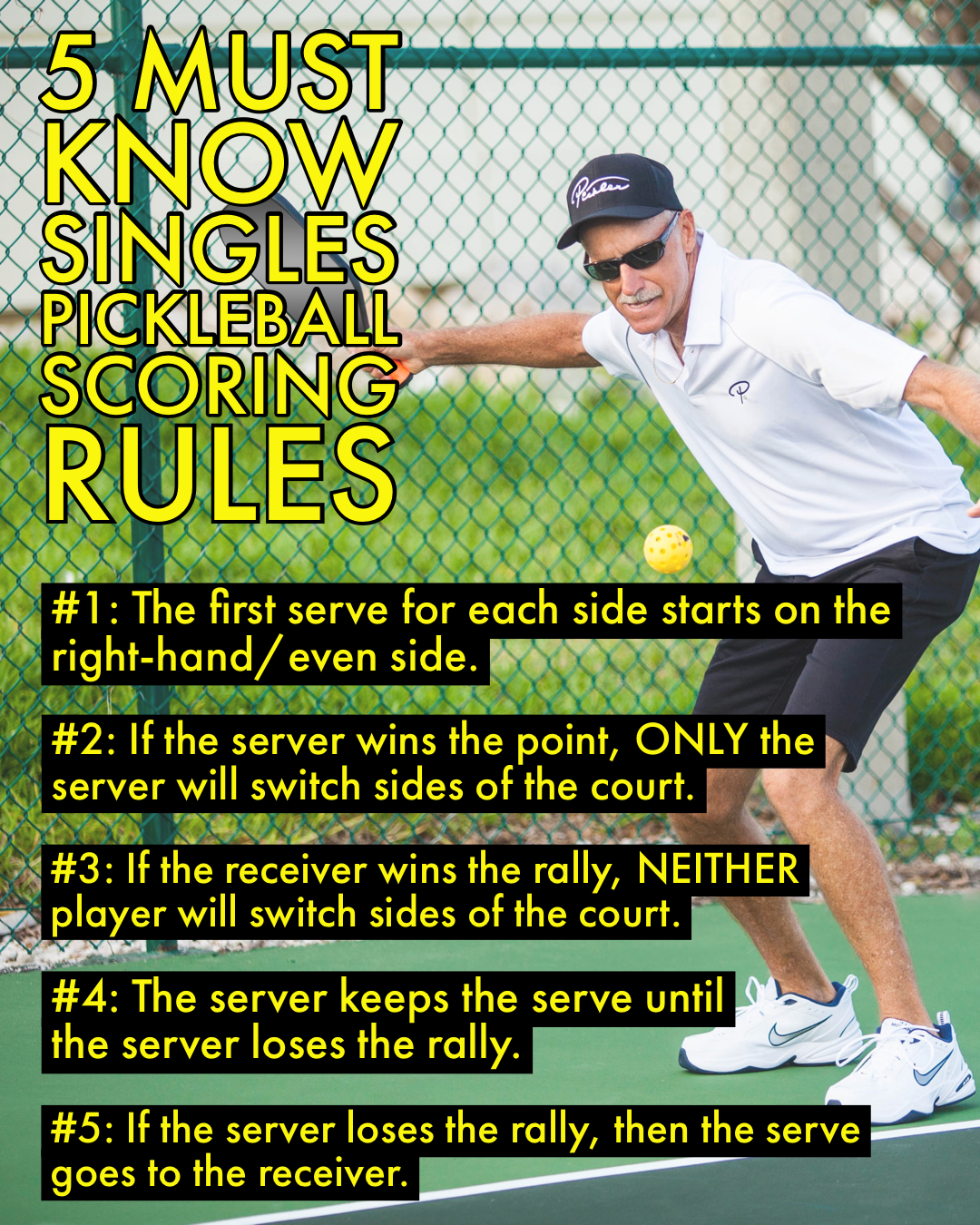
Singles is simple. Say the score with two numbers only. ServerScore–ReceiverScore. You serve from the right when your score is even, and from the left when it is odd.
Only the server scores. Games are to 11, win by 2, unless set otherwise. If you want to master how do you play and score in pickleball?, use “even-right, odd-left” as your mental cue.
Singles tips:
- Serve deep and to the backhand if you can.
- Recover to the middle after each shot.
- Keep returns deep to push the server back.
Common Faults And How To Avoid Them
Most errors come from rush and feet. I see it every week. Slow down your split step and set your base.
Frequent faults:
- Serve lands short or wide. Aim higher and add margin.
- Volley with a foot in the kitchen. Check your toes.
- Hitting before the second bounce. Count “one, two.”
- Not clearing the net on dinks. Lift with your legs, not wrist.
- Out balls on drives. Aim three feet inside lines.
How to clean them up:
- Serve targets. Back third of the box, center and corner.
- Kitchen discipline. Shadow volley with a line check.
- Rally rhythm. Say “bounce, bounce” until it sticks.
- Height over net. Imagine a safe tunnel above the tape.
If you ask how do you play and score in pickleball?, avoiding cheap faults is half the win.

Simple Strategies For Better Play
You do not need power to win. You need a plan. Place the ball, move your feet, and make one more shot.
High-percentage habits:
- Keep serves and returns deep. Depth buys time.
- Get to the kitchen line after the second bounce. Own that space.
- Dink cross-court more than down the line. You get a longer, safer angle.
- Attack pop-ups at the chest and higher. Aim at feet when they are back.
- Communicate. Say “mine,” “yours,” “switch,” or “stay.”
What helped me most early on? Saying “patient first.” I stopped chasing winners and asked how do you play and score in pickleball? the smart way. I started winning more by forcing one extra ball.
Practice Drills To Learn Faster
Short, focused drills beat long, sloppy games. Ten minutes can change your next match.
Easy drills:
- Serve and shadow. Hit 20 serves to each corner. Hold your finish.
- Return deep. Partner serves. You aim to the last 5 feet. Switch.
- Bounce-bounce volley. Play mini-rallies where both sides must let two bounces happen before any volley.
- Dink box. Aim into a small square in the kitchen. Ten in a row.
- Third-shot drop ladder. Start at the baseline. Try to land five drops in the kitchen, then step back a foot.
Each drill builds a part of how do you play and score in pickleball? Keep it short and crisp. Track your makes.

Etiquette, Safety, And Rule Updates
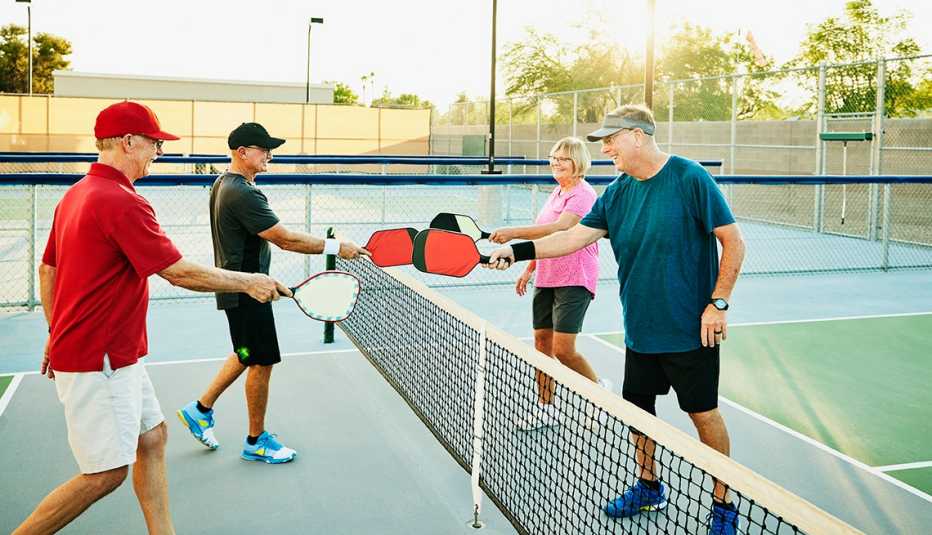
Pickleball is social. Keep it kind and clear. Call the score loud. Call balls on your side. Offer the ball back with a soft tap, not a rocket.
Safety matters:
- Warm up ankles, calves, and shoulders.
- Stop play for stray balls.
- Wear eye protection if play gets fast.
Rules do evolve. Underhand or drop serves are legal. The ball must bounce on the serve and the return. No volleys in the kitchen. Official bodies update rules each year, so check the latest rulebook before league play. Doing this shows you care about how do you play and score in pickleball? the right way.
Frequently Asked Questions of how do you play and score in pickleball?
What does 0-0-2 mean?
It is the first score call in doubles. Only one player serves to start, so the starting server is “2” to speed up rotation.
Do both partners serve in doubles?
Yes. After the first rally of the game, both partners get a turn each side-out. When both fault, it is a side-out.
Can I step into the kitchen?
Yes, after the ball bounces. You cannot volley while touching the kitchen or its line.
How long is a game?
Most games go to 11, win by 2. Some events use 15 or 21, win by 2.
Can I score when I am not serving?
No, not under standard side-out scoring. Only the serving team or player can score points.
How do I know where to serve from in singles?
Serve from the right when your score is even. Serve from the left when your score is odd.
What is the two-bounce rule again?
The serve must bounce, and the return must bounce. After those two bounces, volleys are allowed.
Conclusion
You now know the key parts: the serve, the two-bounce rule, the kitchen, and side-out scoring. If someone asks how do you play and score in pickleball?, you can explain it and show it on court. Keep your serves deep, claim the kitchen, and cut easy faults.
Take this guide to the court this week. Try two drills and one strategy tip each session. Want more? Subscribe for weekly tips, ask a question in the comments, and share your best win-by-2 story.