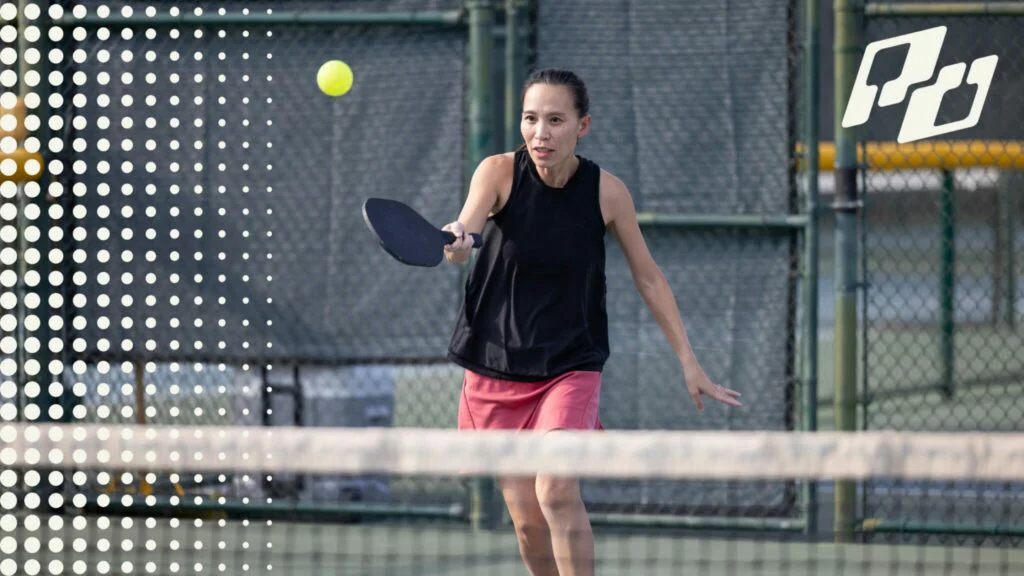
A volley in pickleball is hitting the ball before it bounces.
You came to learn what does volley mean in pickleball, and you are in the right place. I coach beginners and league players, and I’ve taught hundreds of clean, controlled volleys. In this guide, I will explain what does volley mean in pickleball, how the rules work, when to use it, and how to master it fast. Expect simple tips, real examples, and smart drills you can try today.
What does a volley mean in pickleball? Definition and rule basics
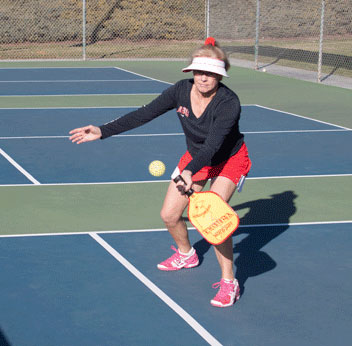
A volley is a strike before the ball bounces. You hit it out of the air. That is the simple core.
But there are rules. You cannot volley while touching the Non-Volley Zone (the kitchen) or its line. Your momentum cannot carry you into the kitchen after a volley. The serve and the return must bounce first. That is the two-bounce rule. After that, volleys are fair play if you stay out of the kitchen.
So, what does volley mean in pickleball in practical terms? It is your tool to take time away. You meet the ball early. You keep it low. You control the pace and the point. When players ask what does volley mean in pickleball, I add this: it is a timing skill and a footwork skill. Your hands start it. Your feet make it safe.
The Non-Volley Zone (Kitchen): What it is and how it affects volleys
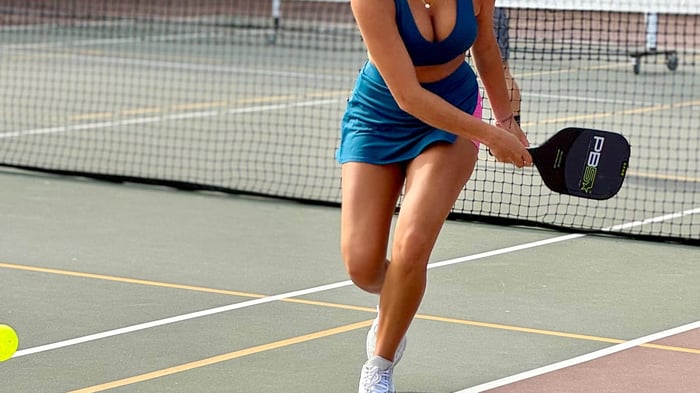
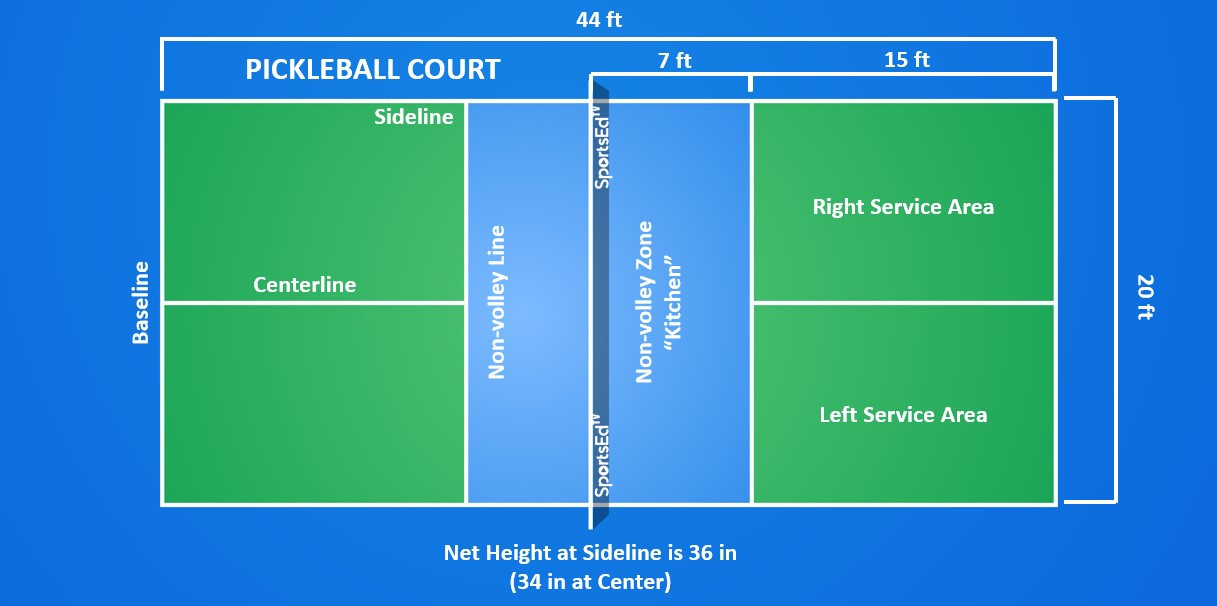
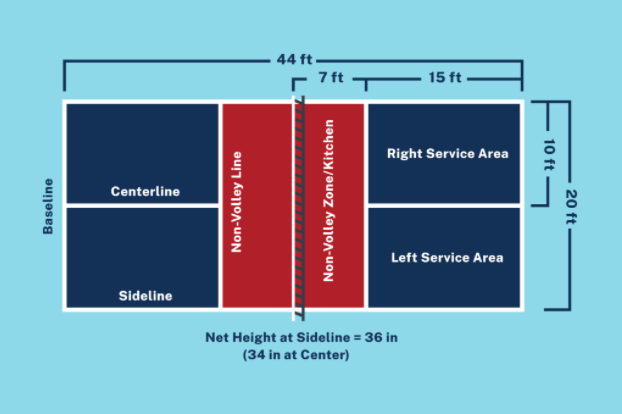
The Non-Volley Zone is the seven-foot area by the net. The line counts as part of that zone. You cannot hit a volley if your feet are in that zone or on its line. Do not let your swing pull you in. Do not let your hat, paddle, or even a toe touch the zone during or after the volley.
Key points I teach on day one:
- You can step into the kitchen anytime if the ball bounces first.
- You can jump from outside the kitchen to hit a volley, but you must land outside it.
- Your momentum matters. If you volley and fall into the kitchen, that is a fault.
When players ask what does volley mean in pickleball, I say it also means kitchen awareness. Good volley players look down with their eyes, not their feet. They split step and stop before they swing.
When you can volley and when you cannot
Here is the clean checklist.
You can volley when:
- The serve has bounced once and the return has bounced once.
- You are behind the kitchen line. Both feet are out, and you stay out.
- You have control. Your body will not drift forward after contact.
You cannot volley when:
- You are on the kitchen line or inside it.
- You are off balance and will fall into the kitchen.
- The ball has not met the two-bounce rule yet.
Players often search what does volley mean in pickleball right after a kitchen fault. That is normal. Think of the kitchen as a hot stove. If you touch it while hitting a volley, you get burned on the score.
Grip, stance, and swing: How to hit a clean volley
You want simple moves. Less motion. More control.
Grip
- Use a continental grip. It works for forehand and backhand.
- Add an overgrip for tack and comfort.
Stance
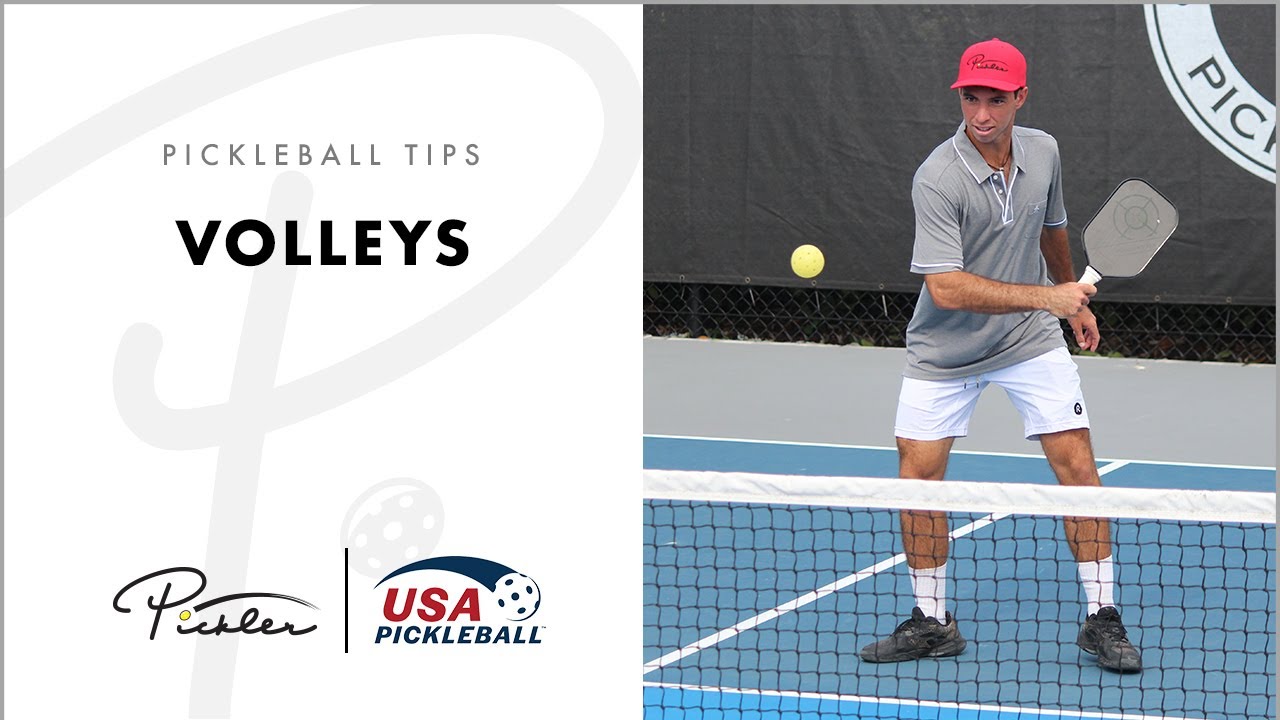
- Hold the paddle up at chest height.
- Keep your elbows in front of your body.
- Split step as your opponent hits. Be light on your toes.
Swing
- Use a short punch. Aim for a compact move, not a big swing.
- Angle the paddle face just a bit closed to keep the ball down.
- Meet the ball in front. Freeze the finish for control.
Footwork
- Step through only if you can stop outside the kitchen.
- Keep your head still. See the ball early.
I tell students who ask what does volley mean in pickleball that it is mainly a block and a punch. Not a tennis-style swing. Quiet hands win.

Advanced volley tactics: Dinks, punches, blocks, and resets
At the kitchen line, you face heat. Your answers need range.
- Punch volley: Short, firm hit to finish a high ball. Aim at feet or gaps.
- Block volley: Soft touch on a fast drive. Let the ball do the work. Paddle stable.
- Roll volley: Small topspin brush to dip the ball at the opponent’s feet.
- Dink volley: Soft touch out of the air on a slow ball. Keep it low and short.
- Reset volley: Absorb pace and drop the ball into the kitchen to slow the rally.
Use targets:
- Opponent’s feet.
- The middle to cause doubt.
- The backhand wing, if weak.
In match talk, when someone asks what does volley mean in pickleball, I say it means options. You can speed up, slow down, or reset. Pick your play on purpose.

Common volley mistakes and how to fix them
Here are the errors I see most.
- Swinging big. Fix it by shortening the stroke. Think punch, not swat.
- Dropping the paddle. Fix it with a “paddle up” rule. Park it at chest height.
- Drifting into the kitchen. Fix it with a firm split step and a wider base.
- Hitting too high. Fix it by closing the face and aiming knee height.
- Poor contact point. Fix it by meeting the ball in front of your body.
I learned this the hard way. I once won three points in a row, then lunged and foot-faulted in the kitchen. Lesson: respect space. If you ask what does volley mean in pickleball, it also means control under pressure.
Drills to improve your volley fast
Use these simple, high-rep drills. Five to ten minutes each.
- Wall blocks: Stand six to eight feet from a wall. Tap the ball with a firm wrist. Keep the paddle up. Aim for 50 in a row.
- Partner punch lines: One feeds slow waist-high balls. You punch to the middle. Switch roles after 20 reps.
- Fast hands game: Stand at the kitchen line. Trade quick, safe volleys at half speed. Focus on paddle stability.
- Reset challenge: Your partner drives, you block the volley low into the kitchen. Count clean resets.
- Feet check drill: Put a towel on the kitchen line. Volley and do not touch the towel. Build muscle memory.
For players still asking what does volley mean in pickleball, these drills answer with feel. You will see and feel control.

Equipment tips for better volleys
Gear will not fix bad form. But it can help.
- Paddle weight: Midweight helps stability on blocks. Try 7.8 to 8.3 ounces.
- Paddle face: A textured face can help you add a soft roll.
- Grip size: Use a size that lets you hold loose. Add an overgrip if needed.
- Balance: Head-heavy paddles add punch. Head-light paddles add speed of hand.
Try paddles with a friend first. If you ask what does volley mean in pickleball from a gear view, it means finding a paddle that keeps your wrist steady on impact.

Real-world scenarios: Examples from match play
Here are quick reads you can use in a game.
- Return volley trap: Your opponents rush after the return. Aim a punch volley at the lead player’s feet. Keep it low and short.
- Drive and crash: A player drives and runs in. Block volley back at the middle. Make them hit up.
- High sitter: Ball floats high at the net. Use a short punch. Pick a gap, not the hero line.
- Firefight: Hands battle at the kitchen. Shorten your stroke. Win with angle or at the body.
- Wind days: The ball floats. Aim lower. Use more blocks. Do not overreach into the kitchen.
What does volley mean in pickleball in these spots? It means reading cues, not guessing. It means calm hands and quick feet.
Frequently Asked Questions of what does volley mean in pickleball
What does volley mean in pickleball?
A volley means you hit the ball before it bounces. You must stay out of the Non-Volley Zone to do it.
Can I volley while standing on the kitchen line?
No. The kitchen line counts as part of the Non-Volley Zone. Touching it during a volley is a fault.
When can I start volleying in a rally?
After the serve bounces once and the return bounces once. That is the two-bounce rule.
Is a block volley different from a punch volley?
Yes. A block absorbs pace with a quiet paddle. A punch adds a small push to place or finish the ball.
What is the best grip for volleys?
Use a continental grip. It lets you use the same hand shape for forehand and backhand.
Can I jump to volley and land in the kitchen?
No. You must land outside the kitchen after a volley. Momentum into the kitchen is a fault.
Conclusion
A volley in pickleball is simple to define and rich to master. You strike the ball in the air, you stay out of the kitchen, and you control the pace. When you next wonder what does volley mean in pickleball, think of it as time control and space control.
Start small. Keep the paddle up. Shorten your swing. Add the wall drill and the reset drill this week. Your hands will calm down, and your points will stretch out in your favor.
Want more? Try these tips in your next game, then share your wins or questions. Subscribe for weekly drills and match-ready tactics.