The kitchen in pickleball is the non-volley zone near the net, 7 feet deep.
If you have ever typed in pickleball what is the kitchen into a search bar, you are in the right place. I coach new and mid-level players every week, and the same question pops up at every clinic. This guide clears it up with simple rules, real examples, and pro tips. Stick with me and you will master the kitchen fast and play smarter points from your very next game.
What Is the Kitchen in Pickleball?
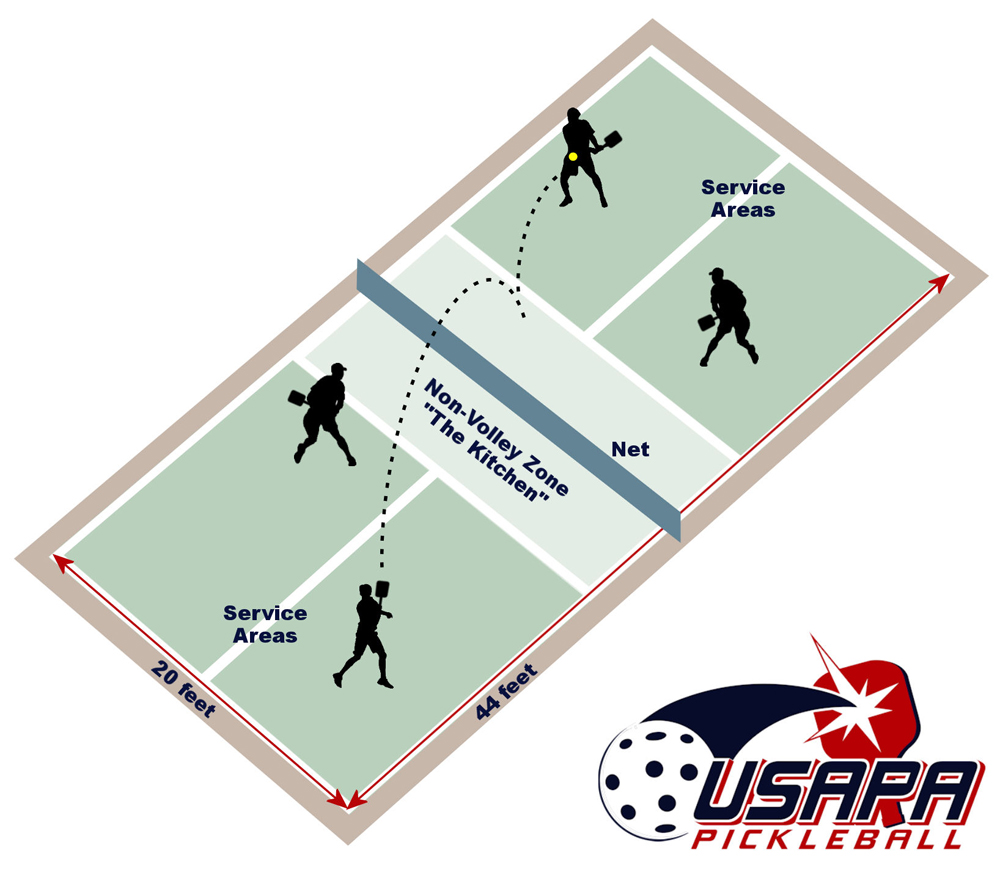
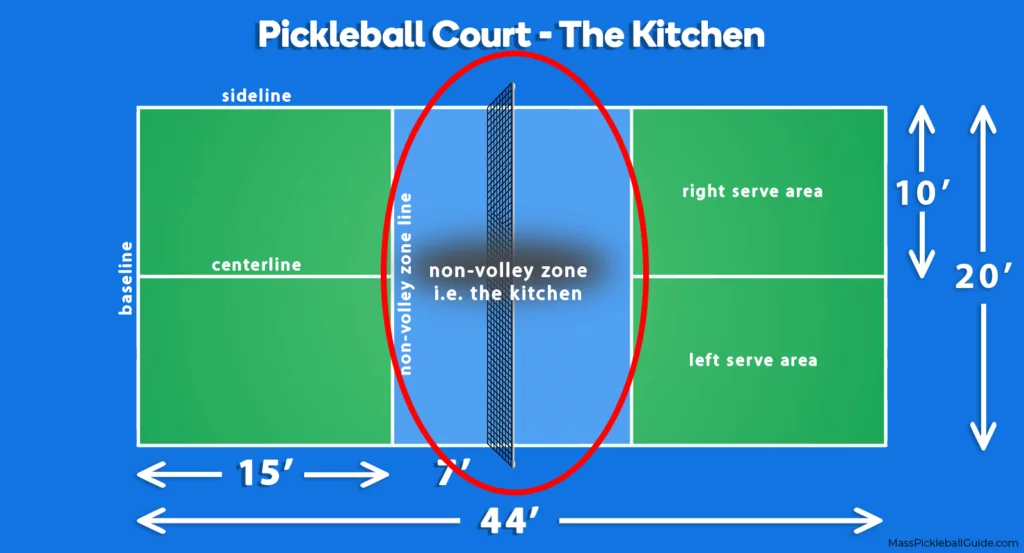
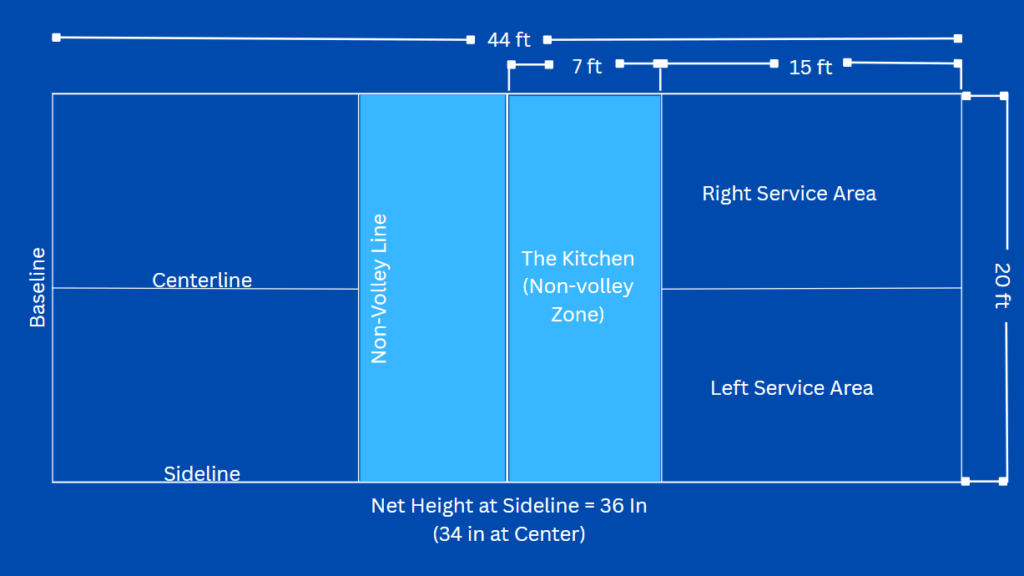
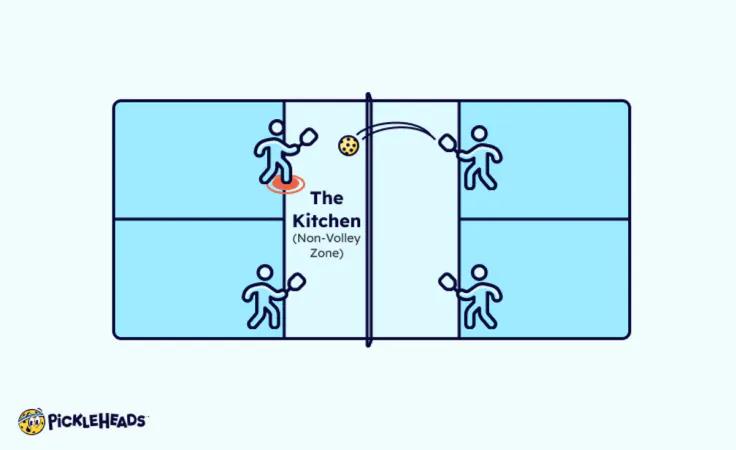
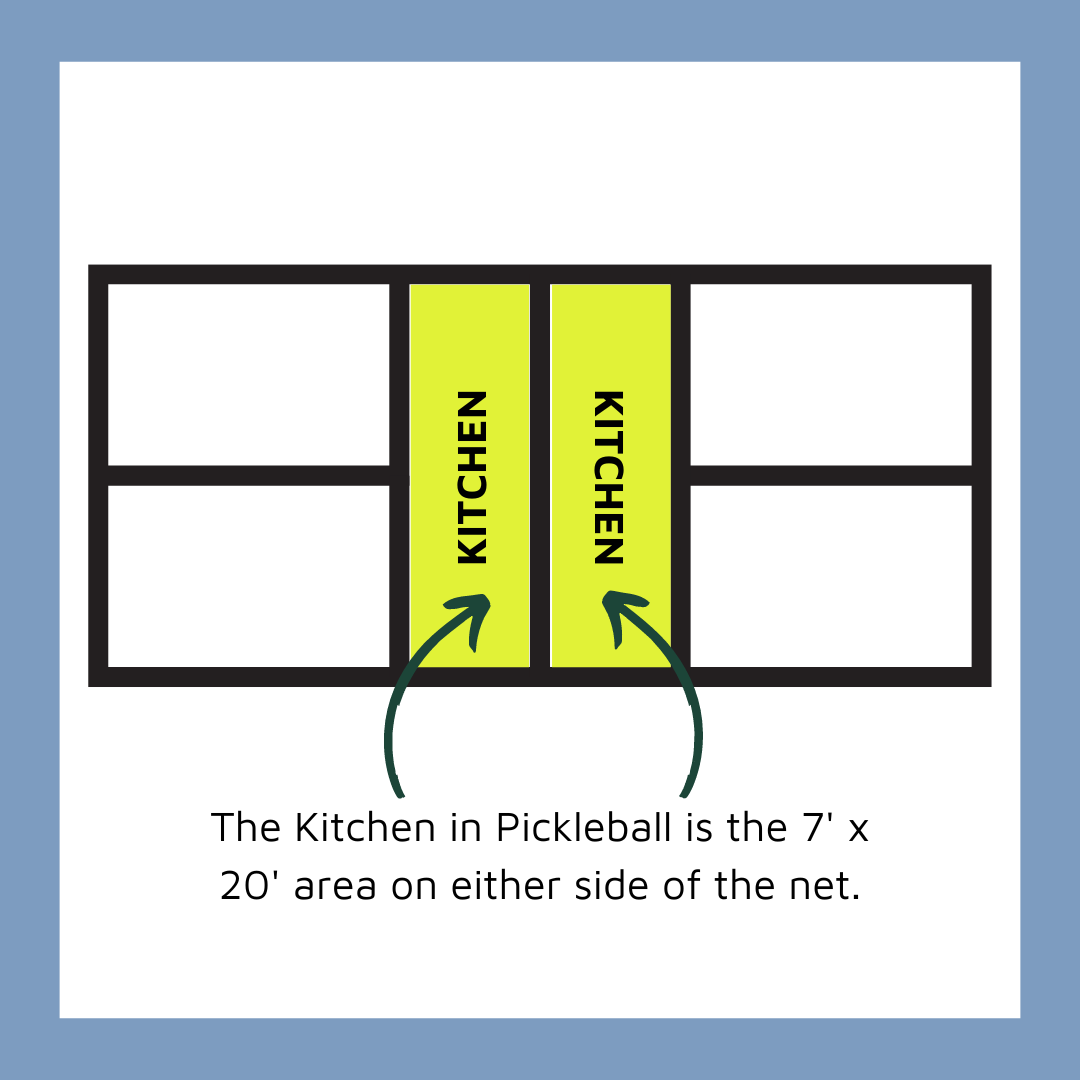
The kitchen is the non-volley zone, often called the NVZ. It spans 7 feet from the net on both sides and runs the full 20-foot width of the court. You can step into it. You just cannot volley from it. That is the short version of in pickleball what is the kitchen.
The line that marks the kitchen counts as part of the kitchen. So if you touch that line while volleying, it is a fault. Think of the kitchen as a no-fly zone for volleys. You can hit balls after a bounce while standing in the kitchen, then step back out to volley again. If a friend asks in pickleball what is the kitchen, tell them it is where control beats power.

Dimensions, Markings, and Court Layout
The kitchen is simple to spot and measure. Here is what matters most.
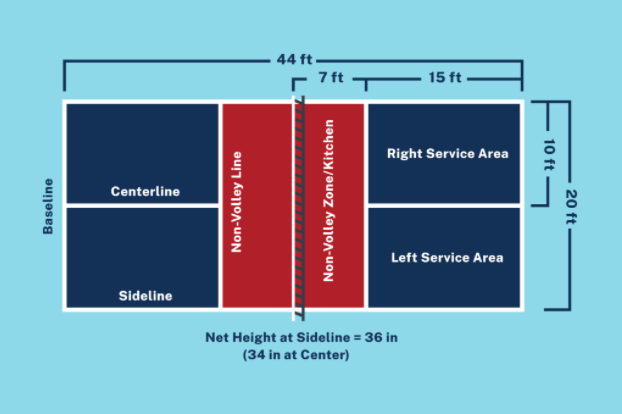
- Depth: 7 feet from the net on both sides.
- Width: 20 feet, same as the court width.
- Lines: All lines that border the kitchen are part of the kitchen.
- Posts and net: The NVZ extends from fence to fence, not just the court surface.
- Serve rule: A serve landing on the NVZ line is a fault because the line is in the NVZ.
When people ask in pickleball what is the kitchen, I also show how close 7 feet feels in real life. It is just a step and a half from the net. That is why footwork and balance matter so much.

The Non-Volley Rule Explained
A volley is a ball you hit out of the air before it bounces. The non-volley rule says you cannot volley while touching the kitchen or its line. There is more to it though.
- Momentum counts. If you volley and your momentum carries you into the kitchen or onto the line, it is a fault.
- Gear counts. If your paddle, hat, or anything you wear falls into the kitchen after a volley, it is a fault.
- Airborne is okay only if you started outside and land outside. If you land in the kitchen after a volley, fault.
- You can stand in the kitchen anytime you are not volleying. Hit a dink after a bounce, no problem.
- Re-establish outside. If you were in the kitchen, you must get both feet back out before you can volley again.
- After the serve and return both bounce, volleys are allowed, but never from the kitchen.
If a new player asks in pickleball what is the kitchen rule, I stress this: it is about volleys and space, not about where you can stand between shots.
Common Kitchen Faults and How to Avoid Them
Most kitchen faults are preventable. Here are the usual suspects and simple fixes.
- Touching the line on a volley. Fix: Keep a shoe-length buffer. I tell students to see daylight between their toes and the line.
- Falling forward after a fast volley. Fix: Split step, then push back after contact. Think bounce out, not fall in.
- Reaching too far into the kitchen. Fix: Shorten your backswing and use your shoulder, not your wrist, for control.
- Dropping your paddle or hat into the NVZ after a volley. Fix: Tuck lanyards, secure hats, and control your follow-through.
- Partner crashes in after your volley. Fix: Call “reset” or “back” so both of you hold the line, not the kitchen.
Beginners often ask in pickleball what is the kitchen fault to watch for first. My answer: the line touch. Train your eyes and feet to respect that thin strip.
Strategy: How to Win the Kitchen Battle
Points at the kitchen are like chess at high speed. Control the line, control the rally.
- Dink with purpose. Aim crosscourt to the opponent’s backhand. It gives you more net and more time.
- Keep the ball unattackable. Net height or lower. If you pop it up, expect a speed-up.
- Use the middle. Many teams argue over the middle ball. Send low balls there and force errors.
- Third shot drop. Land it in the kitchen to earn the line. It is the bridge from baseline to offense.
- Speed-up smart. Attack shoulder-high balls into the body or off the paddle hip. Be ready for the counter.
- Reset under pressure. If you get jammed, absorb pace and reset the ball back into the kitchen.
When people ask in pickleball what is the kitchen strategy, I say it is the slow game that sets up the fast finish.
Footwork, Drills, and Practice Plans
Smooth feet keep you out of trouble at the line. These drills build skill fast.
- Shadow steps on the line. Small side steps, paddle up, no crossing feet. One minute sets.
- Triangle dinks. Forehand, middle, crosscourt. Repeat for five minutes each side.
- Wall resets. Stand 10 feet from a wall. Bump the ball slow and low to mimic a reset.
- Live crosscourt dinks. Aim for 30 in a row. Miss means start over. Pressure builds focus.
- Jump-and-land check. Practice stepping in to dink, then both feet back out before any volley.
If a student repeats in pickleball what is the kitchen and how do I train for it, I hand them this plan and a timer. Ten minutes a day adds up fast.
Doubles vs Singles Kitchen Play
Doubles lives at the kitchen. Singles touches it less but still matters.
- Doubles: Both players hold the line. Cover middle first, sidelines second.
- Stacking: Use it to keep forehands in the middle. Talk before every serve.
- Poaching: Jump on floaters over the kitchen. The net player must close hard.
- Singles: Use short angles that pull foes into the kitchen. Then pass into open space.
Friends often ask in pickleball what is the kitchen difference in doubles. The answer is teamwork at the line. Two minds, one wall.
Equipment and Setup Tips for Kitchen Mastery
The right gear helps you control the soft game.
- Paddle feel. A control paddle with a softer face helps with dinks and resets.
- Grip pressure. Hold like a bird, not like a hammer. Softer grip equals softer touch.
- Shoes. Pick court shoes with good grip for fast stops at the line.
- Temporary courts. Use quality tape for clear kitchen lines. The line must be easy to see.
- Balls. Softer balls play longer in the kitchen. Harder balls speed up the hands.
Recreational players often ask in pickleball what is the kitchen gear secret. Truth is, technique beats tech, but a control paddle helps.

My Experience: Lessons Learned at the Kitchen Line
My first tournament loss came from one mistake. I won a forehead-high exchange and fell forward onto the line. Fault. Game over. It taught me to end every volley with a tiny hop back.
Here are lessons I now share with every player.
- Respect the line. Put a bright marker off-court as a visual anchor to stop drift.
- Quiet hands win. When nervous, I choke down on the grip and soften my hold.
- Breathe between points. It slows the mind and steadies the dink.
- Talk with your partner. A single “mine” or “yours” saves two steps and one fault.
People keep asking in pickleball what is the kitchen trick I trust most. It is the split step. Land on both feet as the ball crosses the net. You will feel balanced and in control.
Frequently Asked Questions of in pickleball what is the kitchen
In pickleball what is the kitchen and why is it called that?
It is the non-volley zone, 7 feet from the net on both sides. The playful name stuck from early days, but the official term is non-volley zone.
Can I step in the kitchen after the ball bounces?
Yes. You may enter and hit a dink after a bounce. Step out again before any volley.
Is the kitchen line in or out?
The line is in the kitchen. If you touch it while volleying, it is a fault.
Can my paddle fall into the kitchen after I volley?
No. If your paddle, hat, or body touches the kitchen after a volley, it is a fault.
Does the serve have to clear the kitchen line?
Yes. A serve that lands on the kitchen line is a fault because that line is part of the NVZ.
Can I jump from outside the kitchen, volley, and land outside?
Yes, if you never touch the kitchen before, during, or after. If you land in the kitchen, it is a fault.
What is the best drill to improve kitchen play?
Crosscourt dinks with a goal number, like 30 in a row. It trains control, aim, and patience.
Conclusion
The kitchen shapes every rally. Know the space, master the non-volley rule, and build habits that keep you balanced and calm. Start with one change today: add a split step at the line and hold a shoe-length buffer from the kitchen line.
Ready to level up? Practice the triangle dink drill this week, track your streaks, and share your progress. If this helped, subscribe for more pickleball guides or drop your kitchen questions in the comments so we can tackle them together.