The kitchen bans volleys; step in only to play balls that bounce.
If you have ever asked how does the kitchen work in pickleball, you are in the right place. I coach new players each week, and the kitchen causes the most confusion and the most faults. Below, I break down real rules, court craft, and smart drills so you feel calm and sharp at the non-volley zone from your very next game.
What Is the Kitchen in Pickleball? The Basics
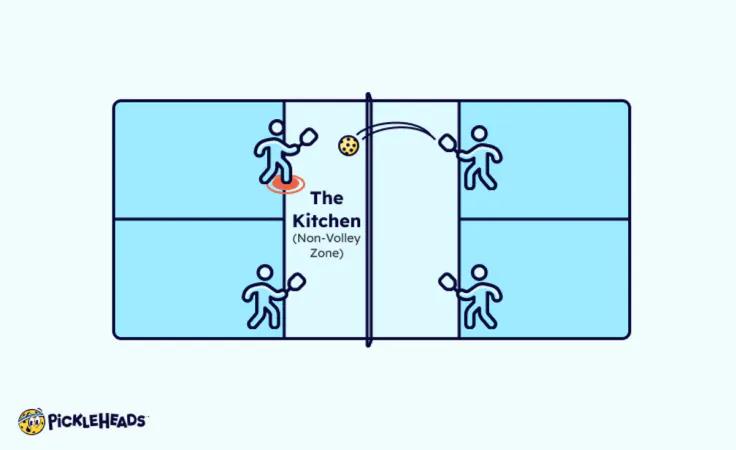
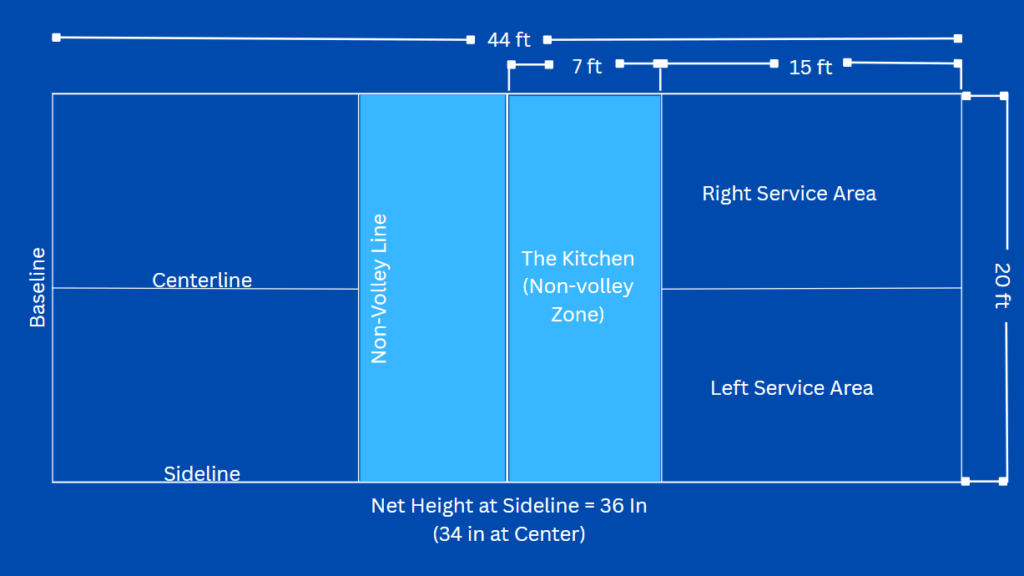
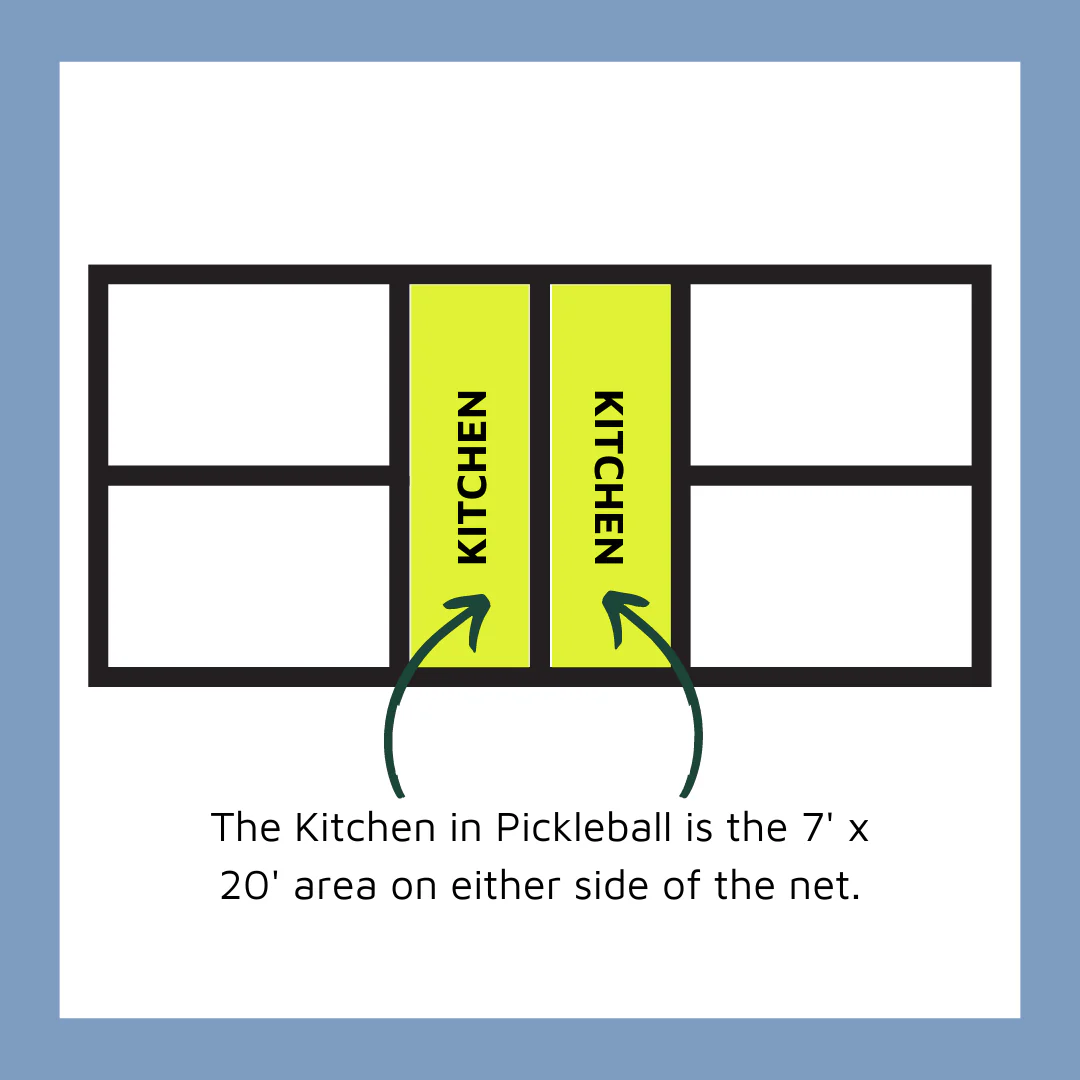
The kitchen is the non-volley zone, or NVZ. It is a 7-foot strip on both sides of the net. The kitchen line is part of the kitchen.
You cannot hit a volley while in the kitchen. A volley is any ball you hit before it bounces. If any part of you or what you wear touches the kitchen during or after a volley due to momentum, it is a fault.
So, how does the kitchen work in pickleball in simple terms? You may step into the kitchen at any time to play a ball that has bounced. You must be fully out of the kitchen before you volley again. This is the heart of how does the kitchen work in pickleball.

Lines, Boundaries, and Footwork Near the Kitchen
The kitchen line counts as the kitchen. If your toe is on the line, you are in. To volley, both feet must be fully outside the kitchen, and your balance must keep you out after contact.
Objects count too. If your paddle, hat, or even a towel drops into the kitchen after a volley, it is a fault. The rule applies to you and anything you wear or carry.
Use calm, clear footwork near the line. Keep a small gap between your toes and the line. Use a split step as your opponent hits. Stay on the balls of your feet. These habits make how does the kitchen work in pickleball feel natural and safe.
The Core Rules of the Kitchen You Must Know
Here is how does the kitchen work in pickleball from a rules view, based on the official rulebook used at events:
- No volleys in the kitchen. If you volley while touching the kitchen or the line, it is a fault.
- Momentum matters. If you volley outside the kitchen but your momentum takes you into it, it is still a fault, even if the ball is dead.
- You can enter the kitchen anytime to hit a ball off the bounce. You must reestablish both feet outside before your next volley.
- Jumping does not save you if you land in the kitchen. A jump volley is legal only if you do not touch the kitchen before or after the hit.
- Gear and clothing count. If your paddle or hat falls into the kitchen after your volley, it is a fault.
- The kitchen runs from sideline to sideline. The posts and net are not the kitchen, but the NVZ includes all its lines.
- The two-bounce rule still applies to all rallies. The serve must bounce once, and the return must bounce once, before any volley. This is separate from the kitchen but ties into how the game flows at the line.
When players ask how does the kitchen work in pickleball, these seven points answer 90 percent of cases I see in clinics.

Common Kitchen Faults and How to Avoid Them
I see the same mistakes each week. Fix these, and your confidence will jump fast.
Common faults
- Toe on the line during a volley. It feels minor but is a clear fault.
- Volley and then stumble forward into the kitchen. Momentum counts against you.
- Reaching wide and letting your paddle swing pull you in. Your upper body drags your feet.
- Partner bumps you after your volley and you step in. Contact that causes you to enter still creates a fault.
Easy fixes
- Leave a shoe-width gap from the line when you plan to volley.
- Think hit, hold, and hop back. After a volley, hold your finish, then take a soft hop back to stop momentum.
- Use a compact volley stroke. Short backswing, firm wrist, and quiet feet.
- Communicate with your partner. Call mine or yours early to avoid bumps.
These cues make how does the kitchen work in pickleball feel more about control than fear of faults.
Smart Kitchen Strategy for Every Skill Level
The kitchen is where points are made. Your aim is to win the soft game and force pop-ups.
Core ideas
- Dink with intent. Aim crosscourt most often. It gives you a longer, safer target over the low part of the net.
- Attack only when set. Look for balls above net height in your strike zone. Then go at feet, hips, or the paddle shoulder.
- Reset from the mid-court. If you get stuck in the transition zone, float a soft reset into the kitchen to buy time to move in.
- Use the third shot drop to reach the kitchen. A slow, arcing ball that lands in the kitchen lets you and your partner step up.
- Pressure with placement. Hit behind a moving player or into the middle to cause mix-ups.
When students ask how does the kitchen work in pickleball for strategy, I say this: control the kitchen, control the rally. Think chess, not chase.

Drills to Master the Kitchen Fast
These drills sharpen skill and reduce faults. Keep them short and focused.
Drills
- Line awareness taps. Stand a shoe-width behind the line. Volley to a partner while keeping that space. Check after each rep.
- Dink ladder. Start crosscourt dinks slow. Raise pace by ten percent each minute. Focus on height and depth control.
- Momentum stop drill. Volley, freeze your finish, then take one small hop back. Build the habit to avoid stepping in after a volley.
- Reset rally. One player drives, the other resets soft into the kitchen. Switch roles every 10 balls.
- Target zones. Place two cones near the opponent’s sideline and middle kitchen. Hit 20 dinks to each cone with clean footwork.
Do these three times a week. You will feel how does the kitchen work in pickleball become muscle memory.

Court and Gear Details That Affect Kitchen Play
Court size and net height shape kitchen shots. The kitchen is 7 feet deep. The net is 34 inches at center and 36 inches at posts. This makes crosscourt dinks safer.
Shoes with good grip help you stop short of the line. A lighter paddle helps with touch. A heavier paddle can add punch but may slow your hands.
Outdoor balls bounce lower on hot days and in wind. Indoors, the bounce is more steady. Adjust your dink height and aim. Small tweaks here make how does the kitchen work in pickleball easier to manage in any setting.

Frequently Asked Questions of how does the kitchen work in pickleball
Can I jump from outside the kitchen, volley, and land in the kitchen?
No. If your momentum takes you into the kitchen after a volley, it is a fault. You must land and stay outside.
Does my paddle touching the kitchen cause a fault on a volley?
Yes. If you volley and your paddle, clothing, or anything you carry touches the kitchen, it is a fault. Keep gear secure.
Can I stand in the kitchen and hit a ball after it bounces?
Yes. You can enter the kitchen anytime to hit a ball off the bounce. You must leave before your next volley.
Is the kitchen line part of the kitchen?
Yes. The line counts as the kitchen. If you touch it during a volley, it is a fault.
How does the kitchen work in pickleball for beginners?
Think simple: volley only when both feet are out and steady. Step in only for balls that bounce, then step out.
Is the two-bounce rule part of the kitchen rule?
It is a separate rule, but it affects play at the kitchen. The serve and return must bounce before any volley can happen.
Can my partner pull me into the kitchen and cause a fault?
If contact from your partner causes you to touch the kitchen after your volley, it is still a fault. Communicate early to avoid this.
Conclusion
The kitchen is simple once you see its aim: stop smash-and-crash play and reward smart touch. Keep your volleys outside, step in for bounces, and control your momentum. That is the core of how does the kitchen work in pickleball.
Start with one drill today. Leave a shoe-width gap at the line, and practice hold and hop after every volley. You will cut faults and win more points fast. Want more guides like this? Subscribe, share this with a pickle friend, or drop your kitchen questions in the comments.