
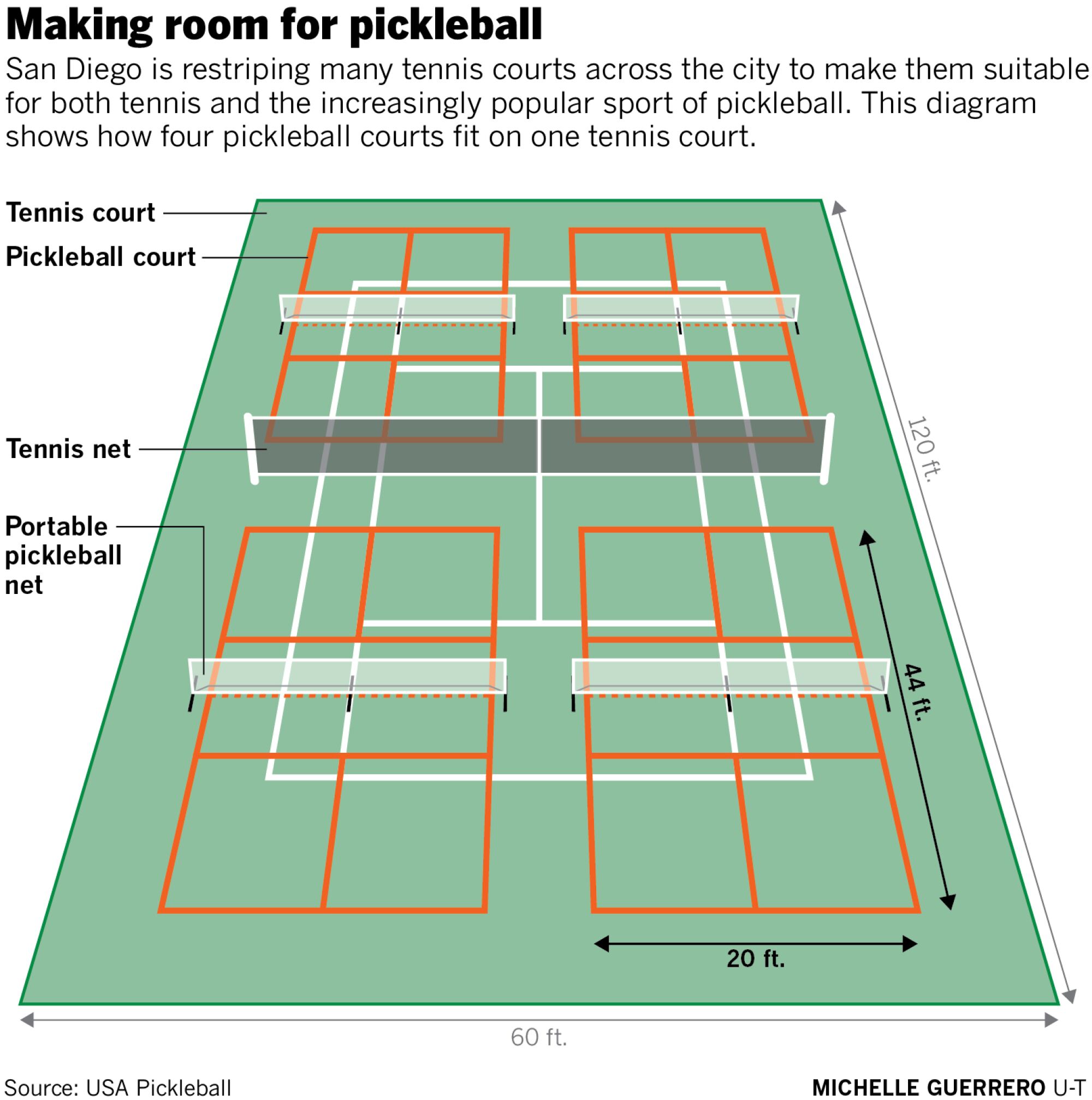
Most standard tennis courts fit four pickleball courts; tighter spaces often allow two or three.
If you have ever asked how many pickleball courts fit on a tennis court, you are in the right place. I have helped cities, clubs, and schools convert courts for years. In this guide, I explain the numbers, layouts, safety space, and budget. You will see the best ways to fit two, three, or four courts, with real examples that work in the real world.
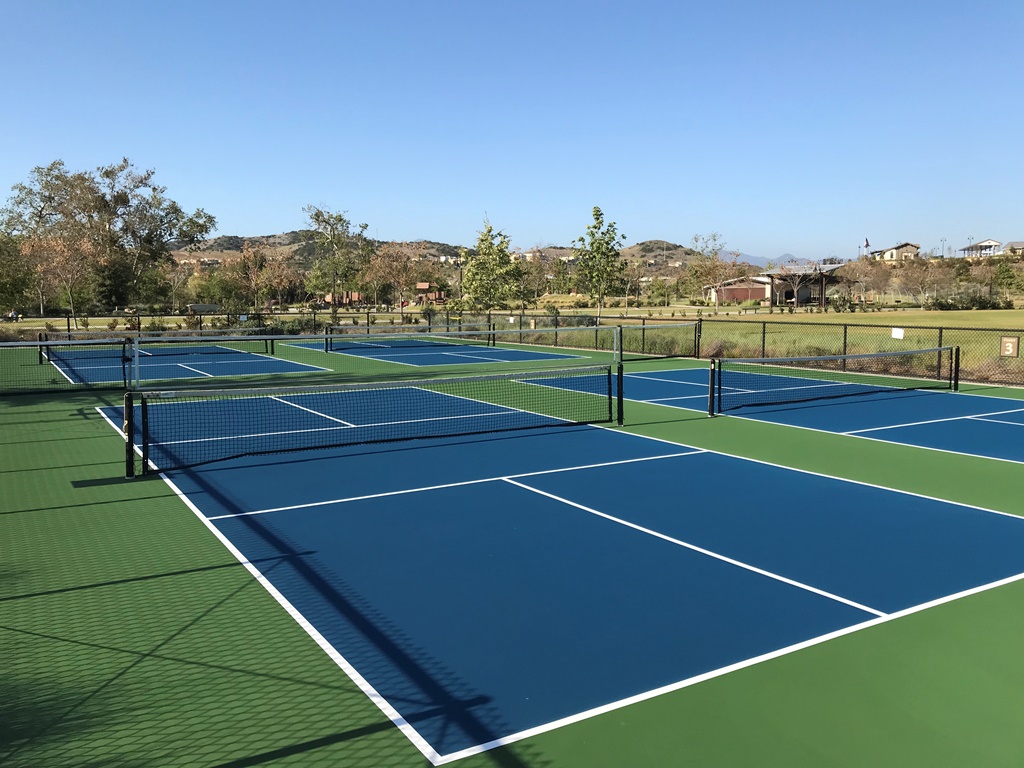
Court sizes and standards you need to know
Before we map layouts, let’s lock in the sizes. This decides how many pickleball courts fit on a tennis court.
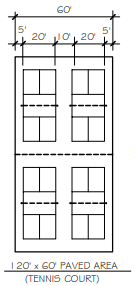
- Tennis court, fence-to-fence, is commonly about 60 feet by 120 feet.
- Tennis playing area is 36 feet by 78 feet for doubles, inside the lines.
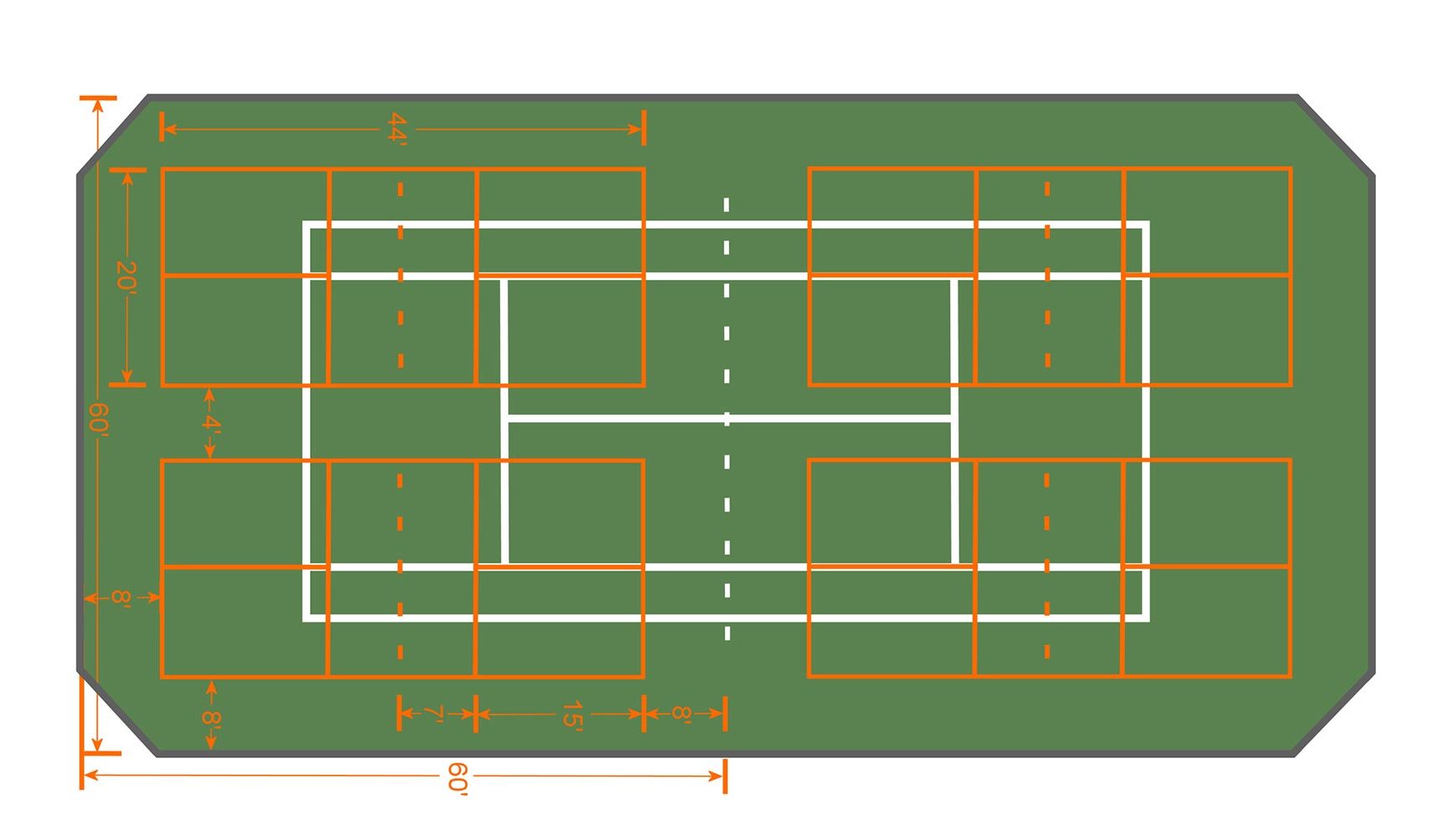
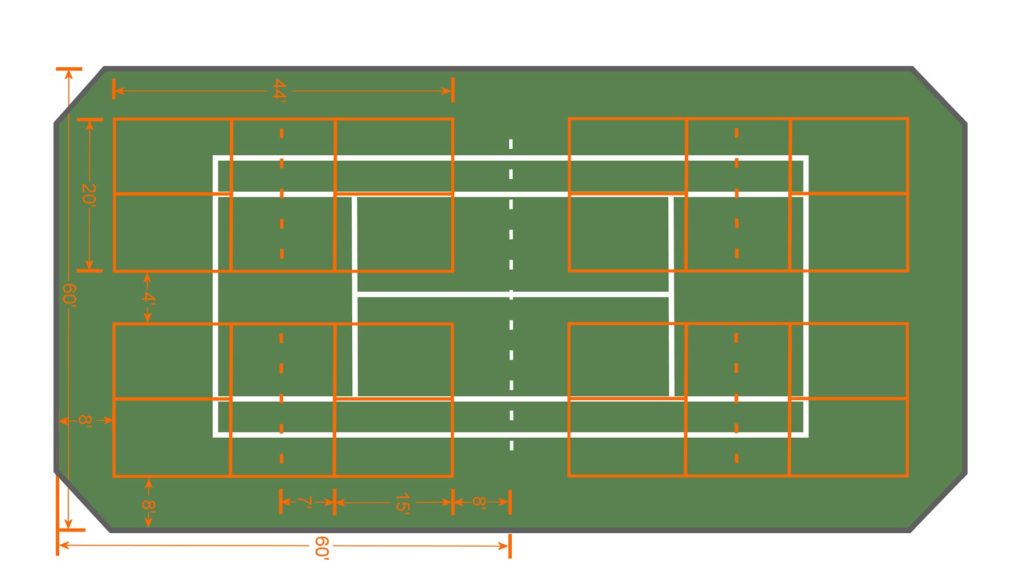
- Pickleball court playing area is 20 feet by 44 feet.
- The recommended pickleball footprint, including run-off, is 30 feet by 60 feet (preferred up to about 34 by 64 for comfort).
- Pickleball net is 36 inches at the sides and 34 inches at the center.
These numbers matter because they reveal how many pickleball courts fit on a tennis court with safe margins, not just on paper.
The real answer: 2, 3, or 4 courts, based on space
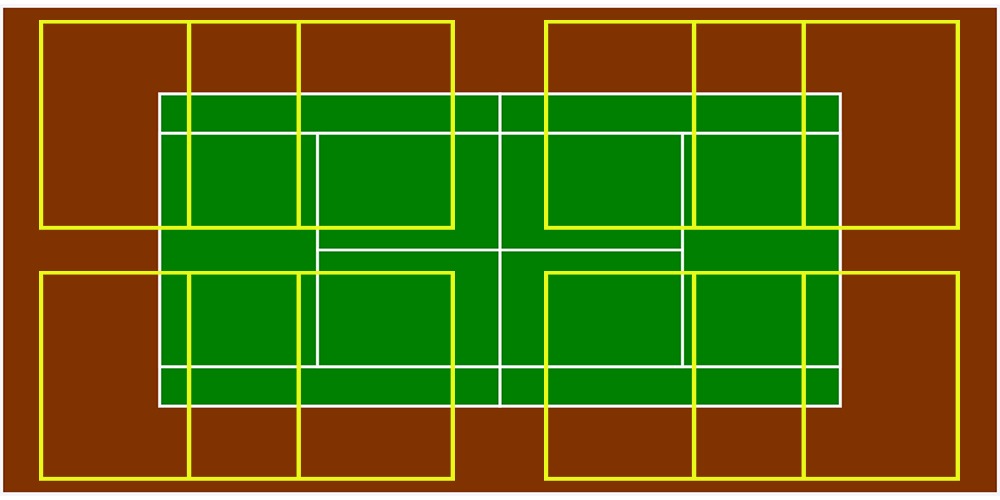
If you want to know exactly how many pickleball courts fit on a tennis court, the true answer is two, three, or four. It depends on your fence size and your safety buffers.
- Four-court layout
- Works when the fenced area is a true 60 by 120 feet or larger.
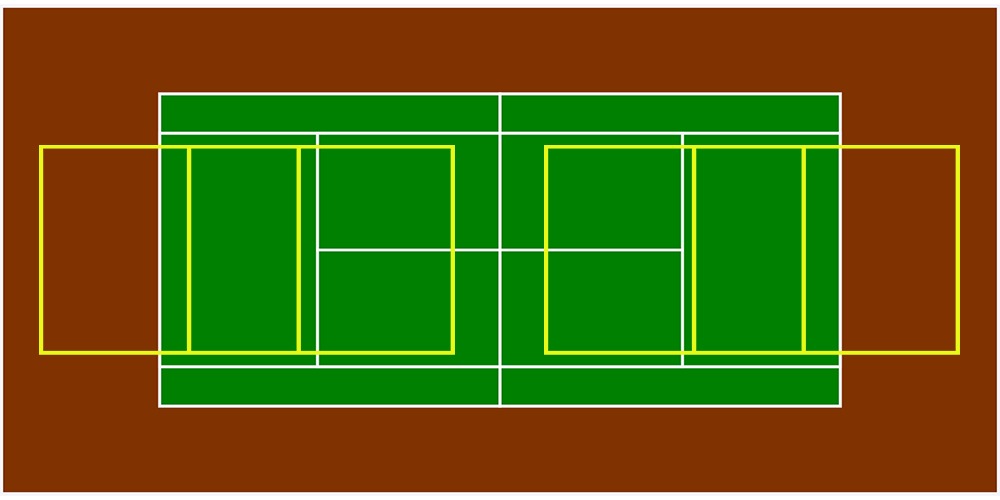
- Use four pickleball footprints of 30 by 60. They fit edge-to-edge at 60 by 120.
- This is efficient. But aisles are tight or zero unless your fence is bigger than 60 by 120.
- Three-court layout
- Ideal when the fenced area is a little tight or when you want a center walkway.
- Place two courts on one side, one on the other, with a shared aisle.
- Good balance of capacity and safety space.
- Two-court layout
- Best for lessons, leagues, and open play with wide run-offs.
- You can use preferred footprints like 34 by 64 for more comfort.
- Easy to manage noise and traffic.
In practice, I often start with three courts when a site wants safety first. If use grows, we re-stripe to four. That way, you meet demand without crowding day one. This stepwise plan also helps you explain to neighbors and boards how many pickleball courts fit on a tennis court, and why you chose that number.
Step-by-step: converting one tennis court to pickleball
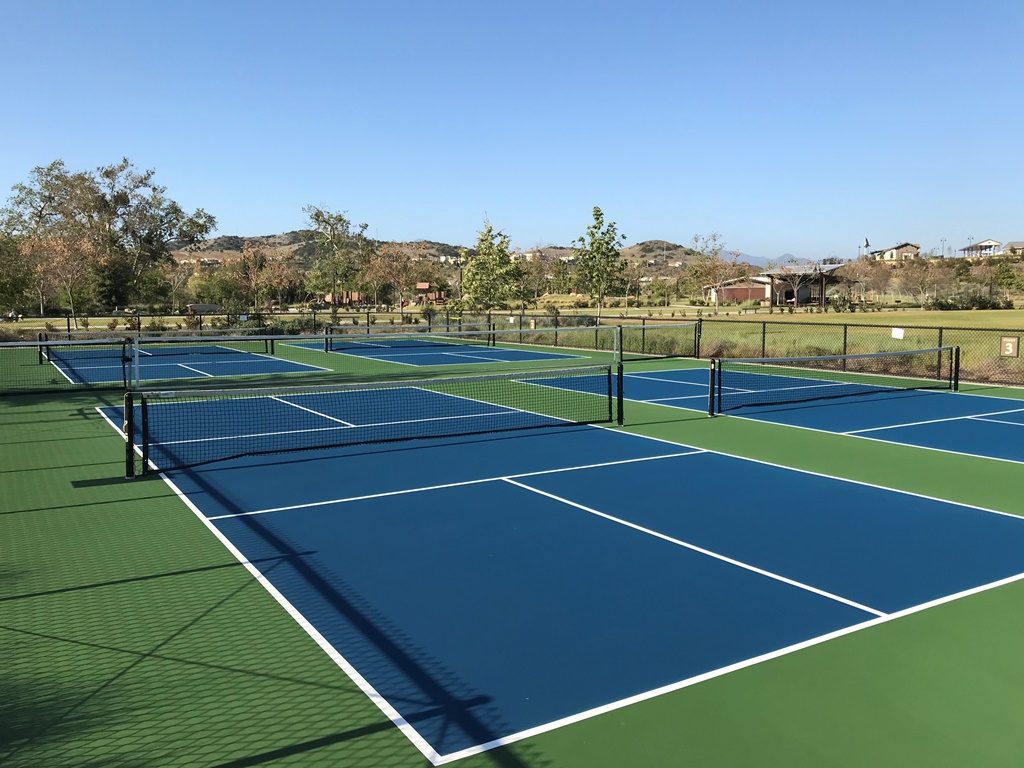
Here is a simple process that works for parks, HOAs, and schools.
- Measure the inside of the fence
- Confirm the usable width and length. Do not guess.
- Note gates, benches, drains, and any raised edges.
- Pick your target count
- Decide early whether two, three, or four courts fit your goals.
- Think about group size, clinics, and mixed play.
- Choose orientation
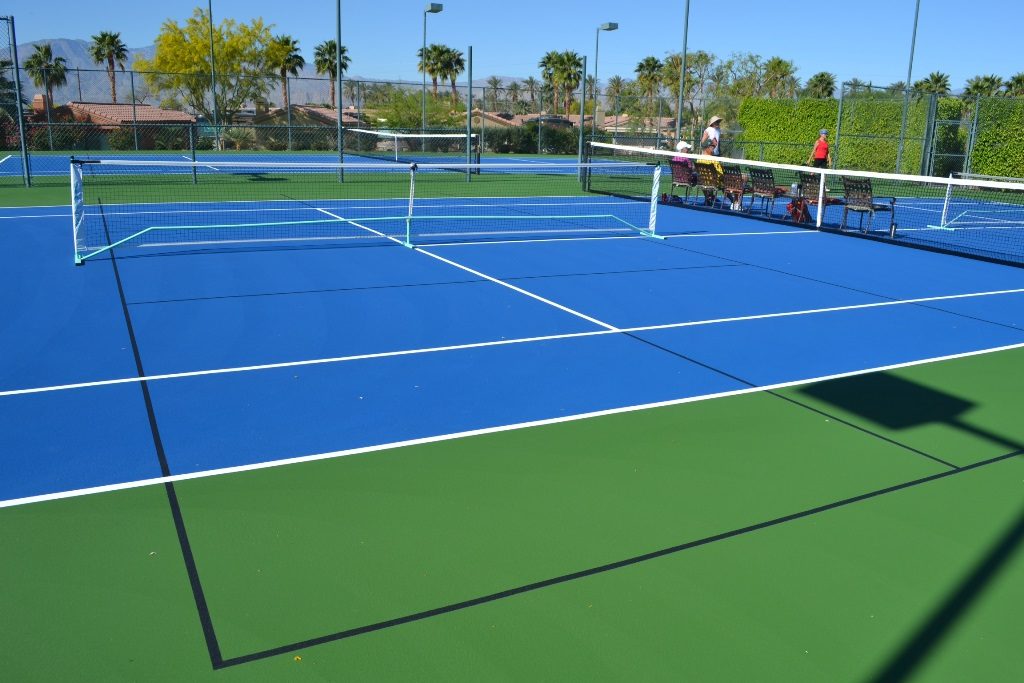
- Most sites set pickleball courts perpendicular to the tennis net.
- This reduces sun glare at peak times.
- Plan spacing
- Aim for a 30 by 60 minimum per court.
- Provide a 5–8 foot shared walkway where possible.
- Select lines and color
- Use high-contrast, but not blinding colors.
- Keep line widths consistent and compliant.
- Choose nets
- Portable pickleball nets are quick and cost-effective.
- Permanent posts and nets are better for heavy use.
- Mark temporary lines first
- Use tape or chalk for a pilot week.
- Gather feedback, then paint if the layout works.
- Paint and anchor
- Use textured acrylic coating for durable lines.
- Anchor nets or add sleeves if going permanent.
- Add signs and rules
- Show court numbers. Post simple play rotation rules.
- Include quiet-hours if needed.
- Schedule and launch
- Stagger opening by time blocks to ease crowding.
- Host a clinic on day one to set good habits.
This whole plan helps you test how many pickleball courts fit on a tennis court at your site with real players, then lock it in.
Lines, nets, and gear that make it work
Lines
- Temporary lines: court tape, chalk, or removable paint. Great for trials.
- Permanent lines: textured acrylic. Long lasting and easy to see.
- Tip: keep lines for each sport in different colors to reduce confusion.
Nets
- Portable pickleball nets: fast setup, 34 inches at center, about 22 feet wide.
- Tennis net conversion: you can strap down the tennis net center to 34 inches, but ends stay high. It is fine for casual play, not ideal for league or tournaments.
- Permanent posts: best for heavy use and windy sites.
Other gear
- Wind screens for comfort and noise control.
- Court numbers and arrows to guide traffic.
- Ball barriers or short dividers for four-court layouts.
Get these choices right, and how many pickleball courts fit on a tennis court becomes less about limits and more about flow.
Safety, spacing, and player flow
Space is safety. Tight courts raise the risk of trips and collisions.
- Side run-off: try for 5 feet minimum on each side.
- Baseline run-off: try for 5–8 feet per end.
- Aisles: aim for 6–10 feet when running three or four courts.
- Doors: keep a clear path from gate to aisles, not across play areas.
- Sun and wind: align courts to limit glare during peak hours.
If your main goal is safe lessons and family play, two or three courts are often better than four. This is a key reason why how many pickleball courts fit on a tennis court is not only a math problem. It is a people problem too.
Costs, timelines, and approvals
Budgets vary by site and scope. Here are ballpark figures I see often.
-
Temporary setup for testing
- Tape or chalk: low cost.
- Two to four portable nets: moderate cost.
- Timeline: one afternoon.
-
Semi-permanent conversion
- Professional line painting: modest per court.
- Windscreens, court numbers, and signs: modest.
- Timeline: a few days with dry weather.
-
Permanent build-out
- Net posts and sleeves: moderate to high per court.
- Minor fence mods and gates: variable.
- Resurfacing or color coating: higher, if needed.
- Timeline: one to three weeks, plus cure time.
Always check with your city, school district, or HOA before painting. Put your plan in writing. Include how many pickleball courts fit on a tennis court at your site, how you will manage noise, and how you will share time with tennis if both sports will remain.
Common mistakes to avoid
- Measuring the playing lines, not the fence-to-fence footprint.
- Forcing four courts when three would be safer and more fun.
- Using glossy paint that becomes slippery when wet.
- Placing courts so players stare into the afternoon sun.
- Skipping simple signs, so new players get lost.
Avoid these, and you avoid 80% of the pain. It also makes it easier to defend your decision on how many pickleball courts fit on a tennis court when neighbors or boards ask tough questions.
Field notes: what actually worked for us
I helped a city park with an older tennis court. The fenced size was about 58 by 118 feet. On paper, four courts might fit. In practice, the gates and a drain made it tight.
We started with three courts using portable nets and taped lines. After two weeks, players loved the center walkway and safer run-offs. We later painted and added windscreens. The lesson: test first. Your site decides how many pickleball courts fit on a tennis court, not a template.
Frequently Asked Questions of how many pickleball courts fit on a tennis court
How many pickleball courts fit on a tennis court?
Most standard tennis courts can hold four pickleball courts if space is a true 60 by 120 feet. Many sites choose two or three for safer run-offs and better player flow.
Can I safely fit four pickleball courts without aisles?
Four 30 by 60 courts fill a 60 by 120 footprint exactly, leaving no aisles. If your fence area is larger, you can add aisles for safety and comfort.
What are the exact dimensions of a pickleball court?
The playing area is 20 by 44 feet. The recommended footprint with run-off is 30 by 60 feet, with a preferred footprint up to about 34 by 64 feet.
Can I use the tennis net for pickleball?
You can strap the center down to 34 inches, but the ends stay high. It is okay for casual play; dedicated pickleball nets are better for consistent play.
Do I need permits to add pickleball lines?
Many cities and HOAs require approval for painting or drilling. Always check local rules before making permanent changes.
How long does a basic conversion take?
A temporary layout can be done in a few hours. A full paint and net-post install can take several days to a couple of weeks, depending on weather.
Is an angled layout better?
Angled layouts can help with sun and space conflicts. They can also reduce ball crossovers in multi-court setups.
Conclusion
You now know how many pickleball courts fit on a tennis court and why the best answer is often two, three, or four. Let your space, safety needs, and player goals decide. Test with tape and portable nets, listen to feedback, then lock in paint and posts.
Ready to map your court? Measure your fence-to-fence area today, sketch two or three layout options, and try a one-week pilot. If this helped, subscribe for more step-by-step guides, or drop a comment with your court dimensions and goals.