
An Ernie in pickleball is a sideline volley hit from outside the kitchen.
If you have ever watched advanced play and seen a player fly past the kitchen to smack a ball by the post, you have seen the Ernie. In this guide, I explain what is an ernie in pickleball, when to use it, how to do it safely, and how to defend it. I have used this shot in league and tournament play, and I will share what works, what fails, and why timing matters.
What is an Ernie in Pickleball? Definition, origin, and why it matters
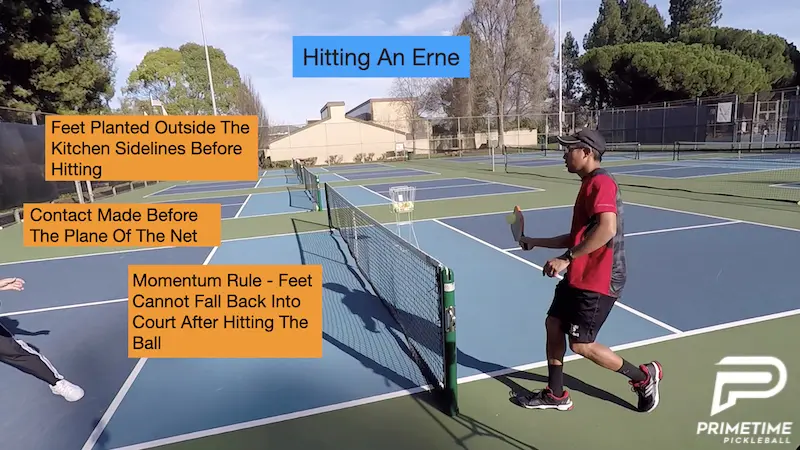
An Ernie is a legal volley taken near the net while the player is positioned outside the non-volley zone along the sideline. The player moves past the kitchen line, exits the court beside the NVZ, and contacts the ball out of the air near the net post. The goal is to cut off a predictable dink or slow ball and win the point fast.
The term comes from Erne Perry, who popularized the move. Some people write it as Ernie, others as Erne. Both refer to the same play. If you came searching for what is an ernie in pickleball, this is the core idea.
It is legal because your feet are not in the kitchen at contact. You can step or jump outside the court and volley there. The ball cannot be contacted over the opponent’s side of the net unless it has already crossed or bounced. Your follow-through can cross the plane as long as you do not touch the net or the opponent’s court.

Why use the Ernie: Benefits and best situations
The Ernie changes angles and steals time. It removes your opponent’s window to react and can end points in one swing. It also sends a message. If they dink lazy to the sideline, you will punish it.
Use it in these spots:
- When crosscourt dinks keep landing near the sideline and pop a bit high.
- When a third-shot drop floats near the kitchen line on your sideline.
- When a speed-up funnels wide and you read the wrist early.
- When the opponent looks down and repeats the same dink pattern.
- When you have a lefty-righty team and the outside player can pounce.
If you wonder what is an ernie in pickleball doing for your win rate, think forced errors and free points. But pick your moments. A mistimed Ernie leaves your side open.

How to execute an Ernie step by step
Here is a simple path I teach and use.
- Read the pattern. Watch the opponent’s paddle face on dinks. If it points wide, get ready.
- Cheat your position. Slide one small step toward the sideline before they hit.
- Exit the kitchen. Plant your outside foot beyond the sideline, outside the NVZ.
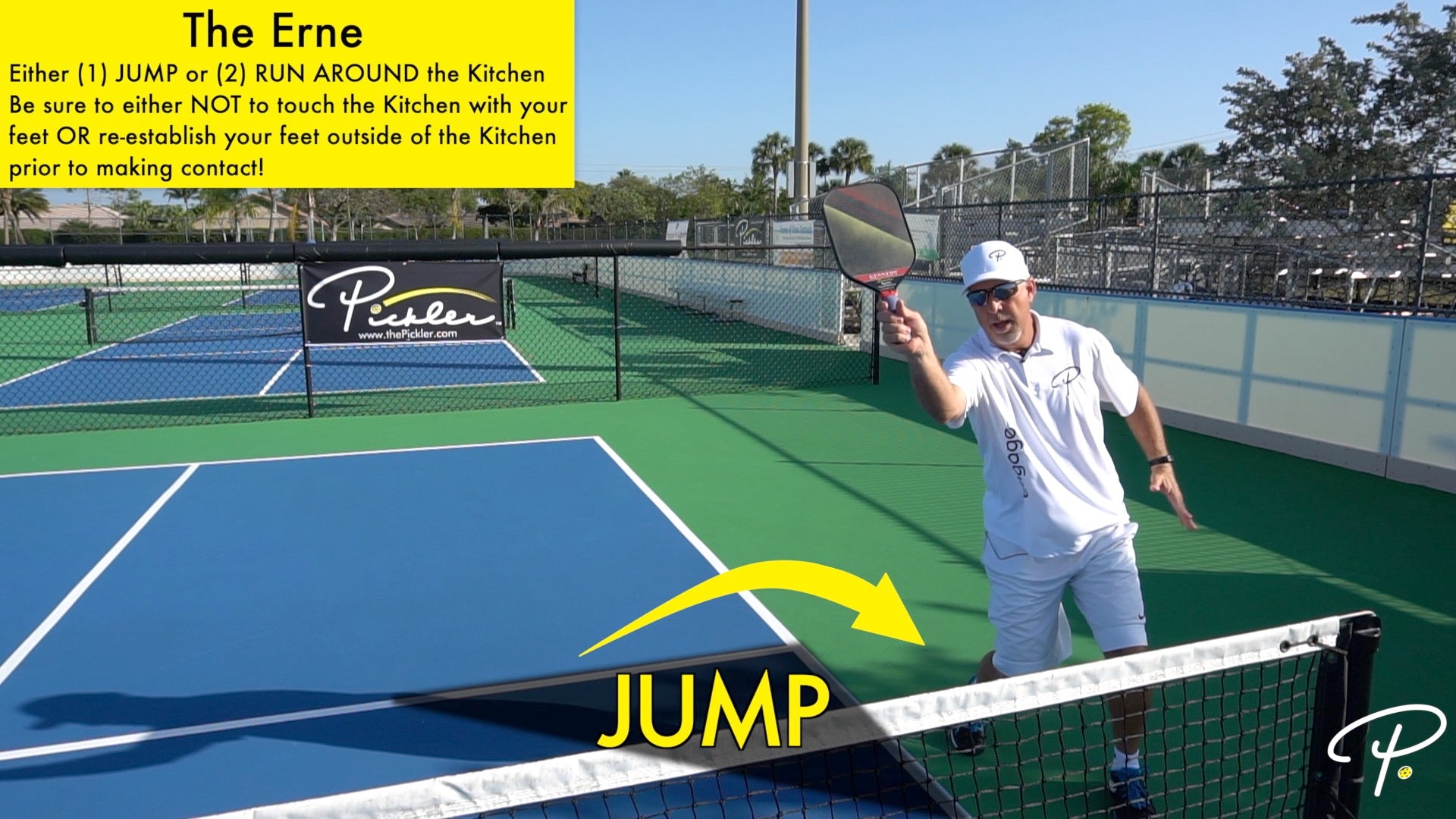
- Take the lane. Either plant and lean, or hop along the line so you never touch the kitchen.
- Contact in front. Strike the ball before it drops below net height if safe.
- Aim smart. Go to the open middle, at the body, or back behind the striker.
- Recover fast. Land balanced and slide back to cover the middle with your partner.
My first clean Ernie in a 4.0 match came off a loopy crosscourt dink. I whispered now, slid out, and tagged the middle. We rode that momentum to close the game.
If a friend asks what is an ernie in pickleball in simple steps, this is the checklist.

Rules and legality: The kitchen, the net, and faults
You cannot volley while touching the non-volley zone or its line. For an Ernie, your feet must be outside the court beside the kitchen when you contact the ball. You can jump over the corner of the kitchen as long as you do not touch it until after the ball is dead.
You may reach over the net only if the ball has crossed to your side or bounced. Your paddle and arm can cross the plane after contact if you do not touch the net. Touching the net or the opponent’s court is a fault.
A quick rule read helps answer what is an ernie in pickleball under official play. The key is footwork, timing, and no kitchen contact on the volley.
Common mistakes and how to fix them
Here are errors I see often, plus fixes that work.
- Stepping on the kitchen line. Draw a chalk lane and rehearse exits. Feel the space.
- Going too early and getting passed. Count to one after their takeback, then go.
- Telegraphing the move. Keep the same posture for two points, then spring.
- Hitting too hard. Use a firm block to the open middle instead of a wild swing.
- Losing balance. Keep your head still and your chest over your toes at contact.
- Leaving the middle empty. Say switch with your partner before you go.
If you think what is an ernie in pickleball without clean footwork, the answer is a free point for your rivals. Fix the feet, and the shot blooms.
Drills to learn the Ernie
These simple drills build habits fast.
- Shadow exits. Without a ball, practice three slow exits along the sideline, then three fast.
- Cone lane. Place two cones to shape your outside path. No cone touches allowed.
- Partner feed. Have a partner dink crosscourt to your sideline. Call go and attack one in four.
- Toss and tag. A coach stands at the kitchen and tosses soft feeds wide. Aim the middle.
- Video check. Record from the side. Freeze the frame at contact. Check feet and paddle path.
If a student asks what is an ernie in pickleball training plan, these drills are my go-to set.
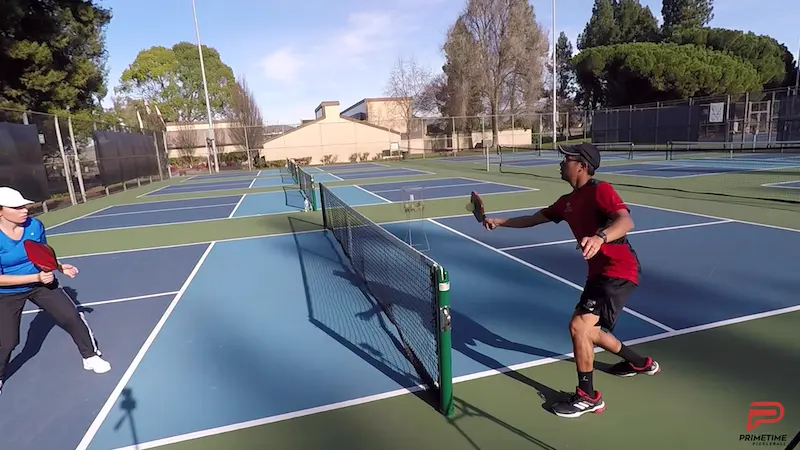
Strategy: Setups and counters
To set up your Ernie:
- Dink to their outside foot until they lean, then bait the wide reply.
- Mix slice dinks that skid and rise near the sideline on the return.
- Fake middle with your eyes, then cheat out one step and spring.
- Bring them wide with two balls, then speed up the third to the body.
To defend the Ernie:
- Avoid wide, high dinks. Aim deeper crosscourt or to the middle seam.
- Roll a surprise lob dink when you see the poach step.
- Use a late counter dink back behind the poacher.
- Call out switch early so your team keeps the middle covered.
This section might be the best answer to what is an ernie in pickleball for players who fear it. Control your patterns, and you control the Ernie.

Safety, etiquette, and communication
The Ernie is fast and close to the post. Safety first.
- Wear stable shoes with good grip. Wet courts make this move risky.
- Give space at the net post. Do not crash the post or the fencing.
- Communicate with one word. Say go or switch before you move.
- Respect rec play. If partners are new, practice setups first, then add speed.
I learned the hard way on a dusty court. One slip taught me to check traction and to keep movements compact. When people ask what is an ernie in pickleball and is it safe, I say yes, with care and clear calls.

Gear and court awareness tips
Small gear tweaks help the Ernie.
- Choose a paddle with a stable face and a soft core for control.
- Use a grip size that lets you hold loose but firm on contact.
- Wear light, grippy shoes and consider protective eyewear.
- Learn each court’s bounce and wind. Wind can push dinks wider for free Ernies.
Gear will not replace timing, but it cleans up misses. It also makes what is an ernie in pickleball feel repeatable, not lucky.
Frequently Asked Questions of what is an ernie in pickleball
Is it spelled Erne or Ernie?
Both show up in play talk. Erne is the original name from Erne Perry, but many players say Ernie.
Can I touch the kitchen after I hit the Ernie?
Yes, after the ball is dead you can enter. During a volley, any kitchen touch before the rally ends is a fault.
Can I reach over the net on an Ernie?
You can cross the plane after you strike the ball on your side. You cannot contact the ball over the opponent’s side unless it has crossed or bounced.
When should a beginner try an Ernie?
Start after you can dink low and read patterns. Practice footwork first, then try it in low-stakes games.
How do I know if the setup is right?
Look for repeat wide dinks that land near the sideline and sit up. If you can see it early and step out clean, go.
What is an ernie in pickleball compared to a poach?
A poach attacks a ball in the middle from your side of the court. An Ernie attacks near the sideline from outside the court beside the kitchen.
Does an Ernie work in singles?
It can, but it is rare. Singles leaves the rest of the court open, so use it only on very soft, wide balls.
Conclusion
The Ernie is a bold, legal volley that punishes lazy wide dinks and floaty drops. You step outside the kitchen, take time away, and change the angle at the net. Learn the rules, drill the exits, and talk with your partner so the middle stays safe.
Try one in practice this week. Set up two wide dinks, then spring on the third. If you found this guide on what is an ernie in pickleball helpful, share it with a partner, subscribe for more tips, or drop a question so we can level up together.