What's the best pickleball paddle? The one that fits your skill, swing, and goals.
If you want a clear, honest guide on what's the best pickleball paddle, you’re in the right place. I study specs, test gear with players at many levels, and track the tech. You’ll learn how to match a paddle to your game and avoid costly mistakes. By the end, you will know exactly how to pick what’s the best pickleball paddle for you.

What does “best” really mean in pickleball?
What’s the best pickleball paddle is not one single model. Best is the paddle that lets you win more points with less strain. It should help your style, not fight it.
Think about three things. Your skill level. Your swing and contact point. Your goals for control, spin, power, and comfort. If these line up, that is what’s the best pickleball paddle for you.

Quick shortlist: best paddles by player type
Below is a practical, test-driven map. Use it to narrow your choices. These picks reflect current trends, lab-style measurements, and player feedback.
- You want control at the kitchen. Look for 16 mm polymer core, raw carbon fiber face, mid weight, standard shape.
- You want power and drives. Try thermoformed carbon paddles with foam walls, 13–14 mm cores, higher swing weight.
- You need spin for serves and rolls. Choose raw T700 carbon faces or textured composite with legal roughness.
- You have tennis background. Go for elongated shape, 5.5–6 inch handle, higher swing weight for plow.
- You battle elbow pain. Use softer 16 mm core, lower swing weight, thicker grip, and damp edge guard.
- You’re a new player on a budget. Pick a midweight, 15–16 mm paddle with a textured face under $100.
Real-world examples to demo
- Control first. Paddles with 16 mm cores and raw carbon faces are standouts for dinks and drops.
- Power first. Modern thermoformed carbon models hit deep, hold twist, and add pace on serves.
- Balanced all-court. Hybrid layups blend pop with dwell time, good for fast hands and resets.
Note: USA Pickleball rules cap size at 24 inches total for length plus width, and max length is 17 inches. Surface roughness must be within legal limits. Any paddle you test should be approved. That matters when you ask what’s the best pickleball paddle for league or tournament play.

Specs that matter and how they change your game
When you compare models, focus on these specs. They affect results right away.
- Weight. Most paddles are 7.8–8.4 oz. More mass adds stability but can tire your arm. Too light can feel fast but unstable.
- Swing weight. This is how heavy the paddle feels in motion. Higher numbers add power and stability. Lower numbers help quick hands. Many players live between 110–125 in common scales.
- Twist weight. This is resistance to twisting on off-center hits. Higher is more forgiving on blocks and flicks.
- Core thickness. 16 mm is soft and plush for control. 13–14 mm is firmer and adds pop.
- Face material. Raw carbon (often T700) gives strong spin and control. Composite can feel poppy and still spin well if textured. Fiberglass is lively but may scratch sooner.
- Shape. Elongated shapes add reach and power. Standard shapes offer bigger sweet spots for resets.
- Handle length. Longer handles help two-handed backhands. Shorter handles enlarge the face sweet spot.
- Build type. Thermoformed, unibody frames with foam edges raise power and stability. Some early runs had delamination risk. Quality control is better now, but test your unit.
- Grip size. A thicker grip can ease elbow load. A thin grip adds wrist whip for spin.
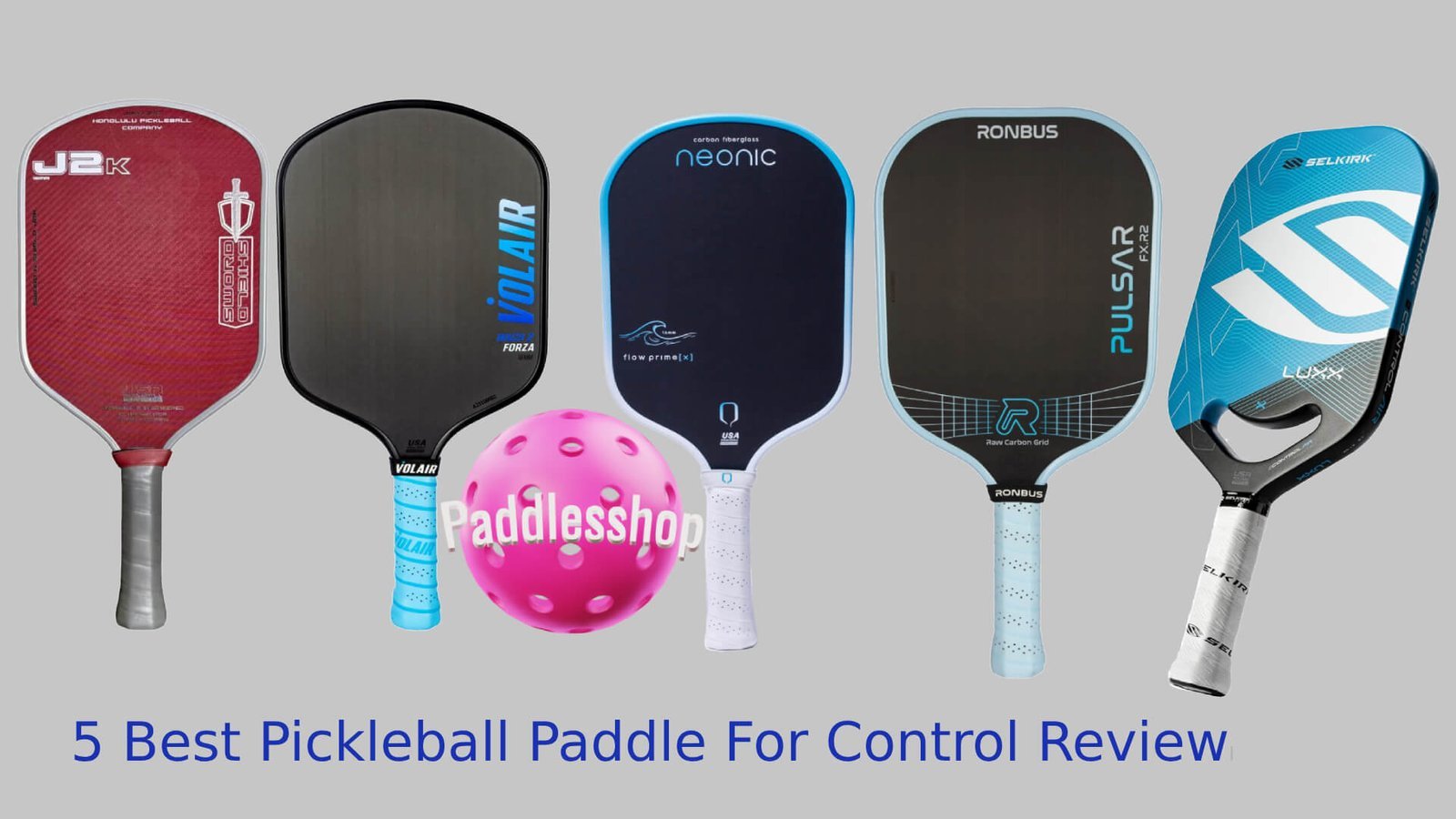
If you ask what’s the best pickleball paddle for spin, look to raw carbon faces with legal texture. If you ask what’s the best pickleball paddle for control, look to 16 mm cores and mid swing weight. If you ask what’s the best pickleball paddle for power, look to thermoformed builds and higher swing weight.
How to choose your paddle in 5 simple steps
Here is a simple plan. It keeps you on track and saves money.
- Set your goal. Control, power, spin, comfort, or a blend. Rank them.
- Match the spec. Pick core thickness, swing weight range, and handle length that fit your goal.
- Pick three demos. Choose one control model, one power model, and one balanced model.
- Test with intent. Hit dinks, drops, blocks, rolls, drives, and serves. Log notes for each shot.
- Decide by results. Which paddle raises your make rate in games with the least strain?
If budget matters, set a cap and stick to it. There are great mid-price paddles now. Ask local shops for demo programs. This is how you find what’s the best pickleball paddle for your exact game.
Real-world testing: how to compare paddles the right way
Short, focused tests beat long, random hitting. Use this repeatable plan.
- Warm-up. Ten dinks crosscourt each side. Count clean contacts.
- Drops. Ten third-shot drops crosscourt. Track how many land in the kitchen.
- Resets. Ten blocks at the kitchen. Note stability on off-center hits.
- Rolls and drives. Ten topspin rolls and ten drives. Watch ball depth and net clearance.
- Serves and returns. Ten serves with your normal target. Note pace and spin.
- Comfort check. Any hot spots, shock, or wrist strain? That matters.
Swap paddles fast to feel differences. Keep the same ball type. Ask a partner to feed at the same pace. This structured test helps you answer what’s the best pickleball paddle in a clear, fair way.

Common mistakes and how to avoid them
Many players chase hype and skip fit. Avoid these traps.
- Buying on pro endorsements alone. Your swing may not match the pro’s setup.
- Ignoring swing weight. Two paddles at the same static weight can swing very different.
- Chasing max power first. Power without control loses points at the kitchen.
- Overgripping. A grip that is too small can stress your elbow. Build it up with overgrips.
- Skipping approval checks. If you play events, make sure the paddle is approved.
Ask yourself again: what’s the best pickleball paddle for your goals today? Pick the tool that lifts your make rate right now.
Care, durability, and when to replace a paddle
Good care keeps your paddle fresh and legal.
- Wipe the face with a damp cloth after play. Keep grit clean for steady spin.
- Store in a cover. Avoid hot car trunks and direct sun.
- Check edges and face. Look for soft spots, cracks, or loose sound. Report issues early.
Replace when the sweet spot dies or the face loses bite. Many frequent players rotate every 6–12 months. If you depend on spin, test new models sooner. A fresh face can be what’s the best pickleball paddle for your next jump in level.
Frequently Asked Questions of what's the best pickleball paddle
What’s the best pickleball paddle for beginners?
Choose a midweight, 16 mm core paddle with a textured face. It will help control, reduce shock, and build clean strokes.
What’s the best pickleball paddle for tennis players?
Try an elongated shape with a 5.5–6 inch handle and higher swing weight. It gives reach, plow, and a smooth two-handed backhand.
What’s the best pickleball paddle for elbow pain?
Pick a softer 16 mm core, mid to low swing weight, and a thicker grip. Add lead low on the throat if you need more stability.
Do expensive paddles make a big difference?
They can add stability, spin, and build quality. But fit matters more; many mid-price paddles now perform very well.
How do I know if a paddle has good spin?
Raw carbon faces and legal texture tend to grab the ball best. You should feel bite on rolls and see extra dip on serves.
What’s the best pickleball paddle for control at the kitchen?
Use a 16 mm polymer core with a raw carbon face and mid swing weight. It helps with soft hands, resets, and dinks.
How important is swing weight compared to static weight?
Swing weight rules feel and timing. It decides paddle speed at the kitchen and stability on blocks more than static weight alone.
Conclusion
Best is personal. Define your goal, match the right specs, and test with intent. When results improve in real games and your arm feels good, you have your answer.
Take one step today. Pick three demos that fit your style and run the test plan. Share your results, ask questions, and keep learning. If this helped, subscribe for more guides and gear breakdowns.