
You can’t volley while touching the kitchen or its line. Enter only after a bounce.
If you’re new or still confused about what are the kitchen rules in pickleball, you’re not alone. I’ve coached dozens of players through this exact question. In this guide, I break down the non-volley zone with clear rules, simple examples, and on-court tips. You’ll learn how to avoid easy faults, play smarter at the net, and win more points with confidence.

What Is the Kitchen (Non-Volley Zone)
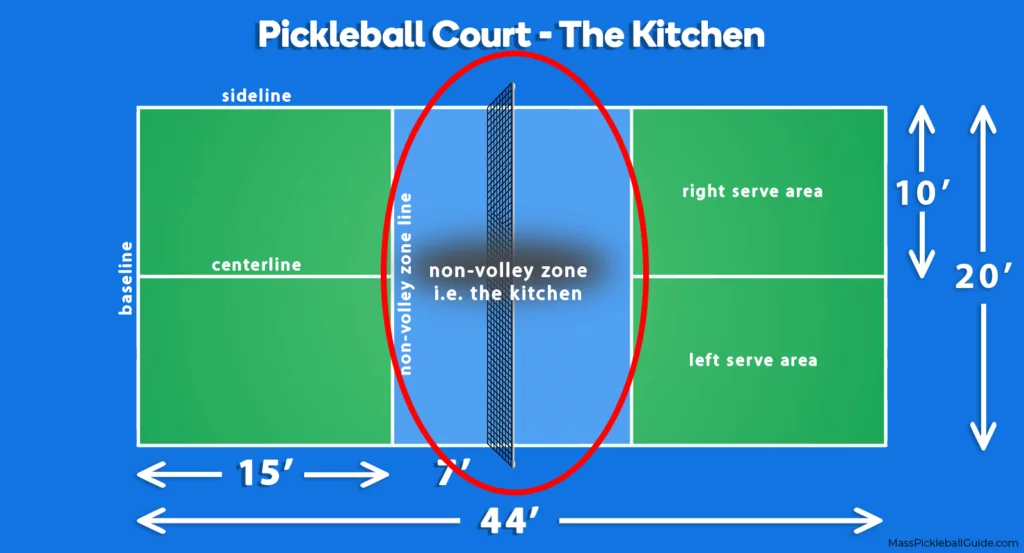
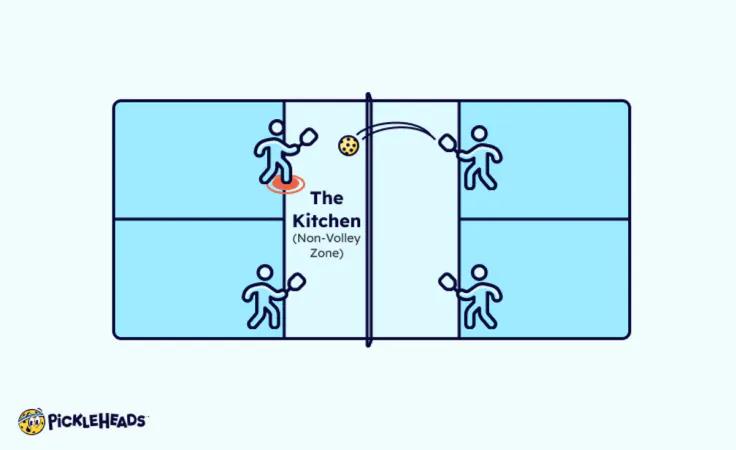
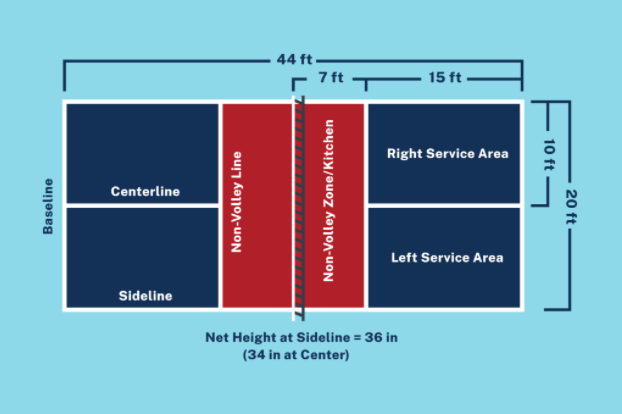
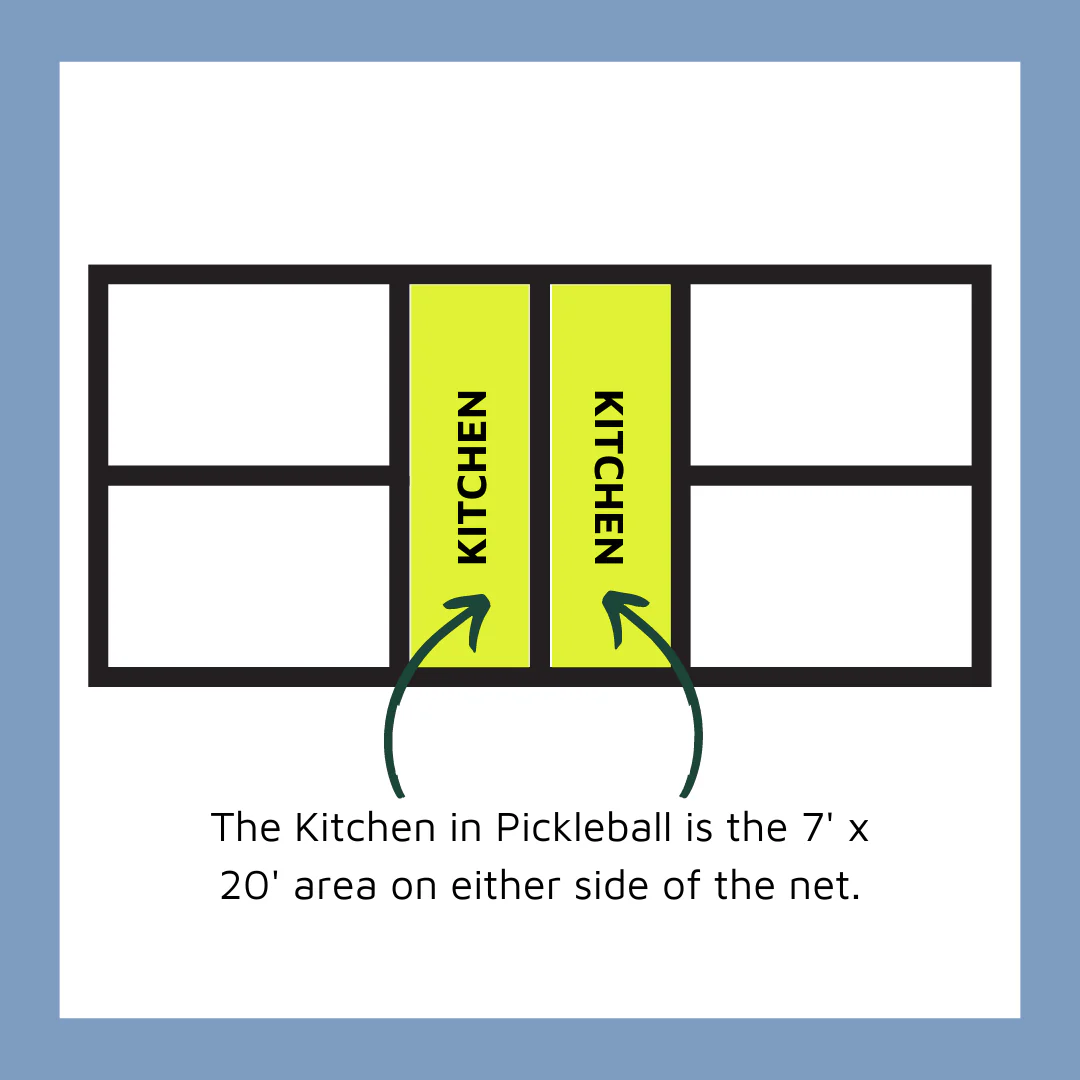
The kitchen is the non-volley zone, also called the NVZ. It is the 7-foot area on both sides of the net. The NVZ line counts as part of the kitchen.
You can stand in the kitchen. You can hit balls that bounce in it. You cannot volley while touching it or its line. This is the heart of what are the kitchen rules in pickleball.
To volley again after being in the kitchen, both feet must first touch outside the NVZ. Only then may you hit a volley.
Core Kitchen Rules You Must Know
These are the key points that answer what are the kitchen rules in pickleball and keep you fault-free:
- No volleys while any part of you touches the kitchen or its line.
- A volley is a shot hit out of the air before the ball bounces.
- You may step into the kitchen to play a dink after the ball bounces.
- After a volley, your momentum cannot carry you into the kitchen or onto its line.
- Your paddle, hat, or anything you wear or carry cannot touch the kitchen during a volley.
- The kitchen line is part of the kitchen, so it counts as a fault on volleys.
- To “reset” after entering the kitchen, both feet must touch the court outside the NVZ before you volley.
If you follow these, you’ll avoid the most common kitchen mistakes.
Foot Faults and Real-World Examples
Foot faults happen when your foot touches the kitchen or line during a volley. It also happens if your momentum carries you in after a volley. I once lost match point because my toe tapped the line after a put-away. It stung, and I never forgot it.
Examples to keep in mind:
- You jump for a high volley and land on the line: fault.
- You volley, then stumble forward into the NVZ: fault from momentum.
- Your paddle drops into the NVZ after a volley: fault.
These cases answer what are the kitchen rules in pickleball in real play. Watch your balance and your landing spots.

Serving, Returning, and the Kitchen
The two-bounce rule and the kitchen are different ideas. On the serve, the ball must bounce once on the return side, and the return must bounce before the serving team volleys. This rule is not the kitchen rule, but players mix them up.
On a serve, the ball cannot land in the kitchen or on the kitchen line. If it touches the NVZ line on the serve, it is a fault. Knowing this helps you handle what are the kitchen rules in pickleball from the very first shot.
Dinks, Volleys, and Momentum
Dinks are soft shots, often from inside the kitchen, after the ball bounces. Volleys are shots taken out of the air. You can stand in the kitchen to dink all day. You just cannot volley while touching the kitchen.
Momentum matters. If you volley and your body, paddle, or clothing later touches the kitchen due to that same motion, it is a fault. Think of it like a “no-fall-forward” rule. This is a key part of what are the kitchen rules in pickleball.

Doubles Nuances and Partner Plays
Partners can help. If your teammate grabs your shirt to stop your fall into the kitchen, that is fine, as long as neither of you touches the kitchen. Teamwork can save a point near the NVZ.
Some doubles tips tied to what are the kitchen rules in pickleball:
- Call “line” if your partner drifts near the NVZ line.
- Stagger feet so only one of you risks a foot fault.
- After a dink, step out fast so you can volley the next ball safely.

Source: pickleballkitchen
Common Myths and Clear Fixes
These myths lead to needless faults. Here is what are the kitchen rules in pickleball in plain words:
- Myth: You cannot stand in the kitchen. Reality: You can, but only hit after a bounce.
- Myth: Your paddle cannot cross over the kitchen in the air. Reality: It can cross over as long as nothing touches the NVZ.
- Myth: A serve can kiss the NVZ line and be good. Reality: If a serve touches the kitchen or its line, it is a fault.
- Myth: If you jump from outside and land back outside, it is always a fault. Reality: It is legal if you never touch the kitchen. This is often seen in an Erne shot.
Source: rockstaracademy
How I Teach New Players The Kitchen
When I coach, I start with a simple drill. I draw a bold NVZ line and ask players to call “in” or “out” with each step. It builds foot awareness.
I also use a “freeze after volley” rule. You volley, and you must hold your finish for a beat. If your body leans in, you would have faulted. This helps people feel what are the kitchen rules in pickleball with their own balance.

Practice Drills to Master the Kitchen
Try these short, clear drills. They will lock in what are the kitchen rules in pickleball while building touch.
- Line taps: Step in, step out, then volley only after both feet reset outside.
- Dink ladder: Dink crosscourt from inside the NVZ, then step out and back in.
- Momentum check: Volley from close range, then plant your weight back to avoid falling in.
- Erne footwork: Practice takeoff from outside the sideline and land beyond the NVZ, no line touch.
- Call-and-catch: Partner shouts “in” or “out” as you move, training quick resets.
Penalties, Referee Calls, and Yearly Updates
In rec play, you call your own kitchen faults. In tournaments, referees watch feet, lines, and momentum after volleys. If your momentum takes you into the kitchen after a volley, the referee will call a fault, even if the ball is no longer in play.
Rules update each year. The core NVZ ideas rarely change, but language can. If you want a deep dive into what are the kitchen rules in pickleball, check the current official rulebook before events.
Equipment and Court Lines That Affect Kitchen Calls
Good shoes help you stop short of the NVZ line. Tape or chalk lines can be slick or raised, so test them in warm-up. Know where the line sits, and note any glare.
Remember: lines are part of the zone they mark. On volleys, the kitchen line is the kitchen. On serves, a ball on the kitchen line is a fault. These small facts shape what are the kitchen rules in pickleball in tight moments.
Frequently Asked Questions of what are the kitchen rules in pickleball
What counts as touching the kitchen during a volley?
Any contact with the NVZ or its line by your body, paddle, or clothing is a fault. If your momentum causes contact after a volley, it is still a fault.
Can I stand in the kitchen and hit the ball?
Yes, if the ball has bounced. You cannot volley from the kitchen or while touching its line.
Does a serve that lands on the kitchen line count?
No. On the serve, the ball cannot land in the kitchen or on its line. That is a service fault.
Can my paddle be over the kitchen while I volley?
Yes, as long as nothing touches the NVZ or its line. Airspace over the kitchen is fine.
Do both feet need to be outside before I can volley?
Yes. You must reestablish both feet outside the NVZ before any volley. Touching the line still counts as being in the kitchen.
Is it legal to jump across the kitchen to hit a volley?
Yes, if you take off from outside the NVZ and land outside it. No part of you may touch the kitchen or its line during the move.
What if my hat or sunglasses fall into the kitchen after I volley?
That is a fault tied to your volley. Anything you wear or carry cannot touch the NVZ due to momentum.
Conclusion
The kitchen is simple once you feel it with your feet. No volleys while touching the NVZ or its line. You can enter to play bounces, then step out to volley again. Keep your balance, manage momentum, and watch that line.
Take today’s tips to your next game. Practice the drills, call out your resets, and aim for clean, smart plays. If this helped, share it with a partner, subscribe for more guides, or drop your questions in the comments.