
Yes, you can stand in the kitchen, but you cannot hit volleys there.
If you play pickleball, the kitchen can feel like a mystery. I’ve taught hundreds of players the kitchen rules, and I still hear the same question: can you be in the kitchen in pickleball? This guide breaks it all down with clear rules, simple examples, and friendly tips you can use today.
What Is the Kitchen in Pickleball?
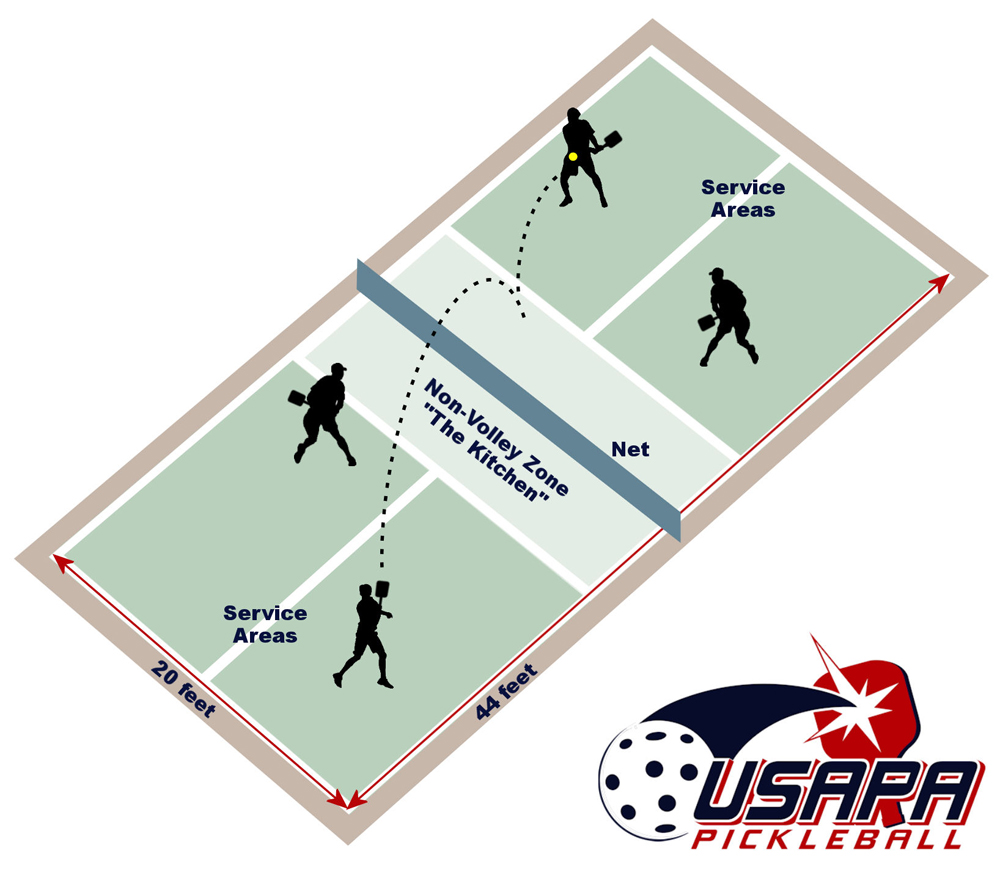
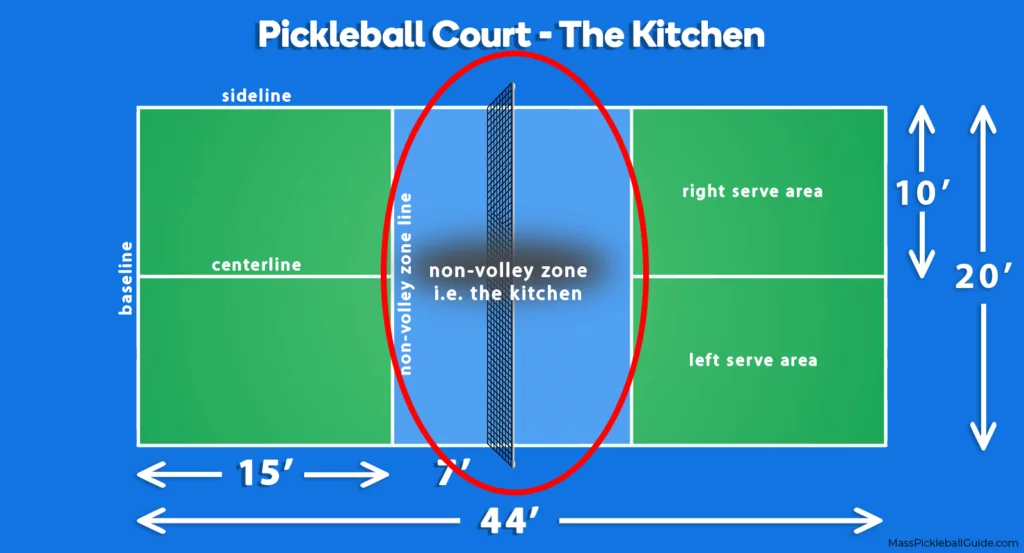
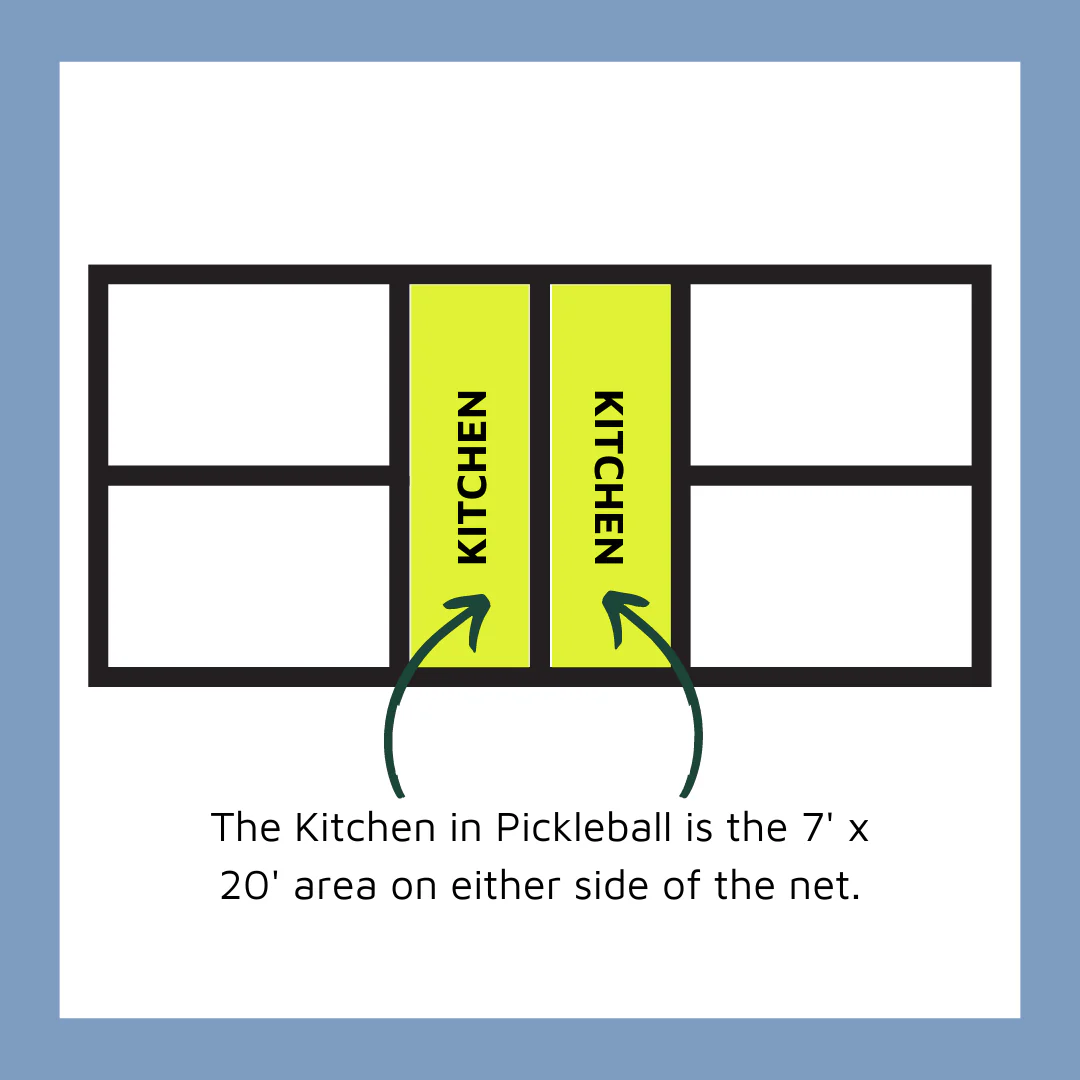
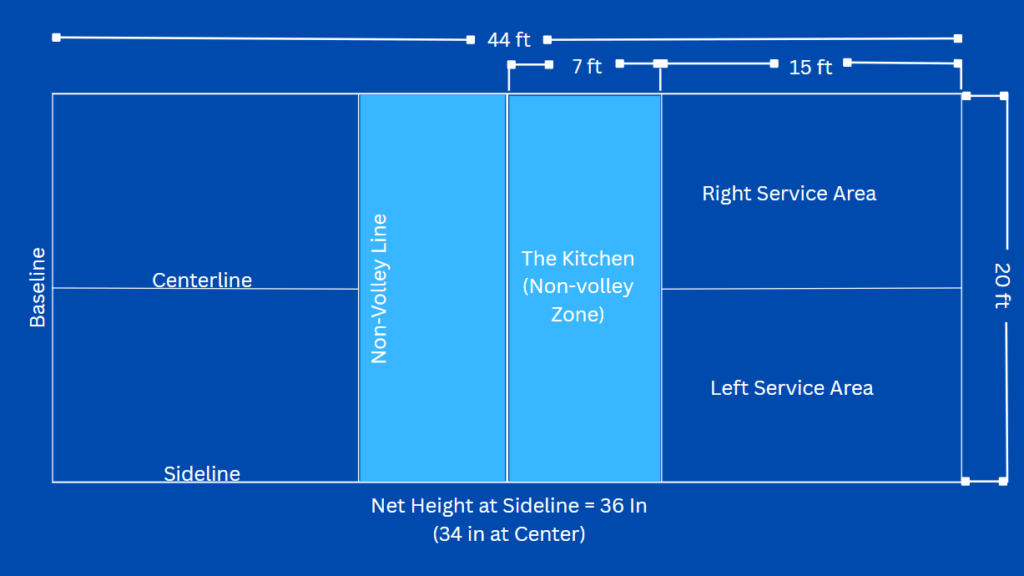
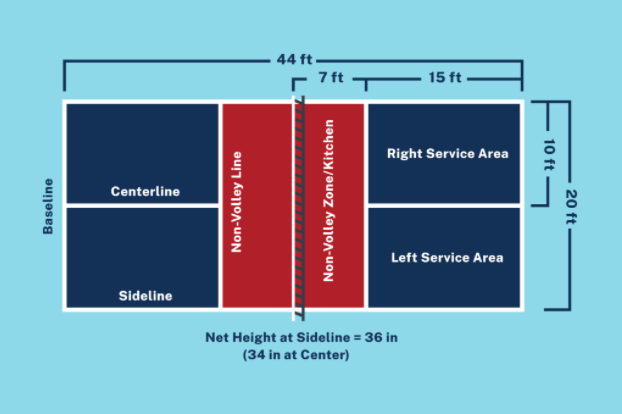
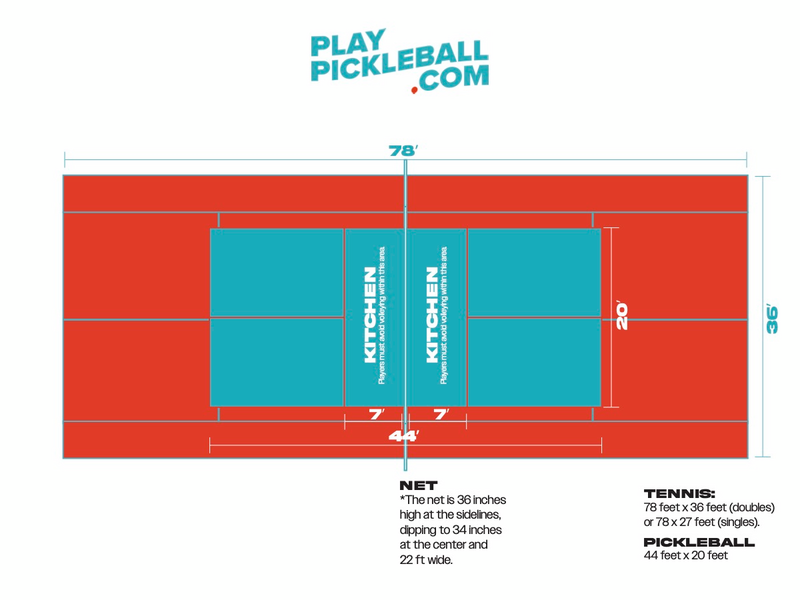
The kitchen is the non-volley zone, also called the NVZ. It is a 7-foot zone on both sides of the net. The lines count as part of the kitchen. The purpose is to stop players from smashing right on top of the net.
The rule is simple. You cannot hit a volley while touching the kitchen in any way. A volley is a shot you hit before the ball bounces. You can step into the kitchen to hit a ball after it bounces. So, can you be in the kitchen in pickleball? Yes, as long as you do not volley.
In the official rulebook, the non-volley zone is clearly defined. It includes the painted line and anything touching it. This includes your shoes, your paddle, your hand, or even your hat. Many players ask, can you be in the kitchen in pickleball during a rally? You can, but not for a volley.
The Core Rule: What You Can and Cannot Do
Here is the heart of the rule, in plain words.
You can:
- Stand in the kitchen when the ball has bounced.
- Step in, hit a dink after a bounce, then step out.
- Reach over the kitchen in the air to volley, as long as no part of you or your gear touches the kitchen.
- Block or reset after a bounce while inside the kitchen.
You cannot:
- Volley while any part of you or your paddle touches the kitchen or its line.
- Let your momentum carry you into the kitchen after a volley.
- Touch the kitchen with your paddle, cap, clothing, or body during a volley.
A common fault is momentum. You volley outside the kitchen, then step into the kitchen because your body keeps moving. That is a fault, even if the ball is dead. People often ask, can you be in the kitchen in pickleball if the ball is already out? If you volleyed and momentum takes you in, it is still a fault.
Can You Be in the Kitchen in Pickleball During Different Shots?
Let’s break it down by play type. This clears up most confusion fast.
Serve and return:
- You may stand outside the kitchen to receive.
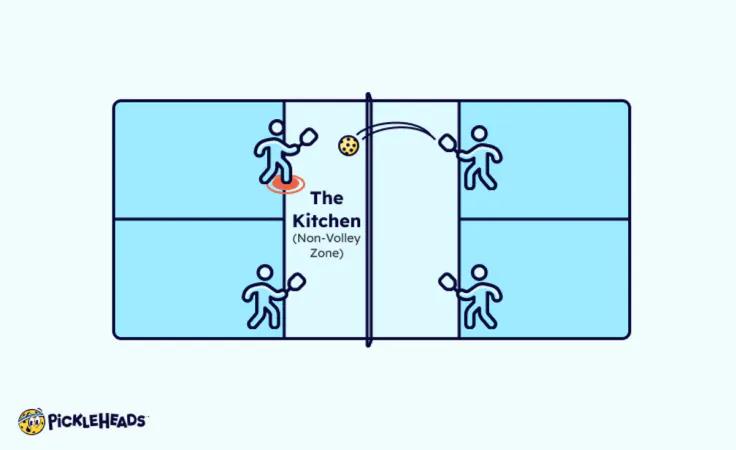
- After the return bounces, you may step into the kitchen for a dink or drop.
- You cannot volley the third shot from the kitchen. In fact, you cannot volley at all from the kitchen.
Dinks:
- Dinks are soft shots that bounce.
- You can step in to hit a dink after it bounces.
- Step out fast so you are ready for the next ball at the line.
Volleys:
- Volleys must be taken with no contact with the kitchen.
- Jumping is allowed if you take off and land outside the kitchen.
- If you land in the kitchen after a volley, that is a fault due to momentum.
Erne and around-the-post:
- These advanced shots can be legal.
- The Erne is a volley taken outside the court near the sideline. You must not touch the kitchen.
- Around-the-post is fine as long as you follow volley and bounce rules.
So, can you be in the kitchen in pickleball during a dink exchange? Yes, if the ball bounces first. Can you be in the kitchen in pickleball during a fast volley hand battle? No, not while volleying.

Common Scenarios and Mistakes to Avoid
These are the situations I see most in rec play and tournaments.
- Toe on the line during a volley: The kitchen line counts as the kitchen. If your toe is on it while volleying, that is a fault.
- Paddle drops in the kitchen: You volley and then your paddle slips and lands in the kitchen. That is a fault.
- Momentum rule trap: You volley near the line, your swing pulls you forward, and you step in. That is still a fault, even after your shot wins the rally.
- Leaning and touching: If you lean to volley and your shirt brushes the net post or your paddle taps the kitchen, that is a fault.
- Confusion after a bounce: Once the ball bounces, you can enter the kitchen. Many players freeze because they think they cannot step in at all. You can, and sometimes you should.
To make it stick, ask yourself in real time: can you be in the kitchen in pickleball right now? If the ball has bounced, yes. If you are about to volley, no.

Footwork and Drills to Master the Kitchen
Good footwork keeps you safe and sharp at the line. Try these simple drills.
- Split-step and shuffle at the NVZ: Stay light on your feet. Split as the hitter contacts the ball. Shuffle left and right while keeping toes behind the line for volleys.
- Bounce-in, bounce-out drill: Toss a soft ball into the kitchen. Step in, dink after the bounce, then step back out to reset. Repeat in sets of 10.
- Momentum control drill: Volley from just behind the line, then freeze. Hold your balance. If you tip forward, you are at risk of a fault.
- Towel test: Place a towel on the kitchen line. Practice volleys close to it without touching the towel.
- Ladder dink ladder: Start cross-court. Hit five dinks from outside the kitchen, then step in for five bounce dinks, then step out again.
I remind students to ask, can you be in the kitchen in pickleball when practicing resets? Yes, after a bounce. That frees your mind and helps you focus on touch.
Strategy: Owning the Kitchen Line
Smart play at the NVZ wins games. Here is the plan I teach.
- Win the line early: Use a soft third shot drop to move up. Both partners should get to the kitchen line.
- Hold your ground: Stay close to the line with a balanced stance. Ready hands. Soft grip for control.
- Reset under pressure: If you face heat, slow the ball into the kitchen. Make it bounce. Then step in as needed.
- Target feet and middle: Aim at toes or the middle gap. You get more errors without big swings.
- Use height and arc: A safe arc that lands in the kitchen keeps you in control.
- Communicate: Call yours or mine. Talk about poaches and who covers lobs.
Players often wonder, can you be in the kitchen in pickleball to finish a point? Yes, if the ball bounces first. If it does not bounce, stay out while you swing.
Gear and Court Setup Tips
Small tweaks make the kitchen easier to manage.
- Shoes: Wear court shoes with good grip. This helps you stop short of the line on volleys.
- Paddle: Use a paddle with control and a soft face. It helps with resets and dinks.
- Socks and balance: Good socks reduce slip so you avoid momentum faults.
- Clear lines: Make sure the kitchen line is bright and not slick. Clean dust often.
- Weather notes: On hot days, sweat can drip and cause slips. On cold days, balls skid more. Adjust your footwork.
These small items help answer the big question: can you be in the kitchen in pickleball with confidence? Yes, when your gear and setup support safe, sharp movement.
Rules and Updates You Should Know
The non-volley zone rules live in the main rulebook. The kitchen includes the line. No volleys while touching the kitchen. Momentum after a volley still counts as a fault. After a bounce, entering the kitchen is allowed.
Rule committees update language from time to time. Check the latest section on non-volley zone rules each season. Tournament directors may post clarifications before play. When in doubt, ask a referee before your match. If you still wonder, can you be in the kitchen in pickleball during a specific situation, refer to the part on volleys, momentum, and line contact.
Real-Life Lessons From Coaching and Play
Here are a few moments that shaped how I teach the kitchen.
- The cap drop: A student volleyed cleanly, then his cap fell into the kitchen. We called a fault. He never forgot that gear counts as contact.
- The happy winner: A player ripped a winner from near the line, then stepped into the kitchen to celebrate. Fault. We learned to hold balance until the rally is truly over.
- The dink freeze: New players refuse to step in for a low dink. They pop it up and lose. When they learned they can step in after a bounce, their soft game jumped fast.
Each moment taught the same lesson. Ask yourself, can you be in the kitchen in pickleball for this shot? If it bounced, go ahead. If not, hold the line and stay clear.
Frequently Asked Questions of can you be in the kitchen in pickleball
Can you be in the kitchen in pickleball at any time?
Yes, you can be in the kitchen any time the ball has bounced. You cannot volley while touching the kitchen or its line.
Is the kitchen line part of the kitchen?
Yes, the line is part of the kitchen. If you touch the line during a volley, it is a fault.
What is the momentum rule in the kitchen?
If you volley and your momentum carries you into the kitchen, it is a fault. This is true even if the rally seems over.
Can you jump to volley over the kitchen?
Yes, if you take off and land outside the kitchen. If you land in the kitchen after the volley, it is a fault.
Can I step into the kitchen to hit a dink?
Yes. If the ball bounces first, you can step in, hit the dink, and step back out.
Can you be in the kitchen in pickleball after hitting a winner?
If it was a volley and your momentum takes you into the kitchen, it is still a fault. If the ball bounced first, entering is fine.
Does my paddle touching the kitchen cause a fault on a volley?
Yes. Any part of your body or gear touching the kitchen during a volley is a fault. Keep everything clear of the zone.
Conclusion
The kitchen rule is simple once you feel it in real play. You can stand in the kitchen after a bounce, but you cannot volley from there or let momentum pull you in. Learn the line, master your balance, and use dinks and resets to control points.
Take this to your next match. Ask yourself before every swing: bounce or no bounce? Then act with confidence. If this helped, share it with a partner, subscribe for more tips, or leave a question so we can improve your kitchen game together.