
Switch ends mid-game and between games; switch service courts after your team scores.
If you have ever asked when do you switch sides in pickleball, you are not alone. I teach and play several days a week, and this one comes up often. Below, I explain when do you switch sides in pickleball in plain terms, with clear rules, real match examples, and smart tips you can use today. Stick with me and you will never be out of position again.

What “switching sides” really means in pickleball
Many players mix up two ideas. Switching sides can mean changing ends of the court, or it can mean swapping left and right service courts with your partner. Both happen, but at different times. Knowing the difference will save points and keep the game smooth.
Think of it like this:
- Changing ends of the court fixes sun, wind, and glare. It happens at set score marks or after a game.
- Switching left and right service courts happens within a rally sequence, and it depends on who served and who scored.
When do you switch sides in pickleball depends on which meaning you have in mind. We will cover both so you can play with full confidence.

Official rules: switching ends of the court
According to the current USA Pickleball rules, players switch ends of the court to keep play fair in sun and wind.
Here is the quick guide:
- Games to 11 points: Switch ends at the end of each game. In game 3 (or any deciding game), switch ends when the first team reaches 6 points.
- Games to 15: Switch ends when the first team reaches 8 points.
- Games to 21: Switch ends when the first team reaches 11 points.
In casual play, many groups choose to switch ends at 6 in a single game to 11, even if it is not the deciding game. That keeps the sun and wind fair for everyone. When do you switch sides in pickleball during rec play can follow house rules, so agree before the first serve.

Doubles: switching service courts and positions
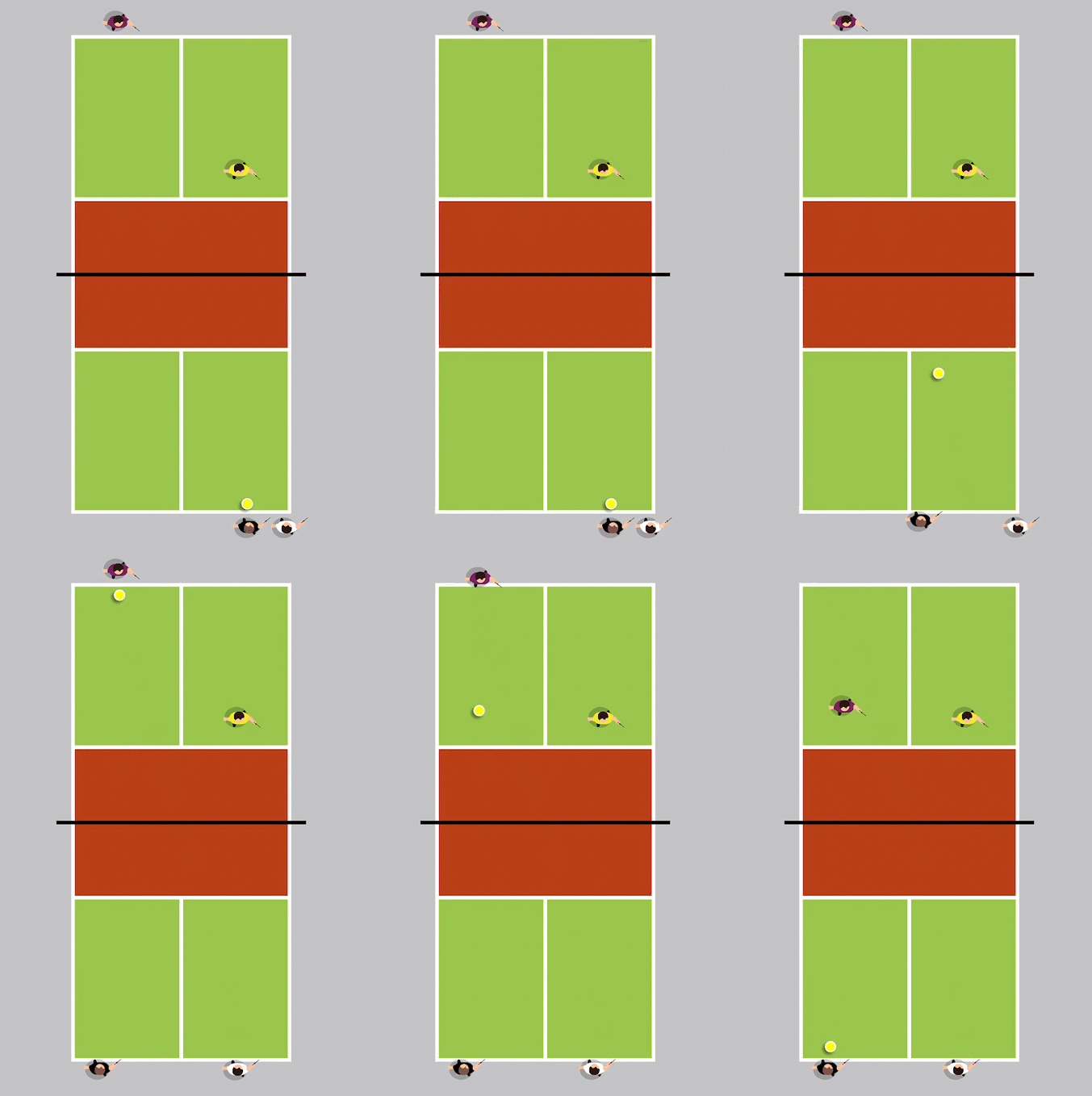
This is where most confusion starts. In doubles, you and your partner change left and right service courts after your team scores a point while serving. The receiving team does not switch sides after a point; they hold their positions. When do you switch sides in pickleball doubles is about tracking the server, the score, and the even or odd court.
Key rules to lock in:
- Even score, serve from the right court. Odd score, serve from the left court.
- After your team wins a rally while serving, the server moves to the other service court. You and your partner swap left and right positions.
- If you lose a rally while serving, you do not switch courts. The serve either moves to your partner (first server to second server) or to the other team on a side out.
- At 0-0, the first serving team starts at 0-0-2, which means only one server for that first turn. After that, it goes back to two servers per team on each side out.
A simple doubles flow:
- Server A starts on the right at 0. They score. A moves to the left; partner moves to the right.
- Score is now 1. A serves from the left because 1 is odd.
- If A’s team scores again, they switch courts again. If they lose the rally, A stays put and the serve goes to Server B.
- On a side out, the other team’s right-side player with an even score will serve first.
Stacking is allowed to keep a lefty or righty on a preferred side. You can stand anywhere behind your baseline at the serve, as long as the correct server and correct receiver play the first shot. Just return to your pattern after the return. When do you switch sides in pickleball while stacking? Only when your serving team wins a point, or when you change ends at the set score mark.

Singles: when and how you switch sides
Singles is simpler. There is only one server and one receiver. The server uses the even or odd rule the same way:
- Server serves from the right on even scores and from the left on odd scores.
- After the server wins a point, the server switches service courts.
- The receiver does not switch sides between rallies, but stands in the proper diagonal court to receive each serve.
So, when do you switch sides in pickleball singles? You change service courts after every point you win on serve, and you change ends at the same score marks listed for doubles.

Real match scenarios that make it click
Let’s lock it in with simple cases.
-
Case 1: Doubles game to 11, first rally
- Score is 0-0-2. Right-side player serves to start. They win the rally.
- Score is 1-0-2. That server moves to the left court. Their partner moves right.
-
Case 2: You lose a rally while serving
- No one switches service courts after the rally ends.
- The second server serves next, or it is a side out if it was the second server.
-
Case 3: Deciding game to 11 in a match
- When the first team reaches 6, players switch ends. Serve stays with the correct team and correct server. Only court ends change.
-
Case 4: Game to 15 on a windy day
- Switch ends at 8. Use that switch to flip your strategy and hit into the wind with more margin.
-
Case 5: Stacking with a lefty
- You stack to keep your lefty on the left. After you score on serve, you may cross and reset into the same pattern. That is allowed as long as the correct server and receiver start the point.
When do you switch sides in pickleball should now feel clear in each case.
Strategy: use side switches to your advantage
Smart teams plan for the switch. Treat it like a timeout you know is coming.
Try these ideas:
- With sun in your eyes, set softer returns and buy time until the end switch.
- In wind, drive into the wind, drop and dink with the wind, and aim higher over the net when gusts rise.
- If your backhand is strong cross-court, try to start on the side that gives you that pattern for more points before the switch.
- Stack to get your best forehand in the middle. Switch ends will not break your pattern if you plan your spots.
When do you switch sides in pickleball can become a weapon. Add a note on your phone or paddle edge tape with your plan for sun, wind, and game three at 6.

Common mistakes and how to avoid them
Even good players slip on these small rules. Catch them early.
-
Serving from the wrong court
- Fix: Check the score. Even score serves from right. Odd score serves from left.
-
Partner forgets to swap after a point
- Fix: Build a habit. Say “switch” out loud after you score while serving.
-
Receiver takes the serve from the wrong court
- Fix: The correct receiver is the one in the diagonal court from the server. If the wrong player returns, stop the rally right away in non-officiated play and replay the point.
-
Stacking confusion
- Fix: Mark who is the correct server and correct receiver before each rally. You can stand anywhere, but the right people must start the point.
-
Missing the mid-game end switch
- Fix: At 6 in a deciding game to 11, or 8 in games to 15, call out “Switch ends.”
When do you switch sides in pickleball errors often come from rushing. Slow down, say the score, then serve.
House rules, leagues, and casual play tips
In many parks, the group uses a simple rule: switch ends at 6 in every game to 11. That keeps things fair with glare and wind. In leagues and tournaments, follow the official score marks. If a referee is present, they will direct the end switch.
Best practices I use with new groups:
- Agree on when do you switch sides in pickleball before the first serve.
- Decide how to handle wrong server or wrong receiver. Most groups replay the point.
- Call the full score out loud. That anchor helps everyone track the correct court.
These small steps prevent disputes and keep games fun for all skill levels.

Frequently Asked Questions of when do you switch sides in pickleball
Do players switch ends in every game to 11?
Players switch ends at the end of the game. In a deciding game to 11, you also switch ends when the first team reaches 6 points.
In doubles, do both partners move after scoring?
Yes. When your team scores while serving, the server and partner swap left and right service courts. The receiving team does not switch positions after that rally.
What happens if we forget to switch ends at 6 in game three?
Stop play at the next dead ball and switch ends then. The score stands; you do not replay points.
Can we switch ends at 6 in casual games to 11?
Yes, if your group agrees. Many rec groups do this to balance sun and wind.
How do I know the correct server in doubles?
Use the even-odd rule. Even team scores serve from the right court; odd team scores serve from the left, using the correct server number in that sequence.
Does stacking change when I switch ends?
No. Stacking is about who starts each rally in each court. You can keep the same pattern after the end switch.
Conclusion
You now know exactly when do you switch sides in pickleball, both for end changes and service courts. Track the score, follow the even-odd rule, and plan for the mid-game switch to turn sun and wind into an edge. Small habits make a big difference.
Put this guide to work in your next game. Share it with your partner, set a plan for the switch, and play with calm and clarity. Want more tips like this? Subscribe, ask a question in the comments, or bookmark this for your next match.