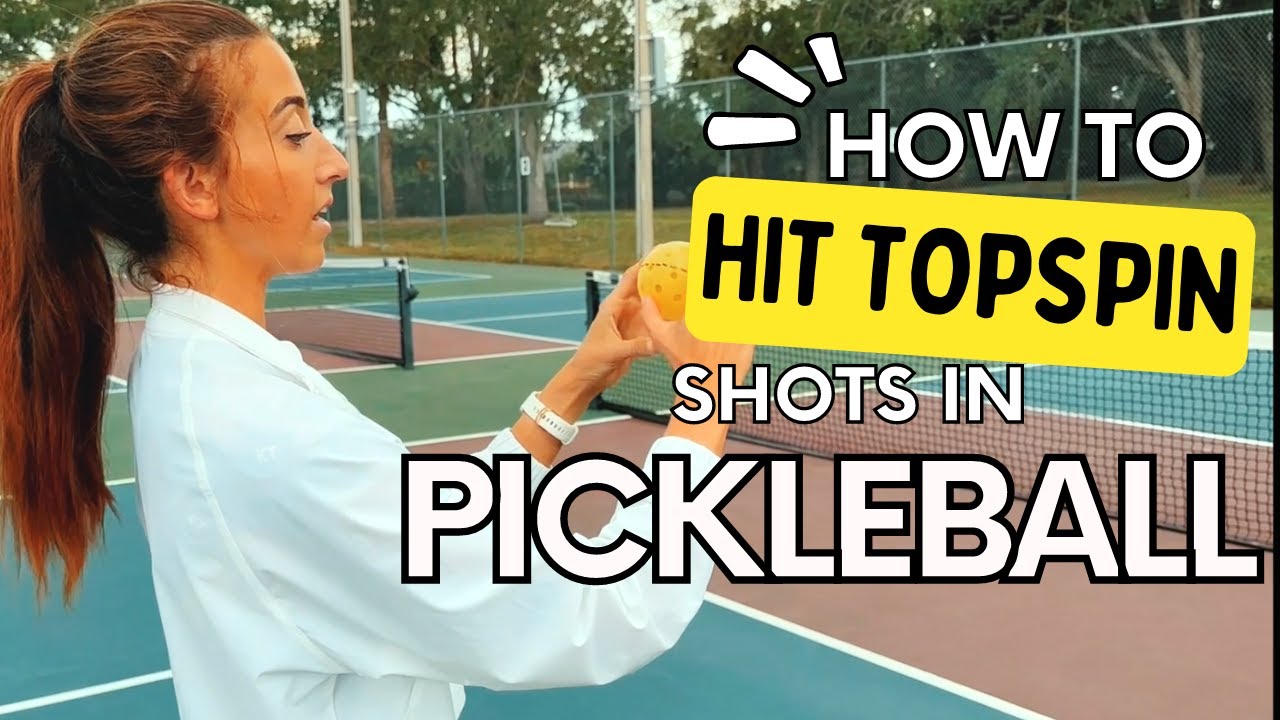
Brush up from low to high with a slightly closed paddle face and finish high.
If you want to learn how to hit topspin in pickleball, you are in the right place. I teach players this skill every week, and I have made every mistake you can imagine. In this guide, I show you a clear, simple path to master spin with sound form, smart drills, and match-tested tips. By the end, you will know exactly how to hit topspin in pickleball with control, power, and confidence.

Why topspin matters
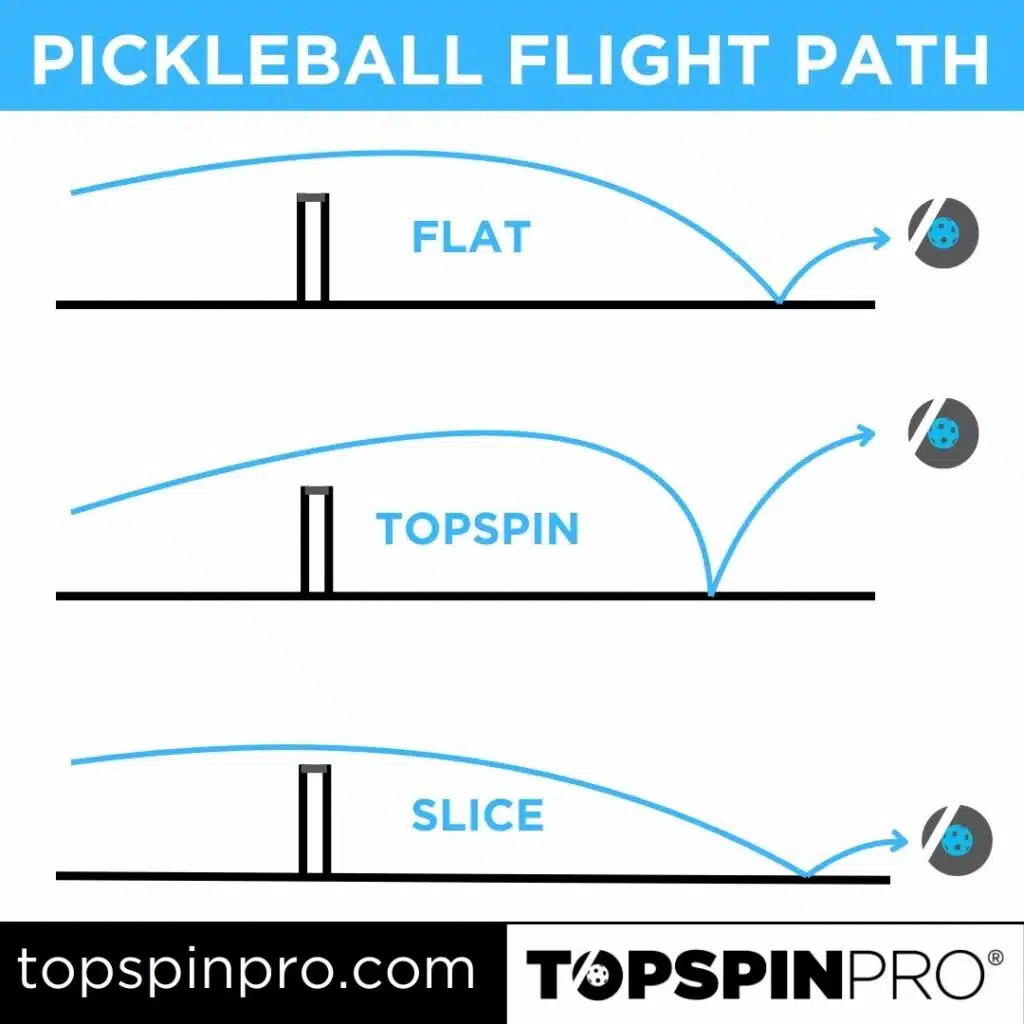
Topspin gives you a bigger margin over the net. The ball arcs up, then dips fast. This helps you swing harder and still land the shot deep.
It also makes the ball jump off the court. Your opponent must hit higher and later. That leads to short replies or pop-ups you can attack.
Coaches and biomechanics research agree on this. The ball’s spin creates downward force in flight and a lively bounce. That is why learning how to hit topspin in pickleball is a fast way to level up.

Grip, paddle angle, and setup
Choose a grip you can repeat
Use an Eastern forehand grip for most players. It is simple and works well at the kitchen and the baseline. A Semi-Western adds more spin but needs more wrist range. Try both and pick the one you can repeat under stress.
Keep a calm wrist and a closed face
Hold the paddle with light pressure. Aim for 3 or 4 out of 10 on your grip scale. Set the paddle face slightly closed, about 5 to 15 degrees. This helps you brush up the back of the ball and keeps shots from floating.
Build a ready base
Stand athletic. Feet under your hips. Knees soft. Use a split step as your opponent hits. This helps you move into the ball and find contact in front. It is a key step in how to hit topspin in pickleball with balance.

Contact point and swing path
The low-to-high path
Start your swing below the ball. Swing up through contact. Imagine you are sliding the paddle up a ramp. The ramp is the back of the ball.
Contact in front
Meet the ball in front of your lead hip. If contact drifts late, the face opens. Then you lose spin and control.
Finish high and across
End with your hand above your shoulder. Let the paddle wrap across your body. This keeps the face closed through contact and adds spin.
Follow these steps every time:
- See the ball early and split step.
- Turn your shoulders and load your legs.
- Drop the paddle head under the ball.
- Brush up with a calm wrist and loose arm.
- Extend forward, then finish high and across.
- Recover your paddle to ready.
These steps are the backbone of how to hit topspin in pickleball.

Footwork and body mechanics
Use your legs first
Power starts from the ground. Bend your knees. Push up as you swing. The legs lift the ball. The brush adds spin.
Coil and uncoil
Turn your hips and shoulders a little as you prepare. Unwind into contact. Keep your head still. This creates a smooth chain from feet to hand.
Stay balanced
Plant wide. Keep your chest over your toes. Land your finish on your lead foot. Then bounce back to ready. Good balance lets you repeat how to hit topspin in pickleball under pressure.

Drills that build real topspin
Use short, focused sessions. Keep 20 to 40 balls per set. Stop when form breaks.
- Drop-feed brush ups. Drop the ball, let it bounce, and brush up. Aim for net clearance of 18 to 24 inches. Land deep cross-court.
- Wall brush drill. Stand 10 to 12 feet from a wall. Brush the ball so it arcs, dips, and hits below a tape line you set.
- Sharpie spin audit. Draw a line around the ball. If the line spins end over end, you have topspin. If it wobbles, adjust face angle.
- Cone gate path. Place two cones a paddle width apart. Swing through the gate from low to high without hitting them.
- Arc ladder. String two ropes at different heights over the net. Clear the top rope, dip under the bottom rope. Feel the arc and drop.
- Serve spin challenge. Hit 25 topspin serves. Track bounce height with chalk marks. Higher jump means more spin.
- Dink to roll. Start with soft dinks. Add a gentle roll on every third ball. This teaches control at slow speed, then adds spin.
Do these drills and you will feel how to hit topspin in pickleball, not just think it.
Common mistakes and quick fixes
- Open face pop-ups. If balls sail long, close the face a little more and finish higher.
- Arming the shot. If your arm feels tight, lighten your grip and use your legs to lift.
- Over-rotating. If you spin off the ball, shorten your turn and keep your head still.
- Late contact. If you feel jammed, prepare sooner and meet the ball earlier in front.
- Death grip. If your wrist is locked, loosen your fingers between points and breathe out on contact.
- Swinging too hard. If spin vanishes, slow down, focus on brush, then add speed back in stages.
I made most of these mistakes when I learned how to hit topspin in pickleball. The fix was almost always a calmer wrist and a smaller, cleaner swing.
Advanced uses of topspin
Topspin serve
Toss low or drop feed. Brush up and through the ball. Aim deep middle. The kick pushes returners back and draws short blocks.
Topspin return
Aim cross-court for space and net height. Roll the ball deep to the backhand. Follow in to the kitchen line behind your shot.
Topspin roll at the NVZ
From the kitchen, open with a soft dink. When you receive a ball that sits up, roll it with a short brush. Think short swing, big spin.
Passing shots and lobs
Roll passes inside-out or cross-court. The dip pulls the ball down near the line. On lobs, add topspin so the ball climbs, then drops inside the baseline. This is a high-skill move for how to hit topspin in pickleball in tight windows.
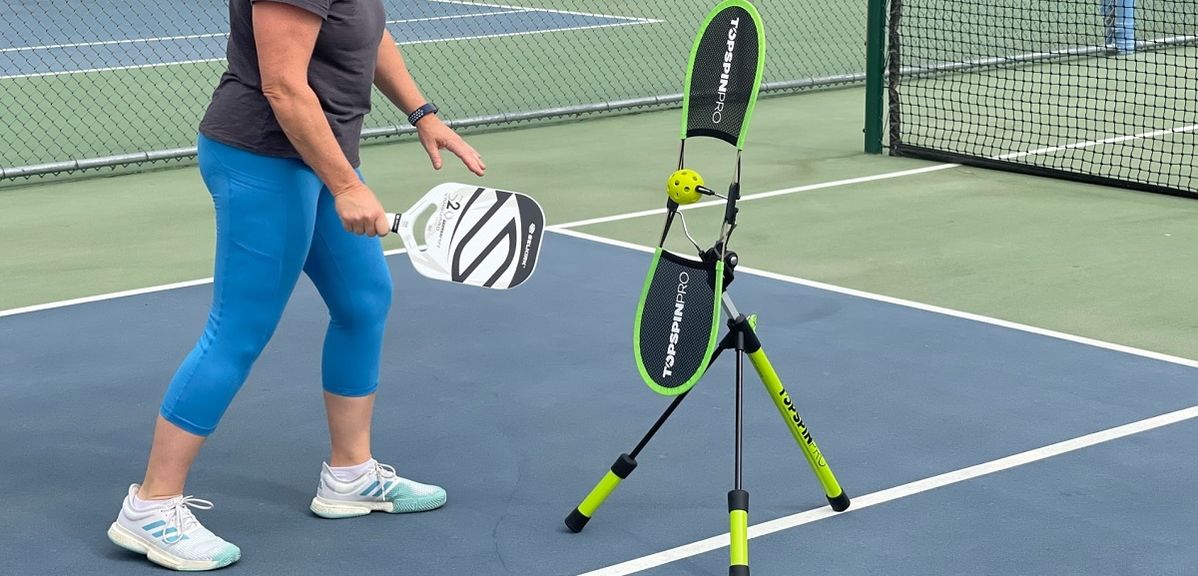
Gear that helps without breaking rules
- Paddle surface. A legal textured face helps grip the ball. Check that your paddle is approved for play.
- Core and thickness. Thicker cores soften feel and can help you brush with control. Thinner cores can feel livelier.
- Weight and balance. A touch more head weight can add plow and spin. Do not go so heavy that your wrist tires.
- Grip size and tack. A snug, tacky grip lets you hold lighter. This is key for a relaxed wrist and clean spin.
- Balls. Some balls grab the face better. Test a few and note which one gives you the most bite.
Gear will not replace form. It can help, but the real gain comes from clean contact. That is the heart of how to hit topspin in pickleball.
A simple 14-day plan to learn how to hit topspin in pickleball
Day 1 to 2: Shadow swings. Ten sets of 10 slow low-to-high swings. Focus on a closed face and high finish.
Day 3 to 4: Drop-feed brush. Five sets of 20 balls. Track net clearance and depth.
Day 5: Wall drill. Ten minutes of brush hits. Aim below a line on the wall.
Day 6: Serve spin. Fifty topspin serves. Note bounce height and depth.
Day 7: Review day. Light play. One focus cue only. My favorite cue is brush up.
Day 8: Cross-court roll. Four sets of 15 to a partner. Land deep and jumpy.
Day 9: Return of serve. Three sets of 15 returns with a roll. Move in behind each.
Day 10: NVZ roll. Two sets of 20 short roll shots off a neutral dink.
Day 11: Pattern play. Serve wide, get a short ball, roll cross-court. Repeat 20 times.
Day 12: Pressure game. First to 11, but a topspin roll is worth 2 points if it lands deep.
Day 13: Video check. Film from the side. Look for low-to-high swing and contact in front.
Day 14: Match test. Use one cue and one goal. The goal is three clean topspin swings per rally.
Repeat this plan for another two weeks. This is how to hit topspin in pickleball and keep it under stress.
Safeguards and injury prevention
Warm up your wrists, forearms, and shoulders. Use circles and light bands. Do not jump right into full swings.
Keep your grip relaxed. A tight grip can stress your elbow. If your forearm aches, reduce volume and check your paddle weight.
Build load slowly. Add only 10 to 15 percent more swings week to week. If pain lasts more than a day, rest and adjust your form. Your body will thank you as you learn how to hit topspin in pickleball for the long run.
Frequently Asked Questions of how to hit topspin in pickleball
How closed should my paddle face be for topspin?
Slightly closed, about 5 to 15 degrees. If balls fly long, close it a bit more. If you net a lot, open it a touch.
Can I learn topspin if I come from tennis?
Yes, and you have a head start. Shorten your backswing and finish compact, since the court is smaller and the ball is lighter.
Do I need a special paddle to create spin?
A legal textured face helps, but form matters more. Clean low-to-high contact will beat gear every time.
What is the best drill to start with?
Drop-feed brush ups. They remove stress and help you feel the low-to-high path and the high finish right away.
How hard should I swing on a topspin roll at the kitchen?
Use a short, smooth swing at 50 to 70 percent. Let the brush create jump, not a big backswing.
Is topspin useful on backhands too?
Yes. Use a simple two-hand or one-hand roll with the same low-to-high path. Keep the finish high and stable.
Conclusion
You now have a clear plan to build real, match-ready spin. Keep the paddle face slightly closed, swing from low to high, and finish high. Use your legs, not just your arm, and stack small, smart reps.
Pick one cue today and take it to the court. Film, review, and adjust. If this helped, share it with a partner, subscribe for more guides, or drop a question so I can help you fine-tune how to hit topspin in pickleball.