
Two bounces must start every rally; after that, only one bounce per side is allowed.
If you’ve ever wondered how many times can the ball bounce in pickleball, you’re in the right place. I coach new and intermediate players, and this question comes up every week. In this guide, I’ll break down the two-bounce rule, show real court examples, and share simple drills. You’ll leave with a clear, confident grasp of how many times can the ball bounce in pickleball and how to use that rule to win more points.
The two-bounce rule, explained
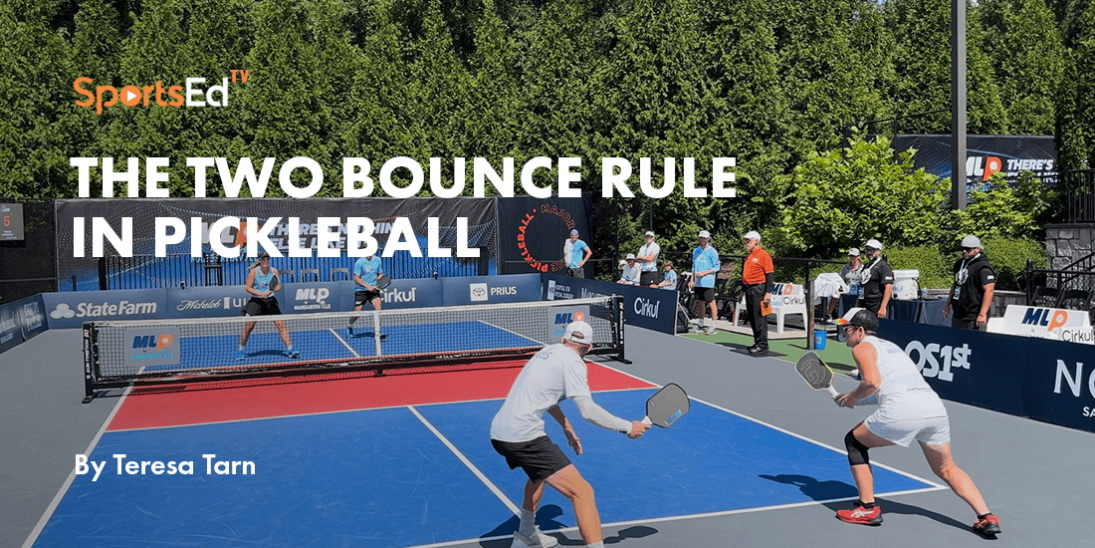
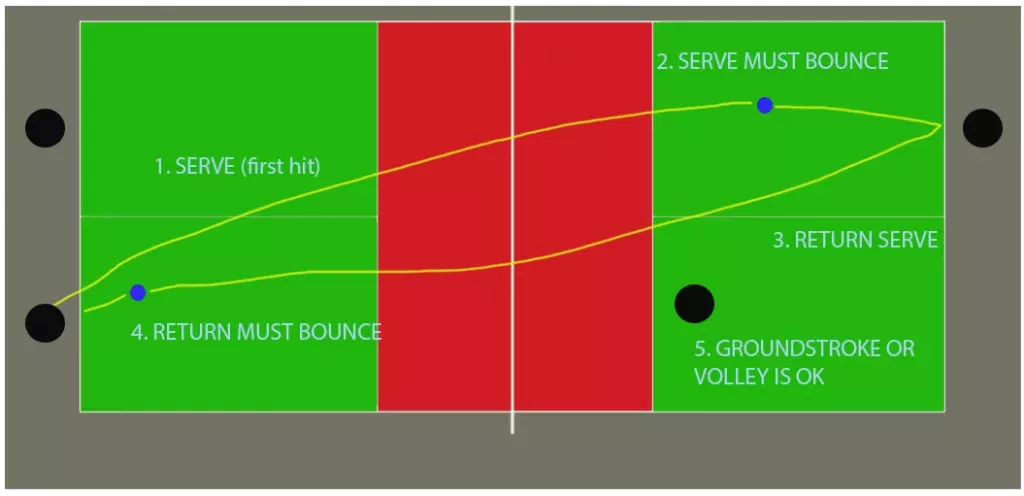
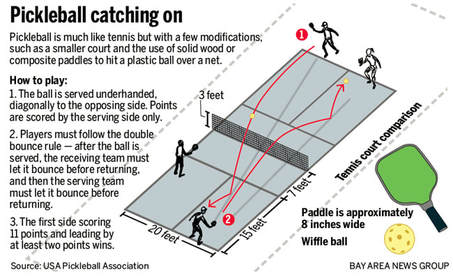
At the start of every rally, the ball must bounce once on the return of serve and once on the serving team’s side before anyone can volley. That’s why people ask how many times can the ball bounce in pickleball. The answer starts with two required bounces: one on the receiver’s side after the serve, and one on the server’s side after the return.
This rule prevents serve-and-volley rushes and gives both teams a fair chance to set up. After these two bounces, you can volley the ball out of the air or let it bounce once on your side before hitting. If it bounces twice on your side before you hit it, you lose the rally.
In recent rulebooks, you’ll see it called the two-bounce rule. Older players still say double-bounce rule. Both mean the same thing.
What happens after the two bounces?
After the opening two bounces, rallies open up. You may choose to volley or to let the ball bounce once on your side. There is no limit to total bounces in a rally across both sides. The limit is simple: not more than one bounce on your side before you hit.
So how many times can the ball bounce in pickleball? As many times as players allow, as long as no side lets it bounce twice before the hit. In dink rallies, the ball might bounce dozens of times in total. Each team still must strike it before it bounces twice on their own side.
From experience, newer players relax once they see this. Think of the court like a trampoline you must touch at most once before sending the ball back. That picture helps during fast exchanges.
The kitchen (non-volley zone) and bounces
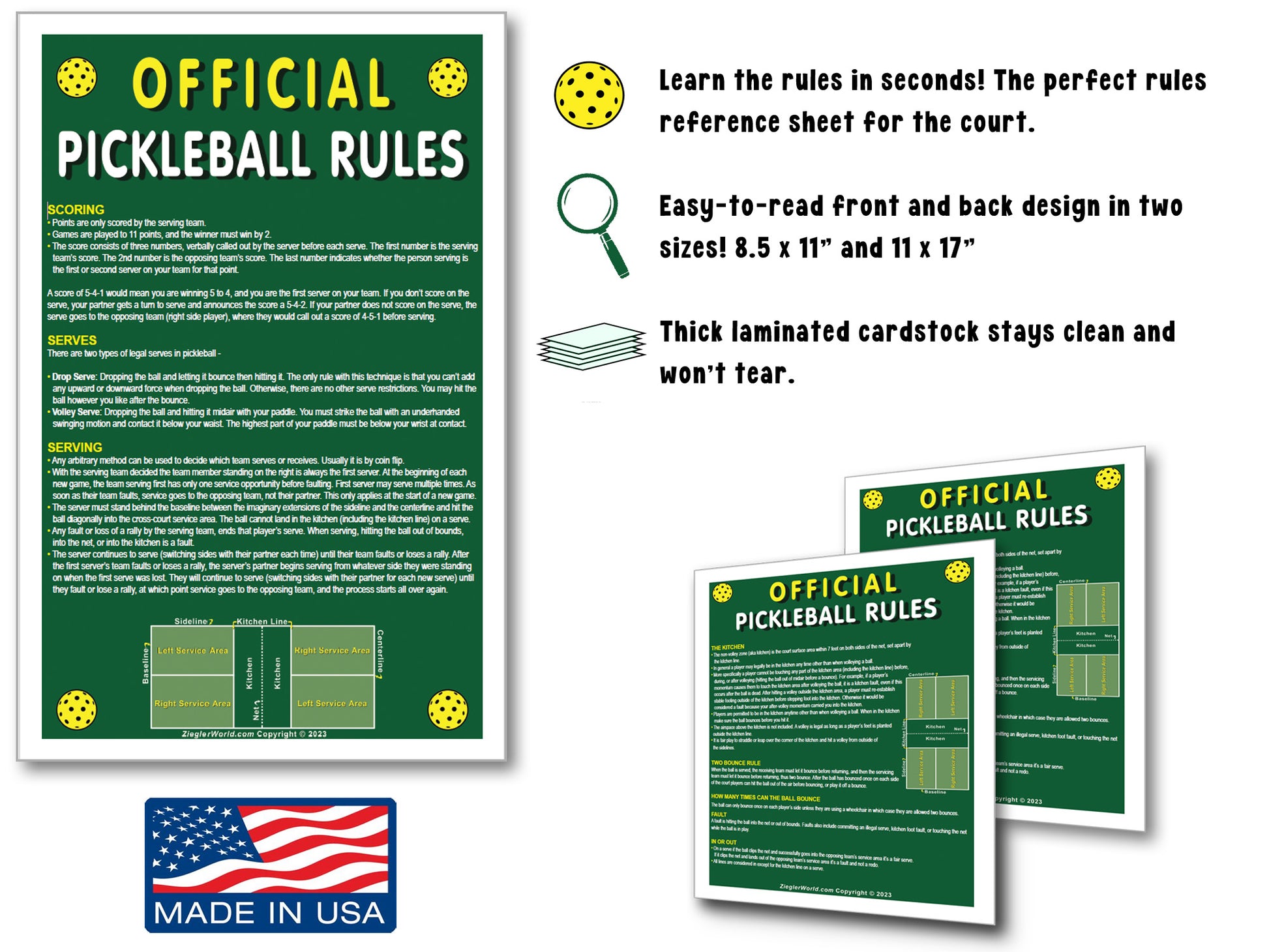
The non-volley zone, or kitchen, sits seven feet from the net on both sides. You cannot volley while standing in the kitchen or touching its line. But you can hit any ball that bounces in the kitchen. Bounces in the kitchen are fully legal.
This matters when you ask how many times can the ball bounce in pickleball during soft play. Dinks almost always bounce once per side many times in a row. You step in after the bounce, hit, and step back out. You only fault if you volley while in the kitchen or let it bounce twice on your side.

Serve, return, and positioning tips to master the rule
I teach players to plan the first three shots: serve, return, and third shot. These tips make the two-bounce rule work for you.
- Serve deep and to the backhand. A deep serve pushes the returner back, making your required second bounce easier to set up.
- Return deep and to the middle. A deep return buys time and sets up your team at the kitchen line.
- Use a third-shot drop often. It encourages the next bounce to land in front of the opponents, slowing the game.
- Call out “bounce-bounce” with your partner on serve points. It’s a simple cue that prevents early volleys.
If a teammate still asks how many times can the ball bounce in pickleball in the opening shots, remind them: bounce on the return, bounce on the serve team, then play on.

Common mistakes and how to avoid them
Small errors around bounces cost big points. Here’s what to watch for.
- Volleing the return of serve. This is a fault. Let the return bounce.
- Rushing the third shot. Players try to crush it and pop it up. Use a soft drop to set up the kitchen.
- Misreading heavy spin. Kick serves and topspin returns jump high. Keep your feet light and eyes level.
- Letting the ball bounce twice on your side. This happens when you hesitate. Decide early: volley or bounce, then commit.
- Kitchen foot faults. If you volley, make sure you are fully clear of the kitchen line and not carried in by momentum.
In my own games, a simple “wait” call from a partner prevents half of these errors. Clear, quick words save points.

Practical examples: how bounces decide points
Let’s walk through a few rally scripts you’ll see every match.
- Standard start: Serve lands deep. Return bounces, player hits a deep return. Ball bounces on the server’s side. Third shot drop falls in the kitchen. Now both teams can volley or let it bounce once per side.
- Early volley fault: Returner rushes and volleys the serve. That is a fault. Point to the serving team.
- Dink marathon: After the two bounces, both teams dink. The ball may bounce many times in total, but only once per side each time. Someone finally pops it up, and a clean put-away ends it.
- Scramble save: Wind pushes a lob back. The defender sprints and hits after one bounce. A second bounce would end the rally, so early movement is key.
These scenes answer how many times can the ball bounce in pickleball in real life. It can be many across a rally, but never twice on your side before you hit.
Drills to master bounces and timing
Try these simple, proven drills. I use them with new players and league teams.
- Bounce-then-hit warmup: Stand at the baseline. Your partner feeds. Let it bounce once, then send a controlled groundstroke. Switch sides after ten balls.
- Third-shot ladder: Serve, receive, and hit a third-shot drop. Aim to land it in the kitchen seven out of ten times. Add pressure with a defender at the net.
- Dink count-up: Dink crosscourt and count consecutive legal bounces. Aim for 20. Reset if you volley from inside the kitchen or let it bounce twice.
- Reaction volley vs. bounce: Your partner fires balls at you near the kitchen line. Call “volley” or “bounce” early, then execute. This locks in your decision speed.
While doing these, keep asking yourself how many times can the ball bounce in pickleball on my side before I must hit. The answer never changes: one.
Rule clarifications and edge cases
Keep these clarifications in your back pocket. They resolve most court debates.
- The term two-bounce rule is current. Double-bounce rule is the older name. Same meaning.
- You can volley after the two required bounces if you are not in the kitchen. Feet and momentum must stay out.
- A ball that bounces twice on one side ends the rally. The other team wins the point.
- Spin and wind do not change bounce limits. Play the ball as it lies.
- Let serves that land in are playable only if your local rules allow that version. Always check your event’s rule set.
- Around-the-post shots are legal. The bounce rule still applies the same way.
When friends ask how many times can the ball bounce in pickleball before contact, I point them to the official rulebook summary: start with two bounces, then never let it bounce twice on your side.

Frequently Asked Questions of how many times can the ball bounce in pickleball
How many times can the ball bounce in pickleball on one side?
Only once. If it bounces twice on your side before you hit, you lose the rally.
Is the two-bounce rule the same as the double-bounce rule?
Yes. It’s the same rule with two common names. Many players now say two-bounce rule.
After the first two bounces, can I volley everything?
Yes, as long as you are not in the kitchen or touching its line. You can also choose to let it bounce once per side.
How many times can the ball bounce in pickleball during a dink rally?
There’s no overall limit during a rally. Each side must hit before the second bounce on their court.
Can I volley the return of serve?
No. The return must bounce. Then the serving side must also let the ball bounce before hitting the third shot.
What if the ball hits the net and then bounces twice on my side?
The rally ends as soon as it bounces twice on your side. The other team wins the point.
Does spin change how many times can the ball bounce in pickleball?
No. Spin changes the height and direction, but not the rule. You still must strike it before the second bounce.
Conclusion
The heart of this topic is simple: start with two bounces, then never let it bounce twice on your side. Understanding how many times can the ball bounce in pickleball helps you choose smarter shots, avoid cheap faults, and control the kitchen line.
Take this to the court today. Call out “bounce-bounce” on serve points, aim deep on returns, and drill your third-shot drops. If this helped, share it with a partner, subscribe for more tips, or leave a question so we can dive deeper together.