You should not play pickleball on a wet court due to slips and bad bounce.
If you have ever wondered can you play pickleball on a wet court, you are in the right place. I coach league players and manage outdoor courts, and I’ve tested many wet-weather fixes. In this guide, I explain the physics, the safety risks, real drying times, smart gear tweaks, and what the rules allow. You’ll get clear steps that help you decide when to stop, how to dry the surface fast, and what to do instead so you protect your body and your game.

Why wet courts are risky
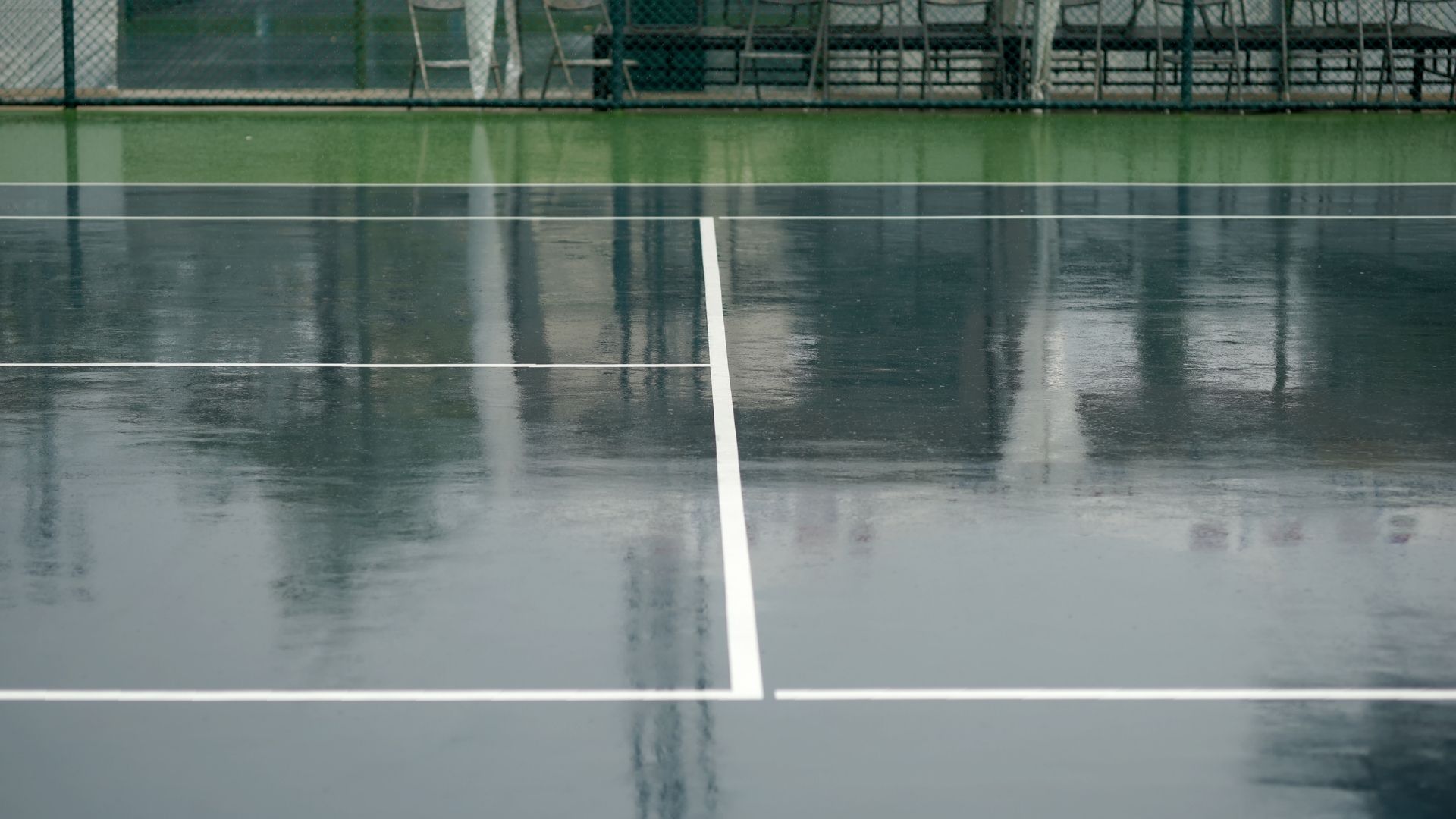
Let’s get blunt: can you play pickleball on a wet court without risk? No. Water on acrylic or smooth concrete creates a thin film that kills traction. Your foot plants, the surface slides, and your joints take the hit.
Here is what makes wet courts dangerous:
- Slips and falls are far more likely. Even micro-moisture from dew can be enough.
- Stopping and cutting become unpredictable. The risk peaks during sprints and sudden lunges.
- Repetitive slips strain ankles, knees, and hips. Sports medicine data links wet floors with higher injury rates.
Different surfaces behave differently:
- Acrylic over asphalt: great when dry, very slick when wet.
- Broom-finished concrete: better grip than acrylic when damp, but still unsafe.
- Indoor wood or vinyl: traction varies; moisture makes dust clump and slide.
From experience, the first dry-looking surface can still be unsafe. A thin sheen you barely see can act like ice. The smart call is to pause and test before you play.
How moisture changes ball behavior and your shots
Even if you ask can you play pickleball on a wet court for casual fun, the play quality drops fast. Water flattens bounce and adds skids. The ball hits a wet patch and shoots low, or it deadens and stops short.
Expect these changes:
- Lower, inconsistent bounce. Dinks float or die.
- Skids on serves and drives. Timing feels off.
- Reduced spin. The ball does not “grab” the surface.
What to do if the court is only damp at the edges:
- Use more arc on dinks.
- Aim for bigger margins. Avoid lines with visible sheen.
- Shorten your split step to avoid over-committing.
Still, if a large area is wet, shut it down. Safety first.

Safety decision checklist: pause, postpone, or resume
Use this quick checklist before every session, and repeat it after any drizzle, dew, or court blow-off.
Step 1: Visual check
- Look for sheen, darker patches, or puddles.
- Check seams, baselines, and the kitchen line. They slick up first.
Step 2: Slide test
- Gently try to twist or slide your shoe at mid-court.
- If it glides with little pressure, call it unsafe.
Step 3: Bounce test
- Drop a dry outdoor ball from shoulder height in three spots.
- Inconsistent bounce means water or residue is still present.
Step 4: Dryness threshold
- If any core area remains shiny or slick, postpone play.
- If only the edges are damp, tape off or avoid those zones.
Can you play pickleball on a wet court after a quick blow-dry? Only if traction is back to normal. Test again before you resume.

Fast ways to dry a pickleball court
I’ve dried hundreds of courts after overnight dew and light showers. Time depends on sun, wind, humidity, and the tools you use.
Tools that work well:
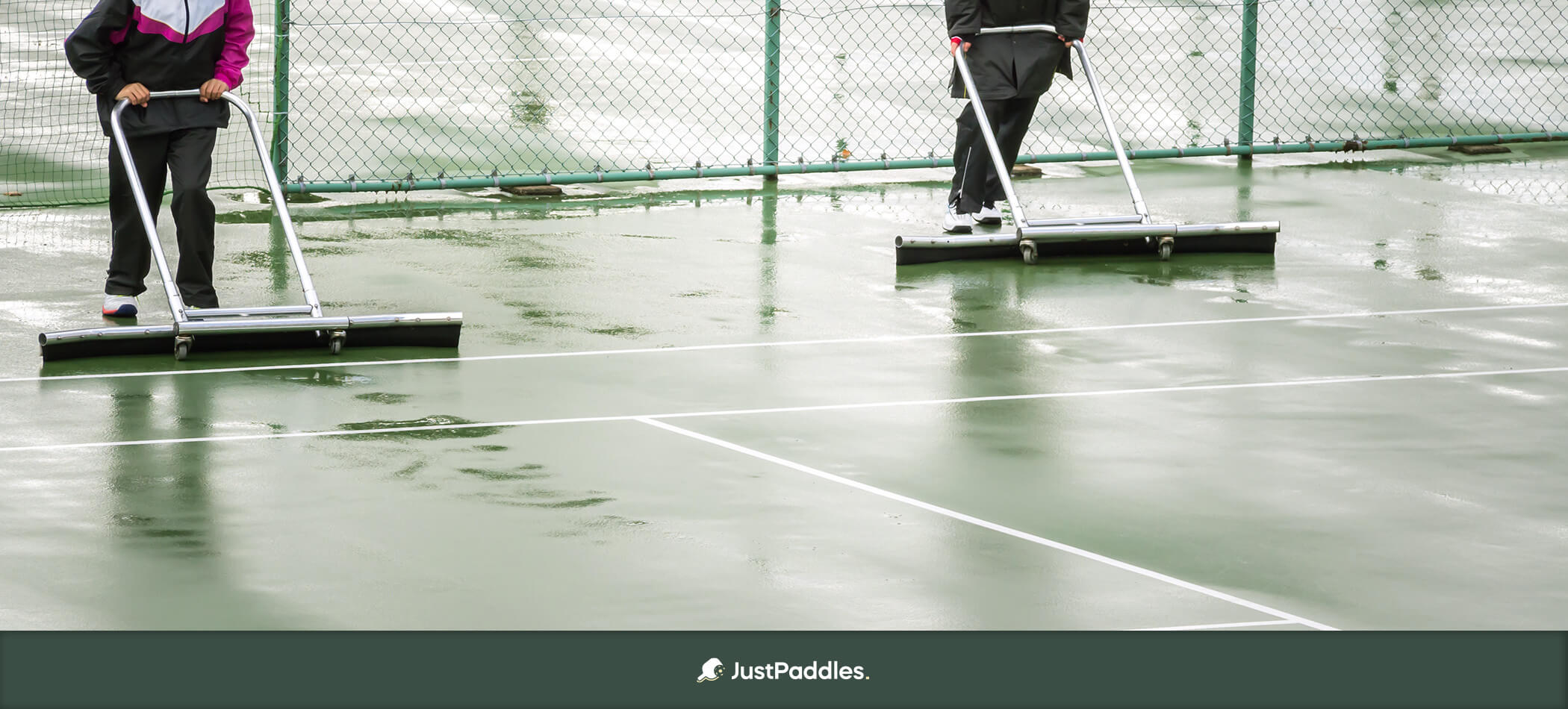
- Foam roller or water remover: pushes standing water off fast.
- Wide squeegee: great for pooled water along baselines and corners.
- Leaf blower: moves beads of water and speeds evaporation.
- Towels or absorbent pads: good for stubborn spots and lines.
- Portable heater fans: helpful in cool, damp air, used with care.
Typical time frames I’ve tracked:
- Light dew with sun and breeze: 10 to 25 minutes using a roller and blower.
- Post-drizzle on acrylic: 25 to 45 minutes with roller, squeegee, and blower.
- High humidity and shade: 45 to 90 minutes, sometimes longer.
Pro tips I’ve learned:
- Work from the center out. Keep water moving off the court.
- Lift lines with towels. Lines dry slower and stay slicker.
- Switch to a dry towel often. Wet towels smear water around.
- Do one last slide test before calling the court playable.
If you still wonder can you play pickleball on a wet court after drying, the answer is yes only when traction feels normal everywhere you intend to move.

Gear tweaks for damp days
Gear will not turn a wet court into a safe one. But small upgrades help once the surface is actually dry.
Helpful changes:
- Shoes with fresh tread: replace worn soles every 60 to 90 hours of play.
- Herringbone or omni-tread: better grip on acrylic when dry.
- Dry socks backup: wet socks reduce foot stability.
- Keep balls dry: rotate two or three balls and towel them often.
Avoid risky hacks:
- Do not use grip sprays or rosin on the floor. They can damage the surface.
- Do not play in trail shoes with lugs. They can catch and wrench your knee.
If you ask can you play pickleball on a wet court with special shoes, the safe answer stays no. Traction aids help only after the court is dry.

Scheduling and smart alternatives when rain or dew hits
Be proactive so weather does not ruin your day.
What to try:
- Watch dew point and overnight lows. Morning dew forms when the surface temp falls below the dew point.
- Shift to mid-day starts on cool, humid mornings.
- Keep an indoor backup. Book a gym slot or local community center.
- Carry a portable net. A dry parking area or covered court can save the session.
If teammates ask can you play pickleball on a wet court if only the kitchen is damp, suggest a switch to indoor or a later time. Your ankles will thank you.
Rules, policies, and liability basics
Most rec play is “at your own risk.” Many parks and clubs post weather guidelines. Tournament play usually pauses for wet conditions and resumes only after a safety check.
Key points to know:
- No official rule forces play on a wet surface. Referees can suspend matches.
- Facility managers may close courts after rain. Respect closures to avoid damage.
- Injury risk rises on wet courts. That can affect insurance and liability.
So, can you play pickleball on a wet court if everyone agrees? Consent does not remove risk. Make a safe, informed call.

Productive drills you can do while the court dries
You can still get better while you wait.
Try these low-space drills:
- Shadow footwork: split step, crossover, recover. Stay light and smooth.
- Kitchen volley patterns: practice contact point with an air or foam ball.
- Wall work: dinks and volleys against a brick wall or garage door.
- Serve routine without serve: toss, swing path, and follow-through.
- Mobility and strength: calves, hips, and glutes for better injury protection.
Can you play pickleball on a wet court while you drill on the side? Skip the court itself, but keep training smart nearby.
Frequently Asked Questions of can you play pickleball on a wet court
Can you play pickleball on a wet court at all?
You can, but you should not. Slip risk and poor bounce make it unsafe and frustrating.
What is the biggest danger on a wet court?
Unexpected slips during sprints, lunges, and hard stops. These cause ankle rolls and knee injuries.
How do I know when it is safe to resume play?
Run the visual, slide, and bounce tests. If traction feels normal in all play zones, you can resume.
Do certain shoes make wet-court play safe?
No shoe can make a wet surface safe. Fresh-cushioned court shoes help only after the court is truly dry.
How long does a court take to dry after light rain?
With sun and breeze, 25 to 45 minutes using rollers and blowers. In shade and humidity, expect 45 to 90 minutes.
Does indoor play solve the moisture problem?
Often yes, but check for dusty or damp spots. Do a quick slide test before play anywhere.
Conclusion
Safety and quality both drop fast on wet surfaces, so protect your body first. If someone asks can you play pickleball on a wet court, the best answer is to wait, dry it right, or move indoors. Use the checklist, bring the right tools, and keep a few backup plans ready.
Take one step today: add a roller, towels, and a blower to your pickleball bag or club kit. Want more practical tips like this? Subscribe, share this guide with your group, or leave a question and I’ll help you plan your wet-weather playbook.