
Use soft touch, short swing, and aim at the kitchen with arc.
If you want control, patience, and more wins, learn how to dink in pickleball. I coach players from day one through tournament play, and the dink is always the bridge to better points. In this guide, I will teach you how to dink in pickleball with simple steps, smart drills, and real match tactics you can use today.
What is a dink and why it matters
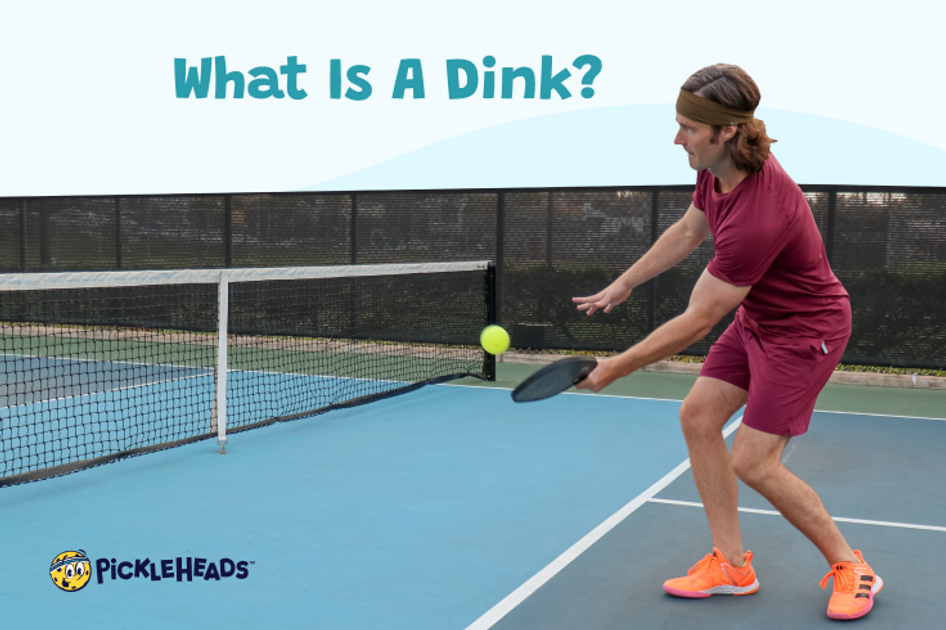
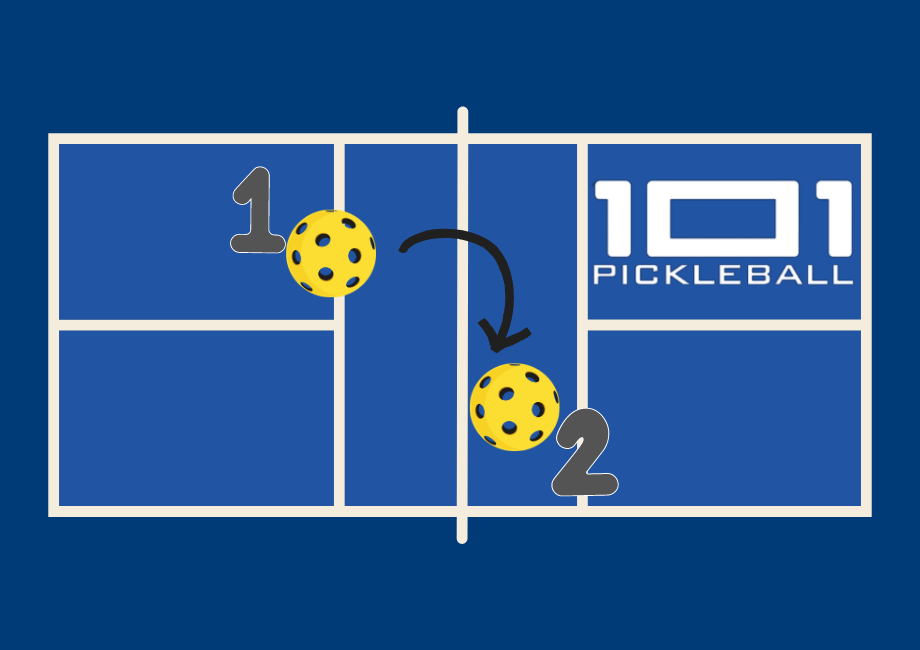
A dink is a slow, soft shot that lands in the kitchen and stays low. It forces your opponent to hit up, not forward. That gives you time, control, and chances to attack a high ball.
You use the dink to move from defense to neutral to offense. It takes pace off the ball and raises your opponent’s errors. If you want to master how to dink in pickleball, you must love the slow game first.
The setup: grip, stance, and ready position
Your grip should be light. Think firm handshake, not a squeeze. A continental grip works best for most dinks.
Stand with feet shoulder-width apart. Knees soft and chest up. Paddle out front with your tip at eye level.
Hold the paddle like a waiter holds a tray. Keep your elbows in and your wrist quiet. This simple setup is the base for how to dink in pickleball.

The swing: compact, smooth, and predictable
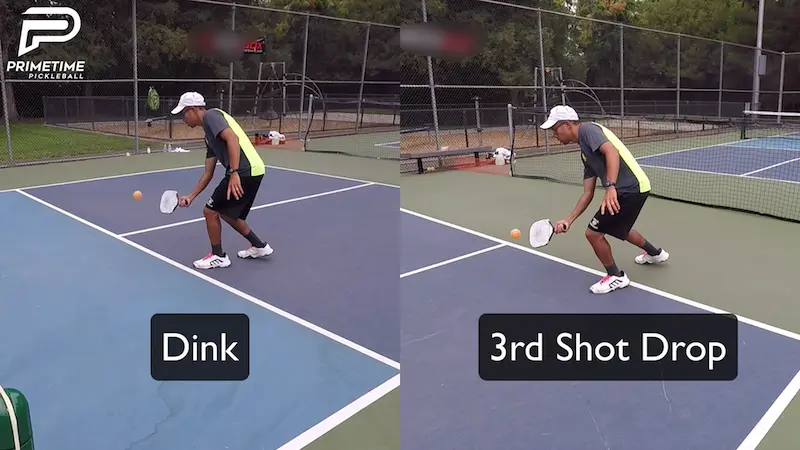
Use a short swing. No backswing past your hip. The motion is a gentle push from your shoulder.
Meet the ball in front of your body. Keep the paddle face open a little. Brush up to add a small arc over the net.
Aim for a net clearance of a shoe height. Land the ball near the kitchen line. If you want repeatable results for how to dink in pickleball, keep the swing the same every time.

Footwork and balance
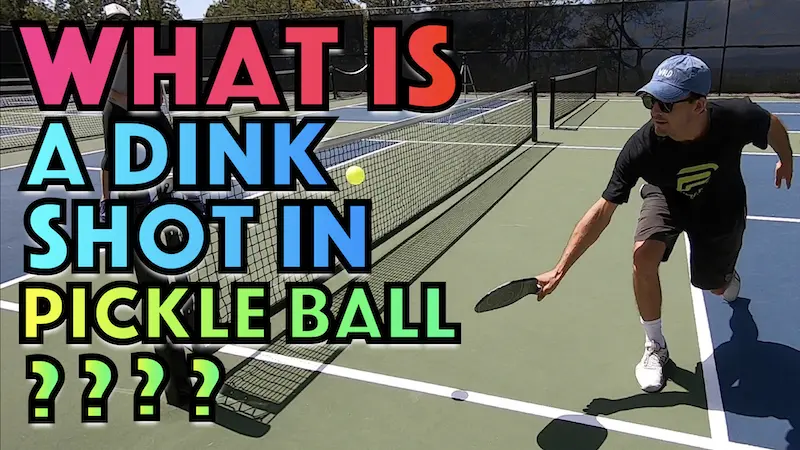
Move with small steps. Get low before contact. Hit off a stable base.
Use a split step as your opponent hits. Then slide to the ball. Avoid reaching with your arm alone.
After contact, recover to neutral. Keep your paddle high and ready. Clean footwork is the quiet secret of how to dink in pickleball.

Where to aim and when to attack
Your top targets are the opponent’s toes, their backhand, and the outside kitchen. Crosscourt is safer because the net is lower and the distance is longer.
Move the ball with purpose. Two to three dinks to one side, then change. Make them move and bend.
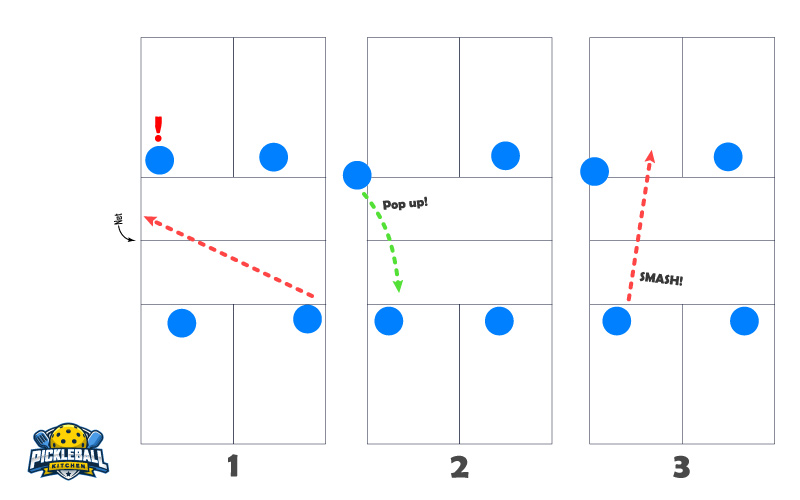
Attack only when the ball is high. If you see a pop-up, speed up to the body or open space. A smart mix of patience and strikes is a key part of how to dink in pickleball.

Types of dinks and when to use them
- Straight dink to the line. Use for pressure and to hold your spot.
- Crosscourt dink. Use for safety, angles, and longer rallies.
- Push dink. A firmer, deeper dink to pin their feet.
- Slice dink. A gentle carve that keeps the ball low and skids.
- Topspin roll dink. A soft roll to lift the ball over the net and dip fast.
- Reset dink. A calm block that drops a fast ball into the kitchen.
Learn one at a time. Start with crosscourt, then add slice. These tools expand how to dink in pickleball under stress.
Drills that build touch fast
- Kitchen line tap. Stand at the NVZ and hit 50 soft dinks crosscourt. Focus on height and arc.
- Box targets. Place four small targets in the kitchen. Hit five balls to each.
- Two-ball ladder. Alternate deep dink to toes, then short angle. Repeat for two minutes.
- Tempo change. Soft, soft, soft, then one firmer push. Reset to soft.
- Wall work. Mark a line on a wall at net height. Hit 100 gentle touches, keep it quiet.
I use a timer for two-minute rounds. Track how many clean dinks you make. This is the fastest way to own how to dink in pickleball.
Common mistakes and quick fixes
- Swinging big. Fix by making your follow-through stop at your non-dominant shoulder.
- Hitting late. Fix by setting your paddle out front and moving your feet sooner.
- Floating high balls. Fix by closing the paddle face a touch and brushing up less.
- Popping up on contact. Fix by staying low through the shot and keeping a loose grip.
- Staring at the target. Fix by watching the ball to your paddle face at contact.
Small tweaks add up. Record a short video and compare to these fixes. That is how to dink in pickleball with steady gains.
Tactics for different opponents
Against bangers, slow the ball and add slice. Keep it low to the body. Make them hit up.
Against soft players, move them wide, then attack the middle. Change speed and height. Force a weak reply.
Against lefty-righty pairs, find the backhands. Dink to the outside hips. These match plans help you apply how to dink in pickleball with intent.
Gear and conditions that affect your dink
Paddle face texture changes spin and grip. A softer core adds feel and control. A stiffer core sends the ball longer.
Balls play different by brand and temp. On hot days, use a softer touch. On windy days, aim bigger and add a bit more arc.
Indoor courts are truer. Outdoor has sun, wind, and noise. Adjusting to the day is a real part of how to dink in pickleball.
A simple 14-day plan to master the dink
Day 1 to 3. Setup and swing only. Ten minutes per day at the kitchen.
Day 4 to 6. Targets and crosscourt. Two sets of 50 reps.
Day 7 to 9. Add slice and push. Alternate patterns for two minutes.
Day 10 to 12. Pressure sets. Play first to 11 on dink-only points.
Day 13 to 14. Match play with goals. Win a rally with three dinks before any attack.
Keep notes after each day. Track net height, misses long, and pop-ups. This habit cements how to dink in pickleball as a skill you can trust.
Mindset, patience, and reading cues
Think rally, not rush. Value one more soft ball. Patience wins many free points.
Watch your opponent’s paddle path. Up equals speed-up risk. Down equals soft reply.
Breathe before each point. Use a simple cue like soft hands or quiet feet. Your mind game shapes how to dink in pickleball when nerves hit.
Safety and etiquette at the kitchen
Call balls honest and clear. Give space at the net during tight plays. Keep your paddle down after a winner.
Mind foot faults at the NVZ. Step in only after the ball bounces. Be kind to new players learning how to dink in pickleball.
Frequently Asked Questions of how to dink in pickleball
What is the best grip pressure for dinking?
Use a light grip, about a 3 out of 10. A loose hand gives you more feel and keeps the ball low.
Should I use topspin or slice on my dink?
Start neutral with a flat face. Add light slice to keep the ball low, or a gentle roll when you need more net clearance.
How high should my dink go over the net?
Aim for a few inches over the tape. Higher on tough balls, lower on easy ones to keep it unattackable.
Where should I aim most dinks?
Aim at the opponent’s feet and backhand. Mix in crosscourt and short angle to move them.
How do I stop popping up my dinks?
Stay low, shorten your swing, and relax your grip. Make contact in front and keep your paddle face stable.
Can I attack from a dink?
Yes, but only on a clear pop-up. Aim at the body or open space and be ready for a counter.
What drills help the fastest?
Crosscourt kitchen taps, box targets, and wall touches. Use two-minute rounds and track clean reps.
Conclusion
You now have the steps, drills, and plans to own the soft game. Keep the swing short, the touch gentle, and the targets smart. With a little time each day, your control and patience will turn close points into wins.
Take today’s plan to the court. Practice ten minutes and log your reps. If this helped, subscribe for more skill guides or share your best tip on how to dink in pickleball.