
Yes, you can play pickleball on artificial turf, with the right setup and care.
Many players ask, can you play pickleball on artificial turf, and still get a good game. Short answer, yes—if the turf is right and the court is prepped. I’ve helped clubs and HOAs test turf courts and upgrade them for safe, fun play. This guide dives deep into ball bounce, traction, line work, and cost so you can decide if a turf court fits your goals. Read on if you want a clear, friendly, and expert take on can you play pickleball on artificial turf.

What the rules say about pickleball surfaces
Governing bodies recommend hard, smooth, non-textured surfaces for match play. Think asphalt or concrete with acrylic coating. Modular sport tiles are also common and approved for many venues.
So, can you play pickleball on artificial turf in a way that meets those standards? Not for top-tier events. But for casual play, recreation, schools, and backyards, playing pickleball on artificial turf can work well with some changes. The key is a short, dense pile with a firm base and good lines.
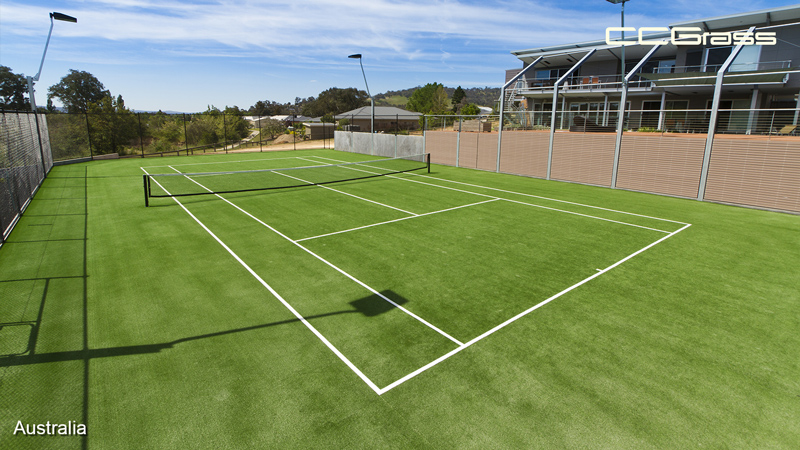
Pros and cons of playing on artificial turf
Before you decide, weigh the trade-offs. Can you play pickleball on artificial turf and still enjoy the game? Yes, but know what you gain and lose.
Pros:
- Softer on joints than concrete, thanks to the turf and pad under it
- Quiet play, which neighbors often appreciate
- Multi-use space for soccer, PE, and clinics
- Good drainage if the base is installed well
Cons:
- Lower and slower bounce, which changes timing and dinks
- More friction on stops and turns, which can affect knees and ankles
- Lines can lift if taped or painted poorly
- Sand or rubber infill can move and cause odd bounces

Best types of artificial turf for pickleball
Not all turf is equal. If you ask, can you play pickleball on artificial turf and get a clean bounce, the turf type is the answer.
Best choices:
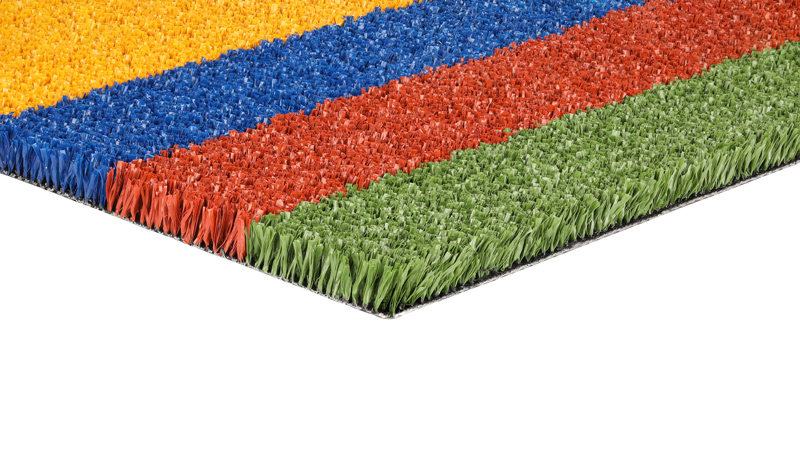
- Short-pile, dense “tennis” or “multi-sport” turf at 10–16 mm
- Sand-dressed or lightly sand-filled systems for firmness
- A stable base like asphalt or concrete under the turf
- Optional sport shock pad at 8–12 mm for comfort without mush
Avoid:
- Tall “field” turf in the 35–60 mm range used for soccer or football
- Heavy rubber infill that swallows bounce
- Loose sub-base that flexes
If a club asks, can you play pickleball on artificial turf that is already installed for soccer, you can, but expect slow bounce and more fatigue.
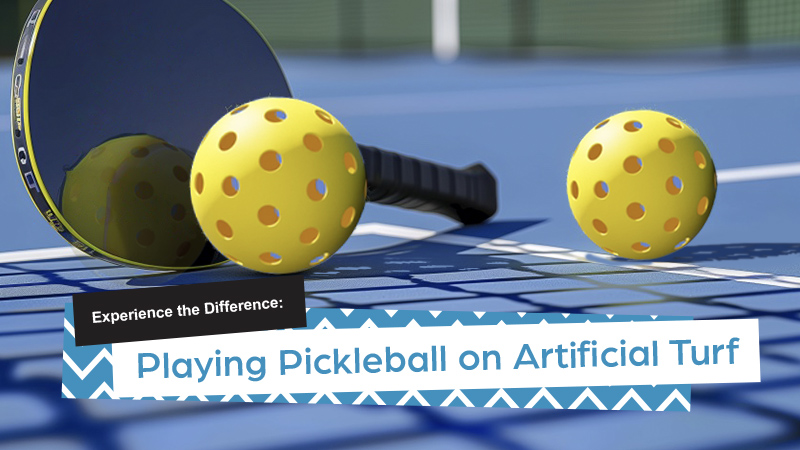
How the ball and bounce change on turf
The ball sits in the fibers. That lowers bounce height and slows pace. Soft turf also absorbs energy. This changes drives, dinks, and resets.
Tips to tune bounce:
- Use a lively outdoor ball to offset the softer surface
- Keep infill levels even and modest in the play zone
- Brush the turf to stand fibers up and improve contact
- Test a practice area before full court setup
People often say, can you play pickleball on artificial turf and keep your touch game. You can, but you need to adapt swing speed and shot choice. Aim deeper on drives and add a touch more lift on dinks.
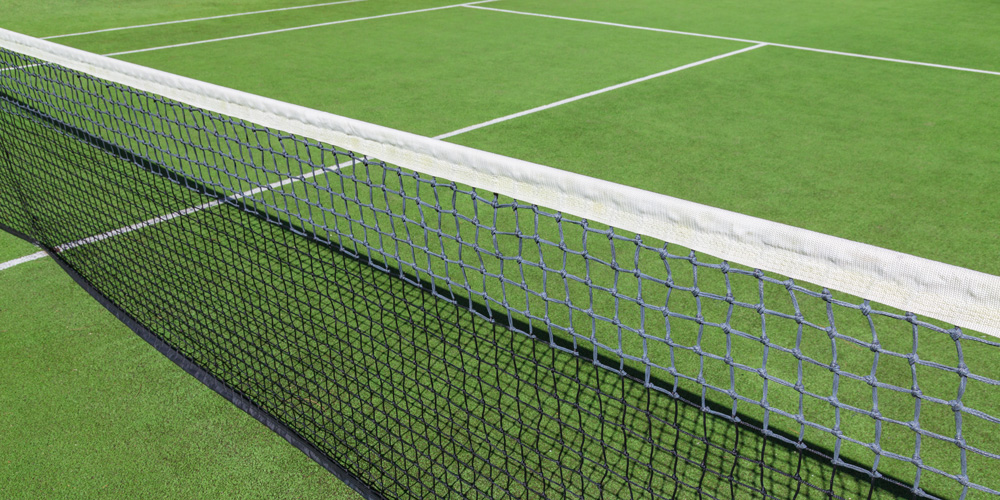
Setup guide: lines, net, and base on turf
Court lines must be visible and secure. Poor lines make play tough and can be a trip risk.
Lines:
- Best long-term: inlaid lines during install
- Next best: turf paint made for synthetics in a high-contrast color
- Quick option: heavy-duty fabric lines with turf spikes, pulled tight
Net:
- Standard height is 36 inches at posts, 34 inches at center
- Use weighted bases or ground sleeves that do not shift on turf
- Check tension often; turf can settle and change net angle
Base:
- A firm base under the turf is vital for bounce
- If you have a stone base, you can still play, but expect more variance
Many ask, can you play pickleball on artificial turf with taped lines. You can, but tape may not stick to fibers for long. Choose paint or inlaid lines if possible.
Safety, shoes, and injury prevention
Turf grip feels different than acrylic. It can be grippy on stops but slick when dusty or wet.
Footwear:
- Use court shoes with a flat, wide outsole
- Avoid deep lugs that grab and twist the knee
- Replace worn shoes; smooth rubber helps with controlled slides
Safety checks:
- Brush and clean infill to avoid sand piles
- Keep lines flat and well bonded
- Dry the court before play; wet turf can be slick
If your crew wonders, can you play pickleball on artificial turf without more injuries, the answer is yes with care. Set rules for no play in heavy rain and do weekly grooming.
Maintenance and weather tips
Good upkeep makes or breaks turf courts. It also keeps bounce more consistent.
Weekly:
- Light brush to lift fibers and level infill
- Blow off leaves and grit
- Check lines and re-anchor if needed
Monthly:
- Deep brush and infill top-off if the bounce gets low
- Inspect seams and tuft bind
- Rinse spills to avoid sticky spots
In hot zones, can you play pickleball on artificial turf at midday? You can, but turf can heat up. Use a quick water mist before play. It cools the surface but let it dry to avoid slick spots.
Costs and practical alternatives
Converting a turf field to a pickleball space costs less than building new hard courts, but results vary.
Costs to expect:
- Line paint or inlaid lines
- Net posts and portable nets with safe anchors
- Brushes and a blower for upkeep
Smart alternatives:
- Lay modular sport tiles over turf for a firmer bounce
- Use a roll-out court system for events or shared spaces
- Build one acrylic court as a “true” surface and keep turf courts for overflow
People often ask, can you play pickleball on artificial turf and still host events. You can host social play and ladders. For sanctioned events, choose hard courts or approved tiles.

Real-world tests and lessons learned
I have tested three setups with players from beginner to 4.0.
Test 1: 40 mm soccer turf with rubber infill
- Bounce was low and random on seams
- Best for casual hits and kids’ PE
- Verdict: you can play pickleball on artificial turf like this, but it is not ideal
Test 2: 15 mm multi-sport turf over asphalt with light sand
- Bounce was lower than acrylic but predictable
- Dinks needed more lift; drives were fine
- Verdict: can you play pickleball on artificial turf here? Yes, and it was fun
Test 3: Multi-sport turf plus a 10 mm shock pad
- Very joint-friendly, but the ball sat in the fibers
- A lively ball helped a lot
- Verdict: great for rec play and clinics
Key lesson: if you need one line to answer can you play pickleball on artificial turf, say yes—choose short, dense turf, keep it firm, and manage infill.
Frequently Asked Questions of "can you play pickleball on artificial turf"
Is artificial turf an approved surface for official pickleball tournaments?
Most sanctioned events prefer acrylic-coated hard courts or approved tiles. Turf is fine for casual, training, and community play.
Will the ball bounce the same on turf as on hard courts?
No. Bounce is lower and slower on turf. Short, dense turf with even infill gives the most consistent bounce.
What kind of shoes should I wear on turf for pickleball?
Wear court shoes with flat, grippy outsoles. Avoid deep lugs that can catch and twist your knee.
Can I paint pickleball lines on artificial turf?
Yes, with turf-safe paint. Inlaid lines are best for long-term use, but paint works if maintained.
How do I make turf play closer to a hard court?
Use a dense, short-pile turf over a firm base, keep infill low and even, and choose a lively outdoor ball. Modular tiles over turf are another good option.
Is playing on turf easier on joints?
Usually yes, due to added cushioning. Still warm up and use proper shoes to reduce strain.
Conclusion
You asked, can you play pickleball on artificial turf, and now you have a clear map. Yes, it works for rec play, clinics, schools, and shared spaces. Choose short, dense turf on a firm base, keep lines solid, groom often, and pick a lively ball. You will trade a bit of bounce for comfort and flexibility.
If you manage a facility, run a small pilot court and gather feedback before a full build. If you play at home, start with clear lines and a reliable net. Ready to test your turf? Try a demo setup this week, share your results, and subscribe for more step-by-step surface guides.