No. Pickleball and tennis courts differ in size, layout, lines, and play needs.
If you have wondered are pickleball and tennis courts the same, you are not alone. I have lined courts, set up nets, and helped towns convert space. This guide gives clear facts and friendly advice. By the end, you will know how each court works, and whether a shared setup fits your goals.
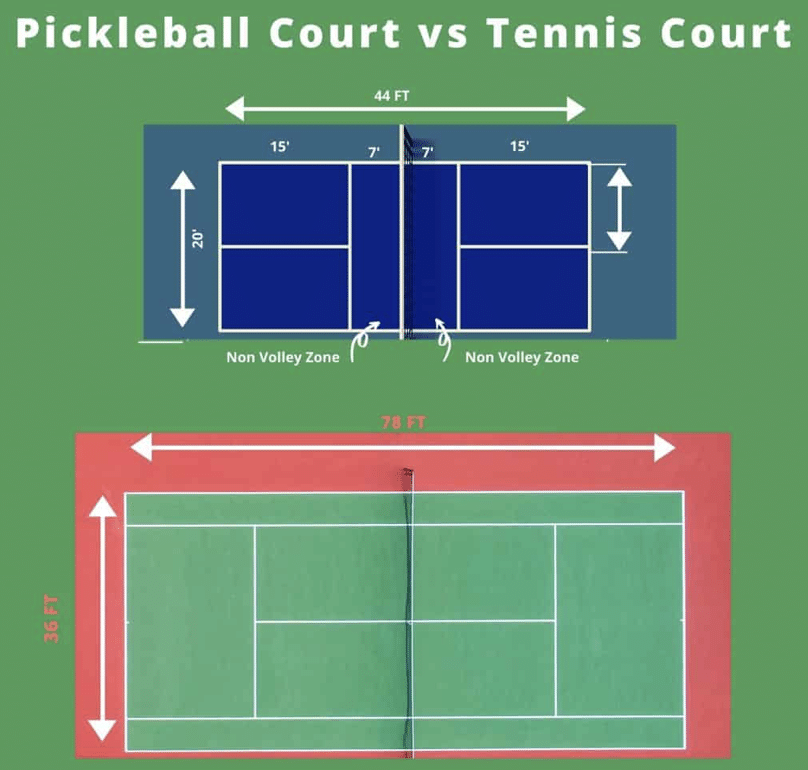
Pickleball Court vs Tennis Court at a Glance
Many players ask: are pickleball and tennis courts the same? They look alike at first. Both have nets, baselines, and hard surfaces. But key details change how the games play and how space is used.
Here is the short view:
- A tennis court is much larger.
- A pickleball court has a non-volley zone, often called the kitchen.
- Net heights differ a bit.
- Lines and safety space are not the same.
If your search is are pickleball and tennis courts the same, the best answer is no. They share a family tree, but they are different sports with different needs.
Dimensions and Layout Differences
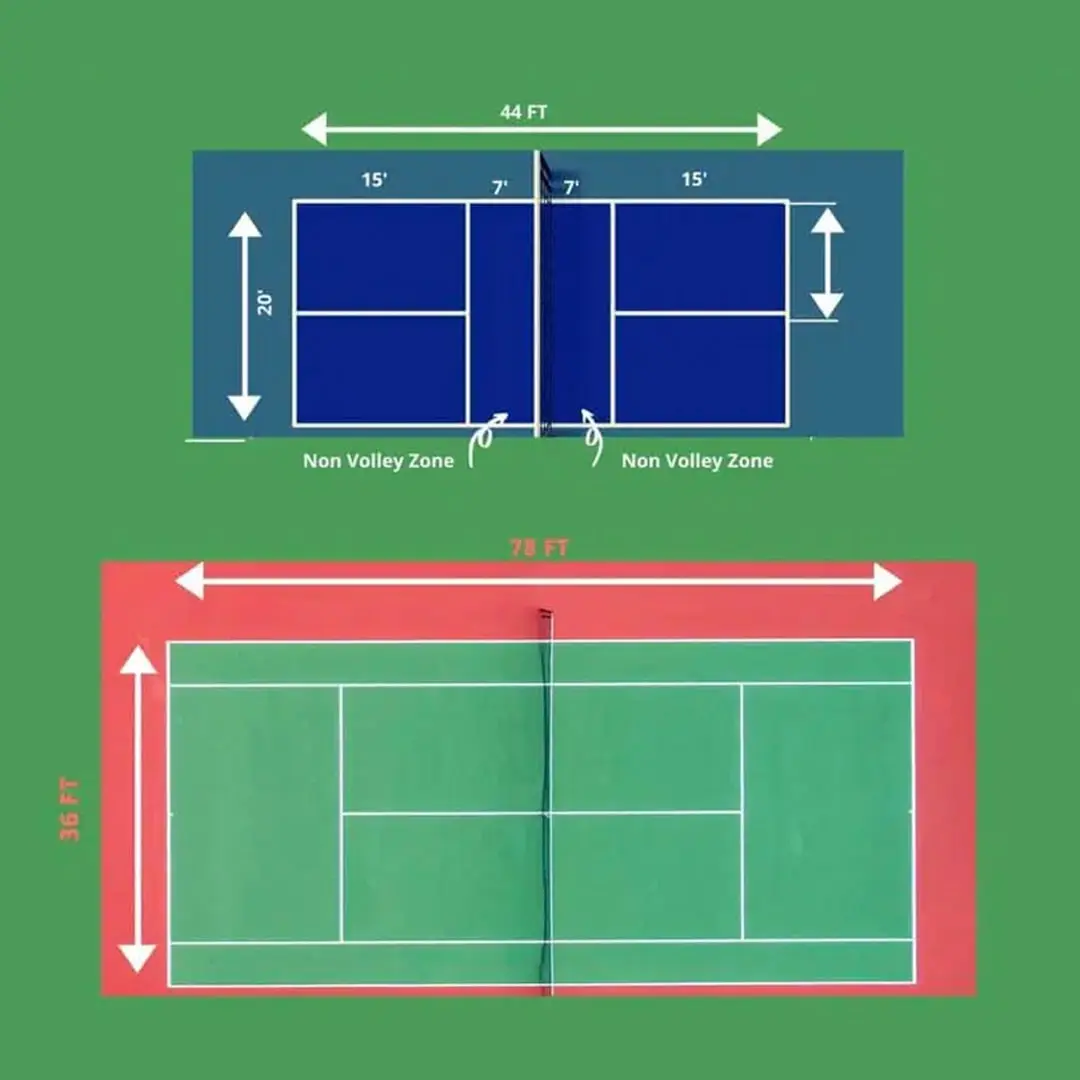
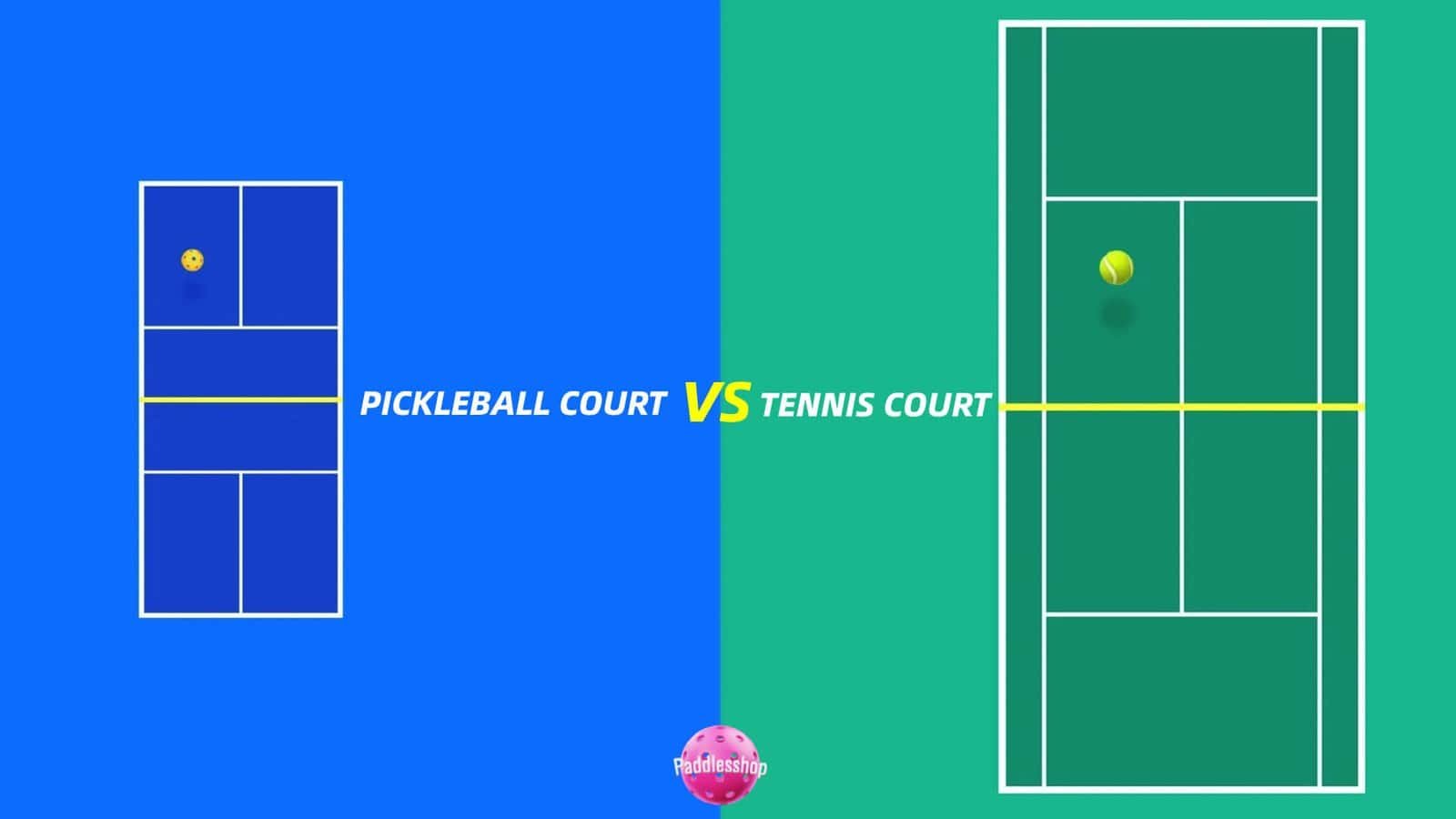
So, are pickleball and tennis courts the same in size? Not at all.
Pickleball
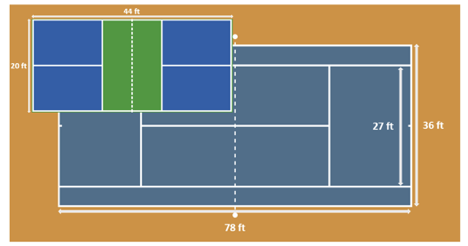
- Playing lines: 20 feet by 44 feet.
- Preferred total area: 30 feet by 60 feet for safe run-off.
- Non-volley zone (kitchen): 7 feet from the net on both sides.
Tennis
- Doubles lines: 36 feet by 78 feet.
- Singles lines: 27 feet by 78 feet.
- Preferred total area: about 60 feet by 120 feet.
In practice, one tennis court can host two to four pickleball courts, based on spacing. Four is tight but possible with careful planning and run-off areas. If you ask are pickleball and tennis courts the same, this size gap is the biggest reason they are not.

Net, Lines, and Markings
From the net and line rules, are pickleball and tennis courts the same? They are close, but not the same.
Nets
- Pickleball: 36 inches at the sidelines and 34 inches at the center.
- Tennis: 42 inches at the posts and 36 inches at the center.
Lines and zones
- Pickleball has a kitchen you cannot volley from. It changes play near the net.
- Tennis service boxes and alleys control serve and doubles space, which pickleball does not use.
Shared lines can confuse new players. I have seen missed calls when light pickleball lines sit over bold tennis lines. If you paint both, pick high contrast and clear color plans.

Surface Materials and Ball Bounce
On surfaces, are pickleball and tennis courts the same? Often yes, but play feel can differ.
Common surfaces
- Acrylic hard courts are most common for both.
- You also see asphalt, post-tension concrete, or cushioned acrylic.
- Indoor pickleball often uses wood or sport tile.
Play effects
- Pickleballs are lighter and have holes. They skid less and pop off the surface fast.
- Tennis balls compress and bounce higher. They need more space to track and hit.
A rougher acrylic texture helps pickleball grip and slow a bit. If you split use, a standard hard court finish is a safe middle ground.
Can You Play Pickleball on a Tennis Court?
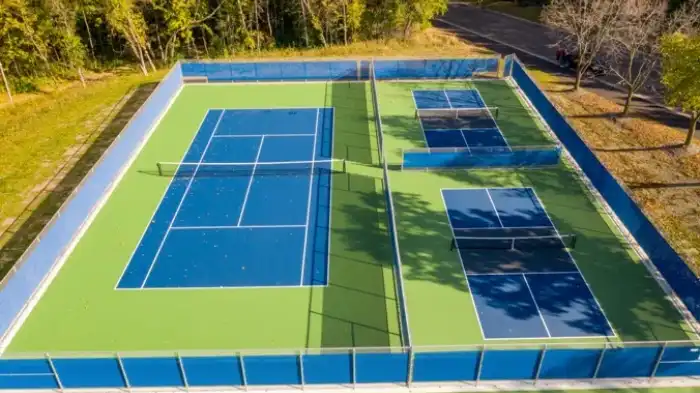
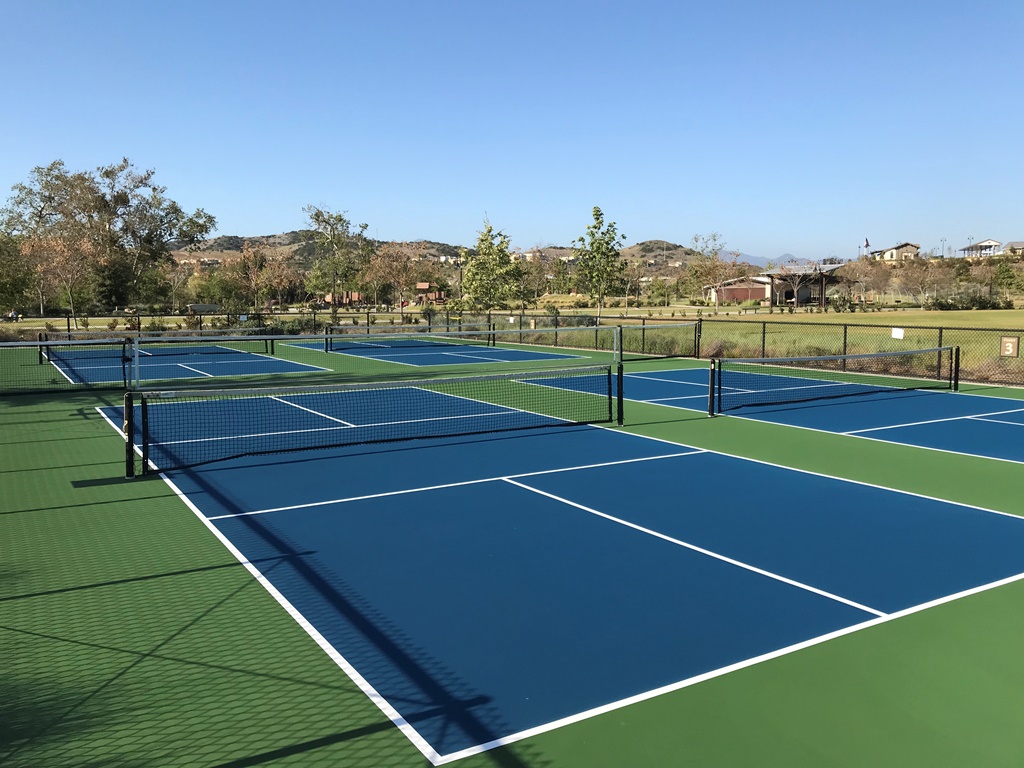
You may think are pickleball and tennis courts the same enough to share lines. You can play pickleball on a tennis court with some tweaks. Many parks do this.
Options I have used
- Roll out portable pickleball nets and add taped lines.
- Paint permanent pickleball lines with a contrasting color.
- Use a net center strap or net adjuster to hit 34 inches at the center.
Tips to reduce confusion
- Use bold corner T-marks at the kitchen to improve calls.
- Keep tennis lines white and pickleball lines a distinct color like yellow or blue.
- Add signs so new players know which lines apply.
Converting a Tennis Court to Pickleball
Before you start, ask yourself: are pickleball and tennis courts the same for safety? Not quite, so plan the details.
Steps I recommend
- Measure and map. Aim for 30 by 60 feet per pickleball court.
- Choose two or four courts per tennis court, based on space and demand.
- Install permanent sleeves and posts if the site is long term.
- Paint lines after a dry-fit with portable nets to confirm layout.
Costs to expect
- Temporary tape: low cost, good for trials.
- Permanent lines: often a few hundred to a couple thousand dollars per court layout.
- Portable nets: about a few hundred each.
- Permanent posts and nets: higher cost but better play and lifespan.
Mistakes to avoid
- Overlapping baselines with poor color contrast.
- Tight spacing that cuts safety run-off.
- Skipping a noise plan if homes sit close.
Cost, Maintenance, and Noise Considerations
Budget wise, are pickleball and tennis courts the same? Not exactly.
Costs and care
- Resurfacing cycles are similar for both since they share coatings.
- Pickleball nets face more impact from frequent setups. Buy sturdy frames.
- Tennis windscreens help both sports. They also reduce noise perception.
Noise
- Pickleball’s paddle-ball pop has higher pitch. It stands out more to neighbors.
- Plant hedges, add acoustic screens, or set quiet hours if the site is near homes.
Community tip
- Test with temporary lines first. Track use and feedback before you invest in paint and posts.
Player Experience: Speed, Strategy, Safety
From a player’s view, are pickleball and tennis courts the same? No. The court shapes strategy.
Play feel
- Pickleball rewards quick feet, soft hands, and kitchen control.
- Tennis rewards depth, topspin, and angles across a larger area.
- Net height and the kitchen shape how you attack and defend.
Safety
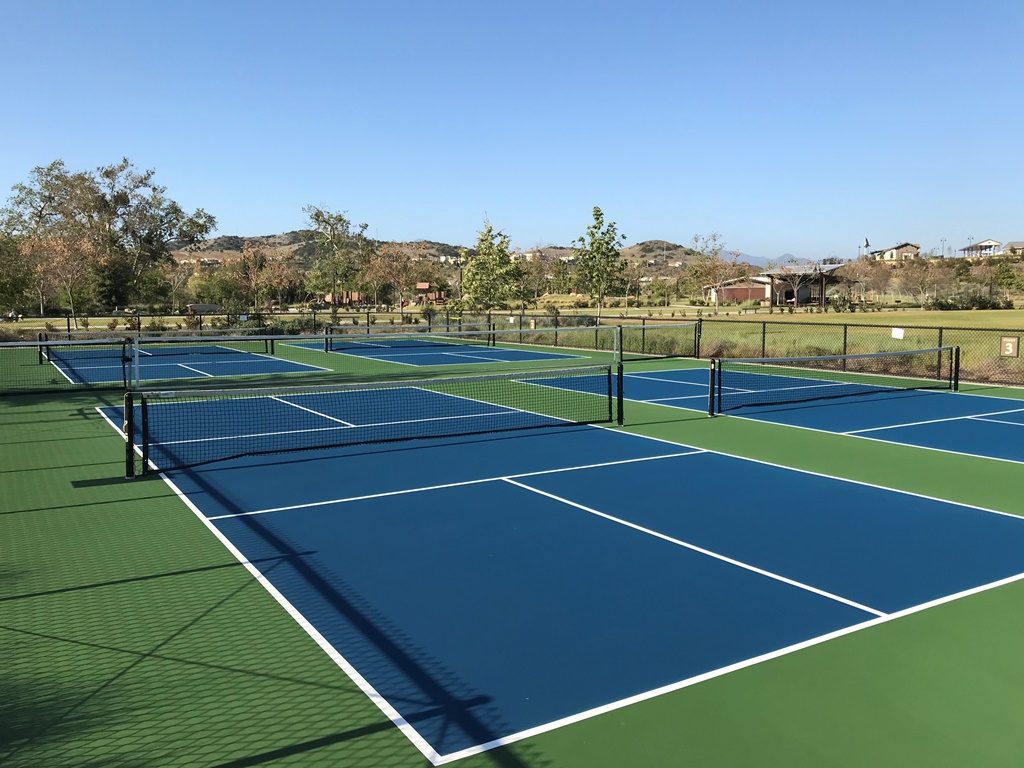
- Tighter spaces need clear run-off. Do not cram four courts if your fence is close.
- Use slip-resistant coatings and clean debris often.
- Keep ball barriers between side-by-side courts to prevent trips.
From my own coaching, the biggest win is clear lines and enough space. Players relax. Rallies get longer. Fewer foot faults and no near-misses on fences.
Community and Facility Planning Tips
Facility planners often ask are pickleball and tennis courts the same. For long-term peace, design for both.
Best practices
- Build flexible hubs with some dedicated pickleball courts and at least one tennis court.
- Use smart scheduling. Morning pickleball, evening tennis leagues, or vice versa.
- Add seating, shade, water, and first aid kits for all users.
- Provide clear maps and rules at the gate.
Data to watch
- Court-hours used per week.
- Wait times and sign-ups.
- Neighbor feedback on noise and parking.
If your board debates are pickleball and tennis courts the same, show the numbers. Balanced plans win support.
Frequently Asked Questions of are pickleball and tennis courts the same
Are pickleball and tennis courts the same size?
No. A pickleball court is 20 by 44 feet, while a tennis doubles court is 36 by 78 feet. The recommended safety area is also different.
Can I set up pickleball on a tennis court without painting?
Yes. You can use portable nets and removable court tape. It is ideal for trials, clinics, or temporary play.
Is the net height the same for both sports?
Not quite. Pickleball nets are 34 inches at the center, tennis nets are 36 inches at the center. The side heights also differ.
How many pickleball courts fit on one tennis court?
Often two to four, depending on safety space. Two gives more run-off and comfort; four maximizes capacity.
Will dual lines confuse players?
They can. Use a high-contrast color plan and bold kitchen markers. Add signs to clarify which lines apply for each sport.
Do pickleball courts cause more noise than tennis?
The sound is different and higher pitched. Acoustic screens, hedges, and smart scheduling help reduce impact.
Are the surfaces the same for both sports?
Yes, most use acrylic hard courts. Finish texture can be tuned for best grip and bounce for each sport.
Conclusion
Pickleball and tennis look related, but they are not the same. Court size, net height, lines, and play style all differ. If you plan a shared site, aim for clear lines, safe spacing, and a noise plan.
Take your next step today. Try a taped trial on a tennis court, count demand, and then invest with confidence. Want more guides like this? Subscribe, share your questions, or leave a comment with your court plan and I will help you map it out.