Yes—but only if the second contact is accidental and in one continuous swing.
If you play long enough, this question will come up: can you double hit in pickleball? I’ve coached new and advanced players, and I’ve seen this rule confuse even seasoned rec groups. In this guide, I break down the official rule in plain English, show real examples from match play, and share simple tips and drills to help you avoid illegal double hits and play with confidence. Stick with me—by the end, you’ll know exactly when a double hit is legal, when it’s a fault, and how to make smart, clean contact on every shot.
Can you double hit in pickleball? What it means and why it matters
A double hit happens when the ball makes contact with your paddle more than once during your swing. The big question is whether it’s legal.
Here’s the core idea from the official rules: if the second contact is unintentional and part of one continuous swing in a single direction, it is legal. If it’s intentional, a carry, or a separate swing, it’s a fault. This matters because fast hands, heavy spin, and awkward blocks can cause accidental double hits, and not all of them are illegal.
The phrase can you double hit in pickleball pops up often because rallies move fast, and the sound of a “double tap” can be misleading. The rule comes down to intent, direction, and continuity.

The official rule in plain English
You can make more than one paddle contact during one continuous motion if you didn’t try to hit it twice. No pause. No scoop. No second swing.
Key points you should know:
- Unintentional double hit in one continuous motion is legal. Think of a fast block where the ball kisses the paddle twice without a second swing.
- Any carry or throw is illegal. If the ball lingers or slides on the paddle, it’s a fault.
- If the ball hits your paddle and then any part of your body or clothing, it’s a fault.
- Your paddle hand below the wrist counts as the paddle. If the ball hits your paddle and then your paddle hand below the wrist, that is legal.
- If you and your partner both touch the ball before it goes over, that’s a fault.
- Referees and players judge by what they see and hear. If it looks like a smooth, single motion, it’s likely legal.
This is how officials teach it: one motion, one direction, no intent to hit twice. That’s your mental checklist when you wonder, can you double hit in pickleball during a frantic exchange?
 examples”
style=”max-width: 100%; height: auto; border: 2px solid black; border-radius: 10px; display: block; margin: 0 auto;”
loading=”lazy”
/>
Legal vs. illegal double-hit scenarios with real examples
Let’s map the rule to the court with simple, real-life moments.
Legal examples:
- Fast kitchen battle: You block a speed-up and the ball skims your paddle twice in one smooth motion. No pause, no scoop. Play on.
- Mishit drive: Your paddle wobbles, the ball buzzes the edge then the face in one swing. It looked ugly, but it was one motion. Legal.
- Paddle-to-hand contact: The ball hits your paddle and your paddle hand below the wrist during the same swing. Legal by rule.
Illegal examples:
- Scoop and throw: You “cradle” the ball on the paddle to guide it over. That’s a carry. Fault.
- Two distinct swings: You nick the ball, then swing again to push it over. Two motions. Fault.
- Paddle then body: Ball hits your paddle then your shirt before going over. Body contact. Fault.
- Partner touch: You nick it, then your partner takes a swipe and sends it over. Two players touched it. Fault.
If you ever think, can you double hit in pickleball on a reflex? Yes, if it’s one smooth, accidental motion. Not if you add a second action.

Edge cases players ask about
Some situations confuse players and spark debates. Here’s how I coach them.
- Heavy topspin dinks: Your soft dink brushes the ball twice on a long stroke. If it’s a clean brush in one motion, it’s legal. If the ball sticks or slides, it’s a carry and a fault.
- Wet or cracked balls: Water or damaged balls can “grab” the paddle and cause carries. If the contact is prolonged, it’s a fault. Dry or replace the ball.
- Edge guard contacts: Edge then face during one swing can be legal if unintentional and continuous. Sound can be deceiving; continuity decides.
- Jammed in the body: If a drive jams you and the ball touches paddle then torso, that’s a fault, even if it was one motion.
- Defending body line shots: Keep your paddle out front and firm. If it grazes your hand below the wrist after the paddle, it’s still legal.
This is why can you double hit in pickleball trends in search. The rule is simple, but real rallies are messy.
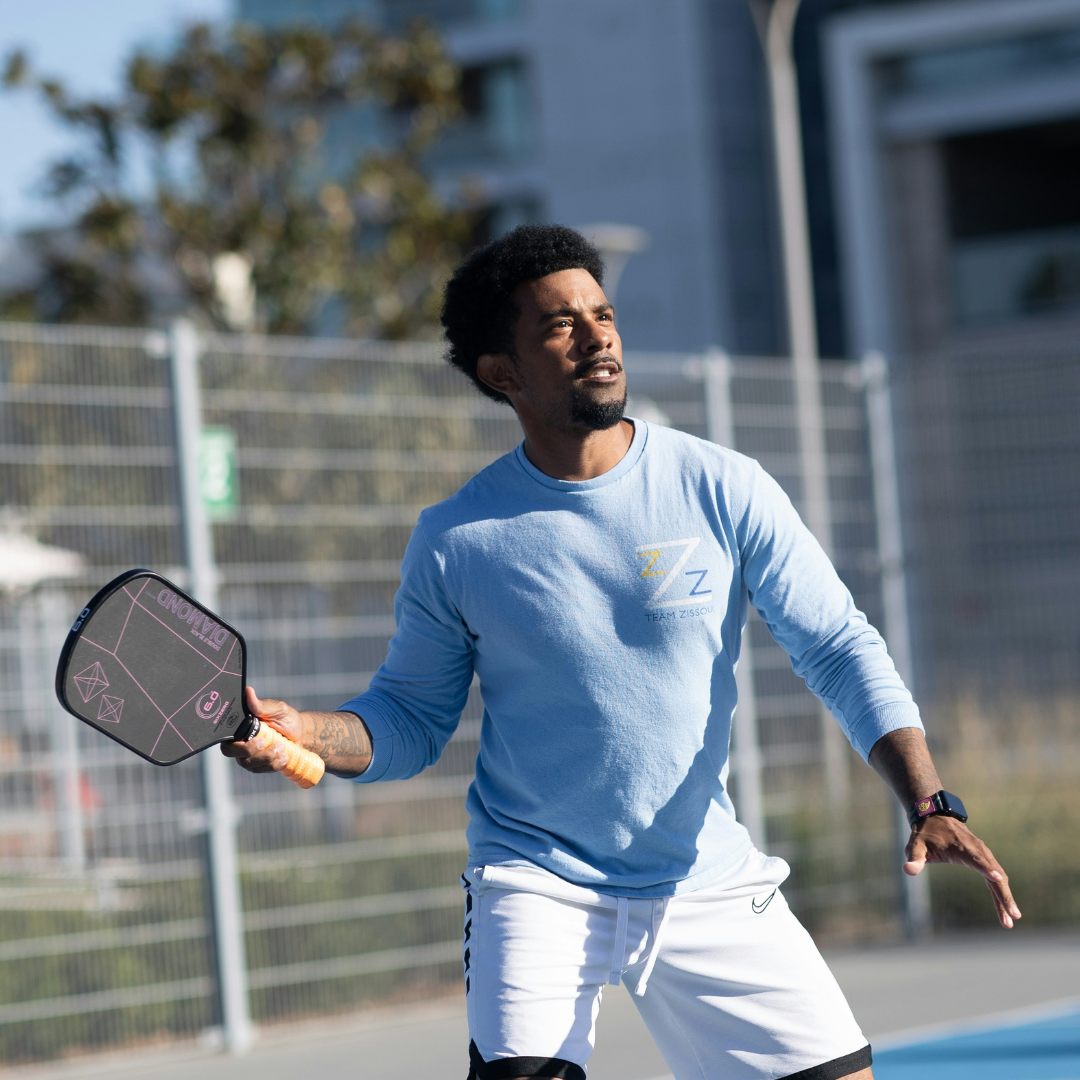
How to avoid illegal double hits
The best fix is good fundamentals. These simple habits prevent most faults.
- Use a compact swing near the kitchen. Short stroke, stable face.
- Keep a firm wrist on blocks. Quiet hands reduce paddle wobble.
- Meet the ball in front. Late contact causes flinches and extra taps.
- Soften your grip on dinks. Let the ball bounce off the paddle, not slide.
- Aim through the ball. One clean direction, not a scoop.
- Reset under pressure. If you feel out of control, slow your swing and absorb pace.
With these habits, you won’t need to ask can you double hit in pickleball after every exchange.

Drills to build clean, single-contact strokes
I use these quick drills with players at all levels.
-
Wall tap drill
- Stand 8–10 feet from a wall.
- Hit 50 soft taps with a short stroke.
- Focus on one clean contact per hit.
-
Kitchen block series
- Partner drives from mid-court to your backhand and forehand.
- You block with a firm wrist and short motion.
- Goal: 20 clean blocks without a wobble.
-
Dink brush control
- Dink cross-court with soft spin.
- Keep the stroke short and smooth.
- If you feel the ball stick, shorten the brush.
-
Reflex volley ladder
- Partner feeds quick volleys.
- You hold a stable paddle face and freeze the finish.
- Count only clean, crisp contacts.
-
Serve-return discipline
- Practice deep returns with a smooth swing.
- No last-second “push” after contact.
Drill with intent. Ask yourself between reps: can you double hit in pickleball by accident here? Then adjust to a shorter, clearer motion.
Calling double hits: refs, rec play, and best etiquette
Double hits are tough to call. Respect and clarity go a long way.
- In rec play: Only call a fault on yourself if you’re sure. If you aren’t sure, keep playing.
- In refereed matches: The referee makes the call. You can ask for clarification, but do not stop play unless instructed.
- For line judges or no-ref matches: Agree with opponents before you start. If there’s doubt, replay the point or play it out by local custom.
- Be consistent: If you call them tight on others, be tight on yourself too.
- Stay cool: A “nice play” and a nod often settle close moments.
This is the human side of can you double hit in pickleball. Most players want fair rallies. Good etiquette keeps games fun.
Gear and conditions that raise double-hit risk
Some gear and weather variables make illegal contacts more likely.
- Paddle face condition: Very slick or very sticky faces can cause slides or grabs. Keep the face clean and within rule specs.
- Delamination or damage: Damaged cores can change dwell time. If your paddle sounds odd or feels springy, check it or replace it.
- Ball quality: Soft, cracked, or wet balls increase “cling.” Swap them out.
- Moisture and heat: Sweat or humidity on the paddle can add friction. Towel off often.
- Grip and wrist fatigue: A weak grip leads to wobbles. Use a fresh overgrip and rest between games.
If you find yourself wondering can you double hit in pickleball more on humid days, check your ball and wipe your paddle. Often that’s the fix.
Frequently Asked Questions of can you double hit in pickleball
Can you double hit in pickleball if it’s accidental?
Yes, if it happens during one continuous swing and in one direction. No pause, no scoop, no second action.
Does a ball that hits my paddle then my shirt count?
Yes, that’s a fault. Paddle-to-body double contact is illegal, even if it’s one motion.
Is the hand below the wrist part of the paddle?
Yes. If the ball hits your paddle hand below the wrist, it’s treated like the paddle. That contact can be legal.
What if both partners touch the ball before it goes over?
That’s a fault. Only one player may strike the ball during a rally.
How do refs judge a double hit?
They look for a single, unbroken motion without carry. If it appears continuous and unintentional, they usually let play continue.
Can a double hit happen on a serve or return?
It can, but the same rule applies. If it’s one accidental, continuous motion, it’s legal; otherwise, it’s a fault.
Does a loud “double pop” sound always mean a fault?
No. Sound can mislead. The decision is based on motion, not noise.
Conclusion
You can make a legal double hit in pickleball when it’s accidental and part of one continuous, single-direction swing. Anything intentional, carried, or made in two actions is a fault. Use compact strokes, keep a firm wrist on blocks, and practice clean contact to avoid gray areas.
Take this to your next game: focus on one clean motion, respect close calls, and keep rallies fair. If this helped answer can you double hit in pickleball, share it with your group, subscribe for more tips, or drop your trickiest rule question in the comments.