
Yes, you can land in the kitchen if the ball bounced; not on volleys.
Curious about can you land in the kitchen in pickleball? You are not alone. I coach new and advanced players, and this rule is the one that sparks the most debate. In this friendly guide, I break down can you land in the kitchen in pickleball with simple words, clear examples, and court-tested tips so you play with confidence and avoid easy faults. Stick with me, and you will master the kitchen in no time.

What the Kitchen (Non-Volley Zone) Really Means
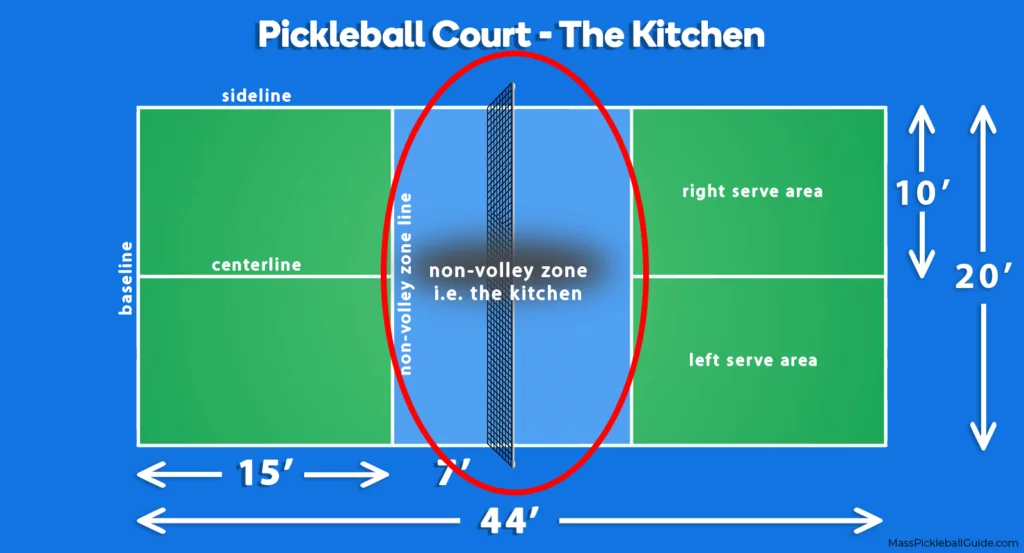
The kitchen is the non-volley zone, or NVZ. It is the seven-foot area on both sides of the net. The line is part of the kitchen, so stepping on the line counts as being in it.
You can be in the kitchen any time the ball has bounced. You can dink, drop, and block there. The only hard stop is this: do not volley while touching the kitchen or its line. That is the core of can you land in the kitchen in pickleball.
Can You Land in the Kitchen in Pickleball? The Exact Rule
Here is the exact idea. You may step into, stand in, jump in, and land in the kitchen if the ball bounces first. You cannot volley and then land in the kitchen due to momentum. If you do, it is a fault.
Think of it like a hot stove. You can work near it when it is off. But if it is on, you cannot touch it. In pickleball, volleys turn the “stove” on. Ask yourself before contact: can you land in the kitchen in pickleball right now? If the ball did not bounce, the answer is no.
A few key points make this simple:
- Any part of your body, paddle, hat, or shirt that touches the kitchen during or after a volley is a fault.
- The line counts as the kitchen.
- If you jump from outside, hit a volley, and then fall into the kitchen, it is still a fault because of momentum.
Common Scenarios You’ll Face
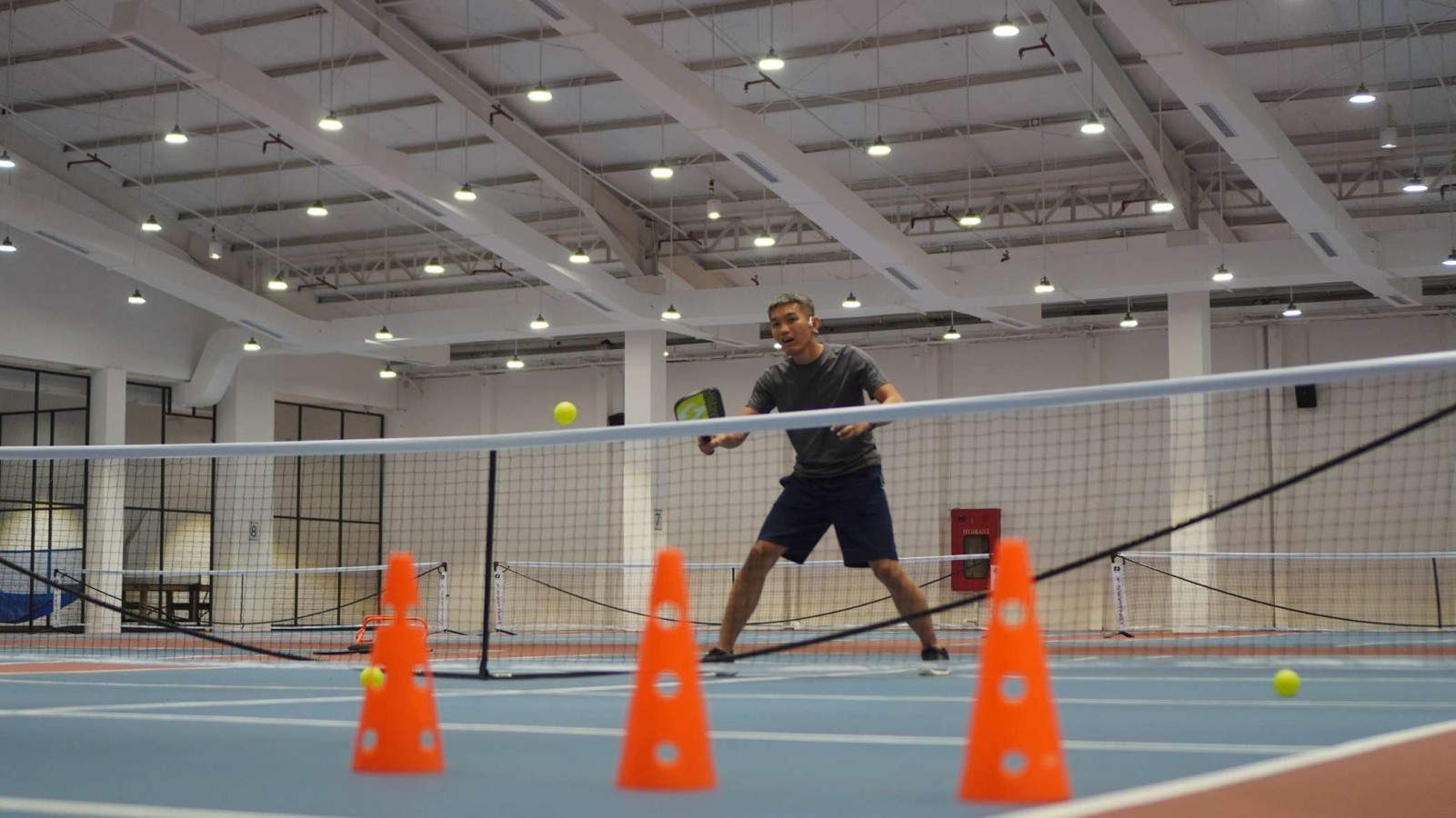
Players ask me can you land in the kitchen in pickleball in dozens of real plays. Here are the most common ones.
- Dinks and drops: The ball bounces. You may step in and play it. You may land in the kitchen. No issue at all.
- Fast volley and stumble: You volley from near the line and stumble forward. If you touch the kitchen before you stop, it is a fault.
- Airborne volley: You launch from outside the kitchen, hit the volley in the air, and land outside. That is legal. Land in the kitchen and it is a fault.
- Jumping from inside the kitchen: You cannot start in the kitchen, jump, and volley while airborne. That is a fault because you were in the kitchen at the start of the volley.
- Partner assist: Your partner can hold you back. If they keep you from falling in, it is legal. If you or your gear still touch the kitchen after the volley, it is a fault.
I once lost a game point because my hat fell into the kitchen after a hard volley. The ball was long. We still lost the point. Why? My coach reminded me that anything I wear counts. That lesson stuck.

Footwork, Balance, and Safe Landings
Footwork saves points. It also keeps you safe. And it answers a big chunk of can you land in the kitchen in pickleball in real time.
- Keep weight low: Bend your knees. Stay light on your toes. This helps you stop short of the line.
- Split step early: Split as your opponent hits. You will be stable and will not lunge into the kitchen.
- Stop before you swing: On marginal balls, plant both feet outside the line before you volley.
- Use side steps: Slide, do not dive. It makes it easier to control momentum.
- Paddle as brake: After a volley, use your off hand and paddle as a counterbalance to slow your body.
Tip from my clinics: draw a chalk arc one shoe length behind the NVZ line. Treat it like a guardrail. Your body learns where to stop.

Drills to Master the Non-Volley Zone
Practice turns rules into habits. These short drills make the kitchen rule feel easy.
- Line shadow stops: Shuffle along the NVZ line. On a clap, freeze so your toes are behind the line. Ten reps each side.
- Airborne volley control: Start one step behind the line. Coach feeds a soft lob. Jump volley forward but land outside. Three sets of ten.
- Bounce-in, bounce-out: Feed a soft dink that bounces. Step into the kitchen, dink, then step back out. Repeat across the line. Build rhythm.
- Momentum check: Partner feeds a fast ball. Volley and stop without crossing the line. Count clean stops in a minute.
Make these drills weekly. In two weeks, your body will “know” the line.

Rule Myths and Edge Cases
Let’s clear up the tricky stuff. This is where can you land in the kitchen in pickleball gets misread.
- Myth: If the point is over, you can fall into the kitchen after a volley. Reality: If your momentum from the volley causes contact with the kitchen, it is a fault, even if the ball is out or dead.
- Myth: The paddle can touch the kitchen after a volley if your feet stay out. Reality: Any contact by anything you wear or carry is a fault.
- Myth: If you jump from the kitchen and hit in the air, it is okay. Reality: Starting in the kitchen means you cannot volley, even airborne.
- Edge case: Reaching over the net. That is legal only after the ball crosses or if it would have crossed. Kitchen rules still apply. Do not touch the NVZ on a volley.
- Edge case: Wind blows your cap into the kitchen after a volley. That is still your fault.
When in doubt, ask yourself: did the ball bounce? If yes, you can land in the kitchen. If no, control your feet.

Singles vs. Doubles: Does It Change?
The kitchen rule is the same in singles and doubles. The only change is traffic. In doubles, your partner can help you hold balance. In singles, you cover more space, so it is easier to overrun the line.
In both formats, can you land in the kitchen in pickleball depends on one thing. Did the ball bounce before your contact? If yes, step in and play the ball. If not, stay out until the rally allows a volley.
Quick Rule References and Terms
Clear terms make fast calls on court. Here is the short list.
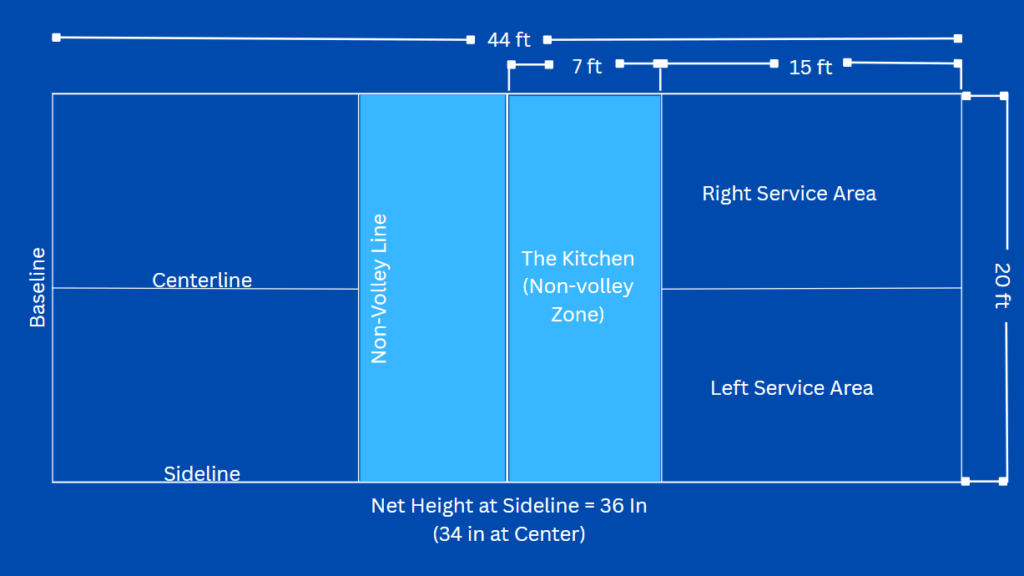
- Non-volley zone or kitchen: The seven-foot zone by the net, plus the line.
- Volley: Striking the ball before it bounces.
- Momentum fault: Touching the kitchen due to motion after volley contact.
- Re-establish: Both feet and body fully out of the kitchen before volleying again.
- Partner support: Legal if neither of you touches the kitchen after a volley.
Review these before league night. Can you land in the kitchen in pickleball will feel simple once these keywords click.

Frequently Asked Questions of can you land in the kitchen in pickleball
Can I stand in the kitchen before the point starts?
Yes, but it is not smart. You will have to move out before any volley, and you give up ideal court spacing.
Is the kitchen line part of the kitchen?
Yes. The line is the kitchen. If you step on it during a volley, it is a fault.
Can I jump over the kitchen, hit a volley, and land outside?
Yes, that is legal. If you land in the kitchen after the volley, it is a fault.
What if my paddle touches the kitchen after a volley?
That is a fault. Anything you wear or carry counts as contact with the kitchen.
Can you land in the kitchen in pickleball after a dink?
Yes. If the ball bounces, you can step in, play it, and land in the kitchen.
Does touching the net post or fence matter?
Touching the net or post is a separate fault. Kitchen rules still apply if you volleyed and then touched the NVZ.
Can my partner hold me so I do not fall in?
Yes. That is legal as long as neither of you, nor your gear, touch the kitchen after a volley.
Conclusion
You can land in the kitchen when the ball bounces. You cannot volley and then touch the kitchen or its line. Keep your feet calm, your balance low, and your eyes on the bounce. That is the heart of can you land in the kitchen in pickleball.
Take this to the court today. Run the drills, talk through calls with your partner, and practice stops by the line. Want more simple rules and smart drills? Subscribe, share your kitchen stories in the comments, and let’s grow your game together.