Yes and no: the serve and return must bounce, then volleys are allowed.
If you have ever asked do you have to let the ball bounce in pickleball, you are not alone. I teach new and seasoned players every week, and this rule trips people up. In this guide, I break it down with clear steps, real court tips, and honest examples. Stick with me and you will know exactly when to let it bounce and when to volley with confidence.
The double-bounce rule, made simple
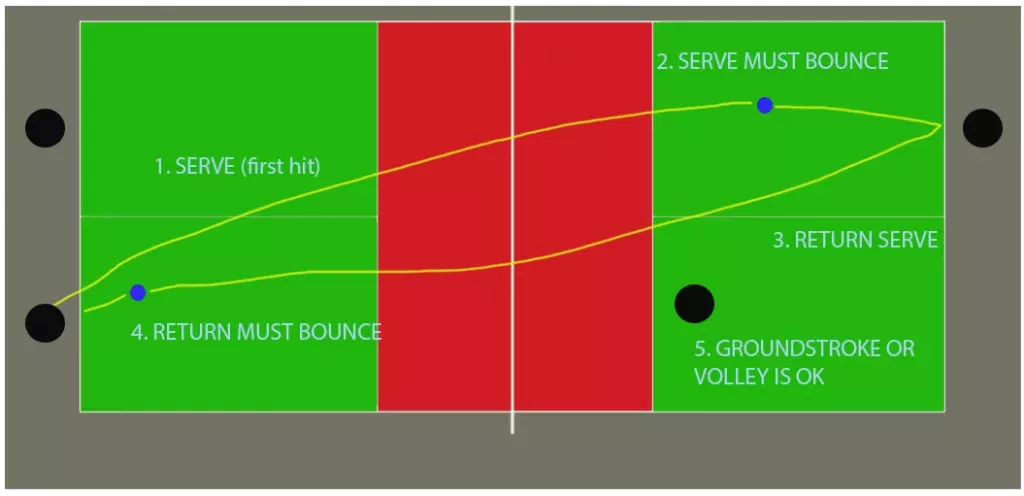
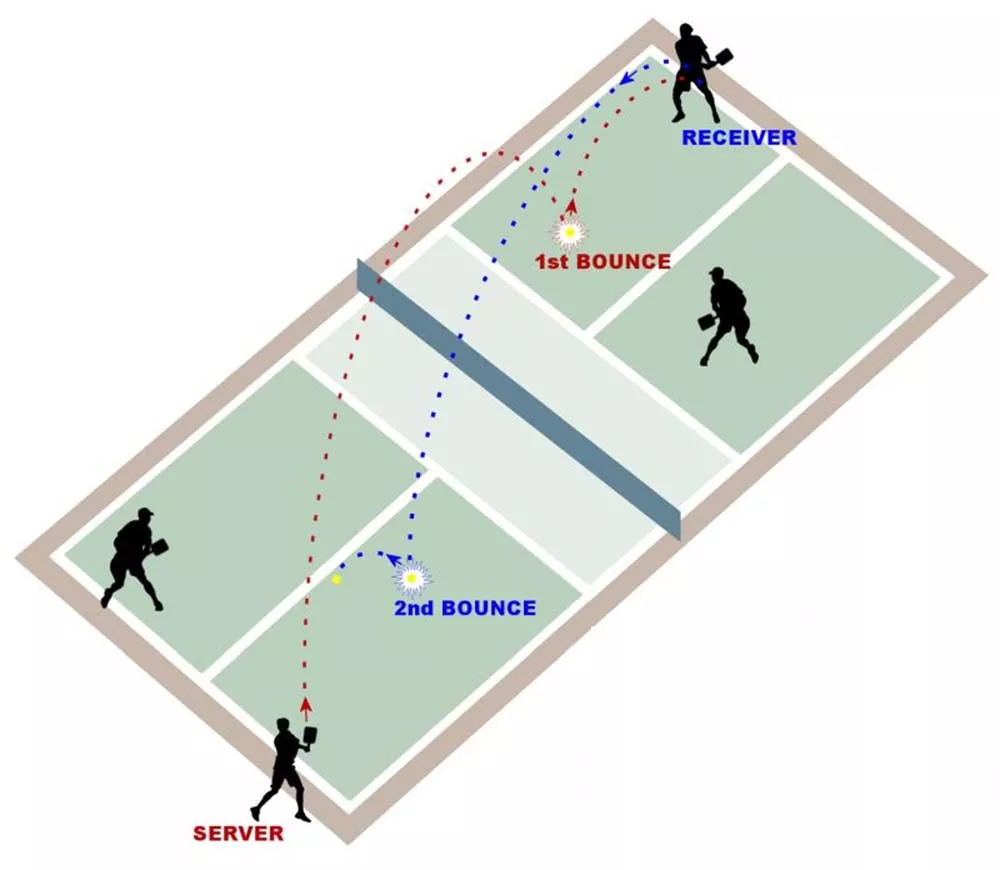
The key rule is called the double-bounce rule. On every point, the serve must bounce once, and the return of serve must bounce once. After those two bounces, either side can volley the ball out of the air.
So, do you have to let the ball bounce in pickleball? On the first two shots, yes. On later shots, you can choose to let it bounce or volley it, as long as you follow kitchen rules. In my clinics, I tell players to pause after the serve and return. Wait for the bounce. Then attack.
Practical takeaways:
- Let the serve bounce on the receiver’s side.
- Let the return bounce on the server’s side.
- After two bounces, you can volley if you are not in the kitchen.

The kitchen rule and volleys
The non-volley zone, or kitchen, is the seven-foot area by the net. You cannot volley while in it or while your momentum takes you into it. You can step in the kitchen to hit a ball that has bounced. You just have to let it bounce first if you are inside that zone.
Do you have to let the ball bounce in pickleball when you are in the kitchen? Yes. If you are in the kitchen, you must let it bounce before you hit. When I coach beginners, I use this cue: green light to volley outside the kitchen, red light inside it.
Watch for these common kitchen faults:
- Reaching in to volley with a toe on the line.
- Volleys that carry you into the kitchen after contact.
- Touching the kitchen line on a volley follow-through.
Strategy: when to let it bounce on purpose
After the first two bounces, you get a choice. Sometimes, letting it bounce is the smart play. A low, fast drive is easier to handle after a bounce. A drop shot sits up if you rush. Give it a beat.
When people ask do you have to let the ball bounce in pickleball, I also teach when you should. Let it bounce on hard drives at your feet. Let it bounce when the ball lands deep and skids. Let it bounce in wind or glare so you set your feet.
Situations where a planned bounce helps:
- Third shot drops that land short.
- Fast topspin drives at your body.
- Tricky net cords that die near the kitchen.
- Lobs that may land out near the baseline.

Common scenarios explained
Players often mix up edge cases. Here are quick answers you can trust.
- Serve play: The serve must bounce on the receiver’s side. If you volley a serve, it is a fault.
- Return play: The return must bounce on the server’s side. If the serving team volleys that return, it is a fault.
- Third shot: After two bounces, either team may volley unless they are in the kitchen.
- Kitchen dinks: You can step into the kitchen for a dink only after the ball bounces.
- Net cord: If the ball hits the net and lands in, it is live. The same bounce rules apply.
- Out calls: If a ball looks long, let it bounce if you are not sure. You can then make a better call.
Do you have to let the ball bounce in pickleball on every drop? No. You choose. But smart players read the ball and make a safe call.

Drills to master bounce judgment
Good footwork makes the bounce choice easy. These simple drills build that habit fast.
- Bounce-then-hit warmup: Feed gentle balls to your partner’s feet. They must let it bounce, set, and push a soft reply.
- Third shot ladder: Hit drop shots that land inside the kitchen. Your partner reads, lets it bounce, and dinks cross-court.
- Volley or bounce callout: A feeder alternates soft floats and hard drives. You must shout “bounce” or “volley” before you swing.
- Kitchen line dance: Start with toes at the line. Catch all balls that would force a volley in the kitchen. Reset if you cross.
Do you have to let the ball bounce in pickleball during these drills? Follow the rule on serves and returns. Then train your read.

Mistakes to avoid and pro tips
Small fixes give big gains. I see these errors all the time.
- Rushing the third shot and popping it up. Let it bounce and lift a smooth drop.
- Volleys with heels on the line. Step back a full stride and plant.
- Reaching instead of moving. Take a split step, then decide bounce or volley.
- Chasing balls into the kitchen after a volley. Control your balance and stop your momentum.
- Forgetting the two required bounces. Say “one” on the serve bounce and “two” on the return bounce.
Do you have to let the ball bounce in pickleball on every dink? If you are in the kitchen, yes. Outside the kitchen, choose the best shot for the ball.
Gear and court factors that change the bounce
Not all bounces act the same. Small details matter a lot.
- Ball type: Outdoor balls are harder and bounce higher. Indoor balls are softer and slower.
- Temperature: Cold balls bounce lower. Warm balls bounce higher and faster.
- Court surface: New, gritty courts grab the ball. Old, slick courts skid more.
- Paddle face: Fiberglass adds pop. Carbon faces add grab and control.
- Shoes: Good grip helps you stop on a dime and read the bounce.
Do you have to let the ball bounce in pickleball more on windy days? Often yes. Give the wind time to show what it will do.

Rules recap you can trust
Here is a quick rules summary in plain words.
- A volley is a shot hit in the air without a bounce.
- The double-bounce rule: serve must bounce once, and return must bounce once.
- The kitchen rule: no volleys while in the non-volley zone or if your momentum takes you in.
- Lines: The kitchen line is part of the kitchen. A foot on the line on a volley is a fault.
- Live balls: Net-cord balls that land in are live. Apply the same bounce rules.
Do you have to let the ball bounce in pickleball after those two first bounces? No, unless you are in the kitchen. Then you must let it bounce.

Frequently Asked Questions of do you have to let the ball bounce in pickleball
Do you have to let the ball bounce in pickleball on the serve and return?
Yes. The serve must bounce on the receiver’s side, and the return must bounce on the server’s side.
Can I volley if I am standing in the kitchen?
No. You cannot volley in the kitchen or if your momentum carries you into it after the volley.
After the first two bounces, can I choose to volley or let it bounce?
Yes. You can volley or let it bounce, as long as you stay out of the kitchen on a volley.
What if the ball clips the net and lands in?
It is a live ball. All standard bounce and kitchen rules still apply.
Is it better to let drives bounce?
Often yes. A hard, low drive is easier to handle after a bounce with a calm, guided swing.
Can I step into the kitchen to hit a ball that bounced?
Yes. You can enter the kitchen to hit a ball that has bounced, then step out and reset.
Does wind change whether I should let it bounce?
It can. In wind, let borderline balls bounce more often so you can read the last move.
Conclusion
You now know when a bounce is a must, when it is smart, and when to swing in the air. The double-bounce rule sets the stage. The kitchen rule guides your feet. From there, your read and your plan make the difference.
Go try the callout drill and the third shot ladder today. Build that pause, make clean reads, and own your choice. If this helped, share it with your doubles partner, subscribe for more tips, or drop a question in the comments.