
Yes—on the serve and the return, the ball must bounce once.
If you’ve ever argued over a point at the kitchen line, you’re not alone. I’ve coached new and seasoned players, and the same question pops up: does the ball have to bounce in pickleball? In this guide, I’ll break down the exact rule, why it exists, how to use it to your advantage, and what mistakes to avoid so you never give away easy points again.
What the official rule says about bounces
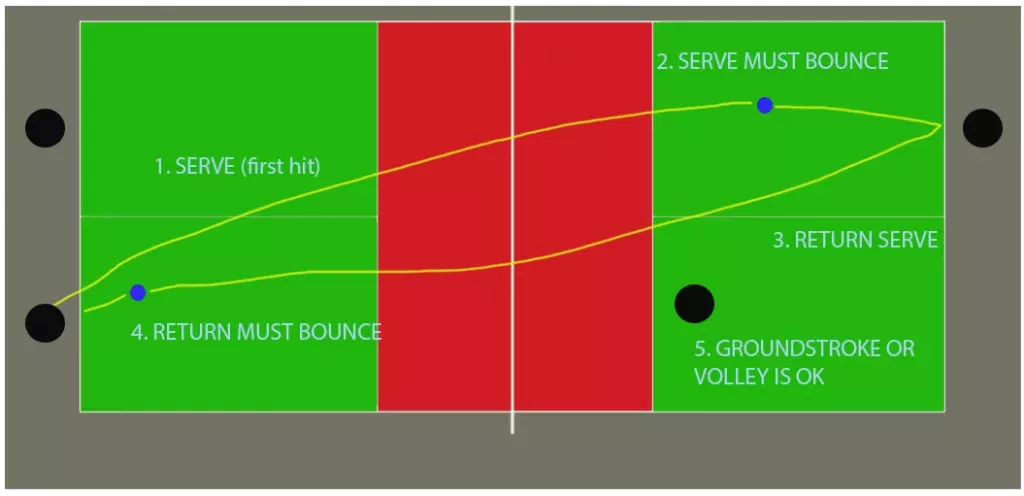
Pickleball has a simple but vital rule called the two-bounce rule. After you serve, the ball must bounce once on the receiver’s side. After the return is hit, it must bounce once on the server’s side. Only then can either team volley.
Once those two bounces happen, you can hit the ball in the air as long as you follow the non-volley zone rule. A rally can include both bounces and volleys. If you ever wonder, does the ball have to bounce in pickleball after the serve and return, the answer is yes, then no.
A ball that bounces twice on one side is a fault on that side. A ball volleyed before those first two bounces is also a fault. These standards come from modern USA Pickleball rules and are used in most events and leagues.
When you can hit without a bounce (volleys) and when you cannot
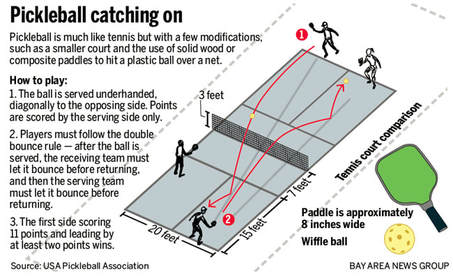
You can volley after the serve and return have each bounced. But you cannot volley from inside the non-volley zone, also called the kitchen. The kitchen is the 7-foot area on both sides of the net.
If you volley while in the kitchen, or your momentum carries you into it after a volley, it is a fault. If the ball bounces in the kitchen, you can step in and hit it. This is where many players ask again, does the ball have to bounce in pickleball near the kitchen, and the answer depends on your feet and the shot. Volleys are fine if you are outside the kitchen.
Think of the kitchen line as a guardrail. It lets you play close, but it stops unsafe lunges on volleys. Use small steps and a steady base to avoid faults.

Common game situations that confuse players
Some parts of a match create doubt. Here are the big ones I see during lessons.
- Return of serve deep. If you return deep and fast, the serving team must let it bounce. They often rush and volley early. That is a fault every time.
- Third shot choice. After two bounces, many players ask, does the ball have to bounce in pickleball on the third shot? No. You may volley, but a drop shot is often wiser to gain the kitchen.
- Dinks at the line. Most dinks bounce. You can also take a dink out of the air if you are not in the kitchen. Keep your toes behind the line.
- Net cord on serve. If a serve clips the net and lands in, play on. There is no let serve. The returner must let it bounce.
- Lobs and overheads. After the two-bounce rule is met, overheads are legal from outside the kitchen. Watch your momentum so you do not step into the kitchen after the swing.
When in doubt, slow down, breathe, and replay the rally in your mind: serve bounce, return bounce, then volley or bounce.

Strategy: Use the bounce to your advantage
The bounce is a built-in equalizer. Learn to use it to control pace and court position.
- On the return, hit deep and with height. Make the serving team’s third shot hard. The ball must bounce on their side, so give it time to drop.
- On the third shot, choose a soft drop when you are under pressure. Let the ball bounce to buy a step forward. You do not win points by rushing the net too soon.
- In fast exchanges, take some dinks out of the air to apply pressure, but be smart. If your balance is off, let it bounce. In coaching, I often say, does the ball have to bounce in pickleball right now, given your footwork? If yes, let it.
- Against bangers, absorb pace. Aim low over the net and let heavy topspin shots bounce up into your strike zone.
Wind, sun, and ball type matter. Outdoor balls stay lower and faster. In wind, a safe rule is to respect the bounce more.

Drills to master bounce timing
You can train the two-bounce feel in minutes a day. Here are simple drills I use with students.
- Say it out loud. Rally with a partner and call “serve bounce,” “return bounce,” then hit. This builds a clean rhythm and cuts early-volley faults.
- Third shot ladder. From the baseline, hit 10 drop shots that land in the kitchen. Let the ball fall to knee height before contact. Reset if you rush.
- Kitchen line catch-and-hit. Stand at the kitchen line. Partner feeds soft. Let one ball bounce and push it back. Take the next ball out of the air. Alternate to learn decisions.
- Deep return target. Aim returns to a two-by-two-foot square within 3 feet of the baseline. The deeper the bounce, the weaker their third shot.
- Shadow steps. Without a ball, rehearse split step, short shuffle, and stable base before contact. Good feet make bounce reads easy.
If you repeat these, the question does the ball have to bounce in pickleball stops being theory and becomes instinct.

Common mistakes and how to fix them
I see the same errors in clinics. Here is how to clean them up fast.
- Early volley on the return. Players forget the second bounce. Fix it by counting out loud during live play for a week.
- Kitchen creep. Heels hover over the line during a volley. Fix it by planting your paddle on the court as a reminder behind the line.
- Rushing the third shot. Driving every ball. Fix it by practicing soft hands and meeting the ball lower. Let it bounce when off balance.
- Misreading spin. Topspin kicks higher. Backspin dies. Fix it by tracking the logo on the ball and giving yourself space.
- Over-swinging. Big swings raise errors. Fix it by using compact strokes. Think block, not bash.
Ask yourself mid-rally, does the ball have to bounce in pickleball on this shot, given my position? If your feet are late, the answer is yes.

Rules nuances, formats, and refs
The two-bounce rule is the same in singles and doubles. Scoring format, rally or side-out, does not change bounce rules. If a ref sees an early volley on serve or return, it is a fault.
If both teams stop play unsure about a bounce, referees can call a replay if no one is certain. In self-officiated play, the standard is that the call goes to the side with the best view. Keep it fair and friendly.
Local leagues follow USA Pickleball rules in most cases. Before you play a tournament, skim the latest rulebook. It will answer questions like does the ball have to bounce in pickleball in any special cases, and it confirms that the kitchen and volley rules are unchanged.

Frequently Asked Questions of does the ball have to bounce in pickleball
Does the ball have to bounce in pickleball on the serve?
Yes. The serve must land in the correct box and bounce before the returner hits it. If the returner volleys the serve, it is a fault.
Can I volley the return of serve?
No. The serving team must also let the return bounce before hitting. Volleys are legal only after those first two bounces.
After the two bounces, can I volley in the kitchen?
No. You cannot volley while standing in the non-volley zone, or if your momentum carries you into it. You can step in only after the ball bounces.
What if the ball bounces twice on my side?
That is a fault on your team. The rally ends the moment the second bounce occurs.
Does spin change the bounce rule?
No. Spin affects how high or low the ball bounces, but the rule stays the same. The first two shots still must bounce.
Does the ball have to bounce in pickleball during a dink rally?
It does not have to, but most dinks bounce. You may take a dink out of the air if you are not in the kitchen and have balance.
Are let serves allowed in pickleball?
No. If the serve clips the net and lands in, it is live. The returner must let it bounce and play on.
Conclusion
The heart of this game is simple: serve bounce, return bounce, then play with purpose. Learn when to volley, when to let it bounce, and how the kitchen shapes your choices. Ask yourself often, does the ball have to bounce in pickleball on this shot, and base your choice on balance and position.
Take these drills and tips to your next session. Practice the count, sharpen your third shot, and stay clear of kitchen faults. Want more guides like this? Subscribe, share this article with your doubles partner, or leave a question and I’ll help you fine-tune your game.