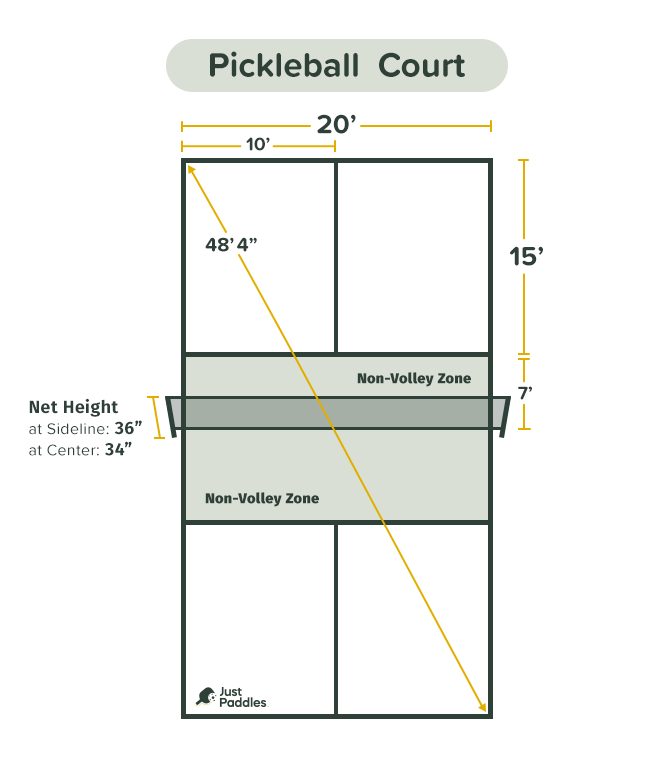
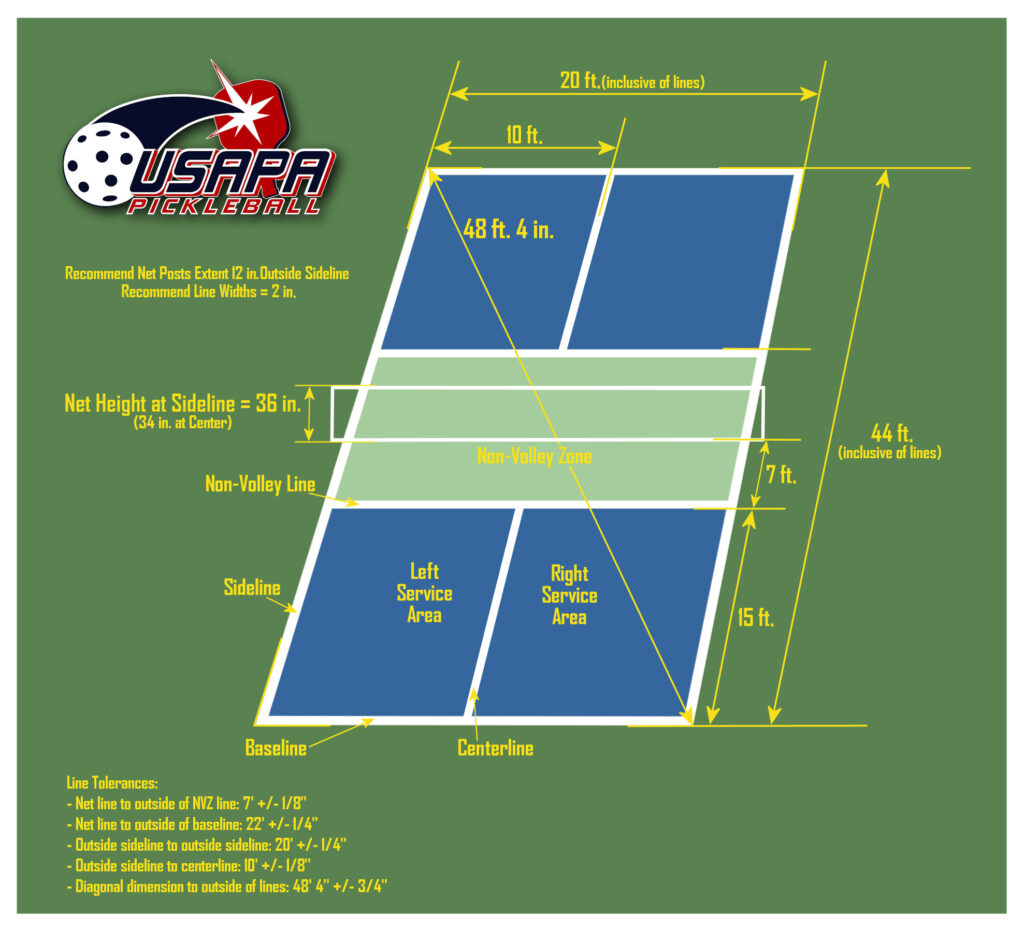
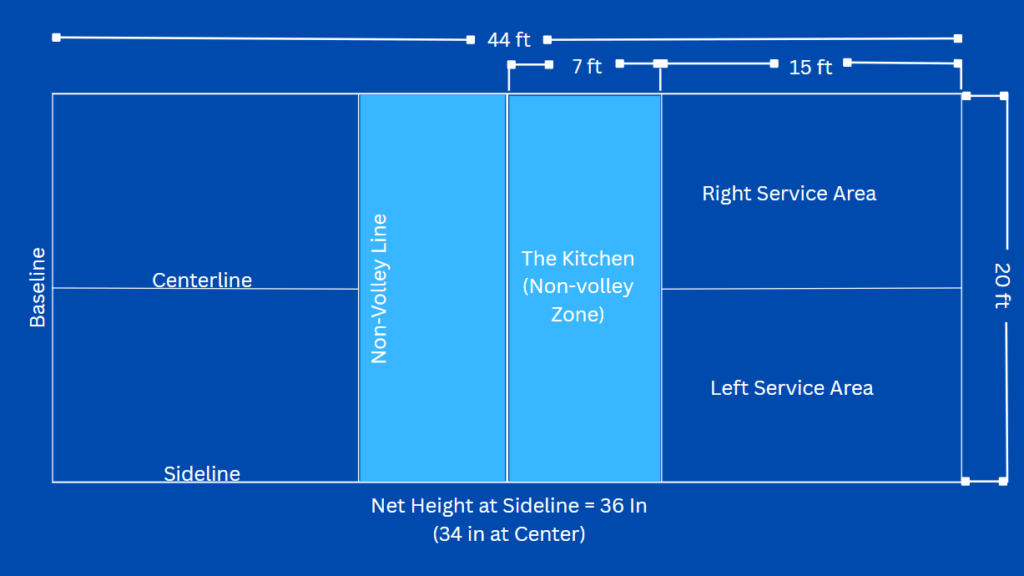
The pickleball kitchen is 7 feet deep on each side of the net.
If you play or plan to play, you have likely asked how deep is the kitchen in pickleball. You are in the right place. I coach new players and compete in local leagues, and I will show you how kitchen depth affects rules, tactics, drills, and wins. Stick with me and you will know how deep is the kitchen in pickleball and how to use it to your edge.

What Is the Kitchen in Pickleball?
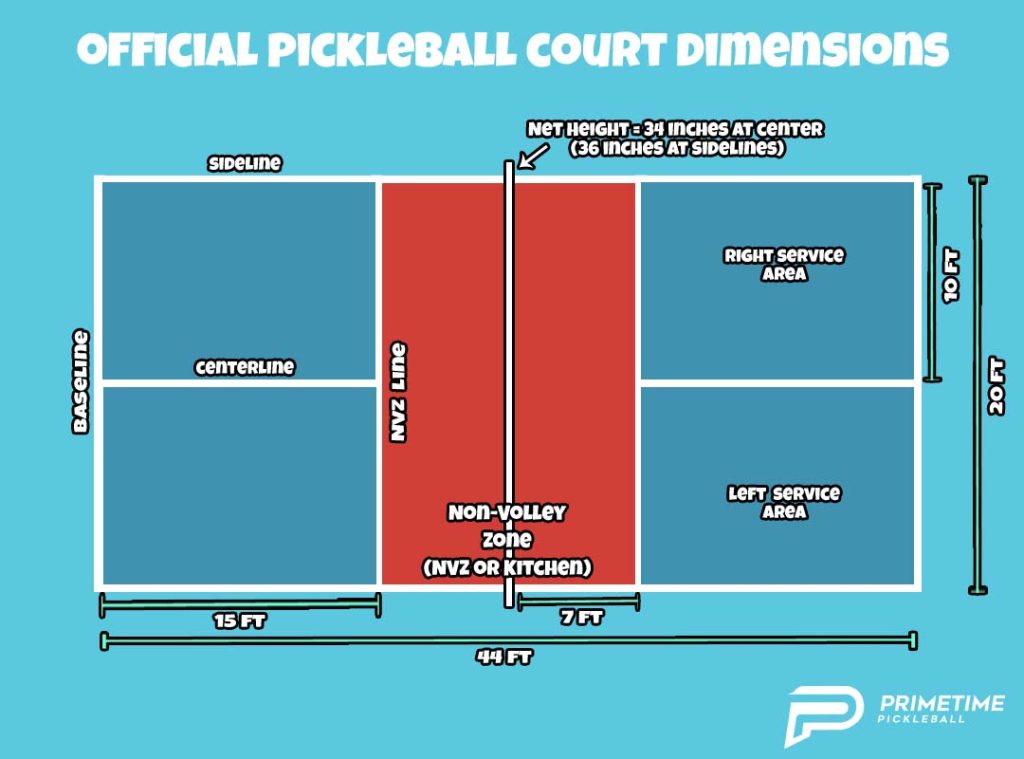
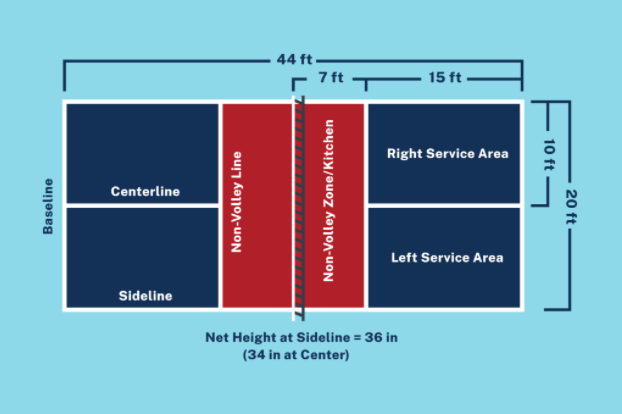
The kitchen is the non-volley zone, also called the NVZ. It runs the full 20-foot width of the court on both sides of the net. It is a no-volley area, which means you cannot hit the ball in the air there. When people ask how deep is the kitchen in pickleball, they want to know the rule line that shapes the soft game.
The NVZ includes the line itself. If you stand on the line and volley, it is a fault. You can step into the kitchen after a bounce, hit, and step back out. Control near this space is the heart of modern play.
Exact Dimensions and How to Measure It
The kitchen depth is exactly 7 feet from the net to the NVZ line. That is about 2.13 meters. The court is 20 feet wide, so the kitchen is a 20-by-7 foot rectangle on each side. If you set up a court at home, use a tape to mark 7 feet from the net and draw a clear line.
Here is a simple way to measure and paint it right:
- Lay the net so the center is at the right height, 34 inches at center.
- Measure 7 feet from the net on both sides and snap a chalk line.
- Paint or tape a 2-inch-wide NVZ line; remember, the line is part of the NVZ.
- Check corners with a square so your lines stay true.
According to the official rulebook, these sizes are standard for all play. If you wonder how deep is the kitchen in pickleball at your club, it should be the same 7 feet unless the court is mis-marked.

Why Kitchen Depth Matters for Your Game
Kitchen depth sets the front line of attack. The player who owns the line controls pace and angles. Soft dinks pull rivals wide, then a fast ball finishes the point. Knowing how deep is the kitchen in pickleball helps you judge if a step is safe or a fault risk.
A clear mental picture of 7 feet also helps with drop shots. Aim to land the ball just over the net and inside the NVZ. That forces a lift and sets up your next swing.
Common Rule Mistakes and How to Avoid Them
Many faults happen at the kitchen line. I see them in every beginner clinic I lead. The good news is you can fix them fast.
Big mistakes to watch:
- Volley while any part of your body touches the NVZ line or zone.
- Let momentum carry you into the kitchen after a volley. That is still a fault.
- Touch the kitchen with your paddle, hat, or even a string. That counts.
- Forget that you can enter the kitchen only after a bounce.
To prevent errors, freeze after a volley and check your balance. Practice a split step that stops your weight. If you ask how deep is the kitchen in pickleball during play, remember the 7-foot space and treat the line like hot lava when you volley.

Strategy: Playing At and Near the Kitchen Line
Win the race to the line. That is key in doubles. The ideal stance is toes a few inches behind the NVZ line. Paddle up, elbows relaxed, eyes on the ball. Play soft when pulled wide and speed up when you see a pop-up.
Smart tactics at the line:
- Dink cross-court to use the longer distance and lower net at the sides.
- Aim at the opponent’s backhand with a slow, low ball.
- Change pace. Mix soft dinks with a surprise flick.
- Reset hard balls into the kitchen to slow rallies.
If a friend asks how deep is the kitchen in pickleball, say 7 feet, then add this tip: your target zone is small, so aim small. The net tape is your guide.
Training Drills to Master the Kitchen
You can build touch in minutes a day. I use these drills with new players and see fast gains.
Try these:
- Box dinks: Aim for four small squares just over the net in the NVZ.
- Triangle drill: Move forehand, middle, backhand at the line with soft dinks.
- Reset wall: Stand 10 feet from a wall and reset hard shots into a chalk box.
- Volley-freeze: Volley, then hold your finish to check balance and footwork.
Repeat with a goal, like 20 clean dinks in a row. Ask yourself how deep is the kitchen in pickleball as you pick targets. That mental cue helps you train touch, not power.
Court Setup: Home and Club Tips
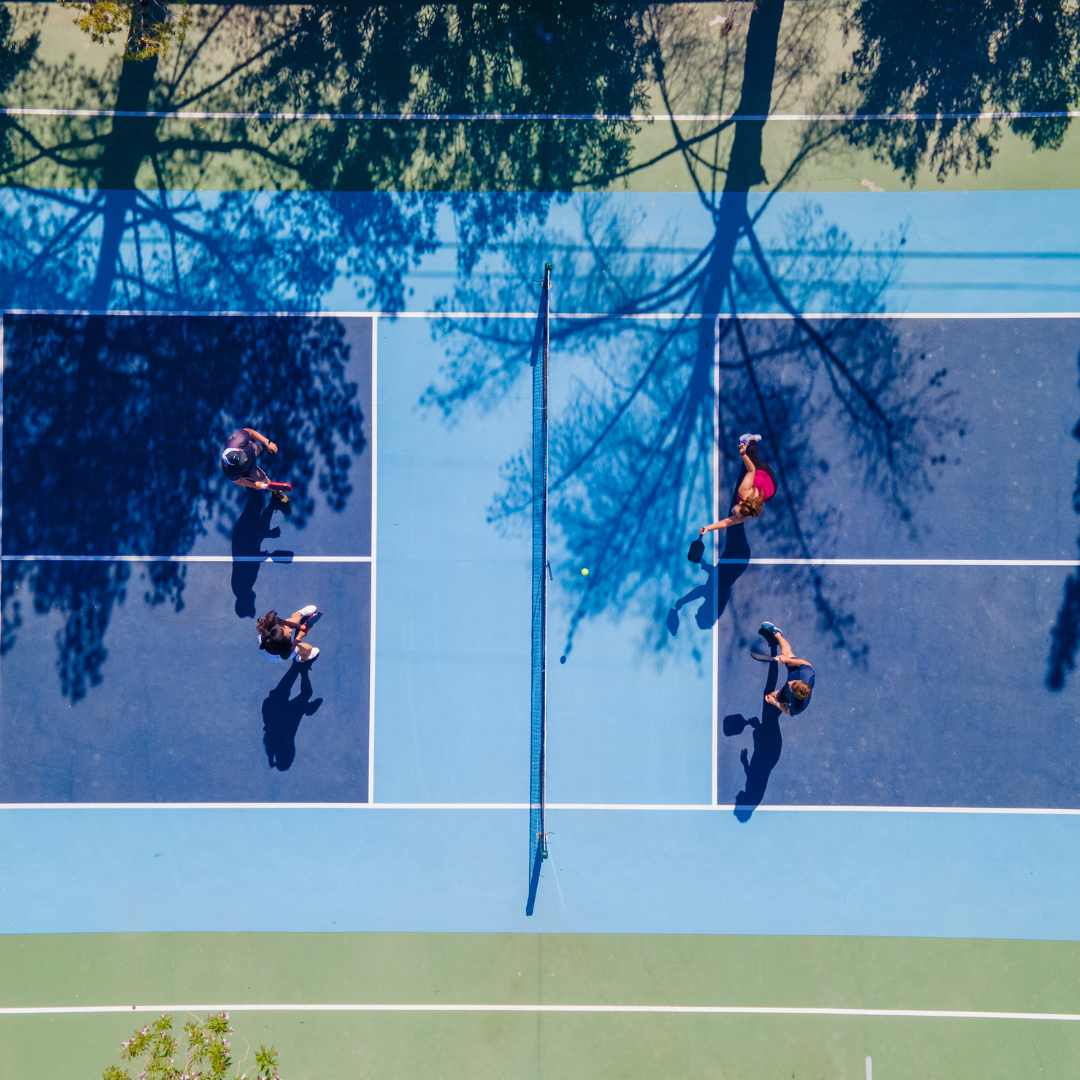
A well-marked kitchen builds good habits. Use bright tape so the NVZ line pops. Replace worn tape often. Poor lines cause arguments and bad calls.
Setup pointers:
- Use a 100-foot tape to mark lines straight and true.
- Confirm 7 feet at the center and at both sidelines.
- Sweep and dry the NVZ before play to avoid slips.
- Keep a simple rule sheet by the court for new players.
If a guest asks how deep is the kitchen in pickleball, point to the rule sheet and your crisp line. Clarity keeps play fun.

My Experience and Pro Tips
When I first started, I kept sliding into the NVZ after a hard volley. I lost points I should have won. The fix was simple. I learned a small hop back as I hit. That stopped my weight and saved many rallies.
Pro tips that helped me:
- Count “one-one-thousand” after a volley to check momentum.
- Keep your pinky on the paddle edge for a softer dink feel.
- Aim two feet inside the sideline to cut errors.
- Say how deep is the kitchen in pickleball out loud in drills to lock in the 7-foot map in your mind.
These small cues build muscle memory. You will feel calmer at the line.
Variations, Tournaments, and Rule Updates
Standard courts follow the same kitchen depth across local play, clubs, and tournaments. The NVZ is 7 feet deep on each side, period. The line is part of the zone. Annual rule updates may adjust wording, but the size has stayed the same for years.
Check the latest official rulebook each season. Event refs will cite those rules on court. If your league posts a house rule, make sure it does not change the kitchen size. If someone asks how deep is the kitchen in pickleball during a match, you can cite the 7-foot rule with confidence.
Frequently Asked Questions of how deep is the kitchen in pickleball
Is the kitchen line itself part of the kitchen?
Yes. The NVZ line is part of the non-volley zone. If you touch the line while volleying, it is a fault.
Can I step into the kitchen after the ball bounces?
Yes, you can. You may enter the kitchen to hit a ball that has bounced, then step out again.
How deep is the kitchen in pickleball for singles vs doubles?
It is the same for both. The kitchen is 7 feet deep on each side, singles or doubles.
Does momentum into the kitchen after a volley count as a fault?
Yes, it does. Even if the ball is dead, your momentum cannot carry you into the NVZ after a volley.
How deep is the kitchen in pickleball in meters?
It is about 2.13 meters. The width is 6.1 meters, or 20 feet, across the court.
How deep is the kitchen in pickleball on temporary or driveway courts?
It should still be 7 feet. Use a tape measure and bright tape to mark it the same way as a standard court.
Can my paddle or hat land in the kitchen on a volley?
No. Any contact with the kitchen during a volley is a fault, including gear that falls in.
Conclusion
The kitchen shapes every rally and every tactic in pickleball. It is 7 feet deep on each side, and that simple fact drives clean footwork, smart drops, and safe volleys. When you know how deep is the kitchen in pickleball, you can plan shots, hold the line, and win more points.
Put this guide to work today. Mark your court, run the drills, and test one tip per practice. Want more deep dives like this? Subscribe, share your questions in the comments, and keep learning with each game.