You score in pickleball by earning points only on your serve and winning by two.
If you’ve ever asked how do you score pickleball, you’re not alone. I’ve taught dozens of new players and run local rec ladders, and scoring is the first hurdle. Stick with me and you’ll learn the three-number call, the right server order, and simple tricks that keep games smooth and fair.

Pickleball scoring basics
Pickleball uses side-out scoring. Only the serving team can score points. Games are usually to 11, win by 2. Some formats go to 15 or 21.
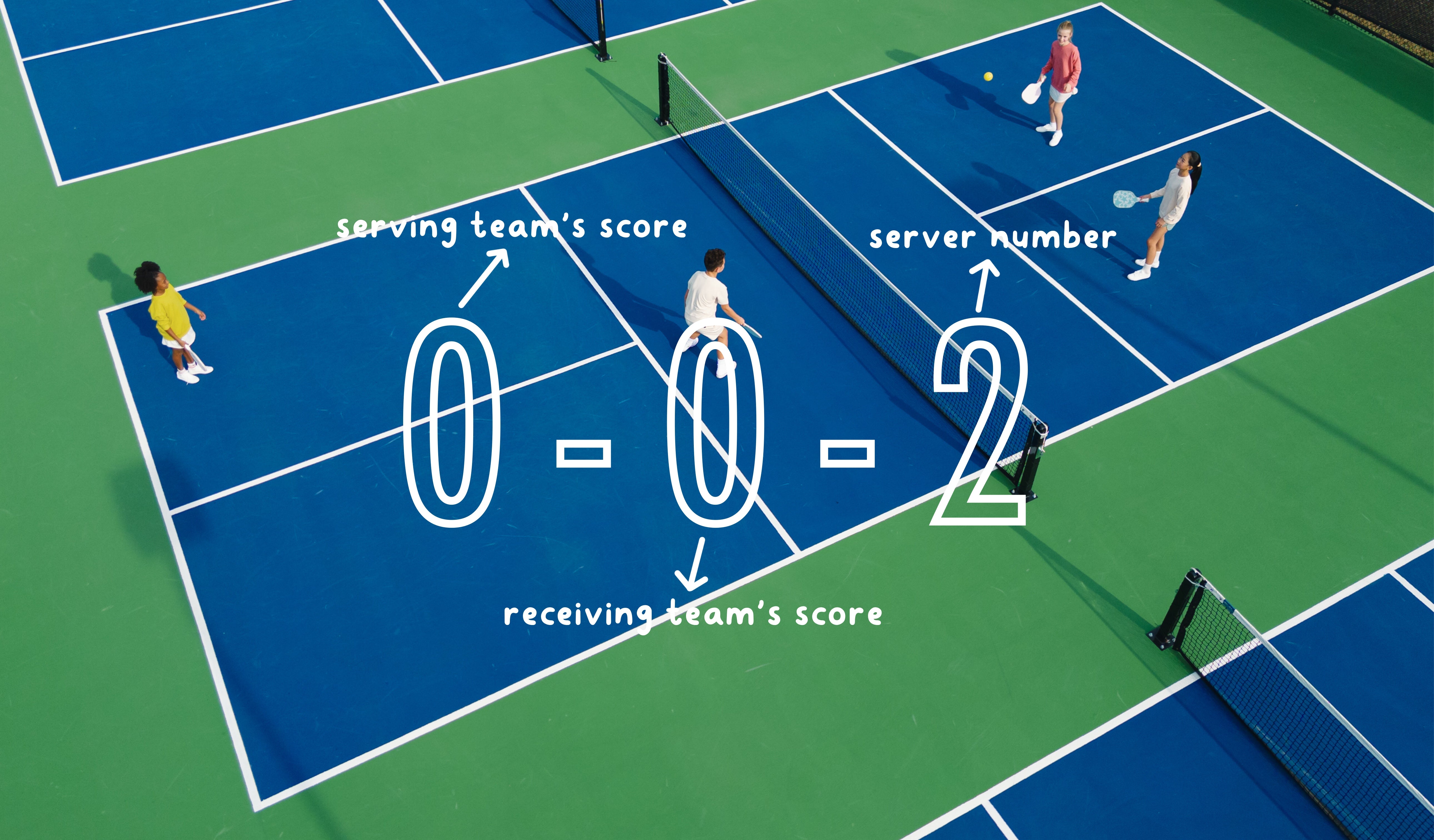
In doubles, you call three numbers: server score, receiver score, and server number (1 or 2). At the very start, you call 0-0-2 to avoid an unfair advantage. That “2” is not the team’s score. It marks the second server, used only on the first rotation.
If you came here wondering how do you score pickleball in the simplest way, remember this. Score on your serve. Win by two. Rotate sides based on even or odd score.

How the three-number score call works
The score call order is server score, receiver score, server number. In doubles, the server number is either 1 or 2. It tells you which partner is serving in that service turn.
Server 1 starts a team’s service turn on the right if their score is even. Server 2 follows after a fault by Server 1. When both servers lose a rally, it’s a side-out and the other team serves.
If you’re asking how do you score pickleball without confusion, pause before every serve. Say the score loud and clear so all four players agree.

Doubles scoring step by step
Here is a simple play-by-play for doubles.
- Start of game: Call 0-0-2. The initial server serves from the right. Only one player serves in this first turn.
- If that server wins the rally, it becomes 1-0-2. Same server serves again, switching sides after each point.
- If that server loses the rally, side-out. Now the other team starts with Server 1 at 0-1-1.
- During a regular service turn, Server 1 serves until a fault. Then Server 2 serves. After Server 2 faults, side-out.
Use these quick cues when learning how do you score pickleball in doubles.
- Even team score means the first server of that team stands on the right.
- Odd team score means the first server of that team stands on the left.
- You always call all three numbers before you strike the serve.

Singles scoring made easy
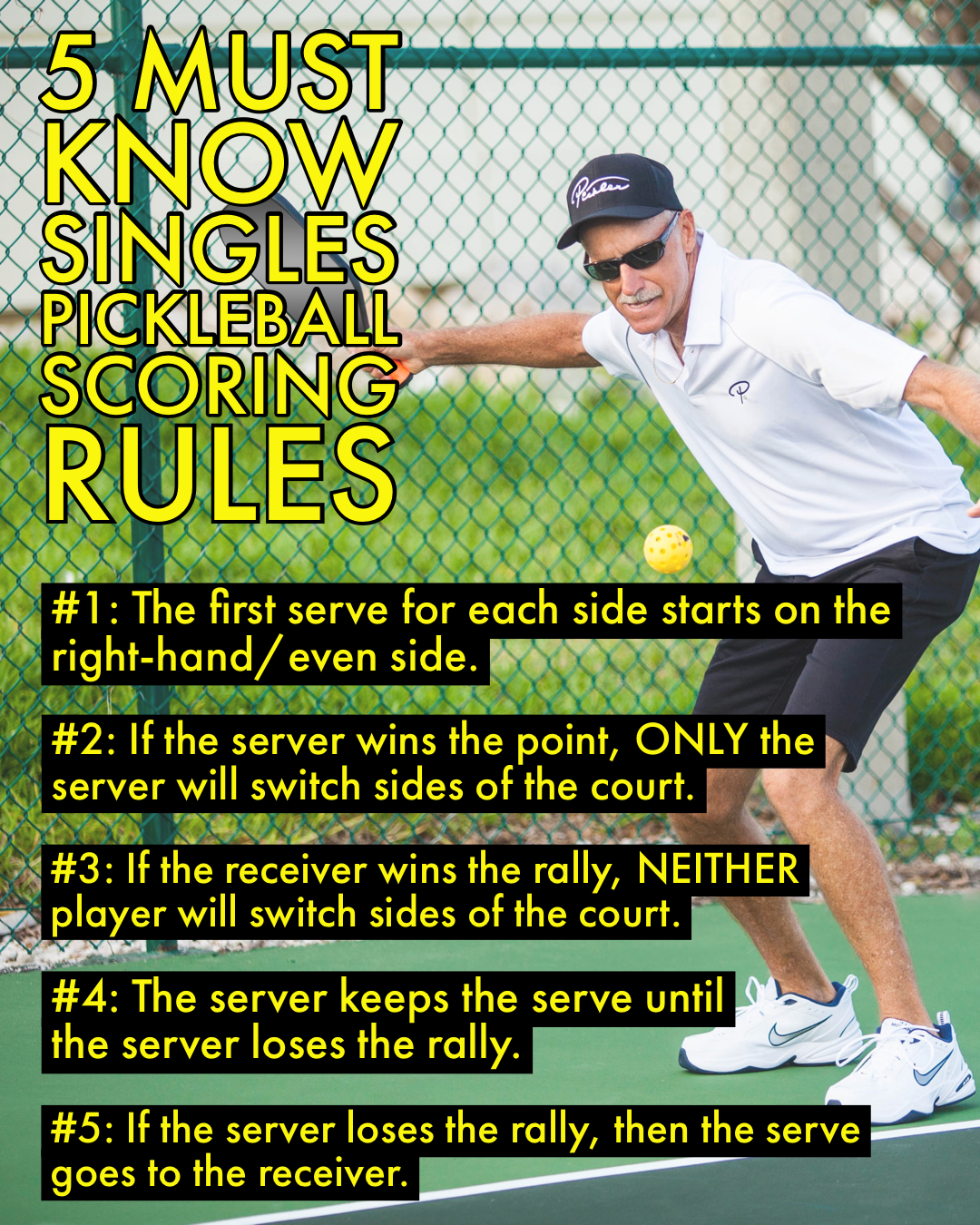
Singles scoring is simpler. You call only two numbers: server score, receiver score. There is no server number in singles.
Serve from the right when your score is even. Serve from the left when your score is odd. You still only score on your serve and must win by two.
Many players ask how do you score pickleball in singles compared to doubles. The answer is the same core idea. Score only when serving, rotate sides based on even or odd, and speak the score first.

Faults that change the score or serve
Faults stop the rally. On the serve, a fault gives the next server a turn or causes a side-out. On return, a fault gives the serving team a point.
Common faults you should know:
- Serve foot fault. Any part of your foot crosses the baseline before contact.
- Wrong server or wrong receiver. Serving or returning out of order is a fault once the rally starts.
- Non-volley zone fault. You volley while touching the kitchen or the line.
- Double bounce. The ball bounces twice before you hit it.
- Out of bounds or the net. The ball lands out or hits the net and does not go over.
Learning how do you score pickleball includes knowing how faults affect service turns. If a fault occurs on the serving team, they lose that serve or the service turn. If it occurs on the receiving team, the serving team earns a point.
Endgame, tiebreaks, and win-by-two
Games are most often to 11, win by 2. At 10-10, keep playing until one team leads by two. In longer games to 15 or 21, the same win-by-two rule applies.
Tournaments may add court-end switches at set points to keep play fair. The pattern is simple. For 11-point games, some formats switch at 6 during a deciding third game. For 15, many switch at 8; for 21, many switch at 11.
People who ask how do you score pickleball in late-game moments often rush serves. Slow down. Call the score, confirm positions, and focus on high-percentage targets.

Real-world scoring examples
Example A: Doubles, early game.
- Call: 0-0-2. You serve from the right. You win the rally.
- Call: 1-0-2. You now serve from the left. You fault.
- Side-out. Other team serves: 0-1-1, server stands on right.
Example B: Doubles, mid-game.
- Score is 6-6-1. First server stands on the right. They earn a point.
- Call: 7-6-1. Server moves to the left. They fault.
- Call: 7-6-2. Partner serves from the left. They fault. Side-out.
Example C: Singles.
- Call: 4-3. Server’s score is even, so serve from the right.
- Server wins the rally. Call: 5-3. Now serve from the left.
These quick snapshots show how do you score pickleball in action. Practice a few sample rallies and the flow will click.
Scoring mistakes to avoid and quick fixes
Wrong server or wrong receiver is the number one issue. Confirm who served first for your team at the start of your service turn. That player is Server 1 until the turn ends.
Saying the wrong score happens too. If you realize it before the return of serve, stop and correct it. If play continues, the rally stands.
A simple tip for anyone asking how do you score pickleball without chaos. Wear a small wristband on Server 1, or keep a coin in the pocket of Server 1. It is a cheap memory aid.

Tips for calling the score clearly
Clear calls speed up games and prevent disputes. Use these habits.
- Face your opponents and speak before you serve. Pause one beat after the call.
- Say it in rhythm. Server score, receiver score, server number.
- Signal with a finger for server number. One or two helps everyone follow.
- Keep it steady on big points. Calm voice, same routine every time.
If your group keeps wondering how do you score pickleball when rallies get tense, pick one person to lead calls for the game. Consistency beats volume.
Frequently Asked Questions of how do you score pickleball
What does 0-0-2 mean at the start?
It means the first serving team gets only one server to begin the game. After that first fault, a side-out happens and normal two-server turns begin.
When do we switch sides of the court while serving?
You switch sides after every point you score on your serve. If you don’t score, you do not switch.
How do you score pickleball if someone serves from the wrong side?
If the wrong server hits the serve and play continues, the rally stands. If you catch it before the return of serve, stop play and correct positions.
In singles, do I use server number 1 or 2?
No. Singles uses only two numbers: server score and receiver score. Rotate right or left based on whether the server’s score is even or odd.
Can the receiving team ever score a point?
Not under side-out scoring. Only the serving team can score. The receiving team must win a rally to earn the chance to serve.
What happens at 10-10?
You keep playing until one team leads by two points. Calls remain the same, and you still only score on your serve.
Is rally scoring used in regular play?
Most rec and league play use side-out scoring. Some special events use rally scoring, but it is not the common format.
Conclusion
You now know the core of how do you score pickleball. Score on your serve, call three numbers in doubles, and win by two. Build a steady routine, and the game flows fast and fair.
Try these tips in your next match. Teach them to a friend and practice calling the score out loud. If this helped, share it, subscribe for more guides, or drop your trick for clean score calls in the comments.