Only the serving side can score, to 11 points, win by 2.
If you’ve ever stood on the baseline asking yourself how does pickleball scoring work, you’re not alone. I teach new players every week, and scoring is the first thing we master. This guide breaks it down with simple rules, real examples, and pro tips. By the end, you will call the score with confidence, know who serves next, and never wonder why the game started at 0-0-2 again.

How does pickleball scoring work
Pickleball uses side-out scoring. That means only the serving side can earn a point. If the serving side wins the rally, it gets a point and keeps serving. If the receiving side wins, it does not get a point. Instead, the serve moves to the next server or the other team.
Most games go to 11 points. You must win by 2. In tournaments, you may see games to 15 or 21. The core scoring rule stays the same.
The score is called out loud before every serve. In doubles, you announce three numbers: server score, receiver score, and server number. In singles, you call only two numbers. Knowing how does pickleball scoring work removes most on-court confusion.
Here is the flow in doubles:
- Your team serves. If you win the rally, add a point and switch sides with your partner.
- Keep serving from the side that matches your score parity. Even score means right side. Odd score means left side.
- When the server loses a rally, the serve passes to the partner. After both partners lose a rally, it is a side out.
This simple pattern is the backbone of how does pickleball scoring work. Once you track the server and the side, the score makes sense fast.
Singles vs doubles scoring
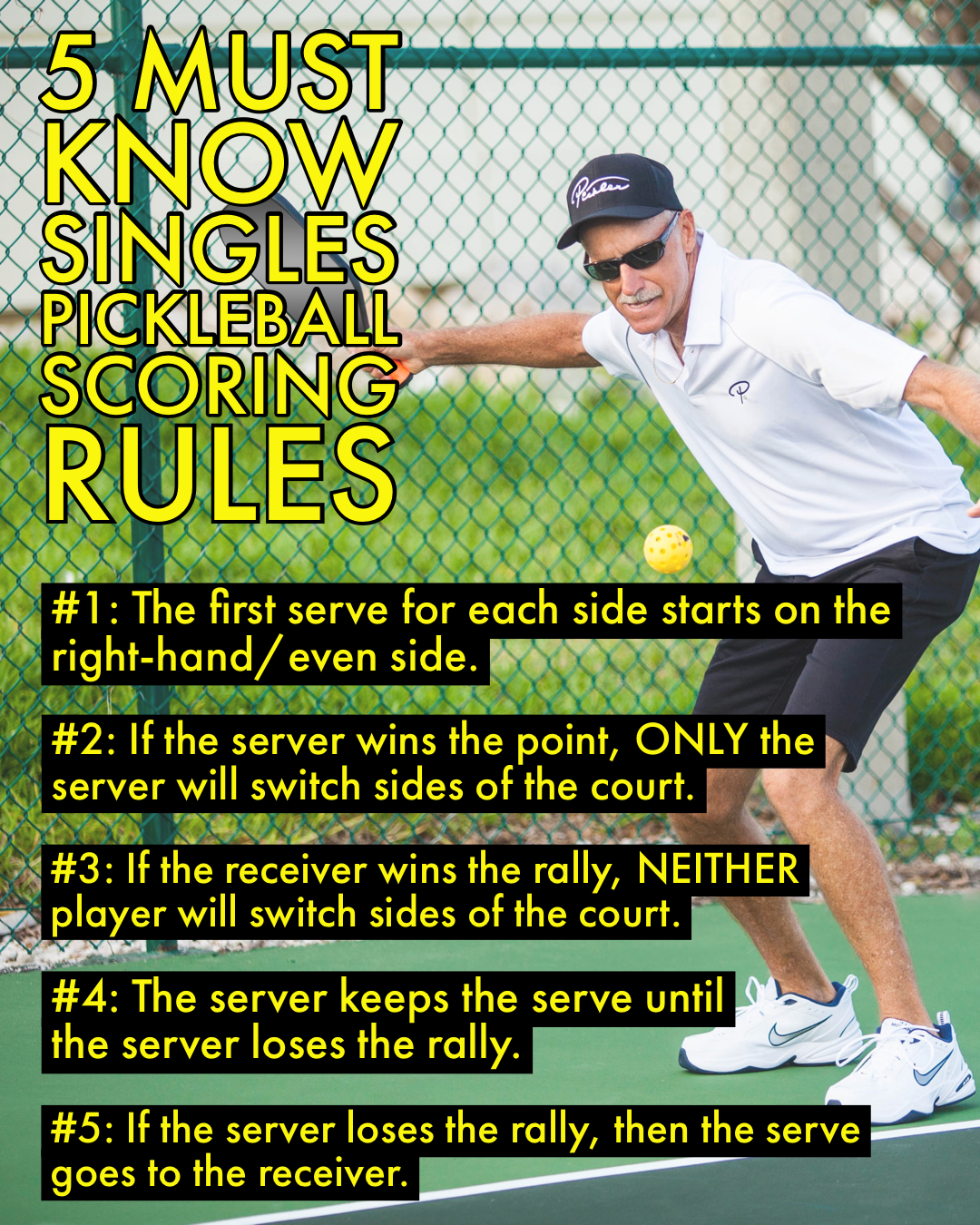
Singles is the easier case. You call two numbers only: server score, receiver score. When your score is even, serve from the right. When odd, serve from the left. Only the server can score. That is the core of how does pickleball scoring work in singles.
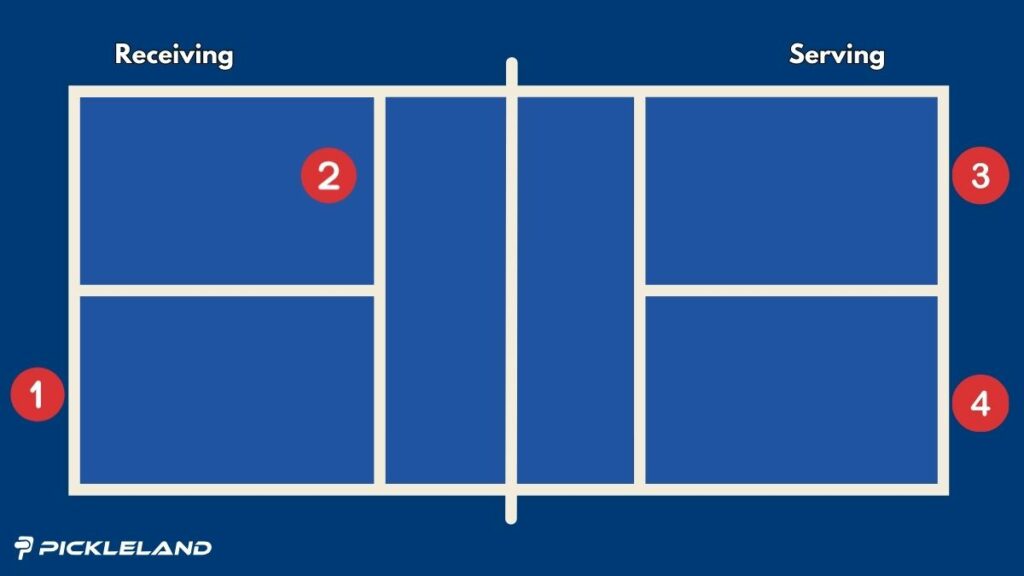
Doubles adds one more piece: a server number. It is either 1 or 2. The starting server on each side is server 1. Their partner is server 2. After the first rally loss in a team’s service turn, server 2 takes over. When server 2 loses a rally, it is a side out.
At the start of the game in doubles, the score is 0-0-2. That “2” tells you the first serving team gets only one server to begin. This keeps games fair. Once the ball changes sides, both players on each team get to serve in turn.
Knowing this difference is key when people ask how does pickleball scoring work across formats. The server number is the linchpin in doubles.
Personal tip from clinics: I ask new pairs to point to the “server 1” before every service turn. This tiny habit stops 90% of mis-servers.

Serving order, positions, and rotation
Correct positions keep scoring clean. Here is the simple map for how does pickleball scoring work on the court.
For doubles:
- Start with the designated first server on the right side.
- Your team switches sides only when it scores a point.
- If your team did not score on a rally, you do not switch sides.
- The player who served last for your team must alternate right and left based on your team’s score parity.
For singles:
- If your score is even, serve from the right.
- If your score is odd, serve from the left.
When a side out happens, the player on the right for the new serving team becomes server 1. That resets the flow. I tell beginners to do a quick “right side check” at every side out. If you forget where to stand, ask, “Is our score even?” If yes, the starting server should be on the right.
Two more serve basics shaped by the rules:
- Call the full score before you serve.
- There are no let serves. If the ball clips the net but lands in the correct box, play on.
- The serve must be underhand and made below the waist, with one foot behind the baseline until contact.

How to call the score the right way
Here is how does pickleball scoring work when you call it out.
For doubles, say three numbers in this order:
- Server score
- Receiver score
- Server number (1 or 2)
Examples:
- 3-2-1 means server’s team has 3, receivers have 2, and the current server is the first server on that team.
- 7-8-2 means server’s team has 7, receivers have 8, and the current server is the second server.
For singles, call only two numbers:
- 10-9 means server has 10, receiver has 9.
Small habits help:
- Face the net and speak loud.
- Pause for a breath after calling the score.
- Start your motion after the call. This keeps your timing clean and reduces disputes.
In my leagues, we use a check phrase before a tight point: “Score is 9-9-2, right?” This tiny habit has saved many game points.

Common scoring scenarios and examples
Learning how does pickleball scoring work is easier with quick examples you can picture.
Start of a doubles game
- Score called: 0-0-2.
- The first serving team has only one server.
- If they lose the rally, it is a side out. Now the other team gets both servers.
Winning points while serving
- Servers win the rally at 2-1-1.
- New score is 3-1-1.
- Partners switch sides. Same server serves again, now from the left.
Server change within a team
- At 5-4-1, the serving side loses the rally.
- Now it is 5-4-2. The partner serves from the correct side.
- If they lose that rally, it becomes a side out. The other team serves at 4-5-1.
Deuce-like moments
- You reach 10-10 in a game to 11.
- You must win by 2. Keep playing until a team leads by 2.
- Score might go 12-10, 13-11, or more.
Singles parity check
- Server has 6 points.
- Even score means serve from the right.
- If server wins, score is 7. Now serve from the left.
If you rehearse these, how does pickleball scoring work will click faster than you expect.

Faults, side outs, and when a rally ends
A rally ends on a fault. When the server commits a fault, the serve passes to the partner or it becomes a side out. When the receiver commits a fault, the serving side scores a point.
Common faults that tie into how does pickleball scoring work:
- Serve or return does not bounce once each. The ball must bounce once on the serve and once on the return.
- Ball lands out. Lines are in except the kitchen line on a volley.
- Volleying in the non-volley zone. You cannot volley with any foot in contact with the kitchen or its line.
- Foot fault on serve. At contact, at least one foot must be behind the baseline.
- Ball hits the net and lands out. That ends the rally.
When a server faults in doubles:
- If it was server 1, the serve goes to server 2.
- If it was server 2, it is a side out.
This clean link between faults and server flow is a key part of how does pickleball scoring work. When in doubt, replay the point only if all agree there was a mix-up. Then reset positions and call the score again.

Variations you may see in leagues or pro play
Most pickleball uses side-out scoring. But you may see rally scoring in some clubs, team events, or pro formats. In rally scoring, every rally earns a point. The serve may rotate often. Games are often to 21 with win by 2. This is not the standard for casual play.
You may also see matches to 15. Or two out of three games to 11. In some events, players switch ends at a set point mark for fairness. Regardless, the key ideas of how does pickleball scoring work stay steady. Only the scoring format changes.
Before a match, ask the host to state:
- Game length and win-by margin
- Side-out or rally scoring
- End changes and timeouts
Clarity before the first serve avoids stalls later.
Strategy tips to win more points with smart scoring
Once you know how does pickleball scoring work, you can squeeze out extra points with small habits.
Call early and serve with purpose
- Call the score with a calm voice. It sets your rhythm.
- Use deep, high-percentage serves. Aim deep middle to reduce angles.
Play the parity game
- On doubles, track even or odd. Even means the starting server should be on the right.
- Use a wristband on the starting server. It is an easy cue during chaos.
Stack when needed
- If one partner is stronger on the right or left, use stacking. It keeps them on that side even after side changes.
- Check that the correct server still serves from the correct side.
Protect the server 2
- Many side outs happen fast on server 2. Play a safer pattern there.
- Dink crosscourt, avoid low-percentage speed-ups, and force one more ball.
Timeouts at tight scores
- At 9-9, take a breath. Confirm the score and positions.
- Decide on a simple plan for the next two points. Serve deep, return deep, play high margin.
These small, repeatable moves use the rules to your edge. That is the quiet power behind how does pickleball scoring work in real play.

Frequently Asked Questions of how does pickleball scoring work
Why does a doubles game start at 0-0-2?
It shows that the starting team gets only one server to begin. After that first side out, both teams get two servers in their turns.
What does the third number in the score mean?
It is the server number in doubles. One means the first server on that team, and two means the second server.
Do I switch sides if we lose a rally while serving?
No. In doubles, you and your partner switch sides only when your team wins a point while serving. No point, no switch.
Is there still a let serve in pickleball?
No. If the serve hits the net and lands in the correct service box, the ball is live. Keep playing.
How do I know where to stand in doubles?
Use parity. If your team’s score is even, the starting server should be on the right. If it is odd, the starting server should be on the left.
Can the receiving team score points?
Not in standard side-out scoring. Only the serving side can score, which is central to how does pickleball scoring work.
What are common game lengths?
Casual games are usually to 11, win by 2. Some matches or leagues use 15 or 21.
Conclusion
You now have the full picture of how does pickleball scoring work. Only the serving side scores. Doubles uses a third number for server order. Positions follow even or odd parity. With these tools, you will avoid mix-ups, keep rallies flowing, and lock in more wins.
Put this into action today. Call the score with confidence, track server numbers, and use parity checks on every side out. If this helped, share it with your crew, subscribe for more quick guides, or drop your toughest scoring question in the comments.