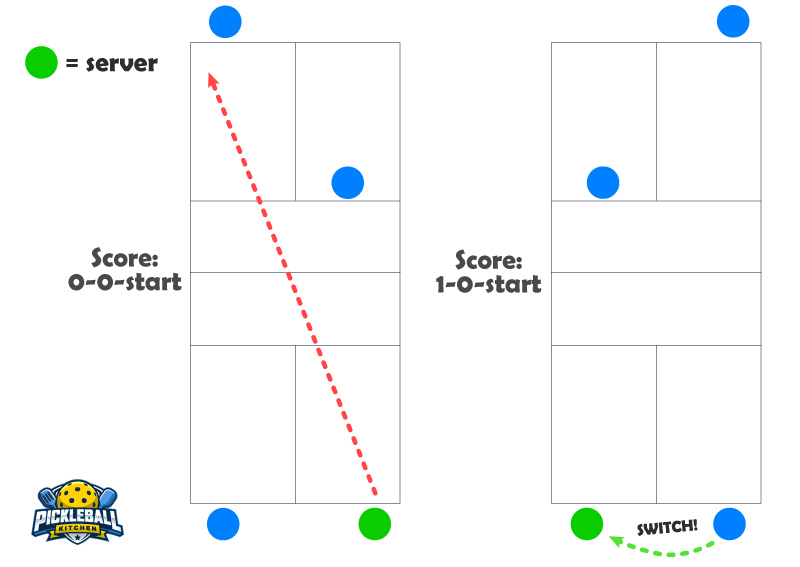
A legal pickleball serve is underhand, struck below waist, diagonally, beyond the kitchen.
If you want to score more and start points right, you need to master how does serving work in pickleball. I’ve coached new and club players for years, and the serve is the fastest way to level up. In this guide, I break down how does serving work in pickleball using simple steps, clear rules, and real tips you can use today. Stick with me, and you’ll serve with calm, power, and purpose.

What makes a legal serve in pickleball
A serve starts the point. Only the serving team can score. So the serve must be legal.
Here is the legal serve, step by step:
- Stand behind the baseline. At least one foot stays behind the line at contact.
- Aim to the diagonal service box. Hit to the box across from you.
- Use an underhand motion if you hit the ball out of the air. The paddle moves up. The highest part of the paddle is below your wrist at contact.
- Strike the ball below your waist (navel). Keep it simple and smooth.
- The ball must land past the kitchen. It cannot touch the non-volley zone line on the serve.
- You get one serve try. There are no let serves. If the ball hits the net and goes in, play on.
This is the core of how does serving work in pickleball. I teach a soft, smooth swing. Think of it like an easy underhand toss. Let the paddle do the work.
Pro tip from league play: breathe out on contact. It helps timing and relaxes your grip.

Court positions and targets that keep you safe
Good position keeps your serve legal and strong.
Key points:
- Your feet: At least one foot is behind the baseline at contact. Do not touch the court or the line.
- Your partner: In doubles, your partner can stand anywhere. I suggest a step behind the baseline, ready for a deep return.
- Your target: Aim deep crosscourt. Think two feet inside the sideline and one foot short of the baseline. Safe and tough.
Aim ideas I use:
- The T serve: Aim near the center line. It jams backhands.
- The wide serve: Aim near the sideline. It pulls them off the court.
- The body serve: Aim at their hip. It cuts options.
All of this supports how does serving work in pickleball: serve safe, serve deep, serve smart.

Singles vs doubles: service order and scoring
Scoring can feel tricky at first. Here is the clean version.
Singles:
- You serve from the right when your score is even.
- You serve from the left when your score is odd.
- Only the server scores. You keep serving if you win points. You switch sides after each point you win.
Doubles:
- The score has three numbers: server score, receiver score, server number.
- A game starts at 0-0-2. This means the first team has only one server at the start.
- When your team wins a point, the same server switches sides and serves again.
- When your team loses a rally, the serve goes to your partner if they have not served yet. If they have, the serve goes to the other team, starting on the right side.
This is the heart of how does serving work in pickleball for doubles. Call the score before each serve to keep order.
The drop serve vs the volley serve
You can serve two ways. Pick the one that fits you.
Volley serve:
- You strike the ball in the air.
- The motion must be underhand. Paddle head below the wrist. Contact below the waist.
Drop serve:
- You drop the ball and let it bounce. Then you hit it.
- You may release the ball from your hand or off the paddle face. No throwing it down.
- The usual underhand and paddle-wrist limits do not apply after the bounce.
- This is great if your toss is shaky. It boosts consistency.
Many of my students switch to the drop serve for control. It is the easiest way to lock in how does serving work in pickleball with fewer faults.
The two-bounce rule and the kitchen on the serve
Two bounces guide the start of every point.
Here is how it works:
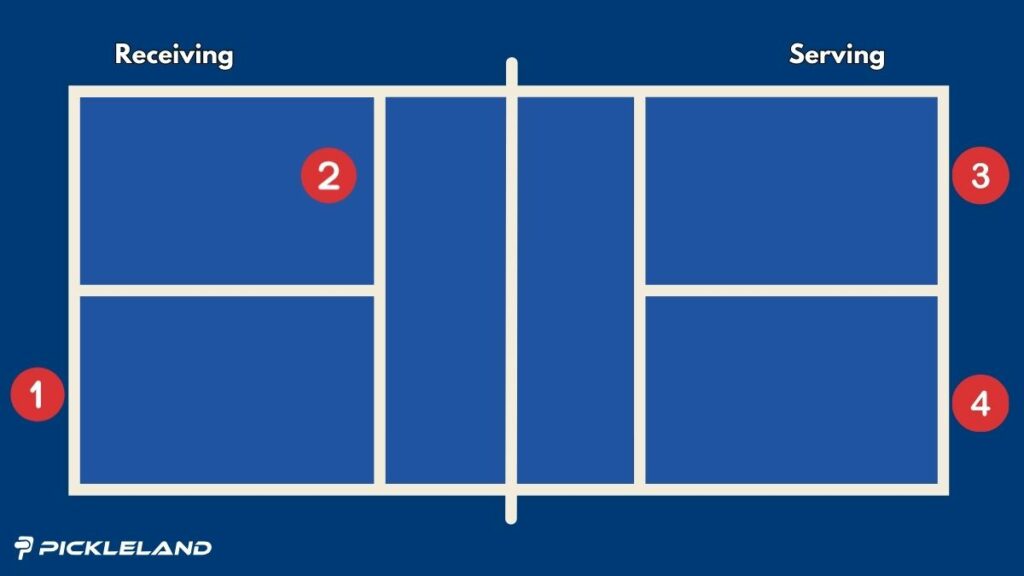
- The serve must bounce once on the receiver’s side before they hit it.
- The return must bounce once on the server’s side before the serving team can volley.
- After these two bounces, players may volley outside the kitchen.
Kitchen rule on the serve:
- The serve must clear the non-volley zone and land in the service box.
- If the serve lands on the kitchen line, it is a fault.
- The center line, sideline, and baseline are good.
These two rules define how does serving work in pickleball from the first hit.

Faults, lets, and spin: what changed and what to avoid
Common serving faults:
- Foot on or inside the baseline at contact.
- Serve to the wrong box.
- Serve lands short, in the kitchen, or out.
- Illegal motion on a volley serve (paddle not below wrist, not upward).
- Wrong server or wrong position.
- Ball hits the net and does not land in.
Let serves:
- There are no let serves. If your serve clips the net and lands in, play continues.
Spin rules you should know:
- No pre-spun “chainsaw” release. Do not add spin with your non-paddle hand during release.
- You may strike with spin using the paddle at contact.
- For a drop serve, you can let natural bounce create variation, but do not propel the ball down.
Understanding these cuts bad habits and clarifies how does serving work in pickleball today.

How to call the score and avoid out-of-order serves
Clear calls keep peace on the court.
Do this before every serve:
- Speak the full score. In doubles: server score, receiver score, server number (1 or 2).
- Face the opponents so they can hear you.
- Pause a beat. Then serve.
To avoid out-of-order mess:
- In doubles, remember: when your team wins a point, the same server switches sides and serves again.
- If you are on the right at 2 points, you should be on the right at 4, 6, and so on.
- If you think someone served out of order, stop play before the return hits. Reset as the rules say.
This simple habit locks in how does serving work in pickleball in live play.

Smart serve strategy for every level
Your serve is your first play. Use it to set the tone.
Simple, safe plan:
- Depth first. Aim three feet from the baseline. Miss long? Aim shorter by a foot next time.
- Pick a side. Test their backhand. Stay there until they make you stop.
- Mix height. Add a higher arc for more depth. Go flatter for pace.
- Add targets. T serve, wide serve, and body serve.
When I coach, we track returns. If they float the return, I tell players to push deeper serves. That is how does serving work in pickleball when you want easy third shots.

Drills to master your serve in 10 minutes a day
Short, sharp practice beats long, loose sessions.
Try these:
- 30 deep serves: Aim two feet inside the baseline. Count makes.
- 20 T serves: Aim at the center line. Switch sides at 10.
- 20 wide serves: Aim one foot from the sideline. Keep it safe.
- 10 drop serves under pressure: Bounce, hit, and call the score out loud first.
Track your make rate. Aim for 90% in. That is the practical proof of how does serving work in pickleball for match play.
Common mistakes and quick fixes
These show up in every clinic. Fix them fast.
Mistake: Rushing the toss or drop.
- Fix: Hold for one breath. Say the score. Then drop and swing.
Mistake: Short serves.
- Fix: Lift higher and finish forward. Aim deeper. Move contact a hair lower.
Mistake: Foot faults.
- Fix: Start one shoe length behind the line. Do not step in until after contact.
Mistake: No target plan.
- Fix: Pick T, wide, or body before each serve. Commit.
These micro tweaks tighten how does serving work in pickleball for your game day routine.
Gear and setup for a better serve
Small gear choices help your serve feel clean and steady.
What to check:
- Paddle grip size: If your grip is too thick, you lose wrist feel. Use a size that lets your fingers wrap with a small gap.
- Ball type: Outdoor balls are firmer and faster. Practice with the ball you will play with.
- Shoes: Good court shoes stop slips on the line. That reduces foot faults.
- Sun and wind: If the wind is at your back, add a touch more arc. Into the wind, swing a bit firmer.
These small edges make how does serving work in pickleball feel simple and repeatable.
Frequently Asked Questions of how does serving work in pickleball
What is the starting score in doubles?
Games start at 0-0-2. That means the first team has only one server before a side out.
Can my serve land on the kitchen line?
No. If the serve hits the non-volley zone line, it is a fault. It must land past the kitchen.
Do we still replay lets on the serve?
No. There are no let serves now. If your serve hits the net and lands in, the ball is live.
Is the drop serve legal for tournaments?
Yes. The drop serve is legal. Drop it, let it bounce, then strike it without throwing it down.
Can I add spin with my fingers on release?
No. You cannot add spin during release. Create spin with your paddle at contact instead.
Where do I stand to serve in singles?
Stand behind the baseline on the side that matches your score. Even score on the right, odd on the left.
What happens if we serve out of order?
Stop play as soon as you notice. Use the correct server and positions per the score, then resume.
Conclusion
A great serve is simple, steady, and deep. Keep one foot behind the line, hit below the waist, aim crosscourt, and land the ball past the kitchen. Use the drop serve for control, mix your targets, and call the score with confidence.
Take one drill from this guide and do it today. That is how does serving work in pickleball when you want fast wins and fewer errors. Want more tips and weekly drills? Subscribe, share this with your crew, and drop your serve questions in the comments.