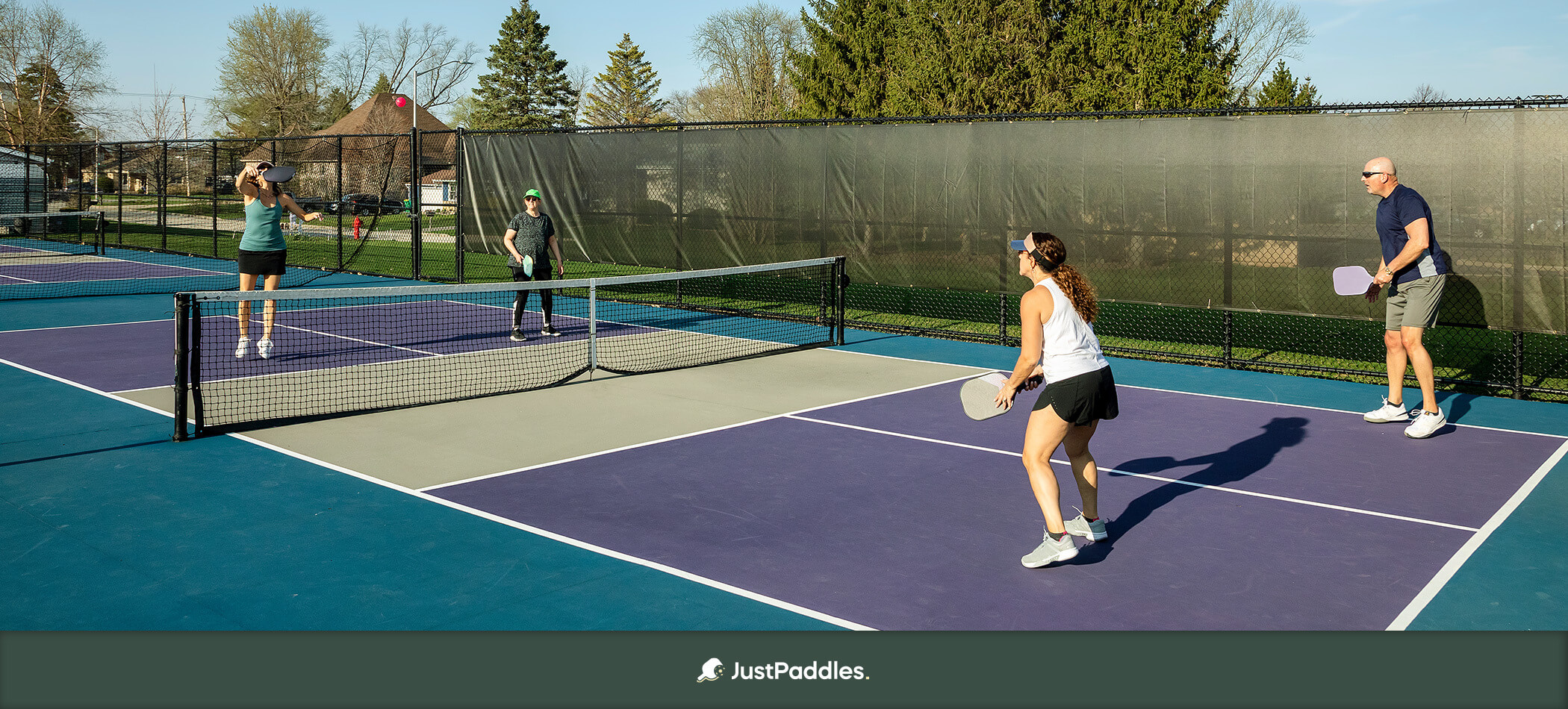
Most pickleball games last 15 to 25 minutes under standard side-out scoring.
That’s the short answer. But if you want to plan court time, run a league, or win your next match, you need more than a guess. In this guide, I break down how long does a pickleball game last across formats, skill levels, and settings, with real numbers, practical examples, and tips from years of playing, coaching, and organizing events.
What actually sets the clock in pickleball?
Several moving parts decide how long does a pickleball game last. Think of them as tiny gears in a watch. When one speeds up or slows down, the whole game changes pace.
Key factors you can count on:
- Scoring system: Side-out scoring runs longer than rally scoring. Side-outs create more changes of serve and longer games.
- Target score: Games to 11 are fastest. Games to 15 or 21 take more time.
- Singles vs doubles: Singles rallies are longer and more tiring. Doubles points end faster but have more side-outs.
- Skill level and style: Dinks and resets add time. Hard hitters finish points faster. Balanced teams extend rallies.
- Serve and return pace: Quick ready routines shave minutes. Long setups stretch the clock.
- Timeouts and breaks: Timeouts, side changes, and ball retrievals add up, especially in tournaments.
- Indoor vs outdoor: Wind, sun, and chasing balls can lengthen play outdoors.
- Refereed vs self-officiated: Refereed matches move cleaner but may include more structured pauses.
As a simple rule, beginners finish games to 11 closer to 20–30 minutes. Intermediate and advanced groups often land in the 12–25 minute range. In tournament play, plan for the longer end due to timeouts, side changes, and pressure points.
Standard scoring formats and average game times
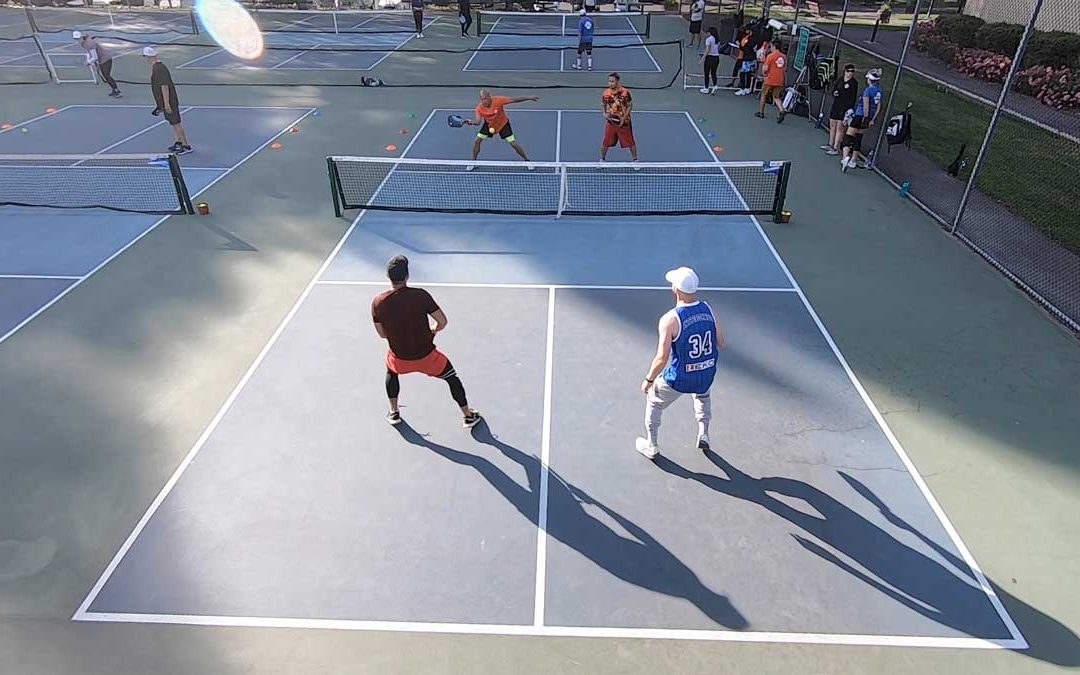
Here is where most players start: How long does a pickleball game last with side-out scoring to 11? And what changes with rally scoring? Below are real-world ranges I track when running events and sessions.
Side-out scoring to 11, win by 2
- Typical time: 12–25 minutes in rec play, 15–30 minutes in league or tournament play.
- Why the range: Side-outs create service rotations and slow momentum. Close games with many deuce points can reach 30 minutes or more.
Side-out scoring to 15 or 21, win by 2
- To 15: 20–35 minutes.
- To 21: 30–50 minutes.
- Notes: Often used for single-game matches or consolation rounds. Extra points mean more side-outs and longer games.
Rally scoring variants
- Rally scoring to 21: 18–30 minutes is common.
- Rally scoring to 15: 12–22 minutes.
- Why it is faster: Every rally counts as a point, so the scoreboard moves on every exchange. Fewer long stalls, fewer extended side-out runs.
Singles vs doubles
- Singles to 11 (side-out): 15–30 minutes, depending on fitness and rally length.
- Doubles to 11 (side-out): 12–25 minutes for most rec and league play.
- Insight: Singles rallies are longer, but games can still end quickly if there are many unforced errors.
Best-of-three matches to 11
- Total time: 30–60 minutes.
- Expect longer when players are evenly matched and use timeouts. Refereed matches, tight game threes, and long dink rallies push toward an hour.
Bottom line: If someone asks, how long does a pickleball game last for an 11-point format with side-out scoring, say 15–25 minutes on average, and longer if play is tight or formal.

Real-world timelines and scenarios
It helps to see the clock in action. These are sample blocks I use when scheduling play.
- Open play rotation: Plan 20–25 minutes per 11-point game. With paddle stacking and quick changeovers, you can rotate every 25 minutes.
- Social rec night: Two games to 11 with side-out scoring fit in a 50–60 minute slot.
- Ladder league, best-of-three to 11: Book 55–70 minutes per round. Close matches can run long.
- Tournament pool play, single game to 15: Plan 30–40 minutes per match including warm-up and reporting scores.
- Tournament bracket match, best-of-three to 11: Schedule 45–70 minutes.
- Beginner clinic scrimmage: Games often run 20–30 minutes because serves, returns, and positioning take time to reset.
On my Tuesday ladder, we post 60-minute rounds for best-of-three. Most finish at 55 minutes. When we switch to rally scoring to 21 for time control, rounds drop to about 30 minutes.

Tips to finish on time (or stretch your session)
If you are asking how long does a pickleball game last because of tight court bookings, you can manage the pace.
Try these:
- Use rally scoring for large groups. It tightens timelines without rushing players.
- Keep warm-ups to 3–5 minutes. Shadow a few dinks, volleys, serves, and go.
- Agree on ball pickup rules. Nearest player retrieves. Others reset quickly.
- Call the score loud and clear. Reduce confusion and replays.
- Set a simple pace cue. Serve within a reasonable count after score is called.
- Save long chats for after the game. Small talk between points adds minutes.
- Use a timer in socials. When the buzzer hits, switch at the next side-out.
Flip side, if you want longer play, choose games to 15 or 21 with side-out scoring, and allow full timeouts.

Timing rules and stoppages that affect pace
Official rules include specific time windows that affect how long does a pickleball game last in tournament settings.
What to expect in regulated play:
- Timeouts: Two timeouts per game to 11, three per game to 15 or 21. Each is up to one minute.
- Between games: Up to two minutes before the next game in a match.
- Medical timeout: Up to 15 minutes, with referee oversight and limits on repeated requests.
- Equipment timeout: Short allowance to fix a paddle, shoe, or eyewear issue.
- End changes: In a best-of-three, teams switch ends at 6 points in the deciding game. For single games to 15 or 21, switches occur roughly halfway.
- Serve readiness: Players must be reasonably ready to receive; referees manage delays and can call technical warnings for slow play.
In rec play, be flexible and kind. Use the structure as a guide, not a hammer.
Planning court bookings and event schedules
If you manage a club, league, or just your group chat, you can predict how long does a pickleball game last and keep everyone happy.
Simple planning rules:
- Casual open play: Book 90 minutes per player block. Expect 3–5 games to 11.
- Small group of four: One court for 90 minutes yields 4–6 games to 11 with short breathers.
- Best-of-three league rounds: Reserve 60–75 minutes per match.
- Tournaments with referees: Use 30–40 minutes for one game to 15, and 45–70 minutes for best-of-three to 11. Add a buffer between rounds.
- Teaching sessions: Build in 5-minute breaks per hour for water, talk-throughs, and adjustments.
Pro tip from running socials: Post the format on the signup sheet. When everyone knows the target score and scoring system, the schedule runs itself.

Frequently Asked Questions of how long does a pickleball game last
How long does a pickleball game last in doubles?
Most doubles games to 11 with side-out scoring last 15–25 minutes. Competitive or evenly matched games can push toward 30 minutes.
How long does a pickleball game last with rally scoring?
Rally scoring speeds things up. A game to 21 usually takes 18–30 minutes, while 15-point games often finish in 12–22 minutes.
How long does a pickleball game last in singles?
Singles to 11 can run 15–30 minutes. Longer rallies and more court coverage can extend time, especially at higher levels.
How long does a pickleball game last in a best-of-three format?
A full match of best-of-three to 11 usually takes 30–60 minutes. Tight matches with timeouts and long rallies can go a bit longer.
How long does a pickleball game last for beginners?
Beginners often take 20–30 minutes for games to 11. Extra time goes to serves, positioning, and keeping track of the score.
How long does a pickleball game last at tournaments?
With referees and timeouts, plan 15–30 minutes for a single game to 11 and 45–70 minutes for best-of-three. The pace depends on the draw and court flow.
Conclusion
You now have a clear view of how long does a pickleball game last across formats, levels, and settings. Most games to 11 with side-out scoring finish in 15–25 minutes, while rally scoring and clear pace habits keep things even tighter. Use the numbers here to plan smarter sessions, book the right court time, and play with less stress.
Ready to put this into practice? Pick a format, set a timer, and track three sessions to see your true pace. Want more guides like this? Subscribe, share this with your crew, or drop your questions in the comments so I can cover them next.