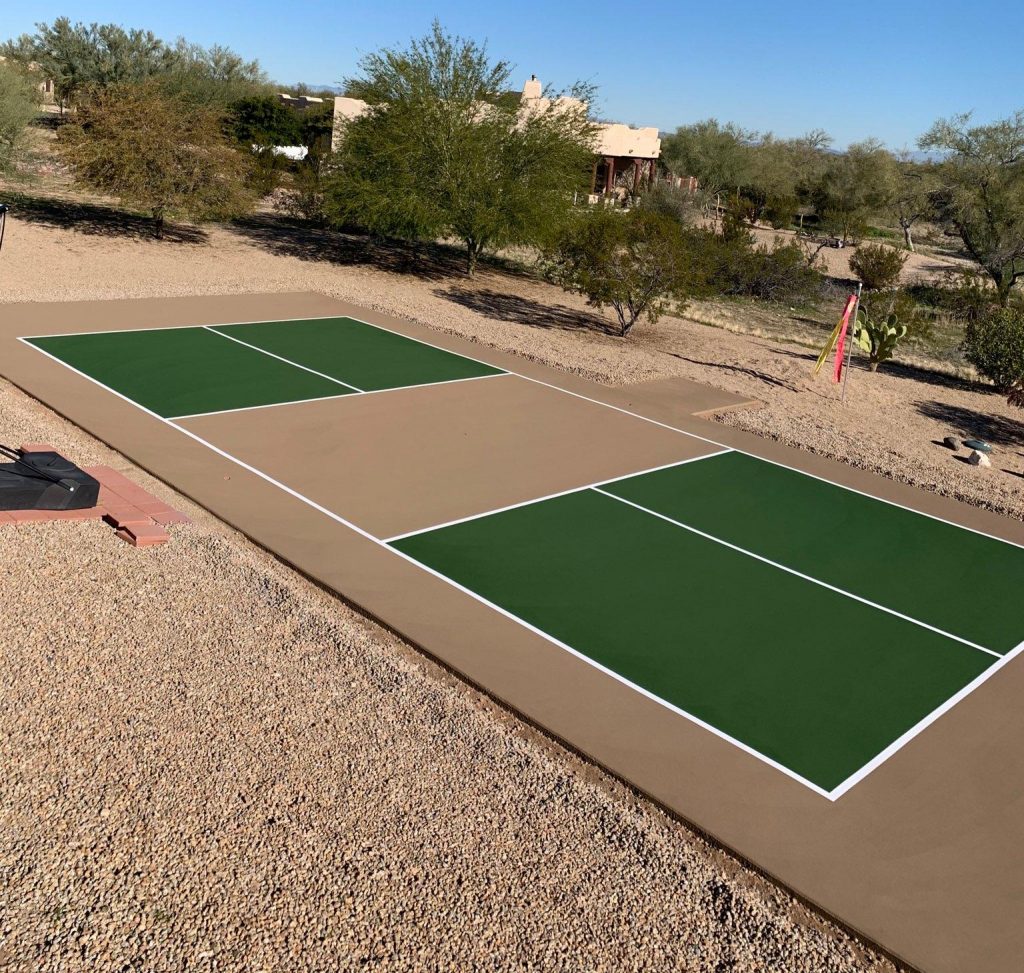
Expect to spend $25,000 to $50,000 for a standard outdoor court, more with lighting.
If you’re asking how much does it cost to build a pickleball court, you want real numbers and honest advice. I’ve helped homeowners, HOAs, and clubs plan courts from scratch and convert old tennis courts. In this guide, I break down every cost, share mistakes to avoid, and give clear budgets you can copy. By the end, you’ll know how much does it cost to build a pickleball court in your area and what choices make the biggest difference.

The real price range at a glance
Most single outdoor courts land between $25,000 and $50,000 without lights. Add $6,000 to $25,000 for quality LED lighting. Premium post-tensioned concrete, tall fencing, and extras can push the total to $60,000 to $120,000.
Here is the short view many buyers use:
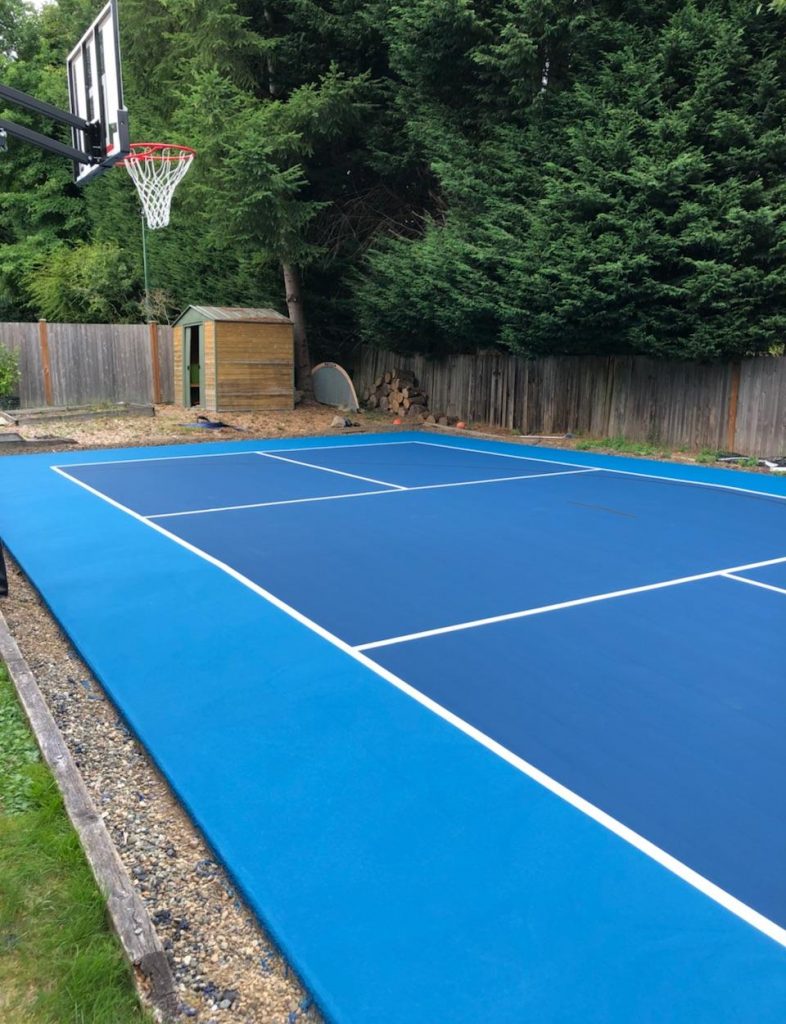
- Budget backyard court without lights: $20,000 to $35,000
- Mid-range HOA court with basic lights: $35,000 to $70,000
- Premium club court with high-end lights and fencing: $60,000 to $120,000
- Indoor court in an existing building: $40,000 to $100,000 per court
These figures reflect national averages. Local labor and site work can swing totals up or down by 20 percent.
What drives the cost of a pickleball court
When people ask how much does it cost to build a pickleball court, I walk them through the same set of drivers. Each choice affects the final bill.
Court size and layout
- Standard playing lines are 20 by 44 feet.
- The recommended total area is 30 by 60 feet. Many pros prefer 34 by 64 feet for extra safety space.
- More area means more base, surfacing, and fencing.
Typical areas by layout:
- Single court at 30 by 60 feet is 1,800 square feet.
- Single court at 34 by 64 feet is 2,176 square feet.
Site prep and grading
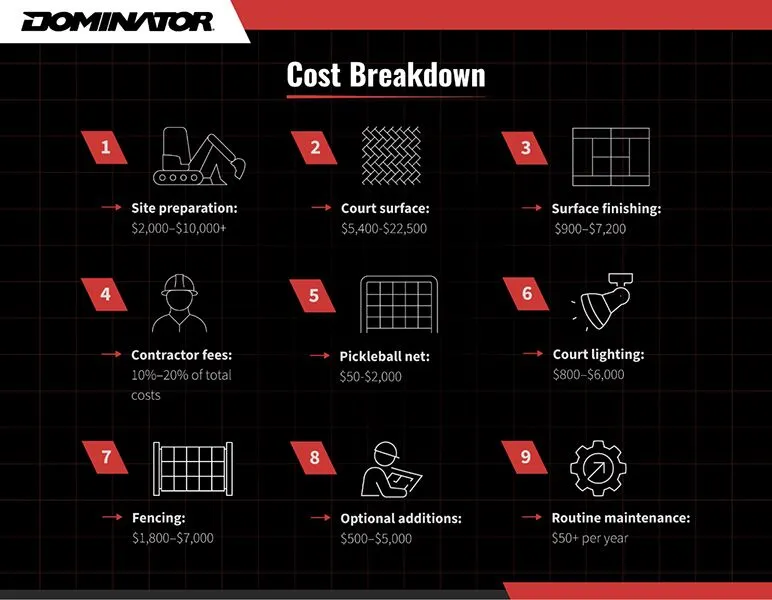
- Light clearing and fine grading: $2,000 to $6,000
- Moderate cut, fill, and base rock: $6,000 to $15,000
- Heavy tree removal or poor soil fixes: $15,000 to $30,000
Drainage matters more than almost anything. A gentle slope of 1 percent is ideal. Add drains if water sits. Poor drainage means cracks and puddles.
Base options
Your base is the foundation. It decides surface life and play quality.
- Hot-mix asphalt: $3 to $7 per square foot installed. Good value. Needs resurfacing sooner than concrete.
- Reinforced concrete: $4 to $10 per square foot. Stiffer and durable.
- Post-tensioned concrete: $8 to $16 per square foot. Best for crack control. Common in premium courts.
For a 30 by 60 foot court:
- Asphalt base roughly $5,400 to $12,600
- Concrete base roughly $7,200 to $18,000
- Post-tensioned roughly $14,400 to $28,800
Acrylic sport surfacing and lines
- Color coatings with cushion options: $1.50 to $3.00 per square foot
- Lines and striping: $300 to $800 per court
Cushion layers add comfort and reduce impact. Expect 10 to 20 percent more for cushioned systems.
Fencing and gates
- Chain-link, 8 to 10 feet high: $30 to $60 per linear foot installed
- Windscreens: $2 to $4 per linear foot
- Two gates with hardware: $600 to $1,500 total
Perimeter for 30 by 60 feet is 180 linear feet. That is $5,400 to $10,800 for fencing alone.
Lighting
- Two to four LED poles, sports-grade: $6,000 to $25,000 per court installed
- Trenching and electrical panel upgrades add cost
- Smart controls can save power and light spill
If neighbors are close, use full cut-off LED heads and timers.
Nets, posts, and accessories
- Permanent net and posts: $300 to $900
- Center strap and anchors: $50 to $150
- Benches, shade, and storage: $500 to $5,000
- Scoreboards and water stations: $300 to $2,000
Permits, engineering, and testing
- Permits: $200 to $1,500 depending on area
- Civil or structural review: $500 to $3,000
- Soil testing if needed: $400 to $1,500
Labor and management
- General contractor markup and coordination: 10 to 20 percent of build cost
- Project management saves time and reduces mistakes
Contingency
- Plan 10 to 15 percent for unknowns
- Rock in the soil or utility moves can change cost fast

Sample budgets and real-world breakdowns
These snapshots reflect projects I have seen or built. They show how much does it cost to build a pickleball court for common cases.
Basic backyard court, no lights
- Light grading and base rock: $4,000
- Asphalt base: $8,000
- Acrylic surfacing and lines: $4,000
- 8-foot fencing on ends only: $4,500
- Net and posts: $500
- Permits and misc: $1,000
- Contingency: $2,000
Estimated total: $24,000 to $30,000
HOA or school court with partial fencing and lights
- Moderate grading and drainage: $8,000
- Concrete base: $12,000
- Surfacing and lines: $4,500
- 10-foot fencing all around with windscreens: $8,000
- Two LED poles with trenching: $12,000
- Benches and bins: $1,200
- Permits and engineering: $1,500
- Contingency: $3,500
Estimated total: $50,000 to $55,000
Premium club court with post-tensioned base
- Post-tensioned concrete: $22,000
- High-build cushioned coating: $6,000
- Pro LED lights and smart controls: $18,000
- 10-foot fencing, windscreens, two gates: $12,000
- Shade, benches, storage: $4,000
- Permits, engineering, testing: $3,000
- Contingency and GC fee: $10,000
Estimated total: $70,000 to $85,000
Indoor court in an existing warehouse
- Surface prep and vapor barrier: $6,000
- Sport tile or cushioned acrylic: $6,000 to $12,000
- LED high-bays and controls: $10,000 to $18,000
- Divider nets and padding: $4,000 to $10,000
- Lines and equipment: $1,500
- HVAC and acoustics if needed: $8,000 to $20,000
Estimated total: $40,000 to $100,000 per court
New build vs tennis court conversion
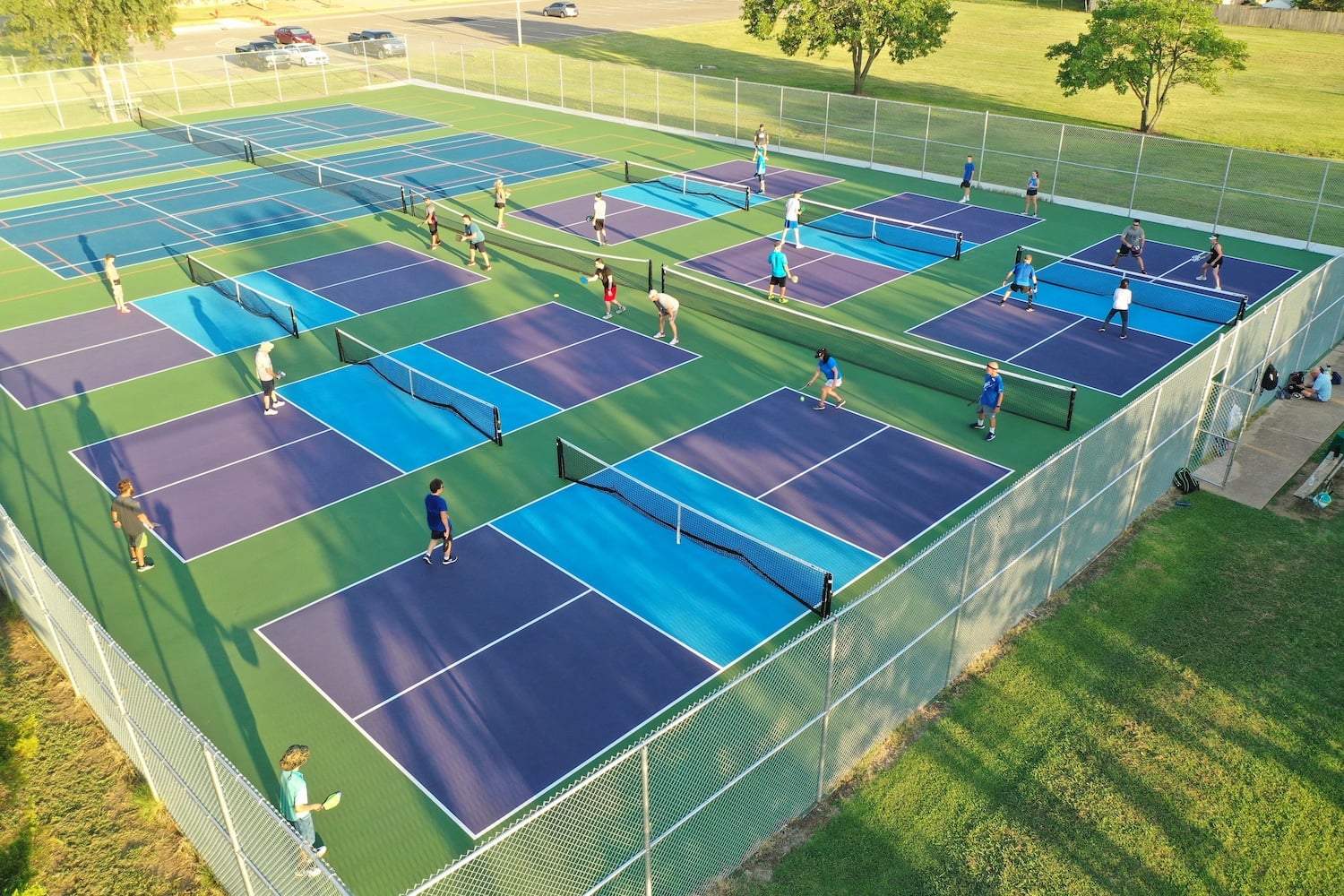
Sometimes the best answer to how much does it cost to build a pickleball court is to convert what you have.
- Paint-only striping on a tennis court: $800 to $2,500 per court area
- Resurface tennis court and convert to two to four pickleball courts: $20,000 to $45,000
- Add divider fencing, new nets, and posts: $5,000 to $15,000
Conversion saves time and money. Watch for neighbor noise and parking needs.
DIY vs hiring a pro
DIY can save money, but it is not for every step.
Good DIY tasks:
- Light clearing and basic grading with proper slope
- Installing windscreens and accessories
- Painting lines with a kit if the surface is ready
Hire pros for:
- Base construction and compaction
- Concrete, asphalt, and post-tension work
- Electrical runs and sports lighting
– Acrylic surfacing in hot or cold weather
DIY savings can be 10 to 25 percent, but a bad base costs more to fix later.
Ongoing maintenance and lifecycle costs
How much does it cost to build a pickleball court is only part of the math. Plan for care.
- Annual cleaning and minor crack seal: $200 to $500
- Windscreen replacement every 3 to 5 years: $500 to $1,500
- Resurfacing every 4 to 7 years: $4,000 to $8,000
- LED light maintenance: low, but plan $100 to $300 per year
A good base cuts long-term costs. Post-tensioned concrete often pays back over time.

Timeline and project plan
A smooth plan saves money and stress.
- Planning and permits: 2 to 6 weeks
- Site prep and base: 1 to 3 weeks
- Surface curing and coatings: 1 to 2 weeks
- Fencing, lights, and accessories: 1 week
- Total timeline: 4 to 8 weeks for most outdoor projects
Allow extra time for weather. Coatings need dry days and mild temps.
Common mistakes and pro tips
These lessons come from courts I have built and fixed.
- Skipping drainage. Water wins every time. Grade right and add drains.
- Building too small. If space allows, use 34 by 64 feet for comfort.
- Ignoring wind and sun. Align courts north to south when you can.
- Cheap lights, poor aiming. Use sports-grade LED with careful aiming plans.
- No buffer in the budget. Keep 10 to 15 percent for surprises.
Pro tips:
- Ask for a written slope plan and a compaction report.
- Get sample panels of surfacing colors in your daylight.
- If neighbors are close, choose shields, timers, and darker screen colors.
Ways to save without cutting corners
People ask how much does it cost to build a pickleball court and then ask how to shave it down. Here is where savings work.
- Choose asphalt base with a quality acrylic system
- Use 8-foot fence on sides and 10-foot on ends only
- Install lights later if budget is tight
- Share mobilization and fencing by building two courts at once
- Convert a sound tennis court instead of a full new build
Bundle work with nearby projects. Many crews discount when they can stage once.
ROI and funding ideas
If you run an HOA, school, or club, the numbers can make sense.
- Court rentals: $10 to $30 per hour
- Clinics and leagues boost use and revenue
- Property value and member satisfaction rise with active courts
Funding options:
- Local grants for parks and schools
- Sponsor signs on windscreens
- Member drive or “buy-a-brick” campaigns
When you weigh how much does it cost to build a pickleball court, include community impact. Courts bring people together.
Cost per square foot explained
Many planners want a simple per-square-foot number. It helps compare sites and options.
- Base plus surfacing only: $5 to $12 per square foot
- Full build with fencing and lines: $12 to $25 per square foot
- Add sports lighting: $3 to $10 per square foot more
Use these ranges to ballpark how much does it cost to build a pickleball court on your lot. Then adjust for grading, access, and local labor.
Real-world example from my notebook
A homeowner asked me how much does it cost to build a pickleball court on a sloped backyard. We faced a two-foot drop across 60 feet. The fix was a cut-and-fill with a small retaining edge, a concrete base, and mid-grade lights. The final bill was near $58,000. The big lesson was early grading plans. A few hours with a laser level saved a costly wall.
Frequently Asked Questions of how much does it cost to build a pickleball court
What is the cheapest way to build a pickleball court?
Use an asphalt base, basic acrylic surfacing, and end fencing only. Skip lights at first and add them later when funds allow.
How big should my pickleball court area be?
Aim for 30 by 60 feet at minimum. If space allows, 34 by 64 feet gives more room and feels safer.
How long does a court surface last?
Most acrylic systems last 4 to 7 years before resurfacing. Good drainage and gentle cleaning extend life.
Can I convert a tennis court into two or more pickleball courts?
Yes, many owners do. You can paint lines, add portable nets, or do a full resurface with divider fencing.
Do I need permits to build a pickleball court?
Often yes. Check local rules for grading, lighting, and fencing. Plan 2 to 6 weeks for approvals.
Are lights worth the cost?
If you have evening play or hot summers, yes. LEDs extend hours and boost court use with low power draw.
What increases cost the most?
Tough site work, premium base like post-tensioned concrete, and sports lighting. Fencing height also adds up.
Conclusion
Now you know how much does it cost to build a pickleball court and where the dollars go. Start with a clear layout, invest in drainage, and pick the right base for your climate. Use a 10 to 15 percent buffer and plan your lights with care.
Ready to take the next step? Sketch your site, pick your base, and ask two or three local contractors for itemized bids. If this guide helped, share it with your board or neighbor, and subscribe for more planning tips.