Pick a midweight paddle with the right grip, polymer core, and light texture.
You want a paddle that feels easy on day one and still grows with your game. In this guide on how to choose a pickleball paddle for beginners, I share what I teach new players in clinics. You will learn the exact specs to focus on, simple tests you can do in minutes, and a few mistakes to avoid. If you want a clear, friendly path to your first great paddle, you are in the right place.

Paddle basics every beginner should know
Your paddle’s job is simple: give you a big sweet spot and easy control. The best build for most new players is a midweight paddle, a comfy grip, a polymer core, and a face that is not too slick or too rough. That mix makes the ball feel soft and steady.
Here is the fast path for how to choose a pickleball paddle for beginners. Pick a weight near 7.8 to 8.4 ounces. Choose a 4.125 to 4.25 inch grip. Go with a polypropylene honeycomb core. Pick a graphite or carbon face for control, or fiberglass for a bit more pop. Make sure the paddle is USA Pickleball approved.
When I run intro sessions, this setup helps most people dink, drop, and block with ease. It also keeps joints happy while you build clean swings.
Grip size: the first fit
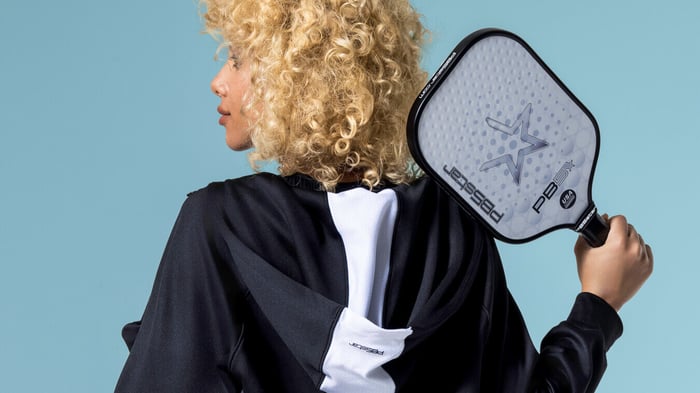
Grip size is your first must-fit. A grip that is too big makes you squeeze. That can lead to tight forearms and sore elbows. A grip that is too small makes the paddle twist in your hand.
Use this simple check. Hold the handle with your normal grip. Slide the index finger from your other hand in the space between your fingers and palm. If it fits snug, the size is right. Most beginners do best with 4.125 to 4.25 inches. If unsure, go smaller and add an overgrip. This is a key step in how to choose a pickleball paddle for beginners.
One more tip from the court. If you plan on a two-handed backhand, a longer handle feels great. But do not chase length if it hurts your reach on dinks.
Weight: find your control-power balance
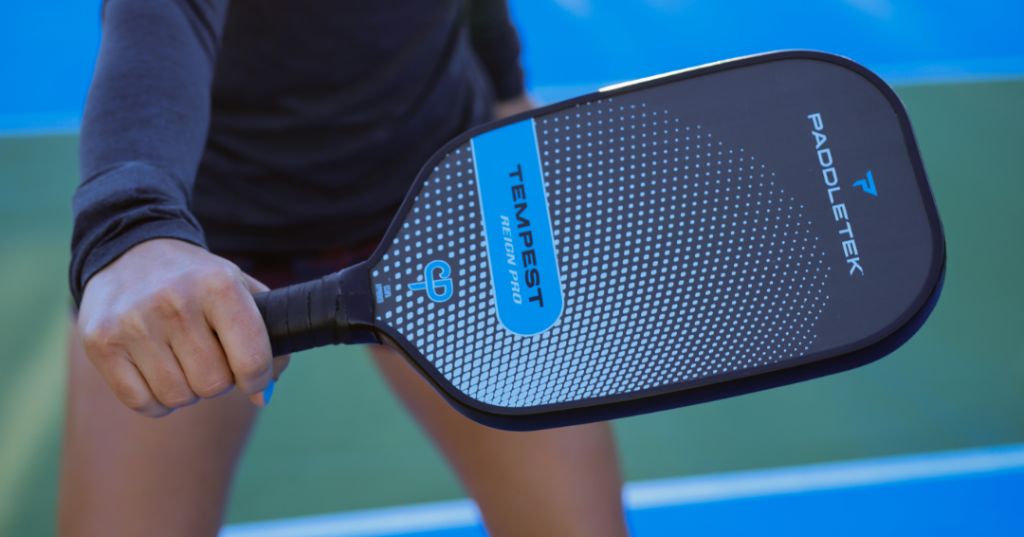
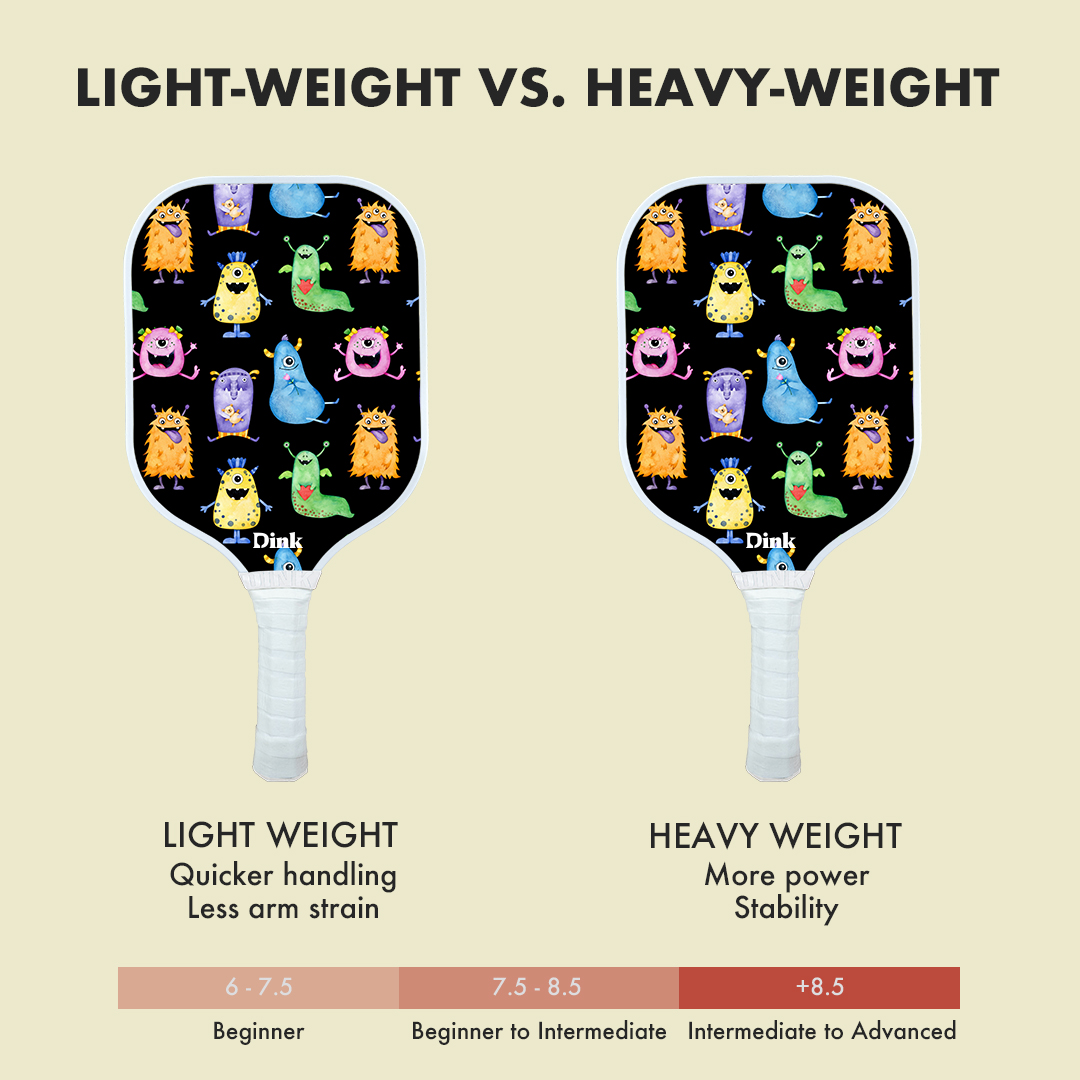
Paddle weight drives feel, speed, and stress on your arm. Light paddles feel fast at the net but may lack depth. Heavy paddles add power but can stress the elbow and shoulder if your form is new.
Use these simple ranges:
- Light: under 7.5 oz. Quick hands, less depth.
- Midweight: 7.6 to 8.4 oz. Best blend for most beginners.
- Heavy: 8.5 oz and up. More power, more strain.
For how to choose a pickleball paddle for beginners, I suggest midweight. When I moved a student from a light to a mid paddle, their drop shots stopped falling short that same day. The extra mass helped the ball travel with less effort.

Shape, size, and thickness
Shape changes how big the sweet spot feels. So pick what helps you hit the middle more often.
- Standard shape: about 15.5 to 16 inches long and 7.5 to 8.25 inches wide. Big sweet spot. Easy aim.
- Elongated shape: more reach and serve pop. Smaller sweet spot. Better once your contact is clean.
Paddle thickness also matters. Thicker cores, like 16 mm, soften the feel and help control. Thinner cores, like 13 mm, add pop but can feel bouncy. For how to choose a pickleball paddle for beginners, a 16 mm core makes touch shots and blocks simpler.
Edge guards protect the paddle and do not hurt play. If you like a clean edge, an edgeless design feels nice, but be gentle on the court.
Core and face materials
Core and face materials set the paddle’s sound, feel, and spin.
Core types:
- Polypropylene honeycomb: the top choice for new players. Soft feel. Low noise. Stable.
- Nomex honeycomb: firm and loud. Big pop. Less forgiving touch.
- Aluminum honeycomb: good control. Can dent. Less power.
Face types:
- Carbon fiber or graphite: smooth control and feedback. Great for learning touch.
- Fiberglass: more power and pop. Still fine for beginners if you pick a thicker core.
- Raw carbon textures: extra grab on the ball. Spin stays within rule limits when approved.
Most communities like quieter paddles. Polymer cores with carbon faces are quieter and friendly. For how to choose a pickleball paddle for beginners, that combo hits the sweet spot for touch, control, and comfort.

Balance, handle length, and swing weight
Balance and swing weight shape how quick the paddle moves in your hand. A head-light paddle feels fast at the kitchen. A head-heavy paddle hits a deeper ball but can feel slow on volleys.
Handle length matters if you use two hands. A 5.25 inch or longer handle gives space. A standard 5 inch handle works for most. For how to choose a pickleball paddle for beginners, start with neutral balance and a standard handle. It will feel stable in more shots.
Swing weight is the real secret. Two paddles can weigh the same but swing very different. If it feels slow to start or stop, pick a paddle that swings lighter.
Comfort, noise, and injury prevention
Your paddle should help your body, not fight it. A soft core and a midweight build reduce shock and keep joints calm. Sports medicine data shows less vibration and lower torque help avoid tennis elbow. Warm up for five minutes, even on fun days.
Use an overgrip to fine-tune size and add cushion. Replace it when it gets slick. If you feel elbow or wrist pain, drop weight or pick a thicker core. For how to choose a pickleball paddle for beginners, comfort is not a luxury. It is your base for progress.

Budget and value
You do not need a $250 paddle to start strong. Smart specs beat price tags.
Price tiers to guide you:
- Under $50: entry paddles for casual play. Small sweet spot. Less stable.
- $50 to $120: best value for most new players. Good cores. Solid faces.
- $120 to $200: premium control, power, and feel. Better build and warranty.
- $200 and up: pro tech and fine-tuned balance. Great, but not needed at the start.
Focus on USA Pickleball approval, a midweight build, and the right grip. For how to choose a pickleball paddle for beginners, the $60 to $120 range hits the mark. Look for a one-year warranty and responsive customer support.
Try before you buy: a 10-minute court test
You can learn a lot in ten minutes. Here is a fast test I use with new players.
- Dinks: 20 soft dinks cross-court. Does the ball sit on the face or hop off?
- Drops: 10 third-shot drops. Can you land them in the kitchen with soft hands?
- Volleys: 20 block volleys. Does the paddle twist on hard balls?
- Serves: 10 serves. Check depth and aim.
- Returns: 10 deep returns. Note height and ease.
- Drives: 10 forehand drives. Does the ball jump with control?
- Overheads: 5 put-aways. Power without shock?
- Reset drill: 10 reset shots from mid-court. Can you settle the ball?
- Spin check: A few topspin rolls. Does the ball grab or slide?
- Fatigue check: Shake out your hand. Any hot spots or strain?
If it scores well on those steps, you found a match. This is a quick and honest path for how to choose a pickleball paddle for beginners.
Common mistakes to avoid
- Buying the heaviest paddle for “free power.” It can slow your hands and stress your arm.
- Picking an oversized grip. It kills touch and adds tension.
- Ignoring thickness. A 16 mm core can save your soft game.
- Chasing the trend. Your needs matter more than hype.
- Skipping approval. Non-approved paddles can be banned in events and some clubs.
These traps show up a lot when people ask how to choose a pickleball paddle for beginners. Keep it simple and fit it to your hand and swings.
Three beginner-friendly spec recipes
You can shop by spec, not by brand. Here are three builds I trust for new players.
Control-first build:
- 16 mm polypropylene core
- Carbon or graphite face
- 7.9 to 8.3 oz
- 4.25 inch grip
- Standard shape
Balanced all-court build:
- 14 to 16 mm polypropylene core
- Fiberglass and carbon blend face
- 7.8 to 8.2 oz
- 4.125 to 4.25 inch grip
- Standard or slightly elongated
Power-leaning build:
- 13 to 14 mm polypropylene core
- Fiberglass face
- 8.2 to 8.5 oz
- 4.25 inch grip
- Elongated shape if your contact is clean
If you want one rule for how to choose a pickleball paddle for beginners, start with the control-first spec. It will grow with you and keep your soft game strong.
Frequently Asked Questions of how to choose a pickleball paddle for beginners
What weight is best for beginners?
Most beginners do best with a midweight paddle, around 7.8 to 8.4 ounces. It gives control without stressing your arm.
How do I measure my pickleball grip size?
Do the index finger test. If your finger fits snug between your palm and fingers when gripping, the size is right.
Is carbon fiber better than fiberglass for new players?
Carbon fiber gives more control and a softer feel. Fiberglass adds pop, which can be fun, but it is harder to tame.
Do I need a 16 mm core to learn touch?
A 16 mm core helps, but it is not the only way. Any stable polymer core with a good face can teach touch.
Should I get an elongated paddle as a beginner?
Only if you need reach and accept a smaller sweet spot. Most new players learn faster with a standard shape.
Conclusion
You now know the key specs that matter and how to test them fast. If you remember one thing about how to choose a pickleball paddle for beginners, make it this: fit the grip, pick midweight, choose a polymer core, and aim for a big sweet spot. That mix makes learning smooth and fun.
Put the guide to work today. Try two or three paddles with the test above, and trust your hand. When a paddle feels calm on soft shots and solid on blocks, you found your match. Want more tips and drills? Subscribe, share your questions, or drop your paddle shortlist in the comments.