
Create a DUPR profile, self-rate, then play verified matches or sanctioned tournaments to earn an official rating.
If you want to learn how to get a pickleball rating, you are in the right place. I coach new players, run club ladders, and track ratings for teams across seasons. In this guide, I’ll show you how to get a pickleball rating step by step, what each system means, and how to move up with smart play and simple habits.
What a Pickleball Rating Means (And Why It Matters)
A pickleball rating is a simple number that shows your skill. It helps you find fair matches, enter the right divisions, and track progress. Leagues and tournaments use it to seed players and build competitive brackets.
You will see two main formats:
- A dynamic number, like DUPR 3.72 or UTPR 4.12.
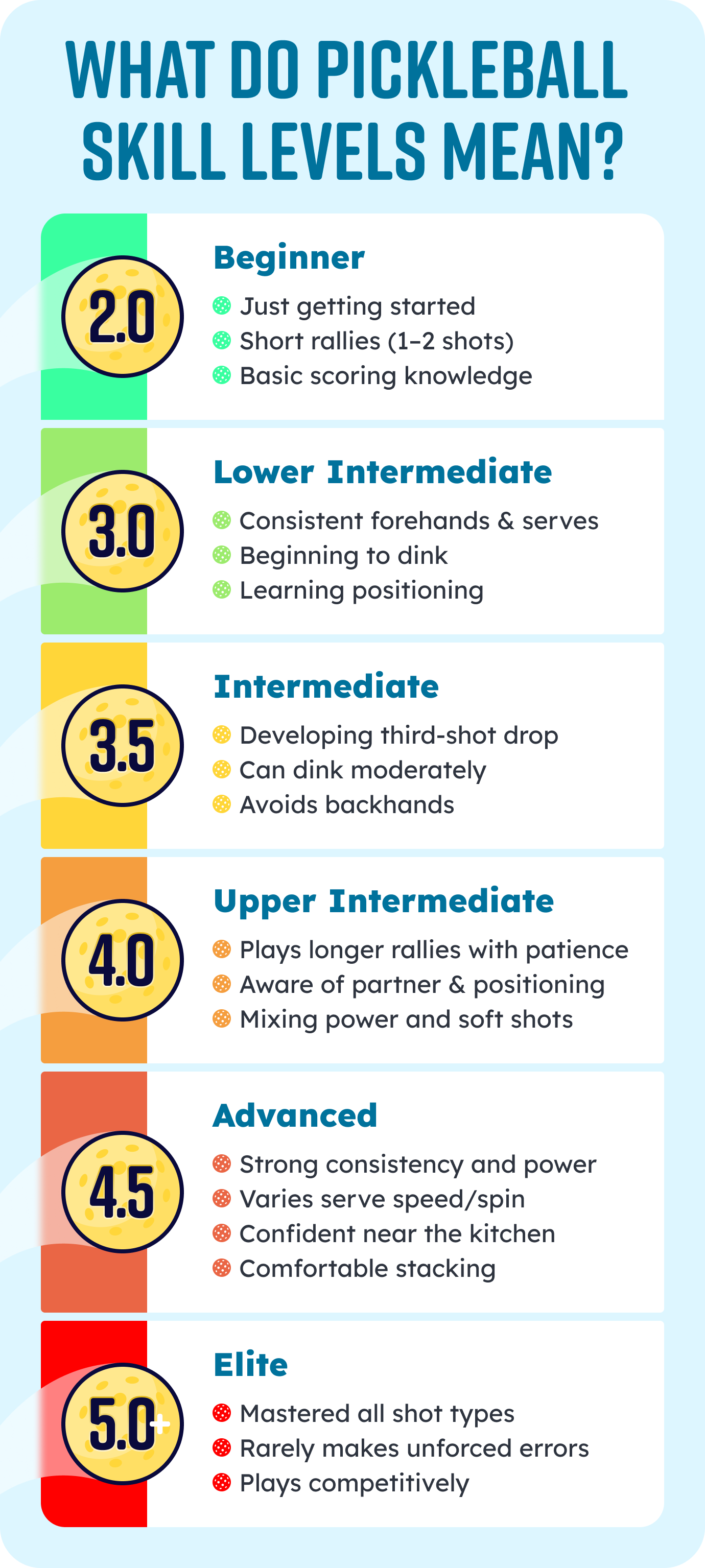
- A skill band, like 3.0, 3.5, 4.0, 4.5, or 5.0+.
If you want to know how to get a pickleball rating, start by choosing the path that fits your goals. Do you want social play with a solid number to guide matchups? Or do you want a rating that ties to sanctioned events and ranking lists? Both are valid.

The Main Rating Systems You Will See
Knowing the systems makes it easier to plan how to get a pickleball rating that suits your needs.
- DUPR. A dynamic rating that uses match scores, opponents’ levels, and margin of victory. You can log rec, league, and event results. Many clubs use DUPR for ladders.
- UTPR. The USA Pickleball Tournament Player Rating. It updates from sanctioned tournament results. It is the standard for national event seeding and official divisions.
- Self-rating. A quick way to join leagues and tournaments when you have no data yet. You pick a level using skill checklists.
- Club or coach assessments. An in-person evaluation that places you in 3.0, 3.5, 4.0, etc., based on observed skills and point play.
A smart way to handle how to get a pickleball rating is to use both DUPR and UTPR. DUPR gives frequent feedback. UTPR gives official weight when you play sanctioned events.

Step-by-Step: How to Get a Pickleball Rating Today
Here is a clear path you can follow right now if you want to know how to get a pickleball rating quickly and accurately.
- Create profiles
- Make a free DUPR account. Add a profile photo, home club, and partners.
- Join USA Pickleball if you plan to play sanctioned tournaments. That activates your UTPR pipeline.
- Self-rate to get started
- Use the USA Pickleball skill rubric to choose 2.5, 3.0, 3.5, 4.0, or higher.
- Be honest. It is a starting point, not a label for life.
- Play verified matches
- Join ladders, leagues, or club sessions that submit results to DUPR.
- Confirm scores fast. More confirmed matches helps your number settle.
- Enter a sanctioned tournament
- Pick a local event with the right division for your self-rating.
- Your results will update UTPR. It may take a short processing window after the event.
- Keep the data flowing
- Log rec matches when allowed, but focus on verified play.
- Play with and against a range of levels. That helps the algorithm place you well.
- Reassess and adjust divisions
- As your number rises, move to tougher courts.
- Update your self-rating for leagues as needed.
I teach this flow to new club members. Within six to eight weeks, they have a stable DUPR and a first UTPR from one tournament. If you want a proven plan for how to get a pickleball rating, this is it.

How to Self-Rate With Confidence
Self-rating is often the first step in how to get a pickleball rating. Use the skill bands to guide your choice.
- 2.5. Basic rules, short rallies, many unforced errors.
- 3.0. Keeps ball in play, understands scoring, starting to dink.
- 3.5. Controls pace at times, dinks with intent, can drive or drop, still streaky.
- 4.0. Uses third-shot drops or drives on purpose, resets under pressure, poaches well.
- 4.5. Consistent offense and defense, targets weaknesses, handles speed-ups cleanly.
- 5.0+. Advanced tactics, elite hands, strong results against top talent.
Be conservative. It is easier to move up. A fair self-rating makes leagues and partners more fun and more fair.

How to Get a Verified Rating Through Play
If your goal is how to get a pickleball rating that others trust, you need verified results.
For DUPR
- Play in provider-run events, leagues, or ladders that submit results directly.
- Confirm scores promptly. In my club, players who confirm within 24 hours see faster stabilization.
- Mix partners and opponents. The algorithm learns faster when you play a variety of levels.
For UTPR
- Enter USA Pickleball sanctioned tournaments.
- Make sure your player profile matches your registration details so your results attach to you.
- Expect updates after event results are certified. It may take a few days.
A tip from my own journey. My rating jumped too fast during a hot streak of rec play. Once I added verified ladder and a small sanctioned tournament, it settled at a truer level. If you ask me how to get a pickleball rating that sticks, I will say this: verified matches, varied opponents, steady volume.

Tips to Raise Your Rating Faster
Want a plan beyond just play more? Here is a simple framework I use with teams.
Target the first three shots
- Serve deep. Returns get shorter when you press depth.
- Return deep and to the backhand. Set up weaker thirds.
- Third-shot plan. Pick drive or drop based on ball height and opponent position.
Win the kitchen
- Dink with shape, not just safety. Aim at outside foot and backhand pocket.
- Reset early if you lose balance. A soft block can win more than a desperate slap.
Own the middle
- Communicate on every ball down the center. Call mine or yours early.
- Poach on predictable patterns, not hunches. Watch shoulder angle and paddle face.
Use smart scheduling
- Play two challenge matches each week against slightly higher players.
- Record scores. Review patterns. Adjust one focus per week.
If your question is how to get a pickleball rating to climb, the answer is simple. Build repeatable patterns in the first five shots and control the kitchen line. That is where ratings live.

Common Mistakes and Myths
I see these all the time when people ask how to get a pickleball rating.
- Myth: If I only play with stronger partners, my rating will soar. Truth: Algorithms adjust for opponent level. You still need wins and close scores.
- Mistake: Logging only rec games with no score checks. Fix: Prioritize verified matches where both sides confirm results.
- Myth: One bad tournament kills my rating. Truth: It may dip, but ongoing matches pull it back to your real level.
- Mistake: Chasing ratings, not skills. Fix: Track two process goals per week and let the rating follow.

Tools, Apps, and Tracking
Good tools make how to get a pickleball rating easier and clearer.
- DUPR app or web. Create your profile, join clubs, confirm scores, and view trends.
- USA Pickleball member portal. Manage your profile and see UTPR when you play sanctioned events.
- Club management tools. Many facilities push scores to DUPR after ladders or leagues.
- Personal log. Keep a simple note with weekly goals, match notes, and shot errors.
Two quick habits
- After each session, write three notes. One win, one miss, one focus.
- Confirm or submit scores the same day so your data stays fresh.

Frequently Asked Questions of how to get a pickleball rating
What is the fastest way to get a rating?
Create a DUPR profile and play in a club ladder that submits results. You will see a number within a handful of verified matches.
Do I need a tournament to get a rating?
For UTPR, yes, you need sanctioned tournament results. For DUPR, you can earn a rating from verified league, ladder, or club play.
How accurate is self-rating?
It is a decent start but not perfect. Verified match results will refine it and reveal your true level over time.
How many matches do I need for a stable rating?
Plan on 8 to 20 verified matches against varied opponents. The more variety you have, the faster the number settles.
Can my rating change if I switch partners?
Yes, but the system weighs who you play and the scores. Consistent performance matters more than who is on your side.
Should I avoid playing stronger players to protect my rating?
No. Playing up can help if you keep scores close. Algorithms reward competitive results against higher-rated opponents.
What if my club uses different levels than tournaments?
That is normal. Use club levels for local play and your tournament rating for sanctioned events. Both can coexist.
Conclusion
You now know how to get a pickleball rating, how each system works, and how to make it rise. Start with a honest self-rating, build a DUPR profile with verified matches, and add a sanctioned tournament to activate UTPR. Keep your goals simple, your shots repeatable, and your data clean.
Pick a step today. Join a ladder, confirm your scores, or sign up for your first event. If this helped, share it with a friend, subscribe for more guides, or drop a question in the comments so we can help you dial in your next win.