
Hold the paddle like a handshake: soft grip, V on edge, index trigger.
If you want more control, spin, and fewer mishits, learn how to grip a pickleball paddle the right way. I’ve coached hundreds of players from day-one beginners to 4.5 competitors, and most breakthroughs start at the handle. In this guide, we’ll walk through how to grip a pickleball paddle step-by-step, why it works, and how to adapt it for every shot so you can play with confidence and feel.
Why your grip matters more than you think
A good grip is like power steering. It makes soft dinks soft, hard drives clean, and volleys stable. It also protects your wrist and elbow.
Start with a light hold. Use a grip pressure of about 3 out of 10 for touch shots, and 5 to 6 for drives. The V between your thumb and index should point to the top edge of the paddle. Keep your index finger slightly off the other fingers, like a small trigger, to guide the face.
Think handshake, not a fist. If your knuckles turn white, you’re losing feel and adding tension. Lighter grip reduces shock and improves control, a point backed by racquet-sport research and what I see in every clinic.

The core grips you’ll use on court
Pickleball handles are less beveled than tennis, so think about edges instead of exact bevel numbers. For right-handers, “rotate right” means toward your forehand side. Left-handers can mirror these steps.
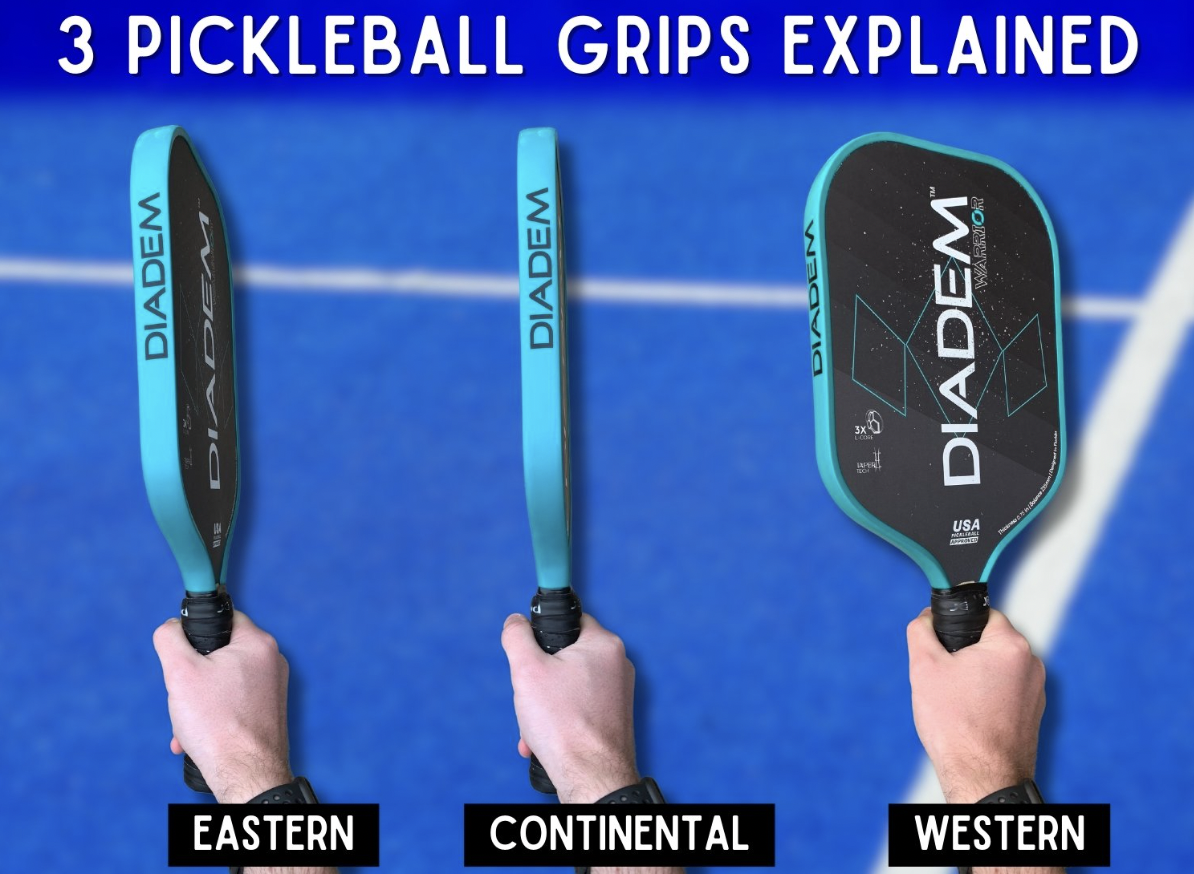
Continental grip
- How to do it: Shake hands with the handle. Point the V of your thumb and index to the top edge. Keep the index finger relaxed as a trigger.
- Why it’s great: Best all-court grip. Quick for dinks, volleys, blocks, resets, and slices. It keeps the face neutral, so you switch from forehand to backhand fast.
Eastern forehand grip
- How to do it: From Continental, rotate your hand slightly right. Your palm sits more behind the face.
- Why it’s great: Adds topspin and net clearance on drives and serves. Use when you want more roll on the ball.
Eastern backhand grip
- How to do it: From Continental, rotate left a touch so your knuckles face more forward on the backhand side.
- Why it’s great: Helps carve slices, roll topspin backhands, and control high backhand volleys.
Two-handed backhand option
- How to do it: Bottom hand in Continental, top hand in a soft Eastern forehand on the paddle throat.
- Why it’s great: Extra stability for counters and topspin backhands, especially if you come from tennis.
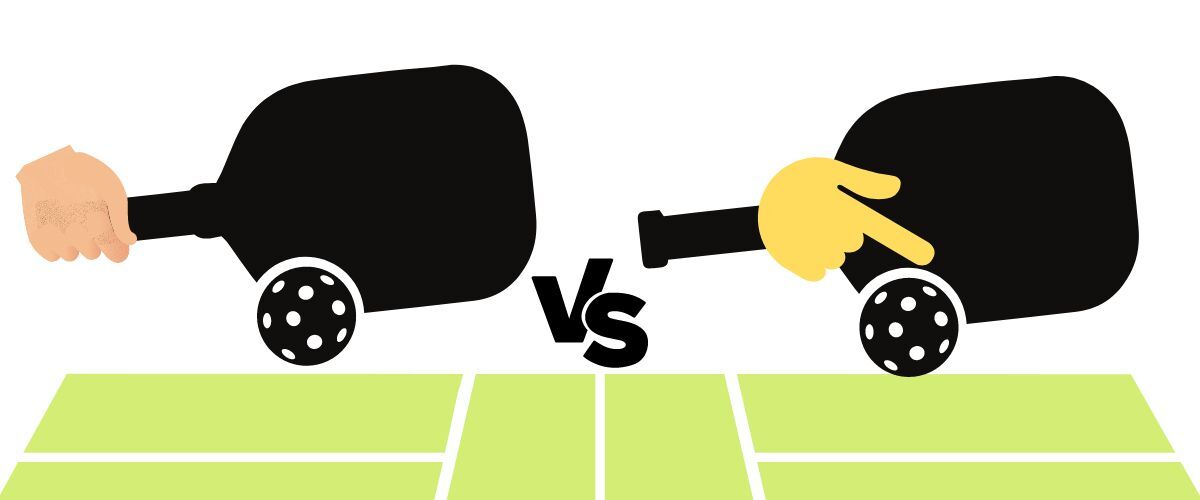
Trigger-finger detail
- Keep a small gap between your index finger and the rest. This “trigger” helps steer the paddle face and improves feel on touch shots.
If you only learn one thing about how to grip a pickleball paddle, make Continental your base, then make small rotates for specialty shots.

Step-by-step: how to grip a pickleball paddle every time
- Stand tall and relax your shoulders. Let your arm hang loose.
- Hold the paddle face vertical. Shake hands with it. That is your base grip.
- Check the V of your thumb and index. Aim it at the top edge.
- Set grip pressure to 3 out of 10. You should still see daylight between palm and heel.
- Make a small trigger with your index finger. Keep it relaxed.
- Bounce a ball on your paddle. If it wobbles, lighten your grip and square the face.
- Hit five dinks, five volleys, five drops. Adjust tiny amounts, not big twists.
With this routine, you will lock in how to grip a pickleball paddle the same way before each point. Consistency builds confidence.

Grip tweaks for every shot
You do not need a brand-new hold for each stroke. Start from Continental, then make small changes based on the task.
Dinks and resets
- Grip: Continental.
- Pressure: 2 to 3 out of 10.
- Keys: Soft wrist, short swing. Let the ball come to you. This is the best place to practice how to grip a pickleball paddle with touch.
Volleys and counters
- Grip: Continental.
- Pressure: 3 to 5 out of 10.
- Keys: Quiet wrist, stable elbow. Punch through the ball. Meet it early.
Drops and thirds
- Grip: Continental.
- Pressure: 3 to 4 out of 10.
- Keys: Smooth tempo. Open the face a hair if the ball is low. Think glide, not slap.
Serves and drives
- Grip: Start Continental, rotate toward Eastern forehand for topspin.
- Pressure: 5 to 6 out of 10.
- Keys: Relax the hand at the start, firm at contact. Brush up for spin and shape.
Slices and defense
- Grip: Continental or slight Eastern backhand.
- Pressure: 3 to 4 out of 10.
- Keys: Lead with the edge, carve under the ball. Keep the face steady.
These micro-adjustments help you master how to grip a pickleball paddle without overthinking. Make small changes. Keep the base the same.

Common mistakes and easy fixes
Death grip
- Symptom: Tight forearm, harsh contact, balls fly long.
- Fix: Breathe out at contact. Rate your pressure out loud: “Three.” Use softer overgrip to add feel.
Paddle face too open or closed
- Symptom: Pops up or dumps in the net.
- Fix: Use the index trigger to steer. Square the face at set, then trust it.
Switching grips too much
- Symptom: Late to the ball, poor reactions at the kitchen.
- Fix: Live in Continental at the net. Rotate only for drives and serves.
Palm on the throat
- Symptom: Reduced reach and power.
- Fix: Slide the hand down so your pinky is near the butt cap.
No trigger finger
- Symptom: Wobbly dinks and drops.
- Fix: Create a small gap. Imagine pointing your index where you want the ball to go.
If you hit a slump, revisit the basics of how to grip a pickleball paddle. Small, smart fixes beat big changes.

Handle size, overgrips, and comfort
Pickleball grip size is more limited than tennis, but you can dial it in. If your fingers dig into your palm, the handle is too small. If you feel strain to wrap your fingers, it is too big.
Use overgrips to fine-tune
- One overgrip adds about 1/16 inch. Add layers until it feels snug.
- Choose dry, tacky, or absorbent types based on sweat. I rotate a fresh overgrip every two to three sessions in summer.
Reduce strain
- A softer hold lowers shock to the elbow and wrist.
- Keep the wrist neutral. Avoid extreme bends on high balls.
- If your hand tingles or aches, lighten pressure and shorten your swing.
Good fit and a soft hold make how to grip a pickleball paddle safer and steadier for long play.
Drills to master your grip feel
Grip ladder
- Hit 10 dinks at pressure 2, then 10 at 3, then 4. Feel the difference.
100-bounce warm-up
- Bounce the ball on your paddle 100 times without moving your feet. Keep the face square. Reset grip if it rotates.
Wall coin drill
- Tape a coin near the paddle tip. Dink against a wall. The added weight teaches a steady face.
Serve-and-rotate
- Serve five with Continental, five with a slight Eastern forehand. Note height, spin, and depth.
Eyes-closed shadow swings
- Close your eyes and swing slow. Feel the handle in your fingers. Build a repeatable set position.
Use these to practice how to grip a pickleball paddle until it is automatic under pressure.

Seasonal and match-day grip tweaks
Heat and sweat
- Use a dry or absorbent overgrip. Towel between points. Keep a spare in your bag.
Cold and stiff paddles
- Loosen to pressure 2 to 3 on touch shots. The ball is firmer, so let it bounce a hair more.
Windy days
- For drives into the wind, rotate slightly toward Eastern forehand for spin and lift. With the wind, stay closer to Continental to keep the ball down.
Fatigue
- If your arm gets tired, your grip creeps tight. Shake out the hand between rallies. Say your pressure number before serve or return.
These small shifts keep your feel steady and refine how to grip a pickleball paddle as conditions change.
Frequently Asked Questions of how to grip a pickleball paddle
What is the best beginner grip for pickleball?
Start with the Continental grip. It works for dinks, volleys, and most shots, so you learn faster with fewer changes.
How tight should I hold the paddle?
Use a 3 out of 10 for touch, 5 to 6 for drives. If your forearm feels tense, you’re holding too tight.
Do I need different grips for forehand and backhand?
Use Continental for most net play and defense. Rotate slightly toward Eastern forehand for topspin drives and serves, or toward Eastern backhand for slices.
Can the right grip reduce elbow pain?
Yes, a lighter hold and a neutral wrist can cut shock. Overgrips and softer balls can also help.
How do I stop my paddle face from twisting on contact?
Set a trigger index finger and keep your wrist quiet. Firm up to 4 or 5 pressure right at contact, then relax again.
Is two-handed backhand useful in pickleball?
It can help with power and stability, especially on high balls. Keep the bottom hand in Continental and the top hand soft.
How do I practice how to grip a pickleball paddle at home?
Bounce a ball on the paddle, work wall dinks, and do shadow swings. Say your pressure number out loud to build the habit.
What overgrip should I use if my hands sweat?
Pick an absorbent or tacky overgrip and replace it often. Keep a towel and rotate fresh grips for longer sessions.
Conclusion
Great strokes start with great feel, and feel starts at the handle. Use a light handshake hold, live in Continental, and make small rotations for spin or slice. Keep the index as a trigger and your pressure honest at 3 to 6.
Put these steps to work on your next session. Spend five minutes on grip before you hit a single ball. If this guide helped you learn how to grip a pickleball paddle with confidence, share it with a partner, subscribe for more tips, or drop your questions in the comments so we can help you fine-tune your game.