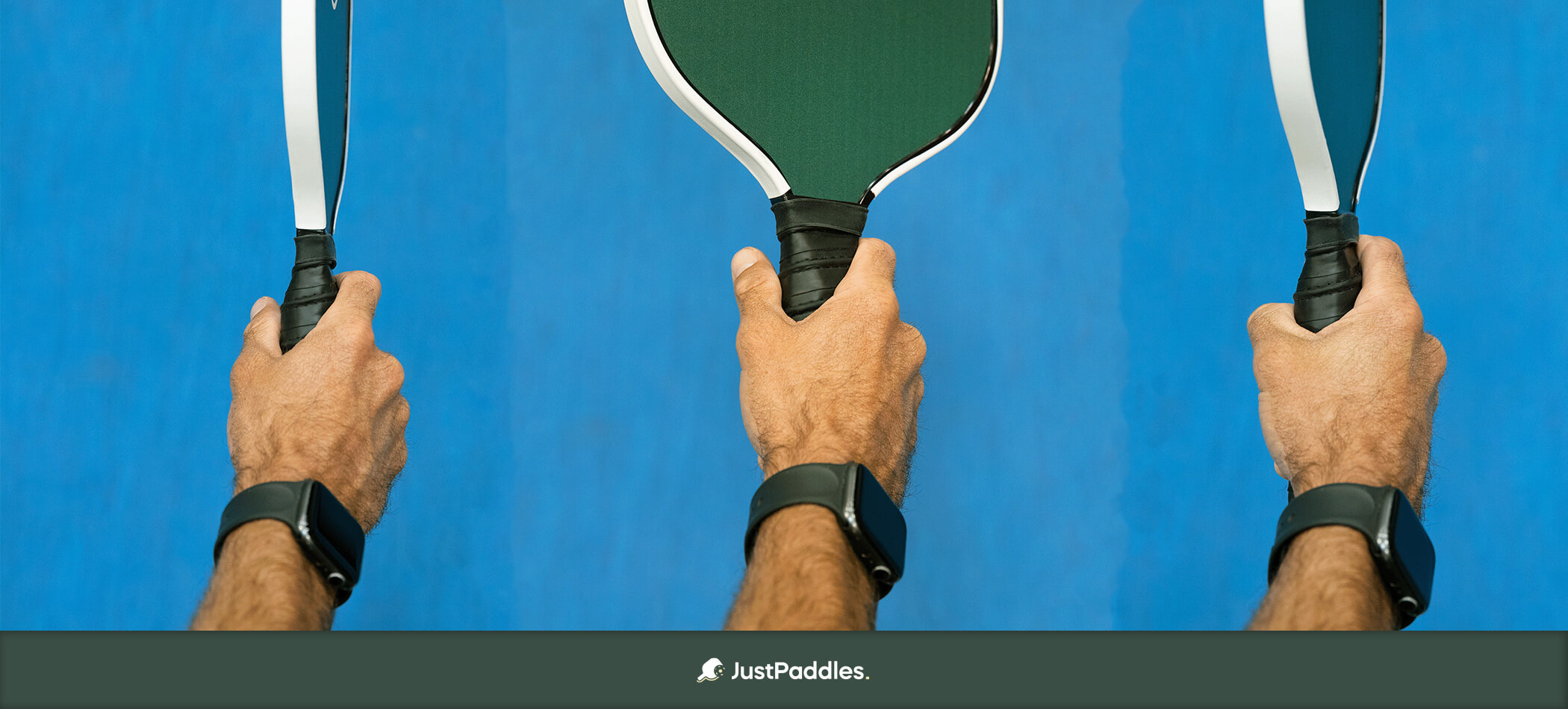
Use a relaxed continental shake-hands grip with light pressure and neutral wrist.
If you want better control, fewer mishits, and easy spin, your grip is the first fix. In this guide, I will show you how to grip pickleball paddle like a coach. I have taught hundreds of players this method. You will learn simple steps, real drills, and pro tips to make the grip feel natural and repeatable. Stick with me, and your paddle will feel like part of your hand.

Why your grip matters in pickleball
Your grip sets the paddle face. The paddle face sets the ball path. If the face is off by a few degrees, your shot misses wide or long. That is why learning how to grip pickleball paddle is the fastest way to upgrade your game.
A good grip does more than guide the ball. It protects your wrist and elbow. It also makes touch shots soft and drives strong. I have seen players gain control in one session by fixing only their grip.

Step-by-step: how to grip pickleball paddle like a coach
Follow this quick setup. It takes 20 seconds and works for both hands.
- Hold the paddle face straight up and down.
- Place your palm on the face like a handshake.
- Slide your hand down onto the handle.
- Wrap your fingers. Let the V between thumb and index point to your hitting shoulder.
- Keep grip pressure light. Aim for a 4 out of 10.
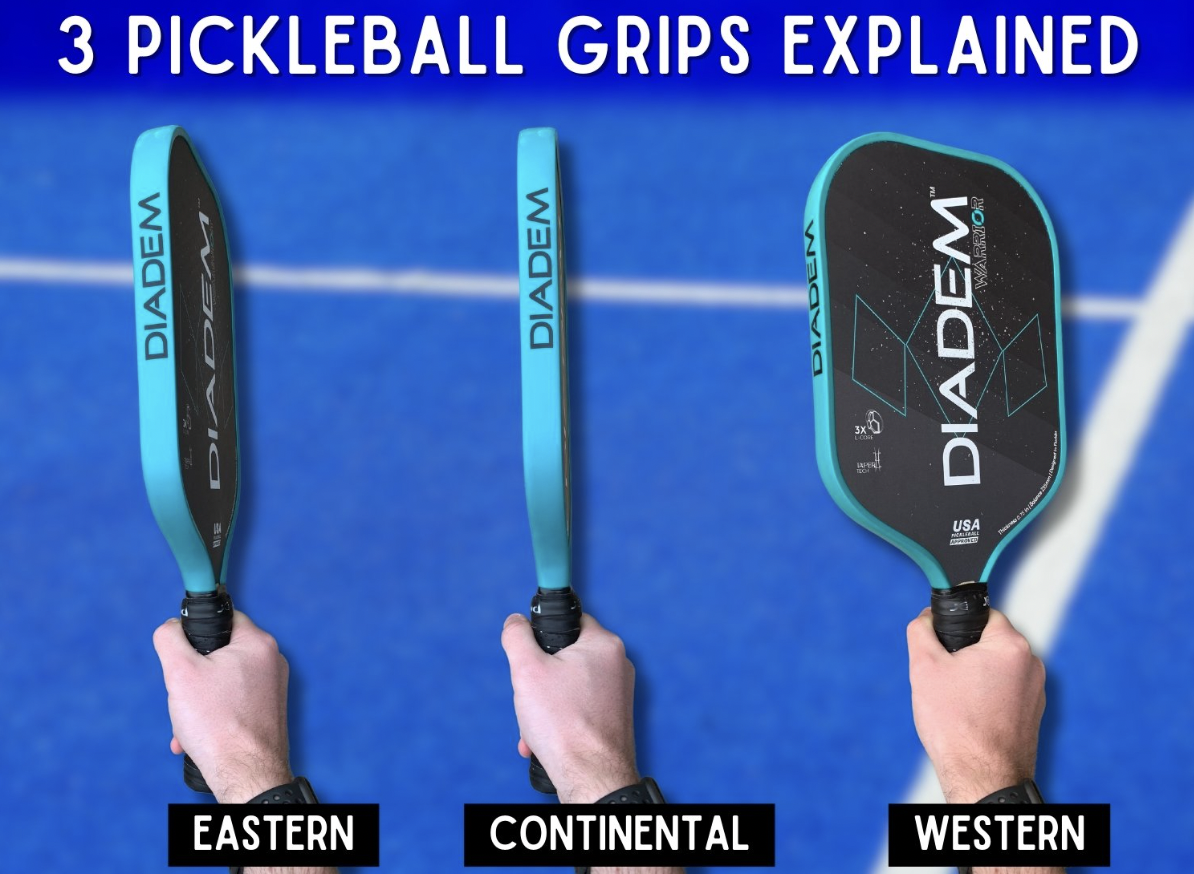
This is the continental grip. It is the best baseline for most shots. If you ask a coach how to grip pickleball paddle, this is what you will hear first.
Find your baseline grip: the continental
Think of the continental grip as your home base. It keeps the paddle face neutral. You can hit forehands, backhands, dinks, and volleys without big changes.
Quick checks:
- Your index finger and thumb form a V that points toward your shoulder.
- Your wrist feels neutral, not bent.
- You can switch from forehand to backhand without moving your hand.
When I help new players, I say, “Use continental until it fails.” It covers 80% of your needs while you learn how to grip pickleball paddle with confidence.

Fine-tune grip pressure and wrist position
Grip pressure controls feel. Use a pressure scale from 1 to 10.
- Dinks and drops: 3 to 4. The paddle absorbs the ball.
- Blocks and resets: 4 to 5. Stable but soft.
- Drives and serves: 6 to 7. Firm at contact, then relax.
Keep your wrist neutral most of the time. A stiff wrist kills feel. A floppy wrist kills aim. If your elbow or wrist hurts, your grip is likely too tight or too far in the palm. Loosen up and let the fingers guide the paddle.

Adjust your grip for every shot
Small tweaks help a lot. You do not need a brand-new grip for each shot.
- Forehand drives: Rotate slightly toward an eastern forehand. The V shifts a little to the right for right-handers. You get more topspin.
- Backhand volleys: Stay close to continental. This makes the paddle firm on contact.
- Two-handed backhands: Keep the bottom hand continental. Place the top hand above it, light and guiding.
- Spin serves: Add a hair of forehand feel. Keep pressure low through the toss and start of the swing.
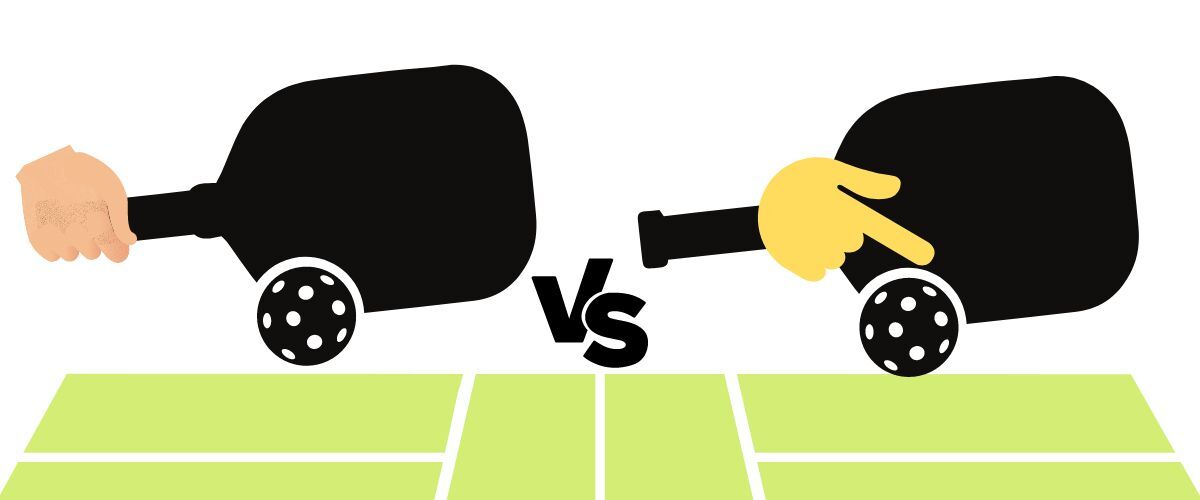
- Dinks and drops: Choke up on the handle for more control. Slide your hand up a half inch.
When players ask how to grip pickleball paddle for spin, I suggest tiny changes first. Small moves beat big flips.

How to grip pickleball paddle for power vs control
Power comes from speed, not a death grip. Control comes from a quiet face, not slow swings.
For power:
- Firm up to 6 or 7 at impact.
- Let the index finger separate a touch for leverage.
- Do not squeeze early. Snap late, then relax.
For control:
- Keep 3 to 4 pressure.
- Keep the wrist neutral.
- Shorten the backswing. Let the paddle face do the work.
These changes are fast and simple. If you wonder how to grip pickleball paddle for both power and touch, practice changing grip pressure, not grip type.
Common mistakes and how to fix them
I see the same issues at open play. They are easy to fix.
- Death grip. Your arm gets tight. Your shots sail. Solution: Breathe out on contact and lighten to 4 pressure.
- Palm-heavy hold. The paddle twists. Solution: Move the handle more into the fingers.
- Finger on the face. Risky on hard shots. Solution: Keep all fingers on the handle for safety and strength.
- Grip flipping each rally. You lose time. Solution: Use continental as home base and make micro-rolls only.
These tweaks solve most control problems when learning how to grip pickleball paddle.

Grip size, handle shapes, and overgrips
Your hand size matters. A good fit improves comfort and aim.
- Quick test: Hold the paddle. If you can slide your index finger between your fingers and palm, the size is close.
- If the grip feels too small, add one or two overgrips.
- If it feels too big, try a thinner replacement grip.
Different brands have different handle shapes. Some are more square. Some are round. Try a few. If you ask a store pro how to grip pickleball paddle with your hand size, they will start with grip circumference and shape.

Drills to master how to grip pickleball paddle
Simple drills help the grip feel natural. Do these for 10 minutes.
- Wall taps. Stand 6 feet from a wall. Tap forehand and backhand with a soft continental grip. Count to 50.
- Kitchen dinks. Aim cross-court. Keep pressure at 3 to 4. Watch the paddle face.
- Shadow swings. Practice your grip set. Freeze the V toward your shoulder.
- Serve build. Hit 10 soft serves with light grip. Then 10 firm serves at 6 pressure.
- Reset ladder. Partner fires medium balls. You block with 4 pressure and a quiet wrist.
These build muscle memory for how to grip pickleball paddle without thinking.
Care, hygiene, and when to replace grips
Grips wear out fast with sweat and sun. A fresh overgrip costs little and boosts control.
- Wipe the handle after play.
- Replace overgrips when they get slick or hard.
- Choose dry overgrips if you sweat a lot. Choose tacky if you want more stick.
If you lose feel or your paddle twists on contact, it is time to change. Keeping a spare overgrip in your bag is smart. It is a small fix with a big effect on how to grip pickleball paddle well.
Frequently Asked Questions of how to grip pickleball paddle
What is the best beginner grip in pickleball?
Use the continental grip. It is a shake-hands hold that works for most shots and keeps the paddle face neutral.
How tight should I hold the paddle?
Use a 3 to 4 pressure for touch and a 6 to 7 for power. If your arm gets tense, you are squeezing too hard.
Should I change grips for forehand and backhand?
Start with continental for both. Make tiny rotations for spin or comfort rather than full grip changes.
How do I know if my grip size is right?
If you can fit your index finger between your fingers and palm when holding the handle, the size is close. Add an overgrip if it feels small.
Is a two-handed backhand better for control?
For many players, yes. Keep the bottom hand continental and add the top hand lightly for support and aim.
How often should I replace my overgrip?
Every 10 to 20 hours of play, or sooner if it feels slick. Fresh grips improve control and reduce mishits.
Can grip fix elbow pain?
A softer, finger-based hold often helps. Lower grip pressure and a fresh, cushioned overgrip can reduce shock.
Conclusion
Master the continental grip, keep pressure light, and use small tweaks for each shot. That is the heart of how to grip pickleball paddle with control and power. Practice the drills, watch the paddle face, and let your fingers guide the swing.
Take this to your next session and test one change at a time. If you found this helpful, share it with a partner, subscribe for more tips, or drop a question so I can help you dial in your grip.