
Hold the paddle with a relaxed Continental grip, neutral face, and soft pressure.
If you want control, spin, and fewer mishits, start with a solid grip. In this guide, I’ll show you how to hold a pickleball paddle like a coach would teach on court. You’ll learn exactly where to place your hand, how much pressure to use, and how to adjust for every shot. If you’ve ever wondered how to hold a pickleball paddle the right way, you’re in the right place.
Why your grip matters
Your grip is the steering wheel of every shot. A small change at your hand can turn a clean dink into a pop-up or a miss. When you learn how to hold a pickleball paddle with intention, your shot quality jumps fast.
A correct grip helps you:
- Control the paddle face at contact.
- Switch from forehand to backhand without delay.
- Absorb pace at the kitchen and add pace on drives.
- Reduce wrist strain and build repeatable swings.
I tell new players this: the ball listens to your paddle face. Your grip decides that face at impact. Learn how to hold a pickleball paddle well, and your game gets easier overnight.

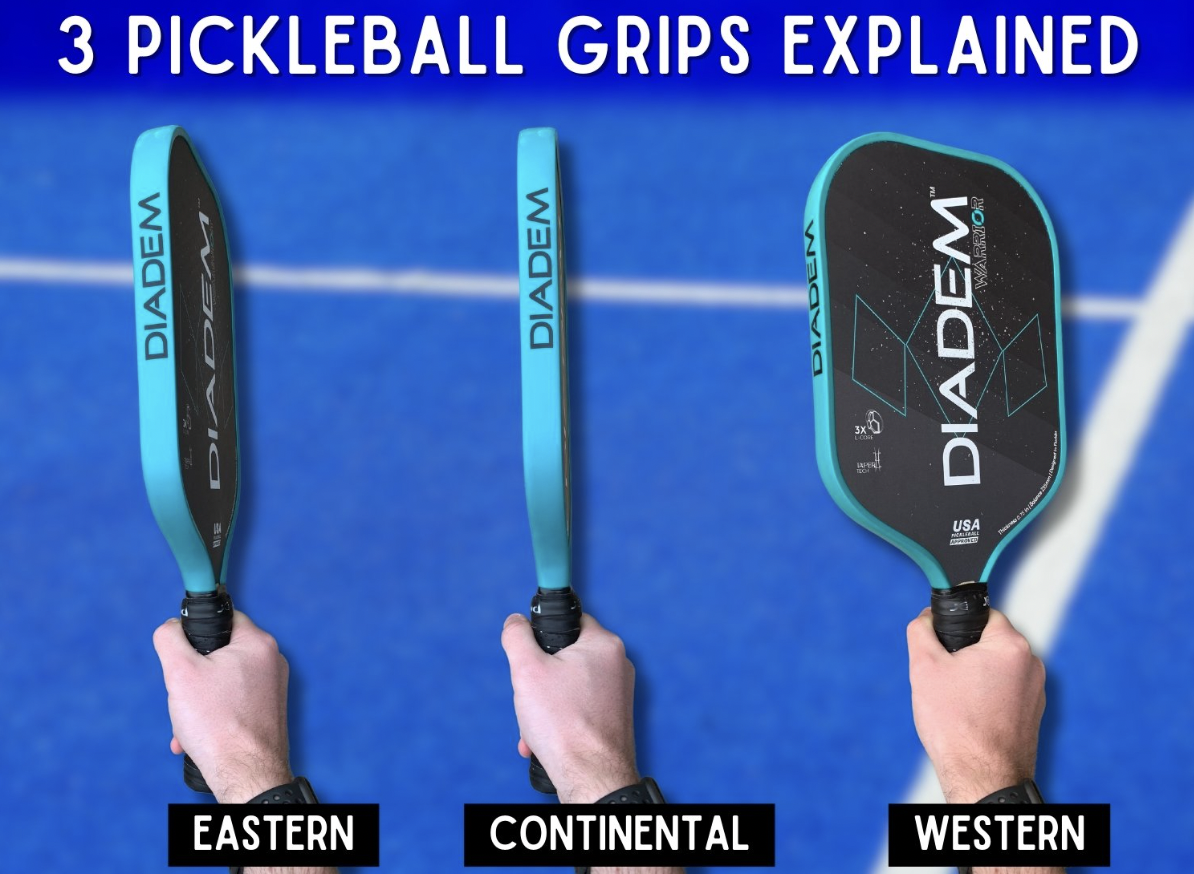
The universal starting point: the Continental grip
Use this as your base. It works for dinks, blocks, volleys, serves, and most backhands.
Steps to find it:
- Shake hands with the paddle. Hold it like you would greet a friend.
- Place the pad of your index finger on the small bevel at the top edge of the handle.
- Let the V made by your thumb and index finger sit on the top-right edge of the handle if you are right-handed. Left-handers mirror this.
- Keep the paddle face neutral. Not open, not closed.
- Use light pressure. On a 1 to 10 scale, start at a 3.
- Keep the wrist neutral. No bend toward your palm or knuckles.
- Quick test: switch from forehand to backhand without moving your hand. It should feel smooth.
Coach tip from clinics: I ask players to hold the handle like a tube of toothpaste. Firm enough that it does not drop. Soft enough that nothing squeezes out. If you are learning how to hold a pickleball paddle, this image helps.

Other grips and when to use them
Most play can live in Continental. But slight shifts help on specific shots. Here is a simple map.
-
Eastern forehand grip
- What it is: Turn the hand a little so your palm is more behind the paddle on forehands.
- When to use: Forehand drives, topspin rolls, high volleys you want to punch.
- How to find it: From Continental, nudge your hand right a small amount if right-handed.
-
Eastern backhand grip
- What it is: Turn the hand the other way so the back of your hand is more behind the paddle.
- When to use: Backhand rolls, counter-attacks, high backhand volleys.
- How to find it: From Continental, nudge your hand left a small amount if right-handed.
-
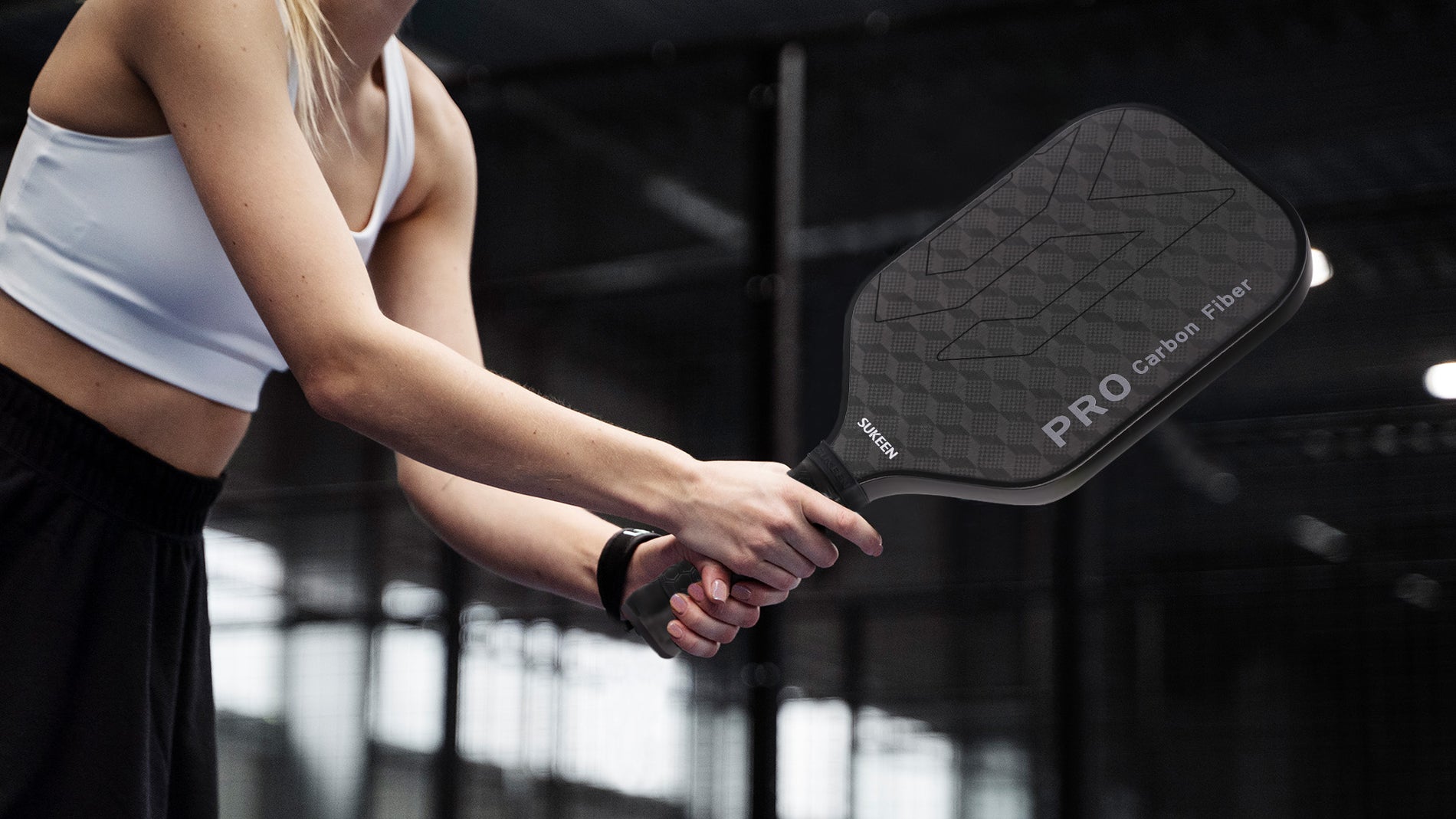
Two-handed backhand
- What it is: Top hand stays on the handle; bottom hand joins above it.
- When to use: Extra stability on counters, heavy backhand rolls, returns.
- How to do it: Keep your base hand Continental. Place your top hand in an Eastern backhand feel and relax.
Note: Extreme grips, like a full Western, are rare in pickleball. The short swing space and plastic ball reward neutral positions. If you are learning how to hold a pickleball paddle for consistent play, stay near Continental with small shifts.

Hand placement, pressure, and alignment
Dial in these micro-details even if you already know how to hold a pickleball paddle. They turn good into great.
-
Index finger
- Slight “trigger” finger works well. It stabilizes the face.
- Do not splay it too far. Keep it relaxed and close.
-
Thumb
- On the back of the handle for support.
- For two-handed backhands, the top-hand thumb rests along the side.
-
Grip pressure
- Soft for touch: 2 to 3 for dinks and drops.
- Medium for volleys: 3 to 4 for blocks and counters.
- Firm for drives: 4 to 5 for serves and put-aways.
- You should be able to wiggle your fingers between points.
-
Wrist and forearm
- Keep the wrist neutral. No sharp angles.
- Elbow near your side in ready position. Paddle at chest height.
-
Paddle face
- Slightly open for soft shots near the net.
- Square for blocks and counters.
- Slightly closed for topspin rolls.
A note from experience: I once gripped too tight at the kitchen. My dinks popped up and got smashed. The fix was simple. I breathed out as the ball came in and dropped pressure to a 2. Soft hands changed everything.
How to adjust your grip for each shot
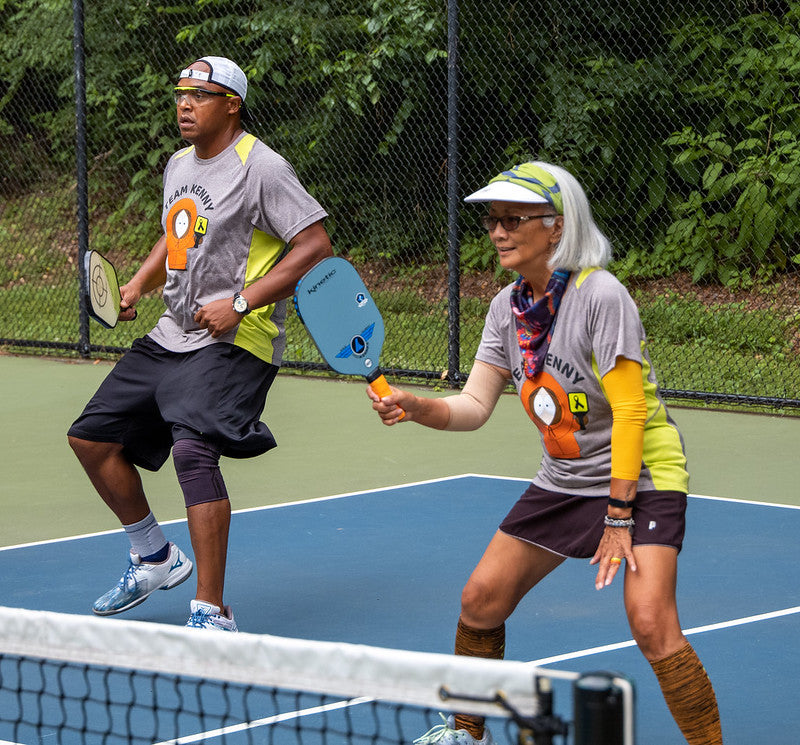
If you want a practical plan for how to hold a pickleball paddle in real play, use these quick presets.
-
Dinks
- Continental grip.
- Pressure 2 to 3.
- Paddle face slightly open. Short strokes.
-
Volleys and blocks
- Continental grip.
- Pressure 3 to 4.
- Meet the ball early. Little to no backswing.
-
Drives and rolls
- Small shift toward Eastern forehand or backhand as needed.
- Pressure 4 to 5.
- Keep a low-to-high path for topspin.
-
Drops from midcourt
- Continental grip.
- Pressure 2 to 3.
- Smooth, slow acceleration. Aim for net height.
-
Serves and returns
- Continental or slight Eastern forehand.
- Pressure 4.
- Loose wrist for spin. Finish to target.
-
Speed-ups and counters
- Continental or small shift.
- Pressure 3 to 4.
- Compact swing. Paddle in front of your body.
The key is simple. Keep your base grip, then make tiny shifts. That is the real trick to how to hold a pickleball paddle through a fast rally.

Common mistakes and easy fixes
These are the issues I see most in lessons. Fix them, and your game lifts fast.
-
Death grip
- Symptom: Pop-ups, sore forearm, poor touch.
- Fix: Breathe out at contact. Count “one-two” and relax to a 3.
-
Paddle face pointing up
- Symptom: Balls sail long.
- Fix: Aim the top edge at your target. Keep the face neutral.
-
Switching to extreme grips mid-rally
- Symptom: Late contact and mishits.
- Fix: Stay near Continental. Use small shifts only when you have time.
-
Finger over the edge guard
- Symptom: Pain on mishits.
- Fix: Keep all fingers on the handle. Use the index trigger, not a finger on the face.
-
Choking too low on the handle for hand speed
- Symptom: Slow reactions at the kitchen.
- Fix: Choke up half an inch for quick hands. Slide back down for power.
Learning how to hold a pickleball paddle is mostly about removing tension and getting neutral. Let the paddle do the work.

Match the paddle to your hand
The right handle makes good grip habits easy.
-
Grip size
- Test: Hold the handle. If your index finger from the other hand fits between your fingers and palm, it is close.
- Too big? Add an overgrip only if needed. Too small? Add one or two overgrips.
-
Handle length
- Two-handed backhand users like longer handles.
- One-handed players can stay standard for more maneuverability.
-
Weight and balance
- Head-light paddles are quick at the net.
- Head-heavy paddles add plow-through on drives.
- Try both and see which helps your grip stay relaxed.
-
Overgrips
- Tacky for dry conditions.
- Absorbent for sweat.
- Replace often. A fresh wrap helps you hold lighter.
-
Texture and shape
- Some handles are more oval; some are more square.
- Choose the one that helps you find Continental by feel, without looking.
Pickleball gear evolves often. But no matter the tech, how to hold a pickleball paddle still comes first.
Simple drills to lock in your grip
Build muscle memory with short, smart reps. No partner needed for most.
-
Wall taps
- Stand five feet from a wall.
- Tap the ball 50 times forehand, 50 backhand with Continental.
- Focus on soft hands and a quiet wrist.
-
Kitchen line catch-and-bump
- Stand at the kitchen line.
- Toss the ball to yourself, catch on the face, and bump it back up.
- Keep pressure at a 2. Stay relaxed.
-
Shadow switches
- From ready position, switch from forehand to backhand 20 times.
- Do not move your hand. Keep the grip and turn your shoulders.
-
Serve grip ladder
- Hit five serves with Continental.
- Nudge toward Eastern forehand for five serves.
- Return to Continental for five. Feel the difference.
-
Drop and stop
- From midcourt, drop-feed yourself.
- Hit soft drops with Continental, pressure 2 to 3.
- Land the ball in the kitchen. Hold your finish.
-
Speed-up checks
- Partner feeds at your chest.
- Counter with small swings, pressure 3 to 4.
- Keep the paddle in front. No big grip change.
-
Eyes closed reset
- In ready stance, close your eyes.
- Find Continental by feel. Open eyes and check.
- Repeat 10 times so your hand learns the shape.
These drills make how to hold a pickleball paddle feel natural, even under pressure.

Special tips for different players
Small changes help different hands and styles.
-
Small hands
- Use a thinner base grip with one overgrip.
- Choke up slightly for control.
-
Large hands
- Use a thicker grip or two overgrips.
- Keep wrist neutral to prevent tipping the face.
-
Sweaty hands
- Use absorbent overgrips.
- Keep a wristband and towel to maintain light pressure.
-
Left-handed players
- Mirror all instructions. Your small shifts go the other way.
- Practice grip finds with your eyes closed to build feel.
-
Juniors and new players
- Start with Continental only for two weeks.
- Then add small shifts for drives and rolls.
These small tweaks make a big difference in how to hold a pickleball paddle for your body and your goals.
Frequently Asked Questions of how to hold a pickleball paddle
What is the best grip for beginners?
Start with the Continental grip. It lets you hit forehands, backhands, dinks, and volleys without big changes.
How tight should I hold the paddle?
Use light to medium pressure. Think 3 out of 10 for touch, 4 to 5 for drives.
Should I change grips during a rally?
Keep the base grip during fast exchanges. Make small shifts only when you have time between shots.
Is a two-handed backhand better?
It helps with stability and counters, especially on high balls. Try it if your one-handed backhand feels weak.
How do I stop popping up dinks?
Soften your grip to a 2 or 3 and keep the face slightly open. Lift through the ball with a small, smooth motion.
How do I know my grip size is right?
Place the index finger of your other hand between your fingers and palm while holding the handle. If it fits snugly, the size is close.
Can my index finger rest on the paddle face?
Keep all fingers on the handle for safety and control. Use a slight trigger finger instead.
Conclusion
Grip is the fastest upgrade in your game. Start with Continental, keep a soft hand, and make small shifts for drives, drops, and volleys. Practice the drills above for one week and your touch and control will jump.
Take one court session to master how to hold a pickleball paddle, then note your errors and adjust pressure, not just swing. Ready to level up? Try the drills, share your results, and subscribe for more simple, on-court tips.