Start on serve, reach the kitchen, and win with patient teamwork.
If you want to learn how to play doubles pickleball, you’re in the right place. I’ve coached new players, played countless ladder matches, and tested drills that actually work. This guide breaks down how to play doubles pickleball from rules to winning plays. You’ll get clear steps, real examples, and smart tips you can use today.
What Makes Doubles Pickleball Unique
Doubles is fast, social, and tactical. You and a partner share a 20-by-44-foot court and aim to take the kitchen line. Only the serving team can score. Patience and placement beat power most days.
Key differences from singles:
- More teamwork and court coverage
- A bigger focus on the soft game
- Structured rotations and score calls
If you’re learning how to play doubles pickleball, start by mastering space, shots, and simple communication. The game opens up from there.
Court, Gear, and Setup
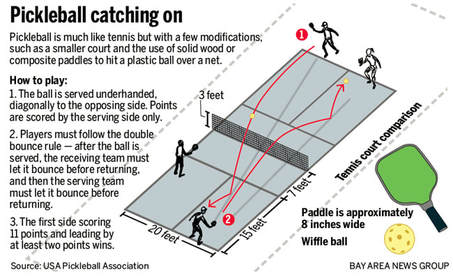
You need a pickleball paddle, an outdoor or indoor ball, and a standard court. The net is 36 inches at posts and 34 inches at center. The non-volley zone (the kitchen) extends 7 feet from the net on both sides.
Lines and areas:
- Baseline, sidelines, and centerline define serve areas
- The kitchen is for groundstrokes only
- Right side is even; left side is odd
Game points are usually to 11, win by 2. If you’re new to how to play doubles pickleball, set up with compatible paddles and a ball that matches your court surface.
Scoring and Rotation in Doubles
Only the serving team can score. The score is called in three parts: server’s score, receiver’s score, server number (1 or 2). At the start of a game, the first server is called 2, so the call is 0-0-2.
Serving rotation basics:
- The player on the right (even) serves first on each new side-out
- If a point is won, the server switches sides and serves again
- When the server loses a rally, the serve moves to the partner
- After both partners lose serve, it’s a side-out
Example:
- Call 3-2-1 means the serving team has 3, receiving team has 2, first server is serving
- If the serving team wins, the score becomes 4-2-1 and the server switches sides
Learn this early if you want to master how to play doubles pickleball without confusion.

Serving Rules and Smart Targets
Use a legal serve. Contact the ball below the waist with an underhand motion, or use a drop serve where the ball is dropped and hit after it bounces. Your feet must be behind the baseline at contact.
High-percentage serving tips:
- Aim deep to the backhand to limit attacks
- Add height for margin and depth
- Hit to the weaker returner when possible
When learning how to play doubles pickleball, keep serves simple. Depth and consistency beat fancy spins in most rec games.

The Return and Getting to the Kitchen
The serve must bounce, and the return must bounce before volleys are allowed. This is the two-bounce rule. After the return, your goal is to rush the kitchen line under control.
Return goals:
- Hit deep, preferably to the server
- Give yourself time to advance
- Split step near the kitchen as the opponent hits
Common mistake: Watching your return instead of moving forward. If you want to improve how to play doubles pickleball, build the habit of returning and closing the net.

The Non-Volley Zone (Kitchen) Strategy
You cannot volley while standing in the kitchen or touching its line. You can enter after the ball bounces. That rule shapes most rallies at higher levels.
Kitchen tactics that win:
- Dink crosscourt to use the longer distance and net height
- Keep the ball unattackable, about 6–12 inches above the net
- Change patterns with a middle dink to create confusion
- Lift your eyes before you speed up; hit only when you see a clear target
When you study how to play doubles pickleball, remember this: control at the kitchen beats power from the baseline.

Communication and Team Positioning
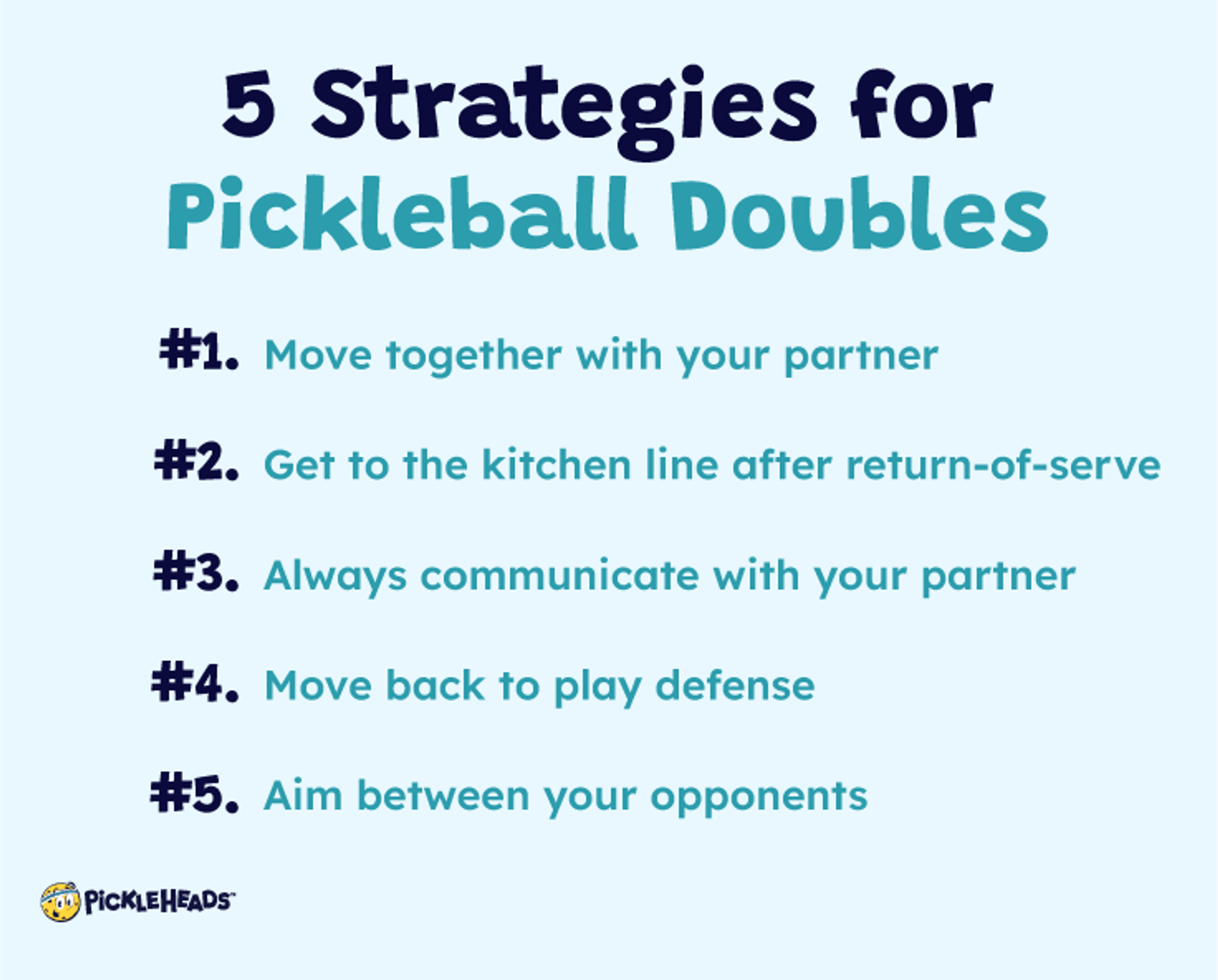
Talk early and often. Call balls in the middle, switch on lobs, and set simple rules.
What to say and do:
- Yours/Mine for middle balls
- No/Out calls loud and fast
- Switch when a lob beats one partner
- Stack when you want a forehand in the middle
Positioning basics:
- Stay shoulder to shoulder with your partner
- Take one small step together after each shot
- Cover down-the-line shots when you’re pulled wide
If you want to master how to play doubles pickleball, communicate every rally. Silence loses points.

Offensive Patterns and Shot Selection
Build points with simple patterns. Think of it like chess with a paddle.
High-value patterns:
- Serve deep, third shot drop to the backhand, join the kitchen
- Return deep, step in, counter the next attack
- Dink crosscourt three times, then go middle or speed up shoulder-high balls
- Attack to the paddle-side hip or the transition zone feet
On how to play doubles pickleball at a strong rec level, use your forehand in the middle when possible. It gives better angles and pressure.

Defensive Skills: Resets, Lobs, and Counters
Defense wins more rallies than you think. Your goal under pressure is to reset the ball into the kitchen.
Resets that calm chaos:
- Loosen your grip
- Shorten your swing
- Aim for the opponent’s feet or the middle kitchen
Use lobs to push opponents back when they lean in. When they speed up into your body, block to the middle. If the ball sits up, counter to the open space.
If you’re learning how to play doubles pickleball, practice absorbing pace first. Offense comes after control.
Common Mistakes and Simple Fixes
These are the errors I see most in new doubles teams, and how to fix them fast.
- Standing too far from the kitchen: Move so your toes kiss the line after each shot.
- Trying to win from the baseline: Drop or reset, then move in.
- Overhitting dinks: Aim low and crosscourt with a soft grip.
- No plan for middle balls: Decide that the forehand in the middle takes it.
- Serving or returning short: Add height for depth and safety.
When you refine how to play doubles pickleball, focus on these small wins. They add up.
Drills to Level Up Your Doubles Game
You improve faster with reps. Keep it simple and repeatable.
- Targeted serves: 20 deep serves to each corner. Track misses short.
- Third shot ladder: 10 drops crosscourt, 10 straight, then mix. Advance after three in a row.
- Dink volley live: One player dinks; the other blocks volleys soft into the kitchen.
- Middle ball calls: Feed neutral balls to the middle. Practice Yours/Mine at speed.
- Reset tunnel: One attacks from midcourt; the other resets five in a row crosscourt.
If you are serious about how to play doubles pickleball, schedule drills before games. Ten minutes is enough to see progress.
Match Preparation, Etiquette, and Safety
Warm up with a few drops, dinks, and volleys. Practice two serves and two returns each. Confirm score, server, and receiving order before you start.
Etiquette that keeps games fun:
- Call the ball out only when you are sure
- Apologize for net cords and say nice shot often
- Give space at the net and avoid swinging through people
Safety tips:
- Call for lobs early to avoid collisions
- Wear court shoes with good grip
- Hydrate and take quick breaks in heat
If you value long-term growth in how to play doubles pickleball, protect your body and your partners.
Advanced Tactics: Stacking and Targeting
Stacking places both players on one side before serve or return to keep forehands in the middle or cover a weak side. It is legal if players serve and receive from the correct boxes.
When to stack:
- One partner has a strong forehand
- You want to hide a backhand
- You prefer crosscourt dinks to your best side
Targeting ideas:
- Aim at the weaker backhand
- Hit the paddle-side hip
- Use the middle to force hesitation
- Attack to the transition zone at opponents’ feet
As you explore how to play doubles pickleball at higher levels, stacking and smart targets create quick edges without big risk.
Frequently Asked Questions of how to play doubles pickleball
What is the starting score in doubles?
Games often start 0-0-2. The first serving team has only one server before a side-out.
How do I call the score in doubles?
Say server’s score, receiver’s score, then server number. For example, 5-3-1.
Where should I stand on the return?
Stand a step or two behind the baseline. Hit deep, then move to the kitchen together.
What is the kitchen rule in simple terms?
You cannot volley while in the kitchen or touching its line. You may step in only after the ball bounces.
Should I learn the third shot drop first?
Yes. A soft, controlled drop helps you join the kitchen. It’s a core skill in how to play doubles pickleball.
When should I speed up the ball?
When it is above net height and you see a clear target, like the paddle-side shoulder. Avoid low balls.
Is stacking allowed for beginners?
Yes. Keep it simple at first. Make sure you serve and receive from the correct boxes.
Conclusion
Doubles rewards clear plans and calm hands. Serve deep, return deep, take the kitchen, and work the soft game until a safe attack appears. If you focus on movement, communication, and smart targets, you’ll feel your game click fast.
Pick two drills from this guide and run them this week. If you want more help on how to play doubles pickleball, subscribe for new drills, print the checklist, or ask a question in the comments.