Start underhand serves, avoid the kitchen, play to 11, win by two.
You’re here to learn how to play pickleball the right way, fast. I’ve coached new players, drilled with club vets, and studied the rules so you don’t have to. This guide breaks the game into simple steps, clear rules, and friendly tips you can use today. Stick with me and you’ll be game-ready by the end.

The basics: what you need to know first
Pickleball is a paddle sport on a small court. It blends tennis, badminton, and ping-pong. You serve underhand, let the ball bounce once on each side to start, and rally until someone misses.
If you want to learn how to play pickleball well, focus on these three ideas:
- Depth beats power. Hit deep and keep the ball in.
- Patience wins. Wait for a high ball before attacking.
- Footwork first. Small steps keep you balanced and fast.
Courts are everywhere now. Most parks and gyms host open play. You can drop in, grab a paddle, and join a game.

Court, lines, and how the setup works
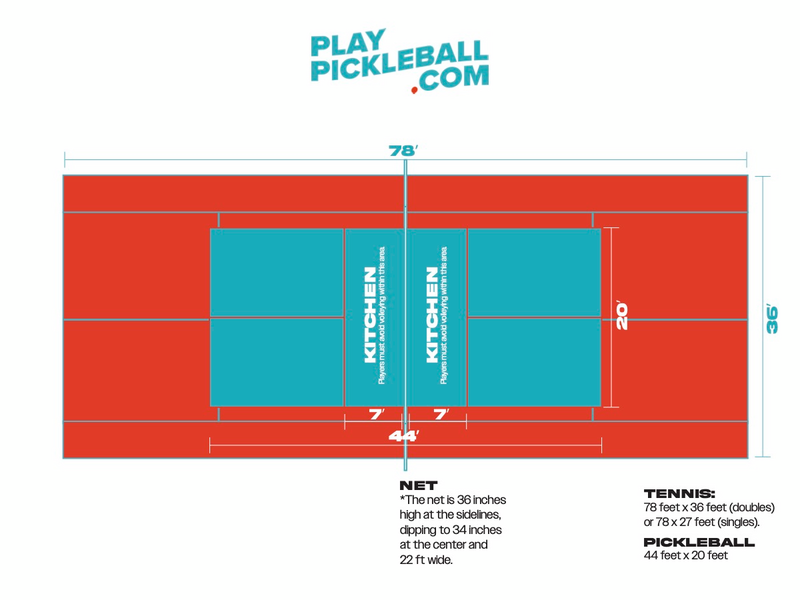
- Court size is 20 feet by 44 feet for both singles and doubles.
- The net is 34 inches in the center and 36 inches at the posts.
- Each side has a 7-foot non-volley zone called the kitchen.
- Service boxes are right and left, split by a center line.
You score only when you serve. Games are usually to 11, win by 2. If you’re learning how to play pickleball, step on a real court early. It makes rules and spacing click fast.

The gear you need (and what matters most)
You only need a paddle, a few pickleballs, and court shoes.
- Paddle: Start with a midweight (7.6–8.4 oz) for control and power.
- Face: Graphite or carbon fiber gives touch. Fiberglass adds pop.
- Core: Polymer honeycomb is quiet and stable.
- Balls: Outdoor balls have smaller holes and feel firmer. Indoor balls are softer.
- Shoes: Court shoes prevent slips and protect your ankles.
Tip from the courts: borrow paddles before you buy. Your hand feel matters more than brand buzz. To learn how to play pickleball with ease, pick a paddle that feels light enough to swing smooth but steady on blocks.

Rules and scoring made simple
You score on your serve only. Most games go to 11, win by 2. Doubles uses a three-number score: server’s score, receiver’s score, and server number (1 or 2).
Key rules that shape how to play pickleball:
- Underhand serve. Contact is below the waist, paddle moves upward.
- Double-bounce rule. The serve must bounce once. The return must bounce once. After that, you can volley.
- Kitchen rule. Do not volley while touching the non-volley zone or its line.
- Faults. Out balls, net touches on serve, kitchen volleys, and missed returns.
For doubles, both partners serve before a side-out, except the very first service turn of the game, which starts with the second server. This balances fairness.

Serving: start the point with purpose
A core step in how to play pickleball is a clean, legal serve. Keep it simple.
- Stance: Square to the target with feet shoulder-width apart.
- Grip: Relax your hand. A gentle grip adds control.
- Swing: Low to high with a smooth follow-through.
- Target: Aim deep to the backhand. Depth beats speed.
Two reliable serves:
- Basic deep serve: Aim middle-backhand. High arc. Land near the baseline.
- Soft lob serve: Add height to disrupt timing and pull players back.
Common error: trying to ace people. In pickleball, a missed serve hurts more than a slow one.
Returning serve: set the table for the rally
Your job is to neutralize the server and get to the net.
- Hit deep, center, and slow enough to run in.
- Aim at the server’s backhand to shrink angles.
- Move in right after contact. Meet your partner at the kitchen line.
If you ask how to play pickleball smarter, master the return depth first. It flips pressure onto the serving team.

The kitchen (non-volley zone) explained
The kitchen is the 7-foot zone near the net. You cannot volley while touching it or its line. You can step in to play a ball that has bounced, then step out before your next volley.
Why it matters for how to play pickleball:
- It stops endless smashes at the net.
- It rewards soft shots, touch, and patience.
- It makes dinking the key skill in close battles.
Personal tip: I used to hover too far back. I lost easy volleys. Now, I stand with toes just behind the line, paddle up, and lean from the hips to reach dinks without stepping in.

Doubles positioning and teamwork
Most people learn how to play pickleball in doubles. Good teams move like a door on a hinge.
- Stay linked. Keep a paddle’s length between you.
- Slide together. If one moves wide, the other shifts to cover the middle.
- Call “mine,” “yours,” and “switch” early and loud.
Serve team flow:
- Server and partner start a bit back.
- After the return bounces, both rush the line.
- Play third shot soft or deep based on ball height.
Return team flow:
- Return deep, run in, and claim the kitchen line.
- Cover middle first. Most balls come there.

Singles basics: cover the court and the middle
Singles is about fitness, depth, and angles.
- Hit deep to push your opponent back.
- Serve wide, then attack the open court.
- Recover to the middle after each shot.
If you practice how to play pickleball alone, singles footwork drills help a lot. Think quick split-steps and small recovery steps after every hit.
Core shots and how to hit them
Dink
- Soft shot into the kitchen after a bounce.
- Keep the paddle face open and the wrist quiet.
- Aim cross-court to use the longer diagonal.
Third shot drop
- A soft arc from the baseline to the kitchen.
- Let the ball drop to waist-high. Swing low to high with a calm hand.
- Land it at your opponents’ feet.
Drive
- A firm, flat shot off a high ball.
- Step into it. Aim at hips or paddle shoulder.
Block volley
- Short punch with no swing.
- Absorb pace by relaxing your grip.
Lob
- Use when rivals crowd the line.
- Lift with legs, not wrist. Aim deep and high.
Overhead
- Turn sideways. Point with your non-paddle hand.
- Contact high and through, not straight down.
A 10-minute plan for your first game
- Minute 1–2: Learn the lines. Find the kitchen and service boxes.
- Minute 3–4: Practice five slow serves on each side.
- Minute 5–6: Practice five deep returns, then run to the line.
- Minute 7–8: Dink cross-court for control and feel.
- Minute 9–10: Play a short game to 5. Call the score before each serve.
This quick block shows how to play pickleball step by step. Keep it easy and focus on clean contact.
Drills that build skills fast
Wall routine
- Ten gentle dinks off a wall, then ten firmer blocks.
- Aim for paddle face control and quiet hands.
Kitchen ladder
- Dink cross-court. Try to land five in a row on a towel target.
Third shot drop ladder
- From baseline, hit ten drops aiming one foot inside the kitchen.
Serve and return targets
- Place cones near the deep corners. Hit five in each.
These drills speed up how to play pickleball the smart way. Ten minutes a day beats one long session a week.
Strategy: how to win more rallies
If your goal is to master how to play pickleball, stack small edges.
- Hit middle often. It causes confusion and fewer angles.
- Change speed. Mix soft dinks with surprise drives.
- Move in pairs. Keep the “hinge” tight in doubles.
- Attack feet, hips, and paddle shoulder.
- Reset when in trouble. Lift a soft ball back into the kitchen.
Personal lesson: Early on, I swung hard at every high ball. I missed often. Now I check height, balance, and partner position. If it’s not there, I reset soft and wait.
Common mistakes and easy fixes
New players learning how to play pickleball often run into the same traps.
- Standing on heels. Fix: small split-step as the opponent hits.
- Swinging from the wrist. Fix: use shoulder and a stable wrist.
- Overhitting serves. Fix: aim high and deep with smooth tempo.
- Camping mid-court. Fix: either at the line or back, not stuck.
- Ignoring the middle. Fix: target the seam between opponents.
One more: foot faults in the kitchen. Practice leaning with your upper body while keeping toes behind the line.
Safety, warm-up, and court etiquette
Warm-up
- 2 minutes of light jog or skips.
- 1 minute of dynamic legs and shoulders.
- 2 minutes of dinks, then a few drops and drives.
Safety
- Wear court shoes for grip.
- Call “ball on” if a stray ball rolls in.
- Hydrate and rest in heat.
Etiquette
- Call the score loud before each serve.
- Give line calls clearly and fairly.
- Tap paddles or say “good game,” win or lose.
Knowing how to play pickleball also means being a great partner and guest on any court.
Finding courts, partners, and your level
- Search local parks, rec centers, and gyms.
- Join open play hours to meet partners fast.
- Ask regulars how they rate levels from 2.5 to 5.0.
- Try round robins to test your skills in short games.
Simple rule for progress: play 70% at your level, 20% above, and 10% below to practice new shots with confidence.
Frequently Asked Questions of how to play pickleball
What is the double-bounce rule?
The serve must bounce once, and the return must bounce once. After those two bounces, players can volley or hit off the bounce.
How do you keep score in doubles?
Only the serving team scores. Call server’s score, receiver’s score, and server number (1 or 2) before each serve.
Can I step into the kitchen?
Yes, but not while volleying. You can step in to hit a ball that bounced, then step back out before your next volley.
What is the best beginner paddle?
Choose a midweight polymer-core paddle with a medium grip. It offers control, comfort, and enough power for growth.
How high can my serve be?
Contact must be below the waist with an upward motion. Keep the paddle head below the wrist at contact for a legal serve.
How do I get better fast?
Practice serves, returns, and dinks for 10 minutes a day. Play games with people who give feedback and drill one skill per session.
Is singles very different from doubles?
Singles needs more fitness and speed. Doubles rewards teamwork, soft shots, and smart positioning.
Conclusion
You now know how to play pickleball from serve to strategy. You can set up your stance, run the kitchen, and use soft shots to win points. Keep your footwork sharp and your choices calm.
Grab a paddle, try the 10-minute plan, and play your first game this week. If this helped, share it with a friend, subscribe for more guides, or leave a question so I can help you level up.