
You can practice pickleball at home with smart drills, simple gear, and space hacks.
Whether you have a garage, a driveway, or a small living room, you can build real, match-ready skills at home. In this guide on how to practice pickleball at home, I will share proven drills, clear plans, and lessons I learned from years of coaching and training in small spaces. You will get step-by-step routines, smart gear swaps, and easy wins that raise your touch, footwork, and confidence. Let’s turn your home into your most reliable court.
Set up your home pickleball space
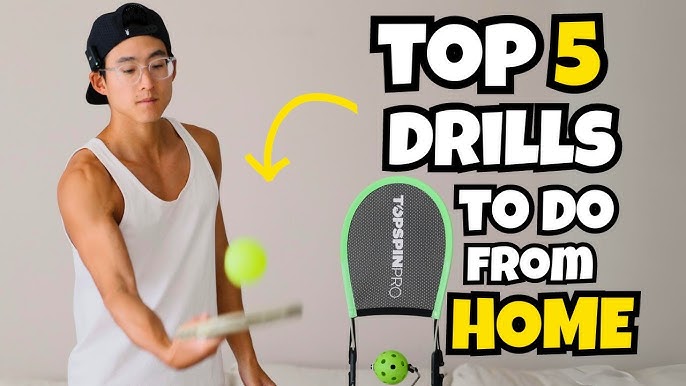
You do not need a full court to learn how to practice pickleball at home. A flat area of 10 to 20 feet is plenty for control, dinks, and volleys. A garage, patio, driveway, basement, or hallway can work. Clear clutter, check the ceiling height, and make sure there is room to swing.
Mark a mini court. Use painter’s tape to create a kitchen line and a target box. A portable net is great, but a string or tape line at 34 inches in the center also works. If you share walls, use foam or low-noise balls to keep peace with neighbors.
Pick safe surfaces. Concrete is fine for serves and targets. Rubber mats add grip and cut noise. Wear court shoes to protect your knees and ankles. Keep a small towel nearby to dry the paddle and your hands.
Gear and DIY substitutes that work
If you wonder how to practice pickleball at home without spending much, start simple. Use what you have and upgrade over time.
- Paddle: Any USAPA-approved paddle works. A budget paddle is fine for drills.
- Balls: Use outdoor balls for driveway training. Use foam or quiet balls indoors.
- Net: A portable net is ideal. A rope or tape line at net height also works.
- Targets: Painter’s tape squares, paper plates, or small cones are great goals.
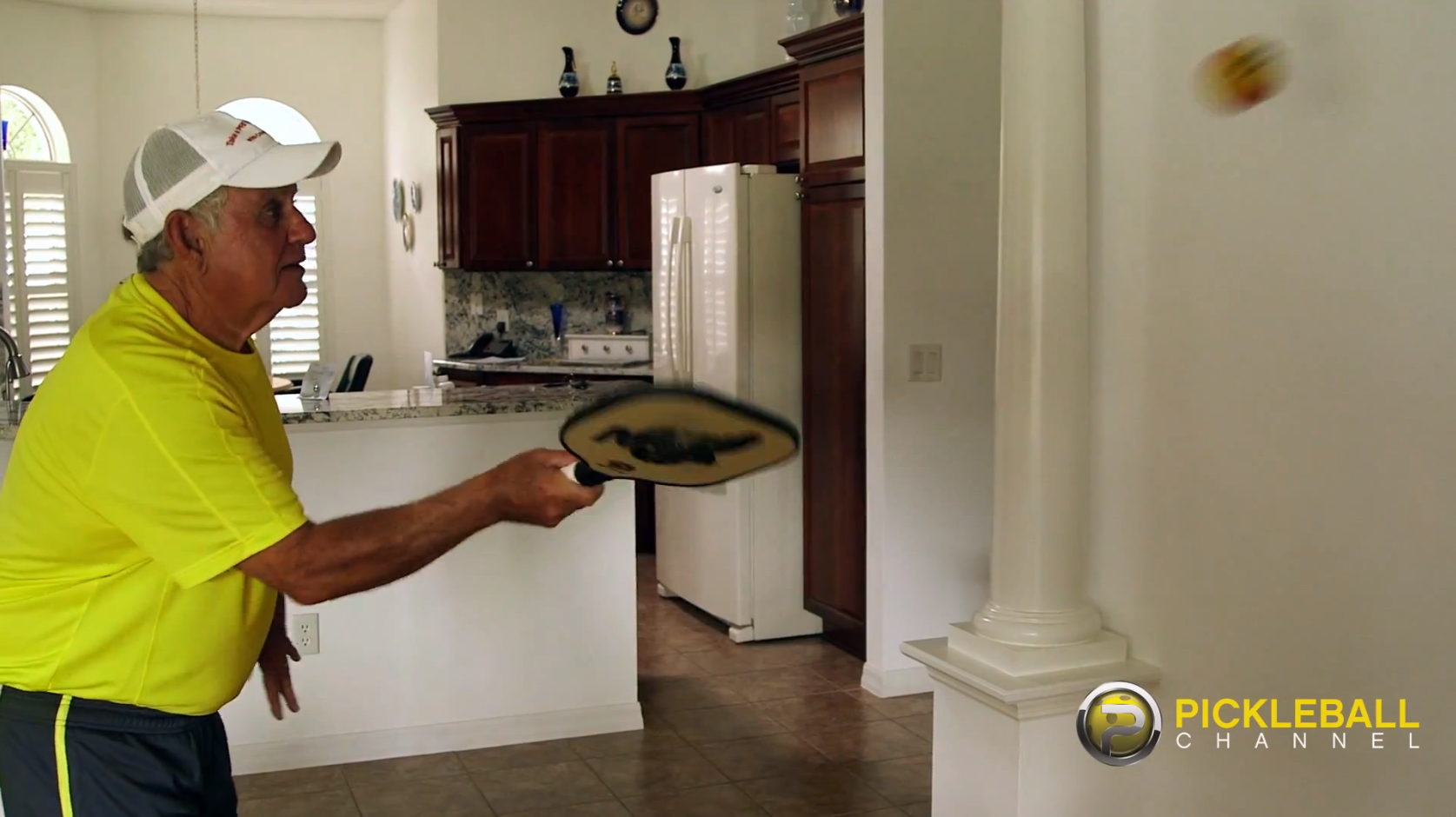
- Rebounder or wall: A flat wall is the best free coach you have.
- Markers: Chalk or tape for lines, arrows, and footwork grids.
- Phone tripod: Record video to check swing path and contact point.
Set a small budget. Invest first in a good paddle and a pack of balls. Add a portable net or a rebounder later. That is how to practice pickleball at home on any budget.

Solo touch and control drills you can do anywhere
Touch wins points. When thinking about how to practice pickleball at home, build touch first. I teach these three core drills to every new player.
- Paddle ups: Keep the ball bouncing on your paddle. Do 50 with forehand, 50 with backhand, 50 alternating. Move your feet as you hit. This builds sweet-spot feel.
- Dink to targets: Set four tape squares six to eight feet away. Aim low over your line, land in a chosen square. Do 10 per square, then switch sides.
- Bounce, catch, and drop: Let the ball bounce once, catch it on your paddle face, and let it slide off into a soft drop. This teaches a calm touch for third-shot drops.
Add a wall if you can. Stand six to ten feet away. Aim to hit 20 soft dinks in a row. Keep the ball below net height by aiming at a low tape line on the wall. Track your streaks. This is my go-to when I have only ten minutes.
Footwork, agility, and balance in small spaces
Great hands mean more when your feet are ready. How to practice pickleball at home includes footwork that keeps you balanced and quick.
- Split step: Hop lightly as your “opponent” would hit. Land on the balls of your feet. Do sets of 30 seconds with calm knees.
- Kitchen shuffle: Tape a line, then shuffle left and right while holding ready position. Touch the line with your paddle tip, then recover. Do five rounds of 30 seconds.
- Ladder moves: Draw a quick ladder with chalk or tape. Do in-in-out, side steps, and icky shuffle for 20 to 30 seconds each. Rest 20 seconds.
- Single-leg balance: Stand on one leg and shadow swing. Switch legs. Do 3 sets of 20 seconds. This helps knee and ankle control.
Sports training research shows that planned footwork and balance work can cut injury risk and improve reaction time. Keep steps short. Keep your head level. Breathe.

Serve and return training without a full court
You can nail serves and returns when you learn how to practice pickleball at home with simple targets.
- Serve station: Stretch a rope at net height across your driveway. Place a tape box 10 to 15 feet past it. Aim deep and to corners. Do 30 serves to the backhand side, then 30 to the forehand.
- Toss drill: No ball, just motion. Shadow your serve with a slow, full swing. Freeze at contact. Check paddle face is square and out front.
- Return depth: Stand 12 to 15 feet from your net line. Drop-feed a ball to yourself and hit long to a taped target. Focus on height and a calm, slow swing.
Film five serves from the side and five from behind. Check for a steady base, relaxed arm, and smooth follow-through. This one tweak made my serve more repeatable than any gadget.
.png)
Wall work and rebounder routines for fast gains
A wall turns minutes into muscle memory. It is the number one tool in how to practice pickleball at home.
- Volley ladder: Stand eight feet from the wall. Hit forehand volley, then backhand volley. Keep the ball below a low tape line. Try for 50 in a row.
- Groundstroke rhythm: Step back to 12 to 15 feet. Rally forehands for 20. Rally backhands for 20. Then alternate 40 total.
- Third-shot drop set: Stand 12 feet out. Aim at a low tape box two to three feet off the ground. Hit 25 soft arcs that land before the “net” line.
- Speed round: Set a metronome to 70 to 90 beats per minute. Hit on each beat for 60 seconds. This builds tempo control.
Keep your wrist quiet and your shoulder loose. If the ball climbs, soften your grip. A grip pressure of 3 out of 10 is a good target for soft shots.

Strategy, vision, and the mental game from your couch
How to practice pickleball at home is not only about swings. It is also your chance to grow your mind for the game.
- Shadow patterns: Call the score, split step, shadow a third-shot drop, move in, and shadow a dink rally. Do three “points” per rep for three sets.
- Read cues: Watch match clips and pause at contact. Call forehand or backhand, drive or drop, then play the clip. This trains early read skills.
- Breathing reset: Between “points,” inhale four counts, exhale six counts. This lowers stress and sharpens your next swing.
- Visualization: Close your eyes for one minute. See your serve land deep. See a calm split step. Motor learning research supports mental reps when paired with real drills.
I improved my patience by setting a three-breath rule after a miss. Try it. It keeps the next shot clean.

Weekly practice plans and tracking
You will see fast gains when you plan how to practice pickleball at home each week. Use one of these simple plans.
-
20-minute micro session
- 3 minutes warm-up shadow swings and split steps
- 6 minutes wall dinks and volleys
- 6 minutes serve targets
- 5 minutes footwork ladder and balance
-
45-minute balanced session
- 8 minutes footwork and mobility
- 10 minutes wall volleys and drops
- 10 minutes serve and return targets
- 10 minutes groundstrokes with rhythm
- 7 minutes video review and notes
-
60-minute power hour
- 10 minutes dynamic warm-up and ladder
- 15 minutes touch drills to targets
- 15 minutes wall sequences with metronome
- 10 minutes serve pressure sets to corners
- 10 minutes shadow patterns and breathing
Track what matters. Count streaks, first-serve percentage to targets, drop height over the net line, and your best rally on the wall. A small notebook or simple app is enough. That is the heart of how to practice pickleball at home with purpose.

Noise, neighbors, and safety tips
You want to train often and keep peace at home. A few tweaks help a lot.
- Pick quiet balls: Foam and low-bounce balls cut noise by a lot indoors.
- Soften the floor: Rubber mats reduce bounce sound and protect joints.
- Set friendly hours: Daytime hits are nicer for neighbors than late nights.
- Protect your eyes: Wear clear glasses for wall work. It is cheap insurance.
- Mind the weather: Hot balls fly faster. Cold balls break easy. Store gear inside.
Do a quick safety scan before each session. Check for wet spots, low lights, and loose items. Good habits keep your training streaks alive.
Frequently Asked Questions of how to practice pickleball at home
How can I practice pickleball alone without a partner?
Use a wall or rebounder, a few targets, and a timer. Focus on dinks, volleys, and serves with simple streak goals.
What is the best small-space drill for beginners?
Paddle ups and wall dinks are perfect. They build control fast and need only a paddle and one ball.
How often should I practice at home?
Short sessions work best. Aim for 20 to 30 minutes, three to five days a week, and track your streaks.
Can I improve my serve at home without a full court?
Yes. Use a rope for net height and tape boxes for depth. Film five serves each day and adjust your contact point.
What gear do I need to start?
A paddle, a few balls, and tape for targets are enough. Add a portable net or rebounder if you have the budget.
Will wall drills hurt my form?
No, if you manage tempo and height. Stand far enough back, aim below a tape line, and keep your grip light.
How do I avoid annoying neighbors?
Pick foam balls, train at friendly hours, and add floor mats. Let neighbors know your schedule if walls are thin.
Conclusion
You now know how to practice pickleball at home with simple gear, tight plans, and smart drills. Build touch on the wall, sharpen your feet with short steps, and track a few key numbers each week. Small daily wins stack into a stronger, calmer game on court.
Pick one plan and start today. Set a target box, hit your first 50 reps, and write down your score. Want more guides like this? Subscribe for weekly tips, ask a question, or share your favorite home drill in the comments.