
Use an underhand motion, hit below your waist, and send it crosscourt.
If you want to learn how to serve a pickleball with control, power, and repeatable accuracy, you’re in the right place. I’ve coached new and advanced players for years, and I’ll walk you through how to serve a pickleball step by step. You’ll get the exact rules, key form cues, and smart tactics that help your serve win more points, not just start the rally.
The rules of a legal pickleball serve
Knowing the rules removes doubt and frees you to swing with confidence. Here is what makes a serve legal under the current rulebook.
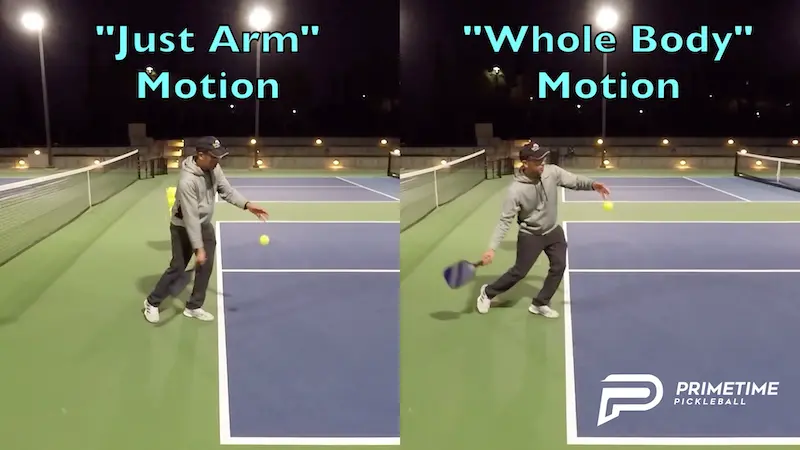
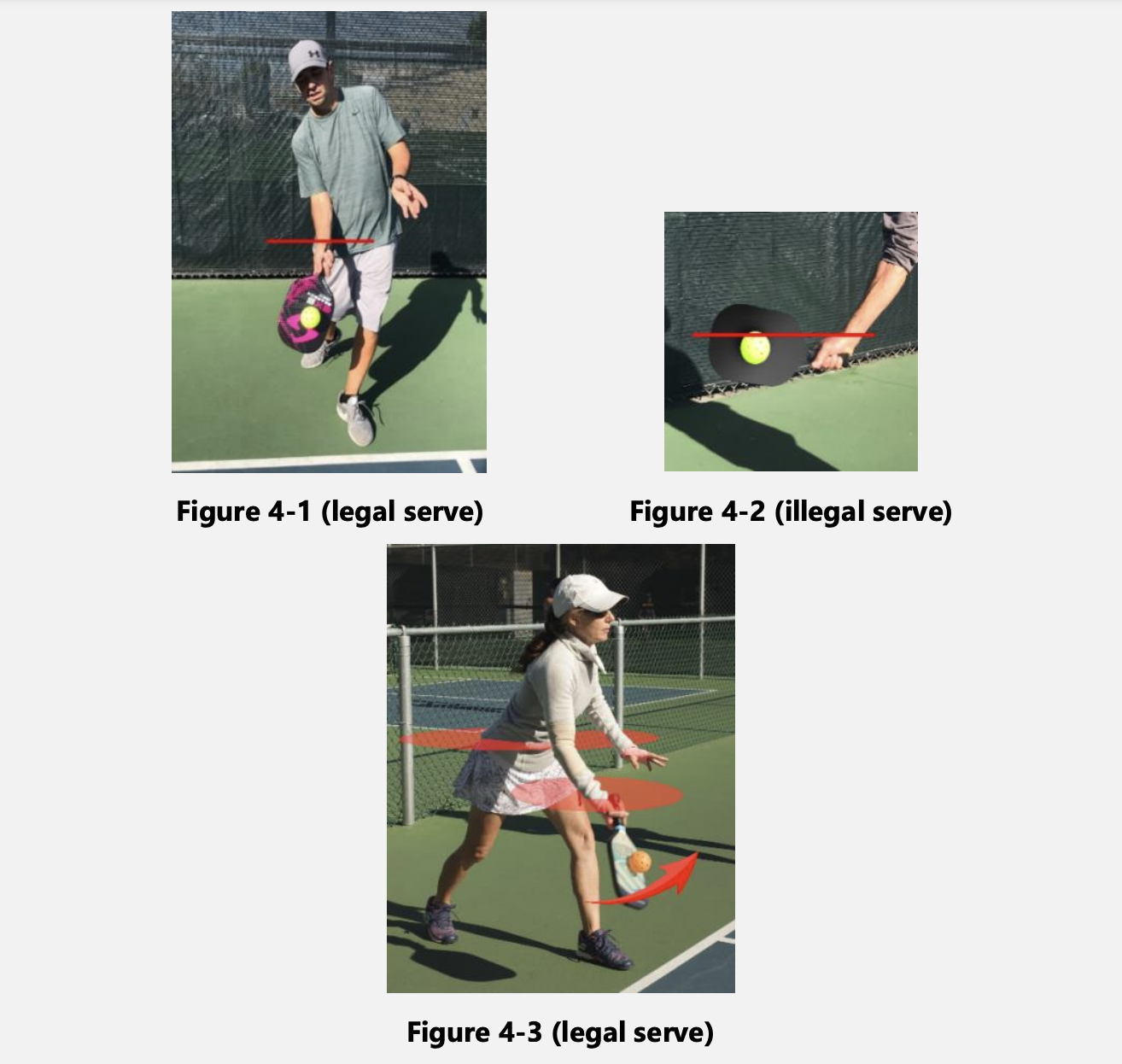
- Underhand only. Your paddle head must be below your wrist at contact.
- Contact below the waist. Think belly button height or lower.
- Feet behind the baseline. At least one foot must touch the ground. Do not step on or over the line until after contact.
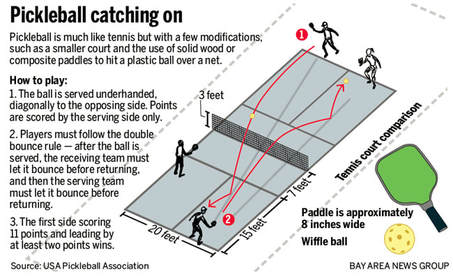
- Serve crosscourt. Land the ball in the diagonal service box, beyond the non-volley zone line.
- The net rule. If your serve clips the net and still lands in, the point plays on.
- One attempt. There is no second try.
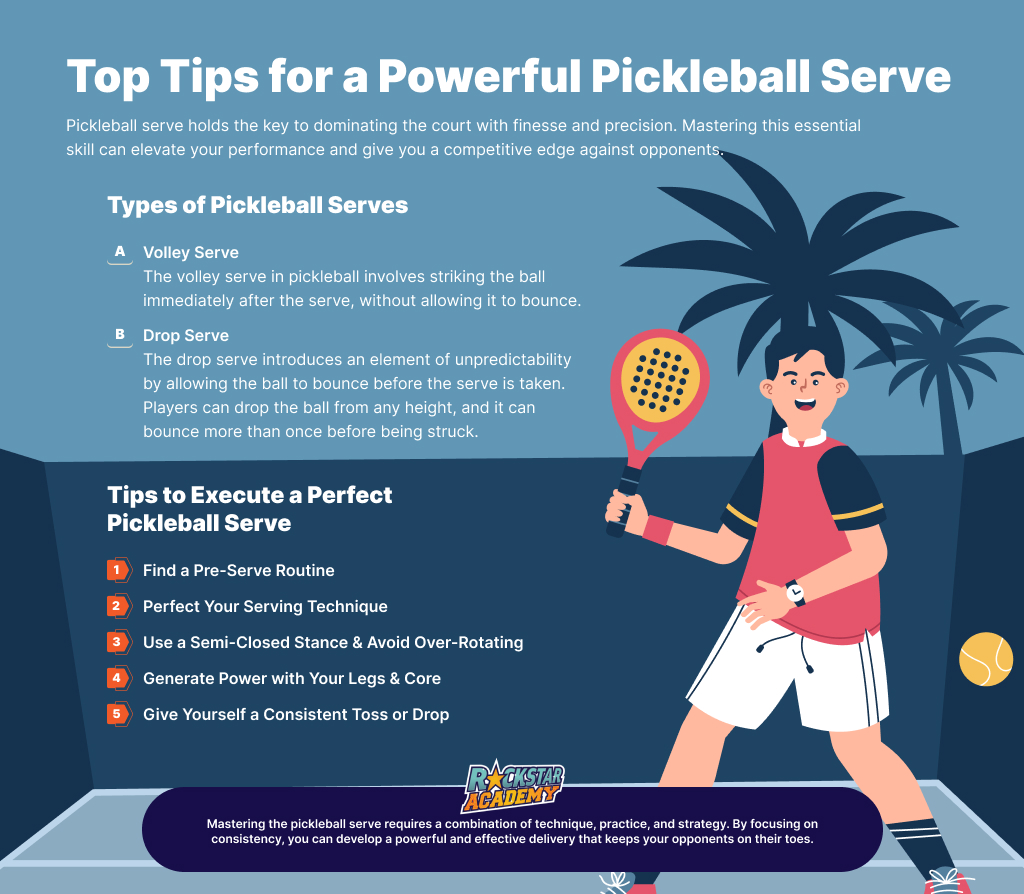
- Two legal methods. The volley serve (hit out of the air) and the drop serve (let the ball drop, then hit after the bounce).
- On the drop serve. Release the ball from your hand without adding spin. Do not propel it upward or downward.
When in doubt, pause and reset your setup. A clean, repeatable routine is the fastest way to learn how to serve a pickleball legally every time.

Grip, stance, and contact point
Great serves start before you swing. Set your base, then let the motion flow.
- Grip. Use a relaxed, neutral grip (like shaking hands). Keep your wrist loose.
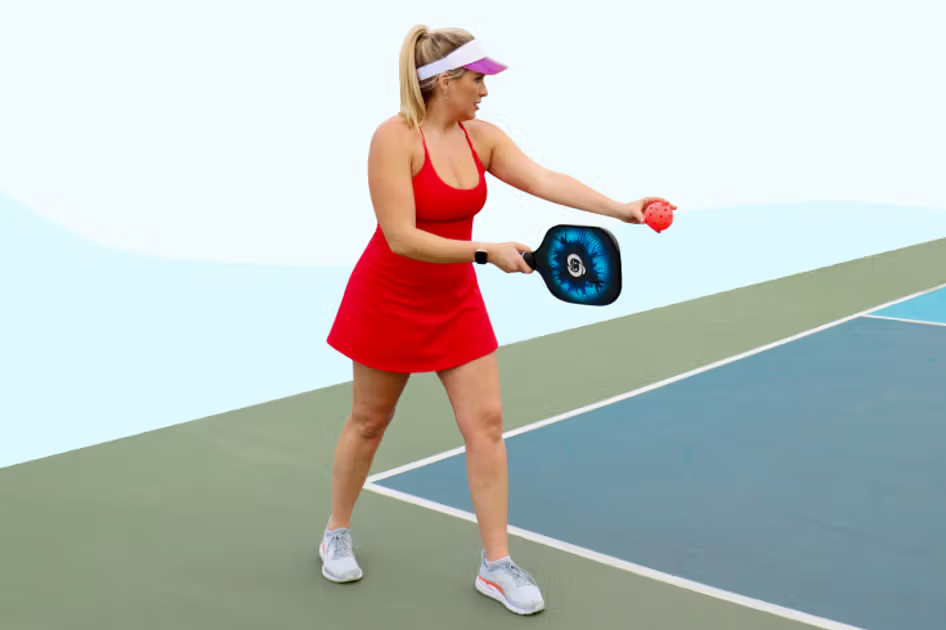
- Stance. Stand sideways to the net. Front shoulder points to the target. Keep your feet light and balanced.
- Ball position. Hold the ball in front of your lead thigh. Not too high. Not too far from your body.
- Contact point. Slightly forward of your front hip. Arm swings low to high.
- Finish. Hand and paddle travel toward the target. Hold your pose for a count.
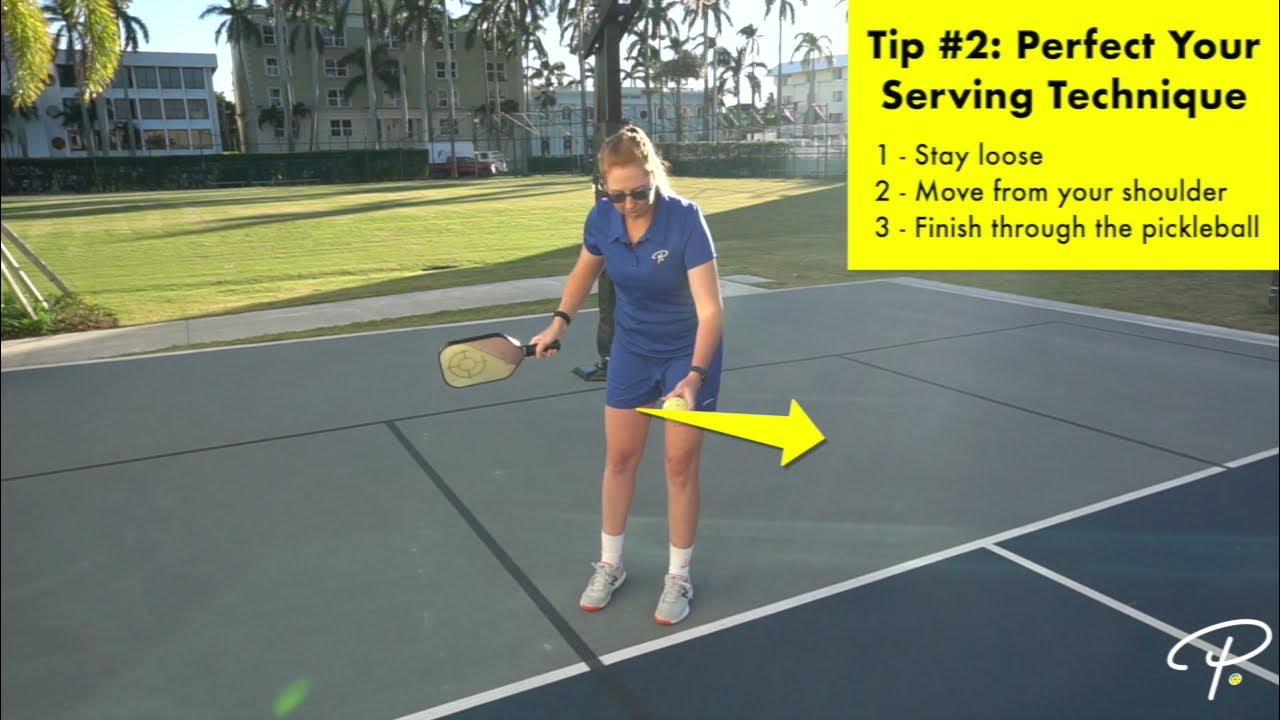
I ask players to imagine they are bowling. That smooth, low-to-high arc helps you learn how to serve a pickleball with height, depth, and a soft net clearance.

Step-by-step: how to serve a pickleball consistently
Follow this short sequence. Do not rush. Build a rhythm you can trust on game day.
- Aim small. Pick a target at the back third of the service box.
- Breathe out. Relax your shoulders.
- Drop or toss for a volley serve. Keep it simple and still.
- Swing underhand. Brush from low to high. Contact below your waist.
- Hold your finish. Freeze your chest and paddle toward the target.
- Watch the ball land. Then get ready for the return.
Two simple cues help most players learn how to serve a pickleball under pressure: slow backswing, longer follow-through. Those reduce spray and add depth.
Types of serves and when to use them
You do not need a dozen serves. You need two or three you can trust. Mix them by depth, speed, and spin.
- Deep, safe serve. High arc to the back third. Best default choice. Keeps returners back and buys you time.
- Power serve. Flatter, faster trajectory. Aim middle to reduce angles. Use when the returner crowds the line.
- Topspin serve. Brush up the back of the ball. It jumps off the bounce and pushes returners deep.
- Slice serve. Brush across the outside of the ball. It skids and drifts away from the paddle sweet spot.
- Short, soft serve. Rare but useful. Drop it at the service line to bait a weak, high return.
- Body serve. Aim at the returner’s chest or hip. It jams their swing.
I rotate between deep safe and body serves to keep rhythm hoppers off balance. This is a simple way to master how to serve a pickleball that creates weaker returns.
Common mistakes and quick fixes
Most serving errors come from the same few habits. Spot them fast. Fix them faster.
- Hitting long. You are swinging flat. Add more arc and a longer follow-through up.
- Hitting into the net. You are decelerating. Start slower, finish bigger.
- Sideways miss. Your head lifts early. Keep your eyes on the contact for one beat longer.
- Foot faults. Place your front foot a shoe length behind the line. Pause before you serve.
- Tight grip. This kills feel. Loosen your fingers to about 4 out of 10 pressure.
If you keep missing, step back to form work. The best path for how to serve a pickleball better is repeatable mechanics, not more power.
Drills and practice plans
You improve what you measure. Use these simple, repeatable drills.
- 50-serve ladder. Hit 10 serves to each target: deep middle, deep backhand, deep forehand, short forehand, short backhand.
- Three-in-a-row. Pick one target. Do not switch until you make three clean in a row.
- Serve and freeze. After contact, hold your finish until the ball lands. Feel your balance.
- Depth markers. Place cones two feet from the baseline. Try to land 70% of serves past the cones.
- Pressure game. Score your serves. Two points for deep, one point for in, zero for a miss. Play to 21.
Weekly plan for how to serve a pickleball with faster gains:
- Two sessions of 15 minutes focused on depth and accuracy.
- One session of 10 minutes on a specialty serve (topspin or slice).
- End each session with five high-focus serves. Pretend it is match point.
Strategy: serving with a purpose
A serve cannot win the rally alone, but it can set the table. Serve to shape the return you want.
- Target the weaker side. Most players slice their backhand return. Serve deep to that corner.
- Aim middle in doubles. It reduces sharp angles and causes return confusion.
- Mix speeds. Change height and tempo, not just direction.
- Read the stance. If a returner stands close, go deep. If they back up, hit a body serve.
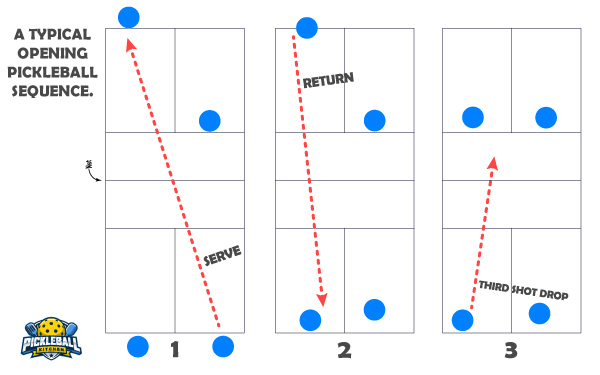
- Plan your next shot. As soon as you swing, think “third shot ready.”
When you think this way, how to serve a pickleball becomes a chess move, not a coin flip.
Equipment and setup tips
Small gear tweaks can pay off big on the service line.
- Paddle. A softer core adds control. A textured face can help you feel spin.
- Grip size. If your grip is too large, you lose wrist speed. If it is too small, you over-squeeze.
- Balls. Warmer balls bounce higher. On hot days, add more arc to keep depth.
- Shoes. Stable shoes help you drive off the ground without sliding.
- Pre-serve routine. Wipe, bounce, breathe. Repeat the same ritual every time.
In my clinics, a lighter grip and a consistent pre-serve breath helped players learn how to serve a pickleball with fewer nerves and more depth.
Mental game: serving under pressure
Your body follows your breath and your eyes. Keep both steady.
- One cue only. Pick a single thought like “finish high.”
- Box breathing. Inhale for four, hold four, exhale four, hold four.
- Narrow your focus. Look at one dimple on the ball at contact.
- Accept misses. Aim small, swing smooth, let go of the outcome.
Confidence grows from reps and routines. The mental side is often the missing piece in how to serve a pickleball when the score feels heavy.
Frequently Asked Questions of how to serve a pickleball
What is the basic rule for how to serve a pickleball?
Use an underhand motion, hit below your waist, and aim crosscourt. Land beyond the non-volley zone line.
Can I add spin with my hand on a drop serve?
No. You must release the ball without adding spin. Then you may hit it after the bounce with any legal underhand motion.
Where should my feet be when I serve?
Both feet must start behind the baseline, with at least one on the ground. Do not touch the baseline or the court until after contact.
Is a serve that hits the net and lands in good?
Yes. The ball is live if it lands in the correct box. Keep playing the point.
What is the fastest way to improve how to serve a pickleball?
Practice a simple routine and track depth. Aim deep middle, breathe out, and hold your finish for consistency.
Should I use a power serve or a deep safe serve?
Use a deep safe serve as your default. Mix in a power or body serve when the returner crowds the line.
Does the drop serve help beginners?
Yes. It slows the timing and lowers the risk. Many players find it easier to learn how to serve a pickleball with a drop serve first.
Conclusion
Serving well is a skill, not a guess. Build a clean routine, hit with a smooth underhand path, and place the ball deep with purpose. When you master how to serve a pickleball this way, you control the pace, create weaker returns, and set up your best third shot.
Put today’s tips into action in your next practice. Track your makes, aim deep, and add one specialty serve. Want more like this? Subscribe for weekly drills, ask a question in the comments, or share your own serve routine so others can learn from you.