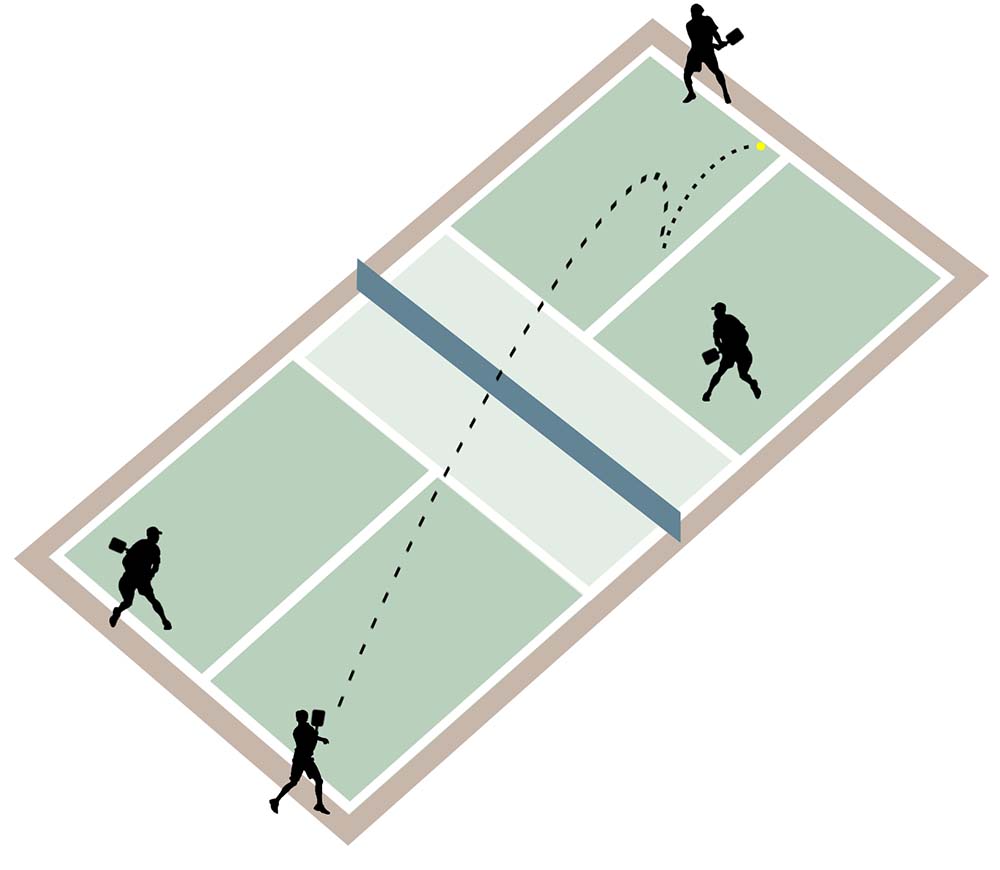
Use an underhand motion, strike below your waist, and aim deep crosscourt.
If you want a clear, step-by-step guide on how to serve in pickleball, you are in the right place. I coach new and advanced players and have taught hundreds of serves. I will show you how to serve in pickleball with simple rules, proven steps, and tips I use on court.
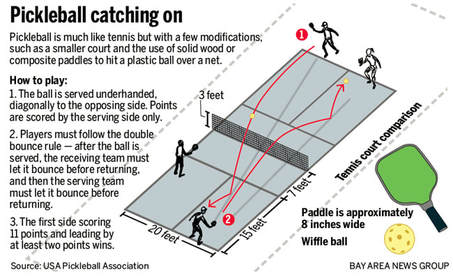
The serve rules that matter
A legal serve starts the point, so it must be clean. Here is what the rulebook expects and why it matters.
- Serve to the diagonal service box. This keeps play fair and the pattern clear.
- Hit the ball with an underhand motion. This keeps the serve from being a big power shot.
- Contact must be below your waist. The waist is your navel line, not your belt.
- For a volley serve, the paddle must move up at contact. The paddle head must be below your wrist.
- At least one foot must be behind the baseline. Do not touch the line at contact.
- The ball must clear the non-volley zone and its line. If it hits the kitchen line, it is a fault.
- Lines are in for the service box. Baseline, centerline, and sideline count.
- Let serves are played. If the ball grazes the net and lands in, keep playing.
- Announce the score before you serve. This sets timing and avoids confusion.
Before you practice how to serve in pickleball, commit these rules to memory. They keep you legal and help you build a reliable motion.

Grip and stance that set up a clean serve
Your setup makes the serve repeatable. Think simple, stable, and smooth.
- Grip: Use a continental grip. Hold it like a handshake. It makes control and height easy.
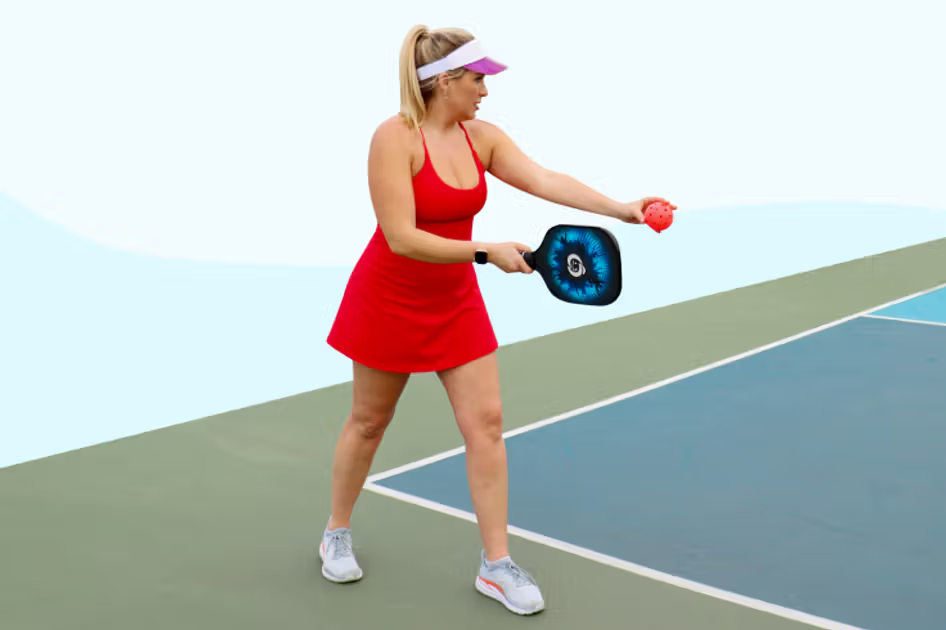
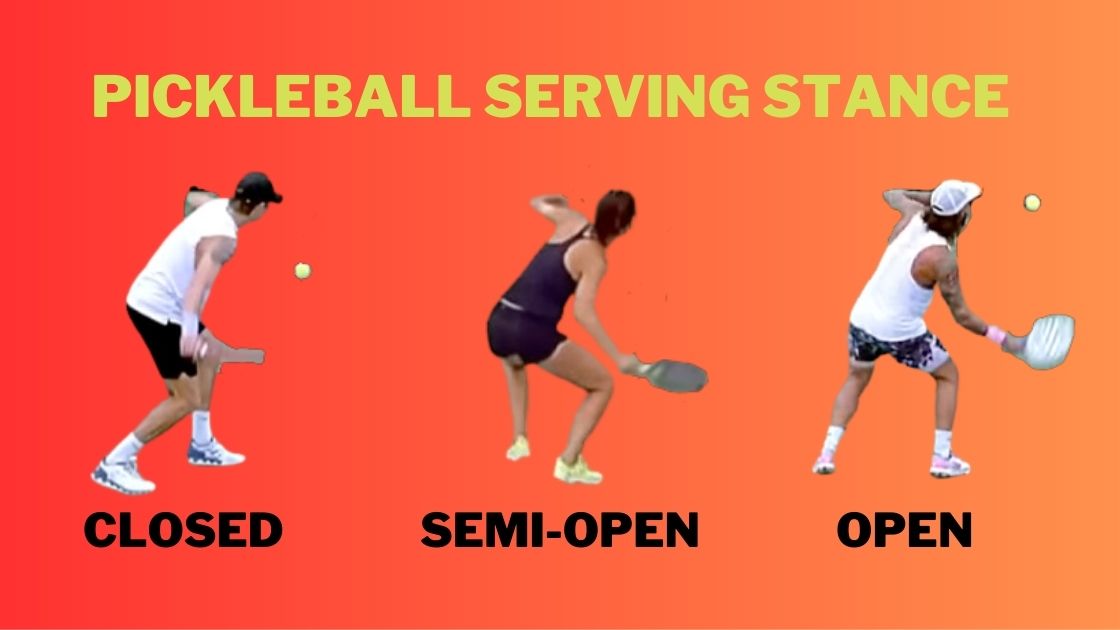
- Stance: Stand sideways to the net. Place your front shoulder toward the target.
- Feet: Keep at least one foot behind the baseline. Line up with the center stripe for accuracy.
- Ball position: Hold the ball out in front of your lead thigh. Relax your shoulders and jaw.
The base of how to serve in pickleball is a steady stance and a soft grip. Tension kills feel. Loose is fast.
Personal tip: I tell students to wiggle their fingers before the toss. It melts tension right away.
Drop serve vs volley serve
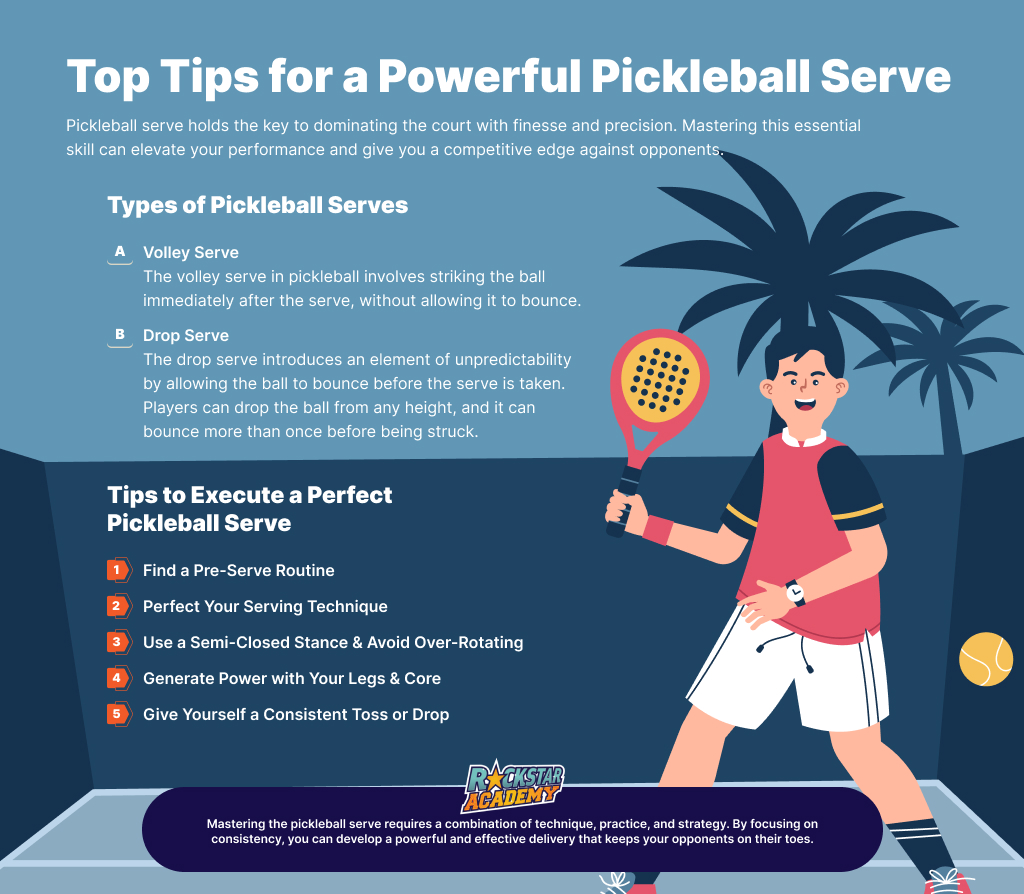
There are two legal ways to start the serve. Each has pros and cons. If you are learning how to serve in pickleball, pick one and master it first.
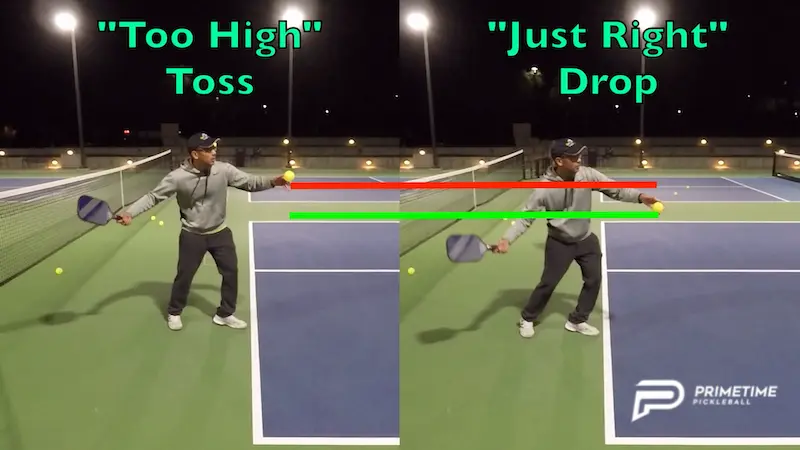
- Volley serve: You release the ball and hit it out of the air. You must use an underhand motion, hit below your waist, and keep the paddle head below your wrist. You may not add spin to the ball with your hand as you release it.
- Drop serve: You drop the ball and let it bounce, then hit it. You can drop from any height. Do not push it down. The upward arc and below-waist rules do not apply after the bounce. You may add spin on the drop.
I switched a few students to the drop serve in wind. Their contact got cleaner fast. Try both, then choose the one that gives you calm contact.
Always check the latest rulebook before events. Rules can get updates.
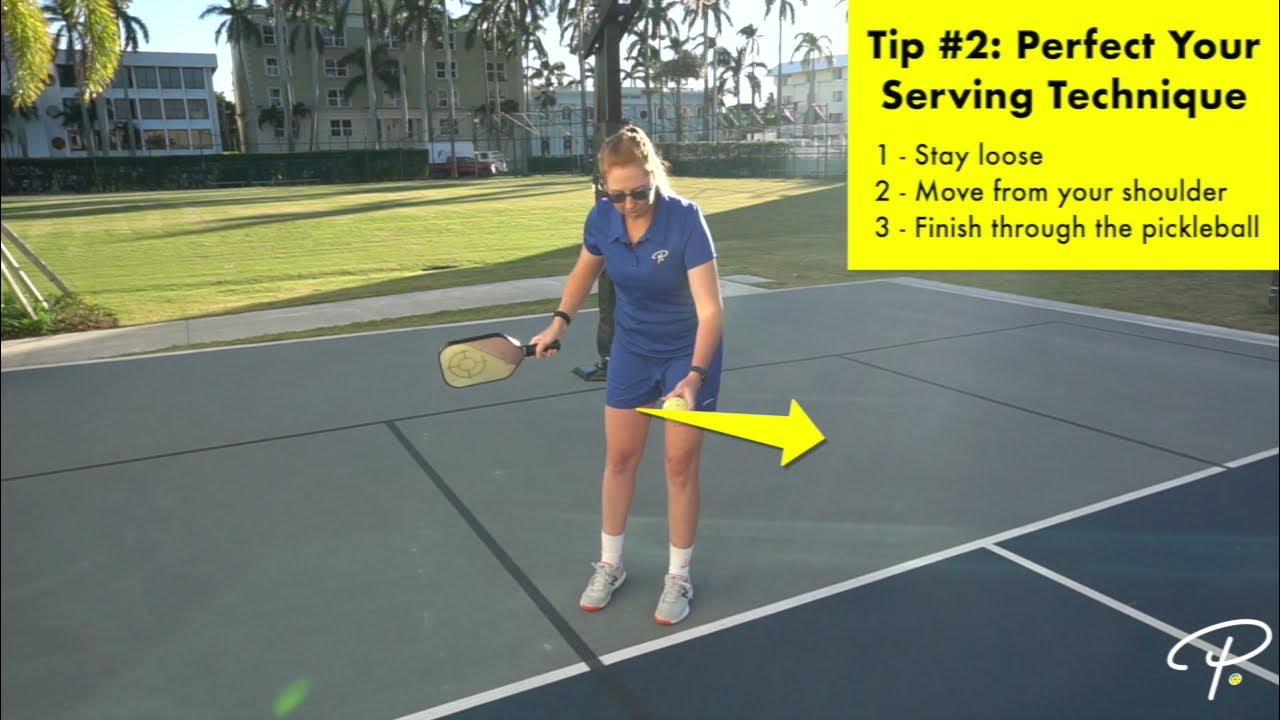
Step-by-step: how to serve in pickleball
Use this simple sequence. It works for beginners and for match play.
- Call the score. Pause one second to set your timing.
- Aim your chest at a deep corner in the opposite box.
- Relax your arm and shoulders. Keep your wrist soft.
- Release or drop the ball. Keep your eyes on the contact point.
- Swing from low to high with a smooth, light arc.
- Contact in front of your body. Keep the face slightly closed for depth.
- Finish forward. Hold your pose for a beat to lock in form.
- Step into the court only after contact. Prepare for the return.
This is how to serve in pickleball with control and repeat power. Do not rush the release. Smooth beats hard.
Coaching note: I teach a “one, two” rhythm. One is release. Two is hit. That simple count keeps the arm in sync.

Common serving faults and how to fix them
When people ask how to serve in pickleball without faults, it often comes down to a few simple fixes.
- Ball lands short in the kitchen. Aim higher. Close the face a touch and swing through more.
- Long serves. Aim lower on the net strap. Soften the grip pressure to a 3 out of 10.
- Foot faults. Paint a small dot one shoe length behind the baseline. Start from there.
- Sideways shanks. Freeze your head at contact. Keep eyes on the back of the ball.
- High contact point. Drop your knees and bend at the hips. Think “paddle under the ball.”
- Rush and mis-hits. Breathe and count “one, two.” Hold your finish for one second.
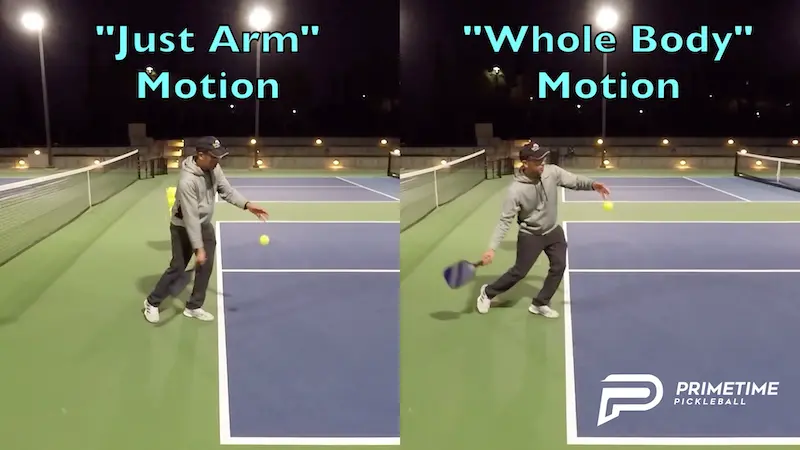
A mistake I made early was swinging with my arm only. Once I let my shoulder and body join, my serve got steady and deep.
Spin, power, and placement
A big part of how to serve in pickleball is where the ball lands. Depth and spin set up weak returns.
- Depth first. Aim three feet inside the baseline. Deep serves push the returner back.
- Pace second. Add only the power you can control. Miss deep by a foot, not short by two.
- Spin last. Use slight topspin for safety, or a gentle sidespin to the corner. Too much spin kills depth.
Targets to try:
- Righty to righty: Slice serve to the backhand corner.
- Righty to lefty: Topspin body serve to jam the paddle hip.
- Windy days: Aim at the big part of the box. Add net clearance, not force.
If you can hit three serves on command, you will win more points. Keep them simple and repeatable.
Drills to improve your serve
To master how to serve in pickleball, repeat these short, focused drills. Ten minutes a day works wonders.
- 20-ball depth ladder. Serve five to each back corner, then five to each body target.
- Net strap drill. Aim to clear the net by the height of one ball. This builds safe arcs.
- Box-out challenge. Place two cones one foot from each sideline. Land five serves between them.
- Bounce-check drill. Listen for a deep thud near the baseline. Sound confirms depth when vision lies.
- Pressure set. Make 10 in a row. If you miss, reset to zero. This trains nerves.
I used the pressure set with a junior team. Misses dropped by half in one week.
Serving strategy by skill level
Knowing how to serve in pickleball under pressure is about smart choices, not heat.
- Aim deep middle to cut angles.
- Use one reliable motion every time.
- Do not chase aces. Make them hit a tough return.
Intermediate
- Add a body serve to jam the return.
- Mix drop serve and volley serve based on wind.
- Change tempo. Quick release, then slow release to disrupt rhythm.
Advanced
- Scout the returner’s weaker wing.
- Serve patterns: deep corner, deep body, short angle. Repeat the one that draws pop-ups.
- Late in games, aim big parts of the box. No free points on faults.
Singles tip: Serve deep to a corner, then cover the open space. Doubles tip: Serve deep middle to set your partner for a poach.
Equipment and conditions that affect your serve
Gear and weather change how to serve in pickleball feels. Adjust, do not fight it.
- Paddle. A softer core adds control and touch. A stiffer face adds pop but can fly long.
- Ball. Outdoor balls are faster and fly in wind. Indoor balls are softer and slower.
- Strings and edge guard are not factors here, but grit level matters for spin.
- Weather. Into the wind, hit higher with more swing. With the wind, lower your net clearance.
I swap to a softer, more control-heavy paddle on very hot days. The ball jumps more in heat, so touch wins.
Scoring, rotation, and timing that impact the serve
Understanding this flow supports how to serve in pickleball with confidence.
- Start of game. Only one player on the first serving team serves before a side out.
- After that, in doubles, both partners serve before the other team gets the ball.
- Always call server score, receiver score, then server number. Example: 6-4-2.
- Serve from the right when your score is even. Serve from the left when it is odd.
Score cadence helps timing. Say the score, breathe, and go. That rhythm keeps nerves low.
Frequently Asked Questions of how to serve in pickleball
What is the best way to learn how to serve in pickleball?
Start with the drop serve to build clean contact. Add the volley serve once you can land 8 out of 10 deep.
How high can my contact be on a legal serve?
For a volley serve, contact must be below your waist, and the paddle head below your wrist. On a drop serve, those limits do not apply after the bounce.
Where should I aim my serve most of the time?
Aim deep and toward the middle to cut angles. Mix in body serves and corner serves to keep them honest.
Can I add spin when I release the ball?
For a volley serve, do not add spin with your hand at release. For a drop serve, you may add spin as you drop, but do not propel the ball down.
Why do my serves go long under pressure?
Grip gets tight and the face opens. Loosen your hand, aim at the net strap, and hold a slow finish.
How often should I practice serving?
Ten minutes, three to five days a week, is enough to improve. Track makes and misses so you see progress.
Conclusion
You now have a simple, proven plan for a legal, deep, and confident serve. Keep the setup calm, choose the serve type that fits you, and use depth and placement to control points. Practice a few smart drills, and how to serve in pickleball will stop being a question and start being your edge.
Go hit 50 serves today. Track your depth. Then try one small change from this guide. Want more tips like this? Subscribe, share this with a pickleball friend, or drop a question in the comments.