
Use an underhand swing, contact below your waist, and serve diagonally deep.
Want to know how to serve pickleball with control and power you can trust? I’ve taught hundreds of players across parks and leagues, and I’ll walk you through what actually works. This friendly, step-by-step guide on how to serve pickleball covers rules, setup, technique, targets, and drills, so you build a serve that holds up under pressure.
The serve rules that matter
A good serve starts with a legal one. Here are the key rules you must know before you work on how to serve pickleball.
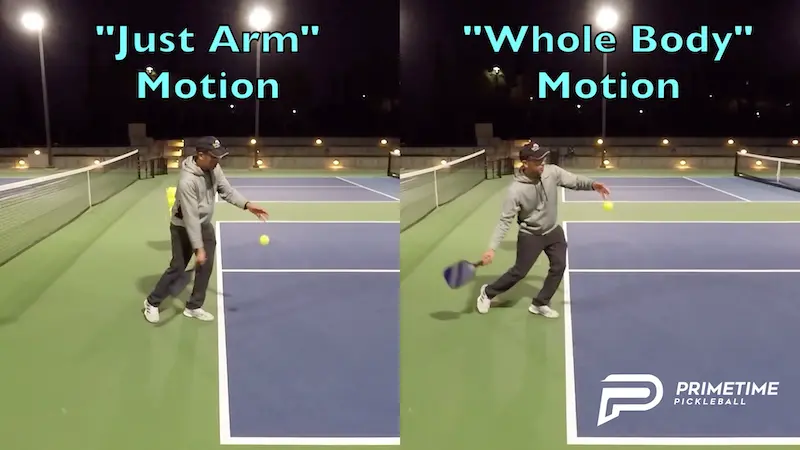
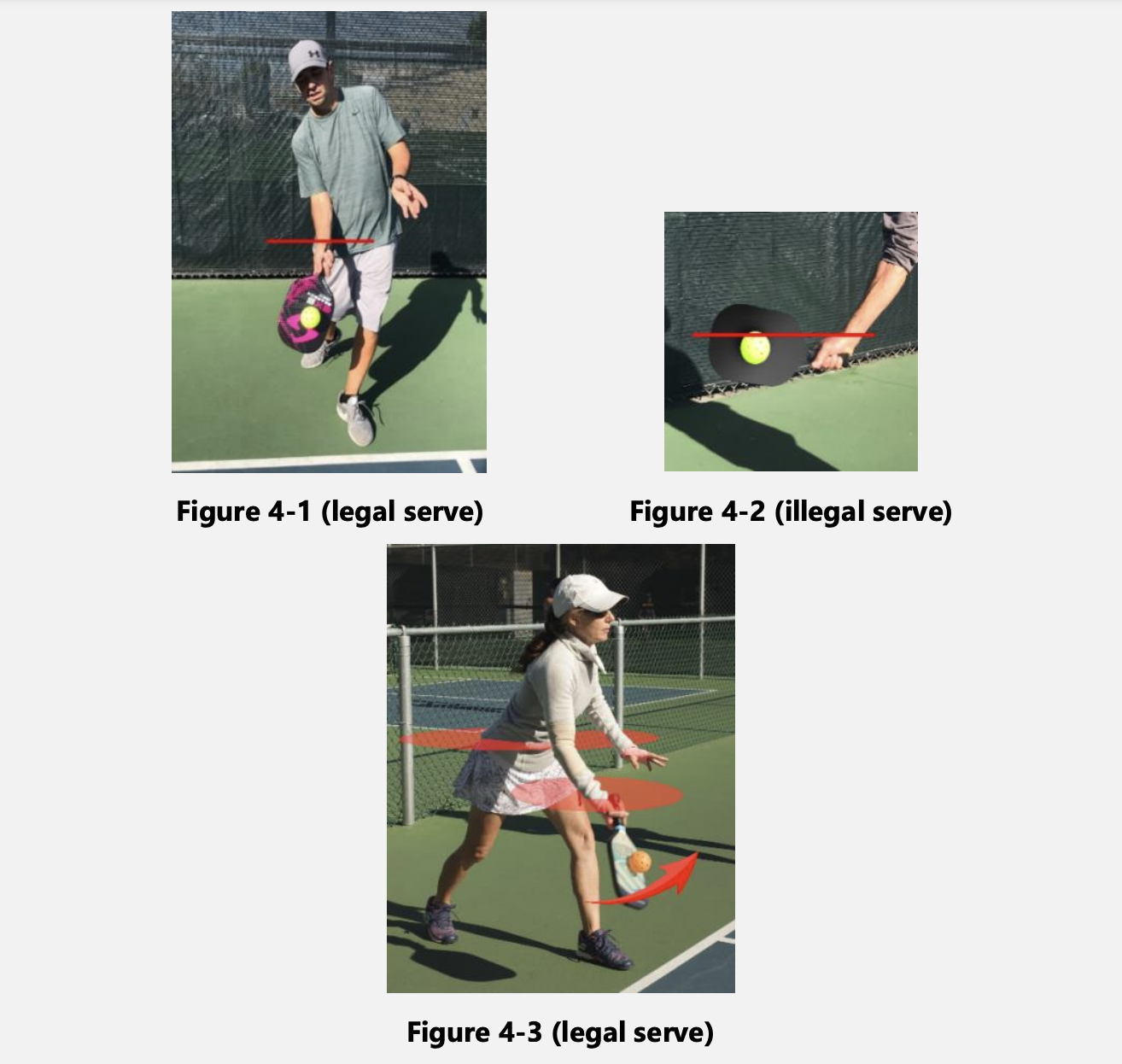
- Hit with an underhand motion. Your arm moves upward at contact.
- Contact must be below your waistline. Think navel height or lower.
- At contact, the paddle head must be below your wrist.
- Serve from behind the baseline. No foot can touch the line or the court until after you hit.
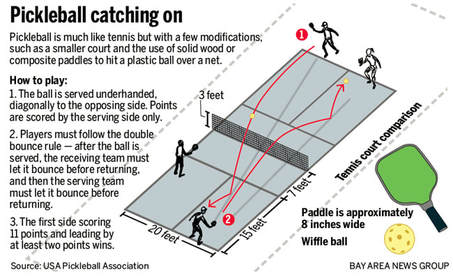
- Serve diagonally to the opposite service box. It must clear the non-volley zone (kitchen). If the serve hits the kitchen line, it is a fault.
- Lines are in, except the kitchen line on the serve. Baseline, sidelines, and centerline count as in.
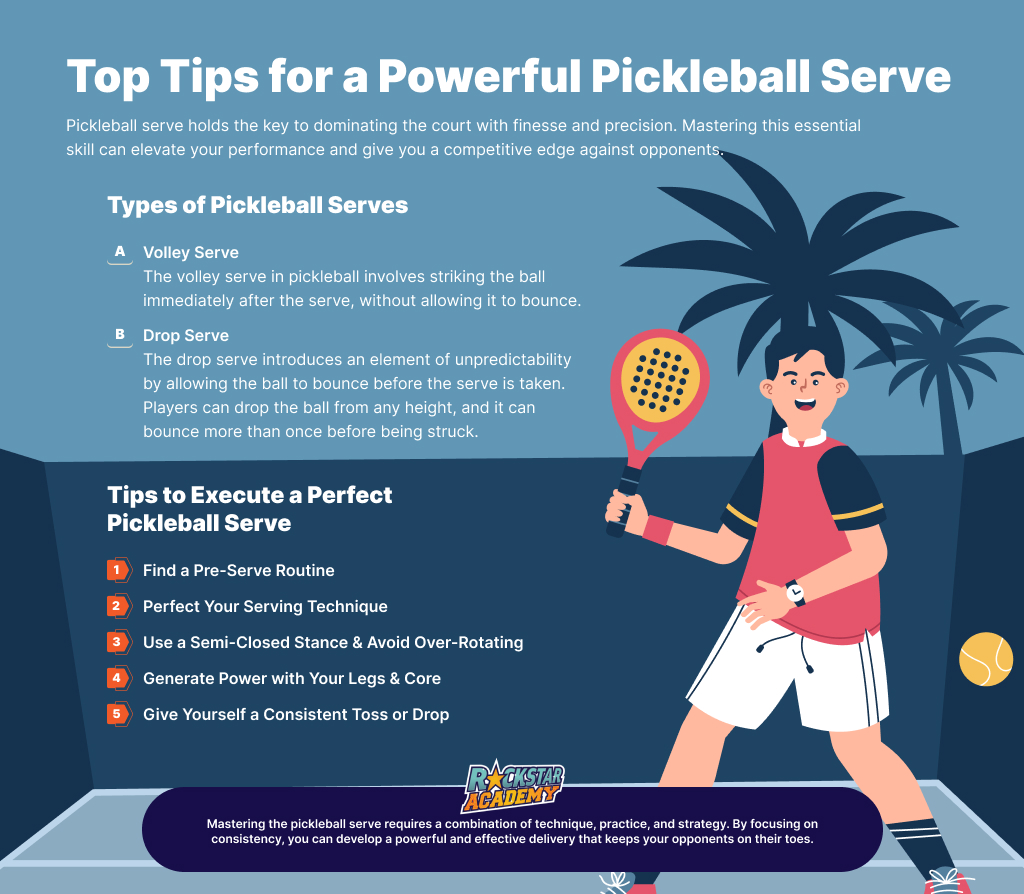
- You have two legal serve styles: volley serve (hit out of the air) and drop serve (let it bounce, then hit).
- No let serves. If your serve clips the net and lands in the correct box, play on.
- Call the full score before you start your motion.
- Two-bounce rule still applies after the serve. The return must bounce, and your next shot must also bounce.
Rule books update each year. If you play tournaments, check the latest published rules and your event’s notes.

Grip, stance, and setup
If you want to learn how to serve pickleball fast, start with a simple, repeatable setup.
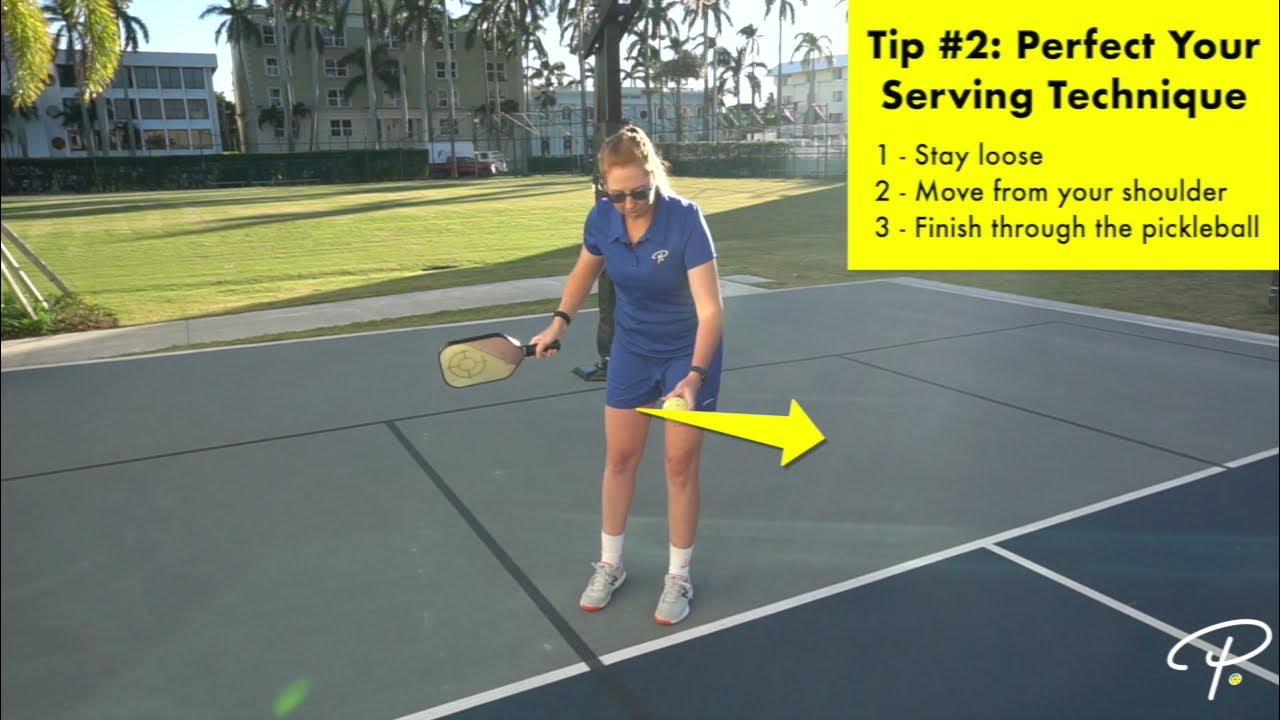
- Grip: Use a relaxed continental or mild eastern grip. It feels like holding a hammer. Light grip pressure helps you swing smooth.
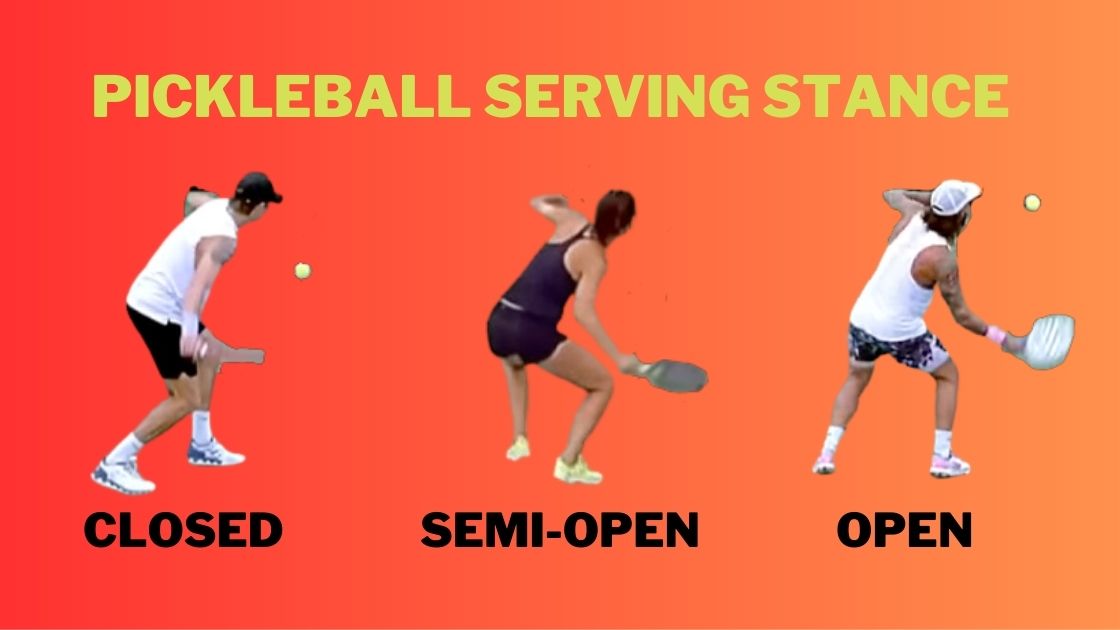
- Stance: Place your front foot about shoulder width in front of the back foot. Square your shoulders to the target. Keep knees soft.
- Contact: Meet the ball in front of your body with a gently rising swing. Think “brush up and through.”
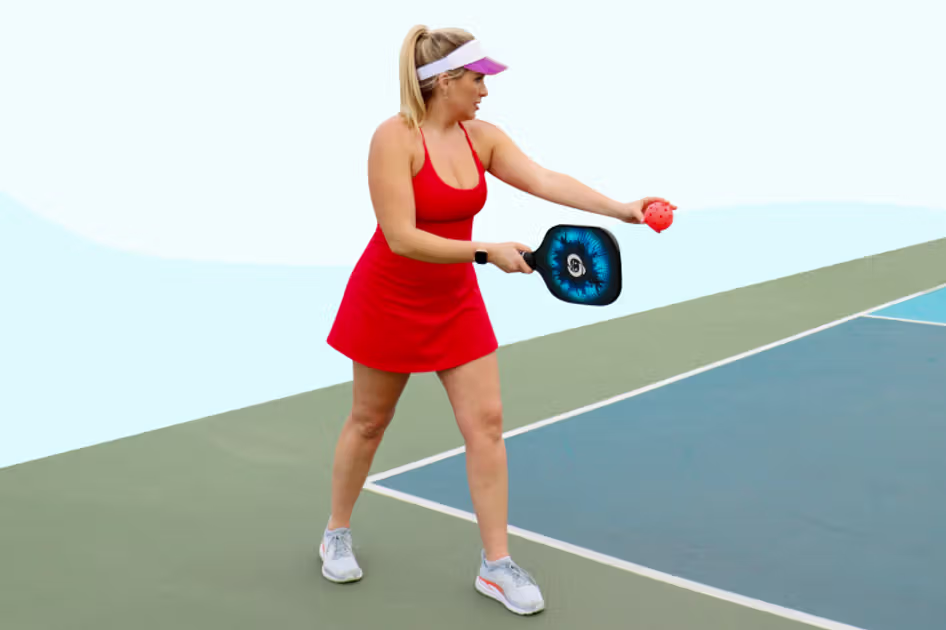
- Ball release for a volley serve: Hold the ball at chest level, let it fall from your fingers, then swing. No toss or spin tricks.
- Ball drop for a drop serve: Let the ball fall from any natural height without pushing it down. Hit it after the bounce.
A calm setup beats a fancy one. I teach players to breathe out as they swing. It keeps the arm loose and the timing smooth.

The basic underhand serve step by step
Here is a simple plan you can use today to master how to serve pickleball.
- Stand behind the baseline with a target in mind.
- Set your grip and stance. Keep your shoulders level and relaxed.
- Call the score so both sides hear it.
- Release or drop the ball. Keep your eyes on the lower half of the ball.
- Swing from low to high with a steady follow-through toward your target.
- Hold your finish. Check that your feet stayed behind the line at contact.
- Watch where the returner stands. Plan your next serve based on their move.
Small tip from coaching: count “one-and” in your head. “One” is your release. “And” is your hit. It locks your rhythm.
Legal vs. illegal serves
To keep how to serve pickleball legal every time, run this quick check.
Legal traits
- Underhand upward motion at contact.
- Contact below waist and paddle head below wrist.
- Both feet behind the baseline at contact.
- Ball lands in the diagonal box, past the kitchen line.
Common illegal faults
- Overhand or sidearm hit with a level or downward path.
- Contact above the waist or paddle above the wrist.
- Foot on or over the baseline at contact.
- Serve landing short in the kitchen or on the kitchen line.
If you are unsure, record a few serves from the side. Slow-motion video makes the contact point and paddle path easy to see.
Serve types and when to use them
Once you know how to serve pickleball the right way, add styles that fit the moment.
- Flat deep serve: Your default. Aim near the baseline to push the returner back. Great for both doubles and singles.
- Lift topspin serve: Brush up the back of the ball. It jumps after the bounce. Use it to rush a weaker backhand.
- Slice serve: Brush the outside of the ball. It curves in the air and skids wide. Aim to pull a righty off the court from the right side.
- Body serve: Aim at the returner’s chest or hip. It jams their swing and draws a short return.
- Lob serve: High arc, deep bounce. Use in wind or to disrupt rhythm, but mix it in sparingly.
Match your serve to your plan. If you want a third-shot drop, a deep body serve sets up a short, central return you can attack.
Strategy: where and why to aim
Good servers learn how to serve pickleball to spots, not just into the box.
- Deep middle: Creates doubt in doubles. Many teams argue the middle ball.
- Backhand corner: Most players defend worse on that side. Test it early.
- Wide angle: Pulls them off court and opens space for your next ball.
- Change height and pace: Mix a flat drive with a higher, slower arc to break timing.
- Scout stance: If the returner stands far back, go short and deep mix. If they hug the baseline, pin them deep.
Build simple patterns. For example, two serves to the backhand, then one to the body. Repeat until they adjust.
Common mistakes and easy fixes
When learning how to serve pickleball, most errors come from the same few habits.
- Fault: Contact is too high. Fix: Bend your knees more and lower your contact point.
- Fault: Short serves. Fix: Aim one paddle length above the net and swing through the ball.
- Fault: Foot faults. Fix: Set your front toe one shoe length behind the line before you start.
- Fault: Wristy flick. Fix: Use a smooth forearm and shoulder swing. Keep the wrist relaxed, not snap-heavy.
- Fault: Nerves in big points. Fix: Use a five-second routine. Breathe, set, look, release, swing.
I ask students to hit 10 in a row to the same deep target before we add speed. Consistency first, pace later.
Drills to master the serve
These simple drills make how to serve pickleball stick fast.
- Deep box challenge: Place two cones one foot inside the baseline. Hit 50 serves that land between the cones and the line.
- Ladder targets: Put three targets left, middle, and right. Serve five to each. Repeat for three rounds.
- Pressure 10: You must make 10 deep serves in a row. If you miss, start again. Builds focus for match points.
- Video check: Record from the side for 10 serves. Confirm contact below waist and upward path.
- Wind practice: On breezy days, aim higher into the wind and lower with the wind. Note how far the ball drifts.
Track your make rate on a notepad. Gamifying your practice turns boring reps into progress you can see.
Gear and conditions that help
The right setup makes how to serve pickleball more reliable.
- Paddle: A balanced, midweight paddle gives control and enough pop. A grip that fits your hand reduces tension.
- Ball choice: Outdoor balls are firmer and faster. Indoor balls are softer and slow a touch. Adjust your swing length.
- Shoes: Good court shoes keep your base stable. A stable base makes a clean swing easier.
- Sun and wind: Serve with the sun at your back when you can. In wind, aim deeper and lower your net clearance on downwind serves.
Write a short note in your bag with two cues you trust. Mine: “Loose hand. Upward finish.”
A 14-day plan to learn how to serve pickleball
Follow this plan to lock in how to serve pickleball in two weeks.
Days 1–3: Build form
- 100 slow-motion serves per day, no targets. Film 20. Focus on contact below waist and smooth follow-through.
Days 4–6: Add direction
- 60 deep serves to the middle, 40 to the backhand. Track makes and misses.
Day 7: Review and rest
- Light session. Watch video. Note one fix and one strength.
Days 8–10: Add pace and shape
- 30 flat deep, 30 slice wide, 30 body, 10 lobs. Keep your make rate over 80%.
Days 11–13: Pressure sets
- Pressure 10 drill twice. Then play serve-only points with a partner. First to 15.
Day 14: Test day
- One take. Serve 50 balls. Log your make rate and where they land. Set next month’s target.
Frequently Asked Questions of how to serve pickleball
What are the basic rules for a legal serve?
Use an underhand swing, hit below your waist, and serve diagonally. Keep both feet behind the baseline at contact, and clear the kitchen.
Can I serve overhand in pickleball?
No. Overhand serves are illegal. The serve must use an upward underhand motion.
Is the drop serve easier for beginners?
Often yes. The bounce slows the ball and gives you more time to swing. It also helps with timing on windy days.
Where should I aim my serve in doubles?
Start with deep middle to cause confusion. Then test the backhand corner and a firm body serve to jam returns.
Do I get a second serve if I miss?
No. You get one serve attempt per point. If you fault, the serve moves per the standard rotation.
What is the best grip for serving?
A relaxed continental grip works for most players. It adds control, easy spin, and smooth contact.
Conclusion
Now you know how to serve pickleball with a simple form, smart targets, and drills that build real skill. Keep your setup calm, swing up through the ball, and aim deep to start the rally on your terms. Practice with purpose for two weeks and your serve will feel automatic. Ready to level up? Try the 14-day plan, track your makes, and share your progress or questions in the comments.