
Plan smart, validate demand, secure courts, market community, and diversify revenue streams.
If you want to learn how to start a pickleball business, you’re in the right place. I’ve planned, launched, and advised sports facilities, and I know the pitfalls. This step-by-step guide blends real numbers, field-tested tips, and clear checklists. Read on to build a simple plan you can act on today.

The pickleball opportunity and winning business models
Pickleball is in a boom. Courts are full. Wait lists are long. Many cities lack indoor options in winter. That creates a gap you can fill with a clear plan and a smart launch.
Here are models that work well:
- Indoor facility Convert a warehouse or gym into a year-round site. Charge for court time and programs.
- Outdoor complex Lease or partner with parks or schools. Add leagues, events, and sponsorships.
- Mobile clinics and events Run pop-up lessons, corporate team days, and school programs.
- Management contract Operate courts for a city, HOA, or college for a fee.
- Pro shop and services Sell paddles, stringing, grips, and demo gear.
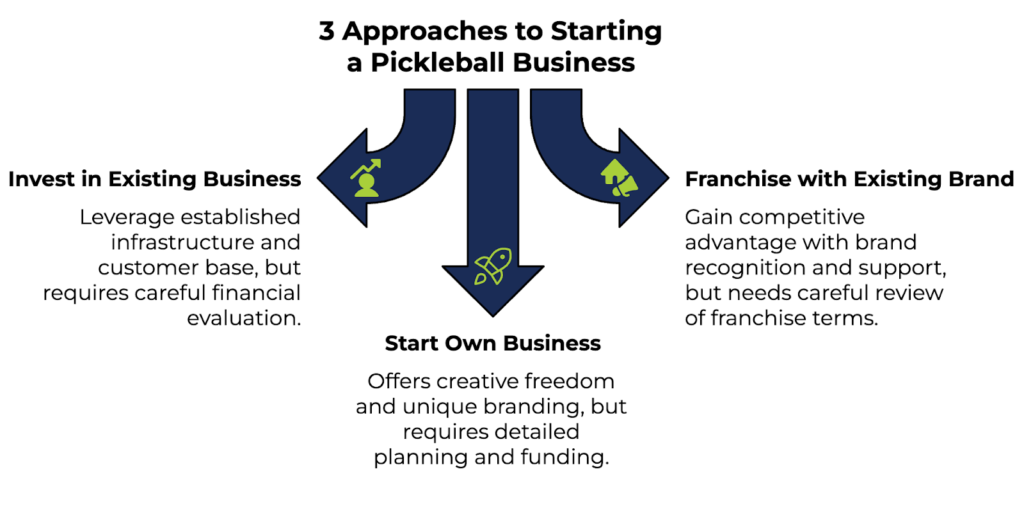
- Franchise Join a growing brand for playbook, tech, and buying power.
Quick pros and cons:
- Indoor facility Higher rent and buildout, but steady demand and higher spend per visit.
- Outdoor complex Lower rent, weather risk, strong summer cash flow.
- Mobile clinics Low startup cost, but less recurring revenue.
- Franchise Faster start, ongoing fees.
The key is fit. Choose the model that matches your budget, skills, and your local demand.

Step-by-step plan: how to start a pickleball business
This is the simple path I use with clients. You can copy it and adapt it.
Step 1: Validate demand fast
- Count courts within a 15–20 minute drive. Note if they are full during peak hours.
- Visit at peak times. Talk to players. Ask what they wish existed.
- Post a Google Form interest list. Offer a free intro clinic. Track responses.
- Call HR leaders at three local firms. Pitch lunchtime leagues. Ask for interest and budgets.
Tip from the field: I will not sign a lease until 500 people join an interest list. That list fills your launch.
Step 2: Pick your model and niche
- Decide if you want indoor, outdoor, hybrid, or mobile.
- Choose a clear niche. Family-friendly club, serious training, or social leagues.
- Define your core customer. Busy adults, seniors, or juniors.
If your goal is quick cash flow, mobile clinics scale fast. If your goal is long-term equity, an indoor site can pay off.
Step 3: Build a lean business plan and numbers
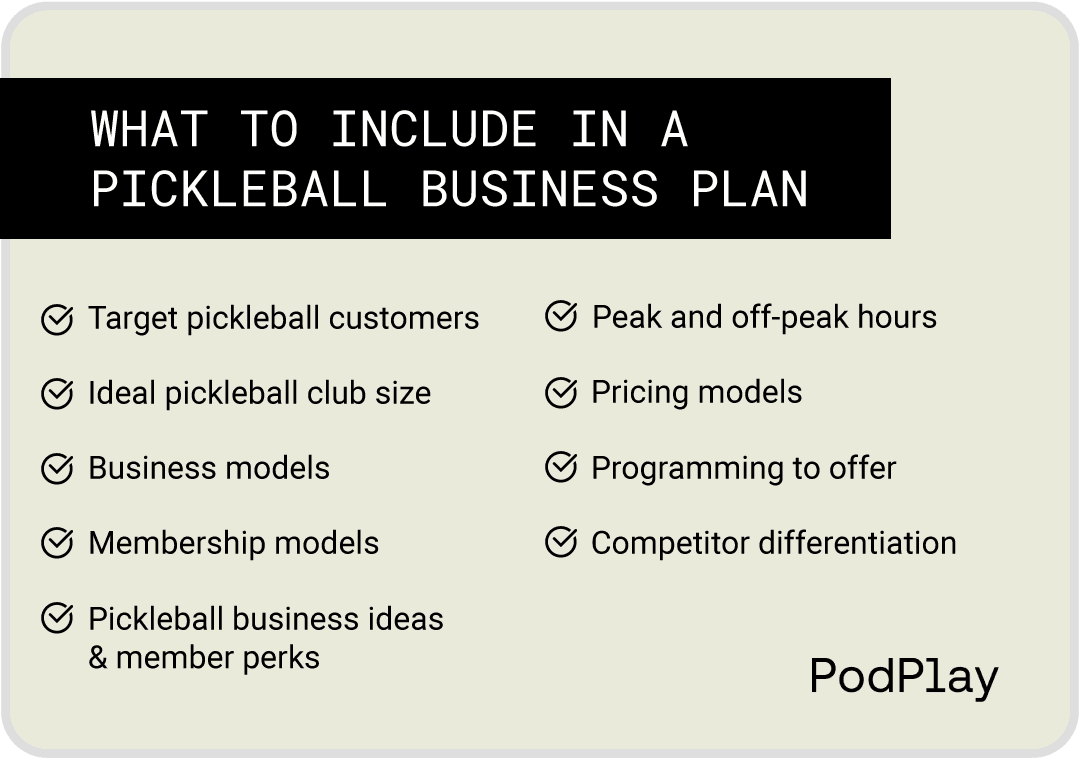
- One-page plan Problem, solution, audience, pricing, and marketing.
- Budget Startup costs, monthly rent, payroll, utilities, insurance, and software.
- Revenue streams Court fees, memberships, lessons, clinics, leagues, tournaments, and retail.
- Break-even math Daily court hours needed to cover costs.
Simple math example:
- Four courts, 12 hours per day, 60 percent utilization, 2 players per hour, at 12 dollars per player.
- That is about 691 dollars per day gross. Add lessons and leagues to lift revenue.
Step 4: Create your brand and pre-sell
- Pick a name you can say and spell fast. Check the domain and social handles.
- Build a one-page website. Add booking waitlist and email capture.
- Pre-sell founder memberships with perks. Cap the number to create urgency.
- Post short, real videos on social. Show faces, drills, and progress.
Use the phrase how to start a pickleball business in your early content. It helps search and trust.
Step 5: Lock down legal and insurance
- Entity and tax setup LLC or corporation. Get an EIN.
- License and permits City business license and seller’s permit if you retail.
- Insurance General liability, participant accident, workers’ comp, and property. Ask about abuse and molestation coverage if you coach kids.
- Waivers and policies Use clear waivers, codes of conduct, and refund rules.
In sports, risk is real. I treat safety as a product feature, not a cost.
Step 6: Secure location and zoning
- Search for 18–28 foot clear height for indoor. Long, clean spans are best.
- Check zoning for indoor recreation. Get it in writing from the city.
- Ask for tenant improvement help. Many landlords help with buildout if you sign longer terms.
- Confirm parking counts, ADA access, and restrooms.
Bring chalk tape and measure court layouts on site. It saves costly design edits later.
Step 7: Design courts and flow
- Court specs Pickleball court is 20 by 44 feet. Allow safe run-off space.
- Surface and bounce Acrylic or cushioned surfaces reduce injury and noise.
- Lighting 50 foot-candles or better for indoor play. Aim for even coverage.
- Sound panels and nets Good acoustics matter. Your neighbors will thank you.
Add viewing space and a small lounge. Community is a core product in pickleball.
Step 8: Choose your tech stack
- Booking and memberships Choose a platform with mobile pay, passes, and waitlists.
- POS and retail Use a simple POS with barcode, taxes, and inventory.
- Website and CRM Use email and SMS to fill off-peak slots.
- Scoreboards and sensors Optional, but they add fun and data for ladders.
Keep your tech light at launch. Upgrade after you hit product-market fit.
Step 9: Hire and train a small, great team
- Start lean One manager, two to four part-time coaches, and front desk.
- Train on safety Warm-ups, paddle checks, and fall prevention.
- Service scripts Teach names, greetings, and quick problem solving.
- Performance Keep simple goals. Court utilization, memberships, and retention.
I hire for warmth first. You can teach rules. You cannot teach care.
Step 10: Launch, measure, and improve
- Soft open Invite your interest list for a free week. Fix bottlenecks.
- Official launch Host a charity tournament and ribbon cut with local press.
- Track KPIs Court utilization, repeat bookings, membership churn, lesson attach rate, and NPS.
- Improve fast Add new programs based on what fills first.
Repeat the phrase how to start a pickleball business in content that recaps your journey. People love the behind-the-scenes story.

Startup costs, funding, and profit benchmarks
Costs vary by market and size. Plan for these ranges in the US:
- Mobile clinics 3,000 to 20,000 dollars for gear, permits, and marketing.
- Outdoor conversion 25,000 to 150,000 dollars for nets, paint, fencing, and lights.
- Small indoor site 250,000 to 1.2 million dollars for buildout, courts, and cash buffer.
Funding paths:
- Savings and friends and family Simple and fast for small starts.
- SBA loans Strong for facilities with solid projections.
- Landlord TI Many cover 10 to 30 percent of buildout.
- Sponsors and naming rights Local banks and health groups often support community sports.
Benchmarks I aim for after month six:
- 55 to 70 percent peak utilization.
- 20 to 35 percent of revenue from lessons and clinics.
- Gross margin over 60 percent before rent on programs and retail.
Use these numbers to guide how to start a pickleball business with a plan that fits your capital.
Legal, permits, and insurance checklist
Here is a simple path to stay compliant and safe:
- Form an LLC or corporation. File in your state and keep an operating agreement.
- Get an EIN and set up a business bank account.
- Secure a city business license. Confirm occupancy permits for your use.
- Insurance package General liability, participant accident, property, and workers’ comp.
- Waivers and signs Clear risks, rules, and staff incident forms.
For coaching minors, run background checks and follow two-adult policies. This is how to start a pickleball business the right way, with trust built in.
Location, zoning, and court buildout basics
Your site makes or breaks unit economics. Simple tips:
- Target dense areas near offices, schools, and highways.
- Look for 12 to 16 parking spots per four courts as a guide.
- Negotiate free rent during buildout and ask for HVAC upgrades.
- Use modular nets and divider curtains for flexible formats.
Sound control matters. Add acoustic panels and schedule quiet hours if needed.
Tech stack, gear, and day-to-day operations
Core gear list:
- USAPA-sized nets, posts, and divider curtains.
- Quality balls for indoor and outdoor. Stock both.
- Loaner paddles and demo rack from top brands.
- First-aid kits, AED, and ice.
Daily rhythm:
- Open with a safety check of floors, lines, and nets.
- Track bookings by the hour. Fill gaps with drop-in play.
- Post same-day deals on social to lift slow slots.
- Close with a quick clean and a next-day checklist.
This steady rhythm is how to start a pickleball business that runs smooth from day one.

Marketing plan to fill your courts fast
Simple, local, and real wins:
- Build an email list with a free beginner class coupon.
- Partner with schools, PT clinics, and senior centers.
- Run a corporate ladder league at lunch. Sell team packages.
- Launch a founders club with a limited hoodie and early booking.
Content ideas:
- Two-minute “learn a shot” videos.
- Member spotlights and match recaps.
- Before-and-after footwork drills.
Track cost per lead and cost per booking. Kill what does not work. Keep what does.
Revenue streams and pricing that work
Mix one-time and recurring revenue:
- Court time Peak and off-peak rates. Sell packs for a discount.
- Membership Early booking, lower rates, and guest passes.
- Lessons and clinics Private, small group, and beginner series.
- Leagues and tournaments Weekly ladders and seasonal events.
- Retail Paddles, balls, grips, and stringing.
- Food and beverage Simple snacks, drinks, and coffee.
- Sponsorships Court banners, digital ads, and event partners.
Price testing is key in how to start a pickleball business. Raise prices when you hit 80 percent peak utilization. Add value before each increase.

Team, training, and safety
Safety habits lower claims and build trust:
- Warm-up boards by the courts. Coach a five-minute routine.
- Clear spill kits and daily floor logs.
- Net height and line checks at open and close.
Train staff to teach rules with care. A friendly rules chat beats a strict warning.
Common mistakes to avoid
I see these often:
- Signing a lease before market proof.
- Overbuilding day one. Start simple. Add nice-to-haves later.
- Weak waivers and no safety plan.
- One revenue stream. You want at least four.
- Ignoring neighbors on noise and parking.
Avoiding these traps is core to how to start a pickleball business that lasts.
Real-world example and launch timeline
A small case from my work:
- Month 0–1 Built an interest list of 800 from schools and firms.
- Month 2 Signed a 10,000 square foot warehouse with six courts.
- Month 3–4 Light buildout, sound panels, used lounge furniture.
- Month 5 Soft launch with free week. Fixed lighting hot spots.
- Month 6 Paid launch. Hit 62 percent peak use and 180 members.
We missed our first league format. We switched to ladders and filled up in two weeks. Listen to your players. They will write your program plan.
Sustainability, accessibility, and community impact
Do good and save costs:
- LED lighting and timed HVAC save power.
- Offer adaptive sessions and wheelchair play. Train staff to assist.
- Add scholarships funded by sponsors and member gifts.
- Host charity days for local causes.
This is smart business and the right thing to do. It also helps when you pitch partners and press.
Frequently Asked Questions of how to start a pickleball business
How much does it cost to start a pickleball business?
A mobile coaching setup can start under 20,000 dollars. A small indoor site can range from 250,000 to 1.2 million dollars depending on buildout and rent.
How long does it take to open?
With a signed lease and light buildout, plan for four to six months. Mobile clinics can launch in four to eight weeks.
Do I need special permits or licenses?
Most cities need a business license and, for facilities, occupancy permits. Confirm zoning for indoor recreation and secure proper insurance.
What is the best way to find customers fast?
Build an email list, run free intro classes, and partner with local groups. Use short, real videos and offer founder deals.
How many courts do I need to be profitable?
Four to six courts can work in many markets if programs are strong. Profit depends on rent, utilization, and add-on revenue like lessons.
Should I buy a franchise or go independent?
Franchises help with a playbook and brand but add fees. Independent offers freedom but demands more setup work and testing.
How do I keep players coming back?
Train a warm staff, run friendly ladders, and offer clear progress paths. Celebrate wins and build a community, not just a schedule.
Conclusion
You now have a clear, simple playbook for how to start a pickleball business. Validate demand, pick the right model, and launch lean. Add programs that people love and keep a sharp eye on safety and service.
Your next step is to build that interest list and draft your one-page plan today. If you want more guides and tools, subscribe or drop a question in the comments. Let’s get your courts buzzing.