
No. Pickleball and padel are different sports with distinct courts and rules.
If you came here asking is pickleball the same as padel, you’re not alone. I coach new players in both, and I’ve helped many people pick the right sport. In this guide, I break down the key differences with clear examples and simple tips. By the end, you’ll know which game fits your style, budget, and goals.
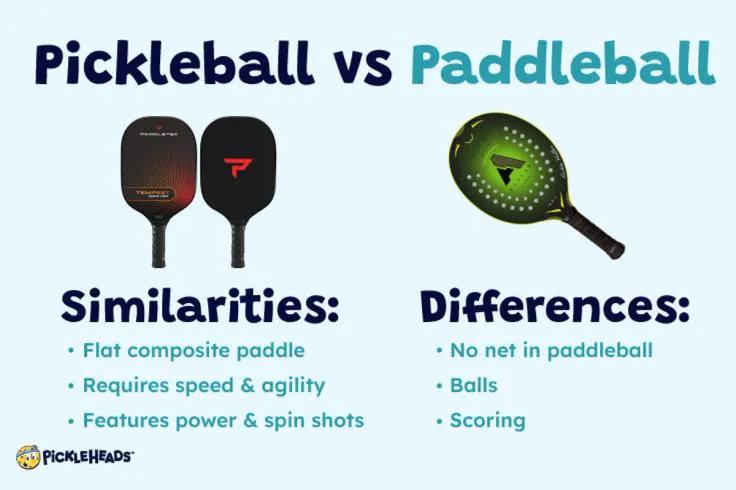
Pickleball vs padel at a glance
If you wonder is pickleball the same as padel, think of cousins, not twins. Both are racket sports with nets and fast rallies. But they look, feel, and score very differently.
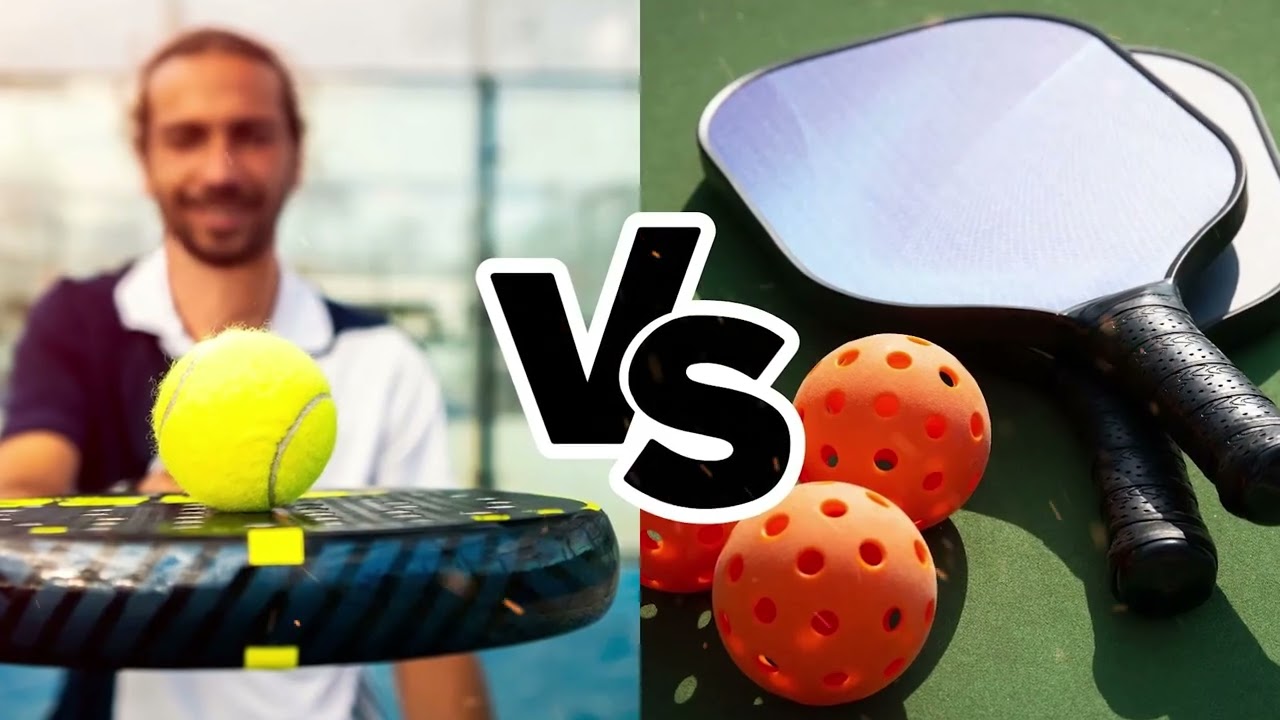
Pickleball uses a small court and a plastic ball. The game rewards touch and placement. Padel uses a glass-walled court and a pressurized ball. The game rewards angles and teamwork.
I play both weekly. When I switch, I also switch my mindset. In pickleball, I hunt the kitchen line. In padel, I set up lobs and use the wall like a friend.
)
Courts and equipment: the big visual differences
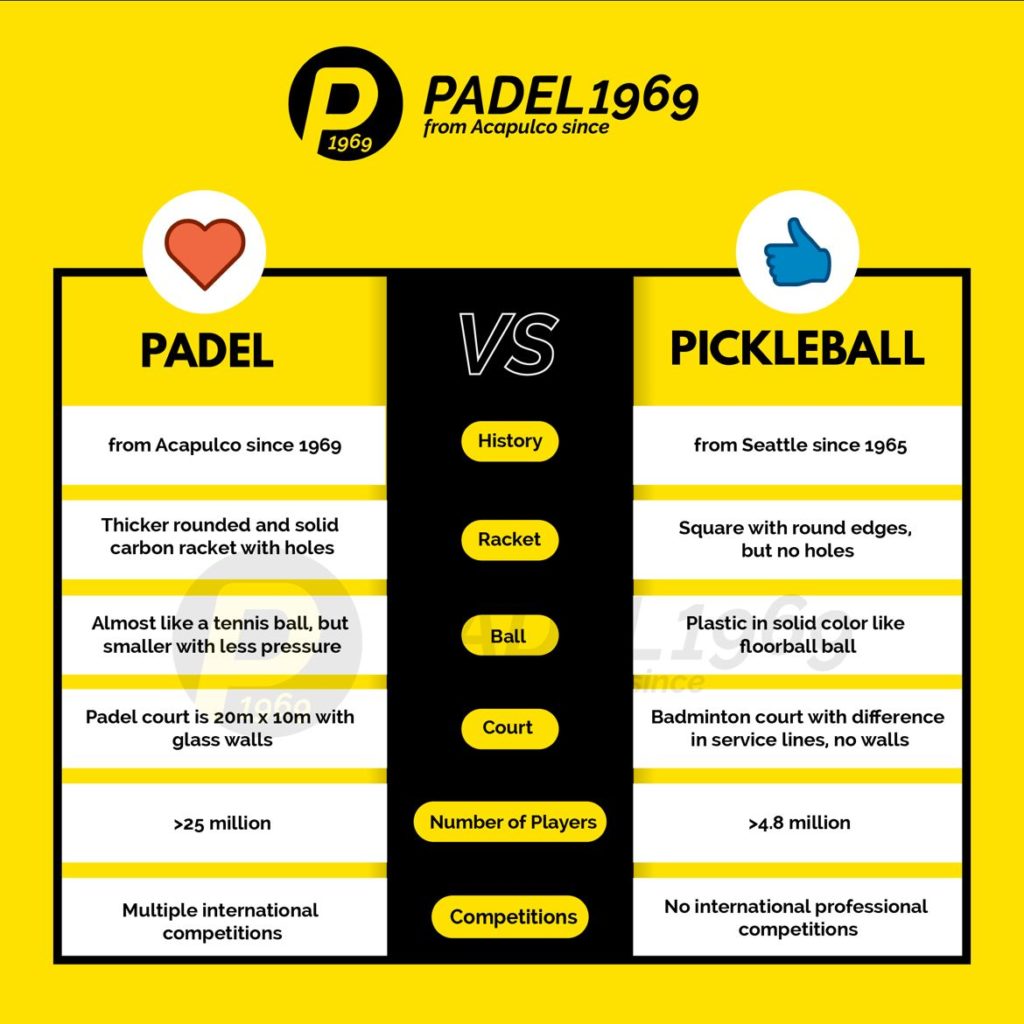
Is pickleball the same as padel when it comes to courts and gear? Not at all. Here is what you will see on day one.
Court size and layout
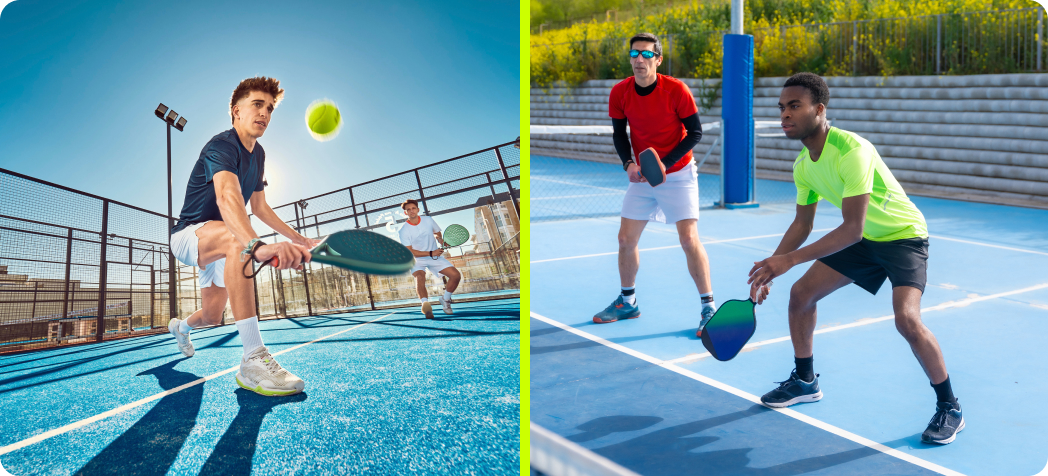
- Pickleball: 44 ft x 20 ft, open court, 7 ft non-volley zone (kitchen) on both sides.
- Padel: 65.6 ft x 32.8 ft (20 m x 10 m), enclosed with glass and mesh walls. Walls are in play.
Nets
- Pickleball: 36 inches at the posts, 34 inches at the center.
- Padel: About 34.6 inches at center (88 cm), slightly higher at the posts.
Paddles and rackets
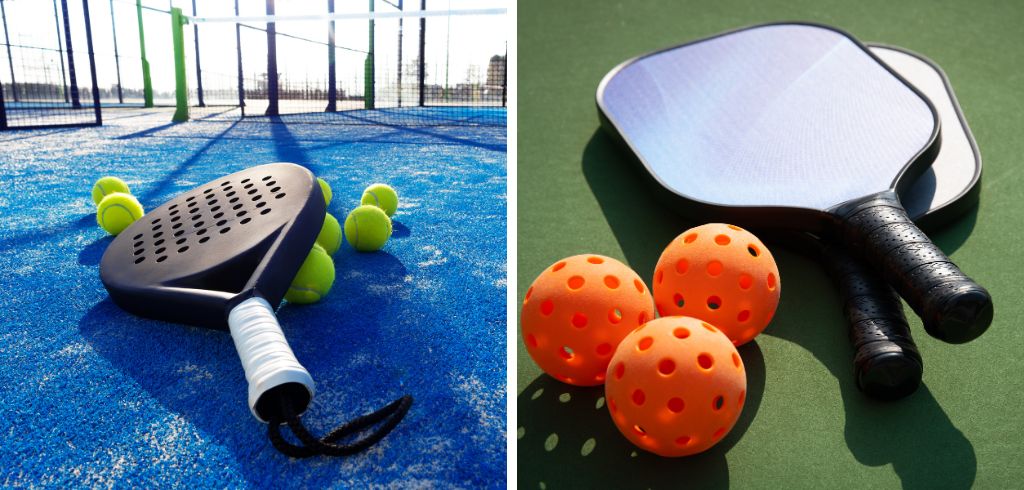
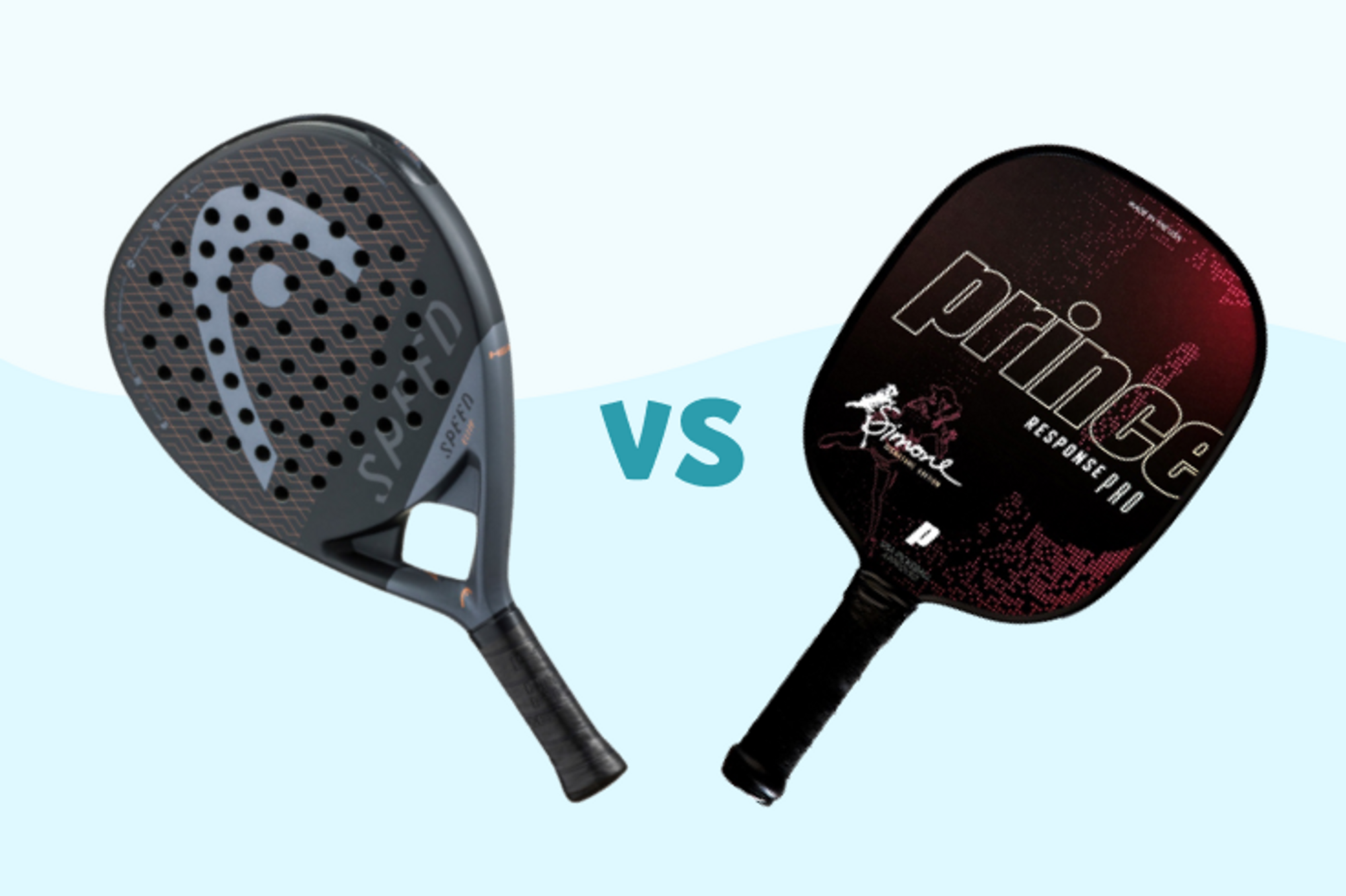
- Pickleball: Solid-faced paddle, no strings. Composite or wood. Light, very maneuverable.
- Padel: Stringless racket with a foam core and holes. Heavier head feel for control and power.
Balls
- Pickleball: Perforated plastic ball. Slower through the air. Lower bounce.
- Padel: Pressurized tennis-style ball with slightly less pressure. Faster, livelier bounce.
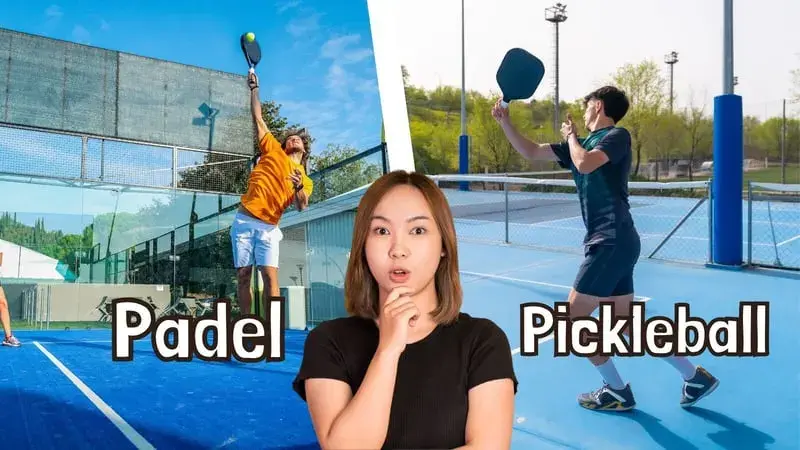
Rules and scoring: how points are won
People who ask is pickleball the same as padel often get tripped up by the rules. They are very different.
Pickleball basics
- Serve underhand, diagonal, from behind the baseline.
- Two-bounce rule: let the ball bounce once on the serve return and once on the next shot before volleys start.
- Non-volley zone: you cannot volley while standing in the kitchen.
- Scoring: Traditional side-out scoring to 11, win by 2, only the serving side can score. Most rec play follows this. Pro formats may vary.
Padel basics
- Serve is underhand after one bounce on the ground, hit at or below waist height.
- Walls are live. The ball can hit your side’s wall after your opponent hits it and still be playable.
- Scoring: Like tennis. Games go 15-30-40, sets to 6, win by 2, usually best of 3 sets.
- Doubles by default. Singles courts exist but are less common.
How each game feels to play
Here is the heart of the question: is pickleball the same as padel in how it feels? Not even close.
In pickleball, points build at the kitchen. Dinks, speed-ups, and counters decide who wins. Soft hands matter a lot. Quick feet matter even more.
In padel, you think like a chess player. You use the walls to reset. You lob to take the net. You hit through the middle to split your rivals. It is doubles teamwork first, power second.
When I coach, I see this mistake: a pickleball player tries to “dink” in padel. That soft ball sits up, and the other team crushes it off the wall. And a padel player in pickleball often drifts back. That cedes the kitchen and the point.
Cost, access, and growth
Is pickleball the same as padel in cost and access? Not in most US cities.
- Pickleball is everywhere. Parks stripe courts. Clubs host drop-ins. You can start for under $100 for a paddle and shoes.
- Padel is growing fast but is still limited in the US. Courts cluster in large metros and warm states. Court fees can be higher due to the build cost and demand.
- Both sports are booming. US participation in pickleball has surged in recent years. Padel growth is rapid worldwide, led by Europe and Latin America.
If budget and location matter, start with what is close. You will play more, improve faster, and have more fun.
Which sport is right for you?
This is where your goals decide the answer to is pickleball the same as padel for your needs. Use this simple guide.
Choose pickleball if:
- You want quick games and easy access at parks.
- You love net play, hand battles, and fast reactions.
- You prefer shorter learning curves and low gear cost.
Choose padel if:
- You enjoy doubles teamwork and point construction.
- You like creative use of walls and smart lobs.
- You want a workout that blends power and finesse.
When I started, pickleball gave me instant fun and lots of reps. Padel stretched my strategy brain and made me a better partner in doubles. Many of my students play both and improve in both.
Tips for switching between pickleball and padel
If you still wonder is pickleball the same as padel, these switch tips will make it clear in practice.
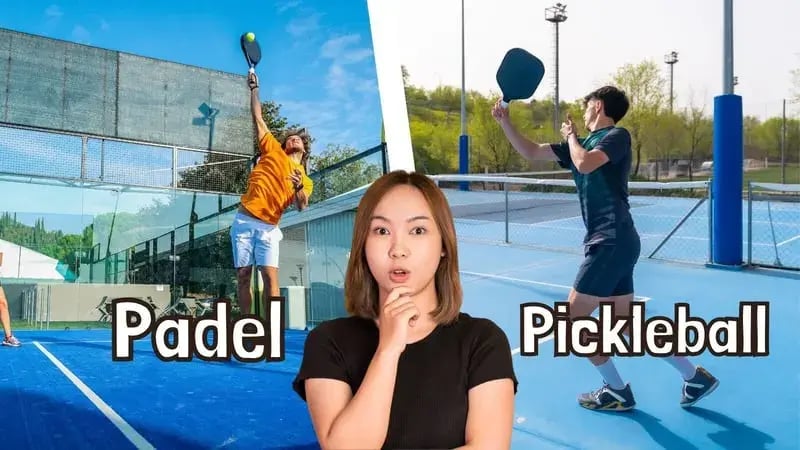
- Adjust contact point. In pickleball, contact in front with a short swing. In padel, use a longer, circular swing with a firm wrist.
- Change net habits. In pickleball, own the kitchen. In padel, earn the net with lobs and deep volleys.
- Respect walls. In padel, let the wall help you reset under pressure. Practice reading rebounds.
- Serve intent. Pickleball serves set up the third shot. Padel serves start neutral. Place, do not blast.
- Footwork. Stay compact in pickleball. In padel, use split steps and side steps to manage walls and overheads.
Safety and common injuries
Is pickleball the same as padel when it comes to injury risk? The patterns differ.
- Pickleball: Many adult starters are 40+. Expect calf strains, ankle rolls, and shoulder or elbow pain. Warm up and avoid sudden sprints from cold starts.
- Padel: Expect ankle sprains, groin strains, and shoulder fatigue from overheads and bandejas. Eye protection is smart in crowded net battles.
- Both: Wear court shoes with good grip. Learn good swing mechanics. Mix mobility and strength 2 to 3 days a week.
Recent participation studies link growth to more overuse injuries. Most are mild and preventable with load management and coaching. If pain lasts more than a week, see a pro.
Simple drills to improve fast
Want proof that is pickleball the same as padel is the wrong question? Train the skills each sport rewards.
For pickleball
- Dink ladder: Cross-court dinks to targets for 5 minutes each side.
- Third-shot drop: Serve, return, drop to the kitchen, then play it out.
- Hand speed: Volley-to-volley at the kitchen line, count clean contacts.
For padel
- Wall resets: Feed medium pace to your backhand. Let it hit the wall, step in, and lift cross-court.
- Lobs under pressure: From defense, lift deep lobs over your rivals. Recover to the net as a team.
- Bandeja control: Aim for deep, slow overheads to push foes back rather than going for winners.
Two sessions a week per sport will build skill in a month. Film a few points on your phone to spot habits you miss on court.
Frequently Asked Questions of is pickleball the same as padel
Is pickleball the same as padel?
No. They use different courts, gear, rules, and scoring. The play style and strategy also differ a lot.
Which is easier for beginners?
Pickleball is easier to start due to court size, ball speed, and access. Padel has a steeper curve because of walls and doubles tactics.
Can I use the same paddle or racket for both?
No. Pickleball paddles and padel rackets are built for different balls and impacts. Use the right tool to avoid injury and play better.
Do both sports use rally scoring?
No. Standard pickleball uses side-out scoring to 11 in most rec play. Padel uses tennis-style games and sets.
Which sport gives a better workout?
Both can be intense. Padel often has longer rallies with more movement; pickleball has shorter bursts and fast hand exchanges.
Can I play singles in padel?
Yes, but doubles is the norm and what most courts support. Singles padel courts are less common.
Will playing one help me in the other?
Yes. Pickleball sharpens hands and net instincts. Padel improves footwork, patience, and point building.
Conclusion
Pickleball and padel share roots, but they grow in different directions. One is a compact, quick duel at the kitchen. The other is a clever dance with glass and angles. Use access, budget, and play style to choose your start, then try both to round out your game.
Ready to take the next step? Book a beginner clinic, find a local club, or grab a friend and demo both sports this week. Have a question or a tip that helped you switch? Drop it in the comments and help the next player learn faster.